This easy Sri Lanka 2 week itinerary focuses on history, culture and tea heritage and highlights some of the country’s best boutique accommodations.
This two week Sri Lanka itinerary was written by Sandy Papas from Weekend Getaways Australia.
Sri Lanka is a fascinating country packed with things to do and places to see.
It may be small in size, but this island nation is big on diverse landscapes – from the picturesque southern coastline to the interior hill country tea plantations – and a cultural heritage that is every bit as varied.
Sri Lanka is unique in many ways – geographically and economically – so it pays to be across a few key things when organising your trip. It’s not the easiest country in the world to travel to, but if you plan wisely and carefully, it is a very worthwhile destination.
Two weeks in Sri Lanka is the ideal duration for first-time visitors. This itinerary covers some of the key highlights, plus my advice for planning your own Sri Lanka itinerary.
Please note: This post contains affiliate links, meaning I may earn a commission if you make a purchase by clicking a link (at no extra cost to you). Learn more.
Best time to visit Sri Lanka
Due to its unique topography and location, Sri Lanka has quite a varied climate. It is not really possible to find a single time of the year where the weather is fantastic everywhere and for that reason not many people cover the entire country in their itinerary.
Average temperatures in Sri Lanka are high 20s (Celsius) on the coast and high teens in the hills. In typical tropical fashion, the monsoon occurs annually but can vary from coast to coast. Despite the small size of the island, its patterns vary depending on your location.
The south of Sri Lanka can experience heavy rain from May to August, meaning hiking or wildlife spotting during this period might be a bit soggy. The best time to visit the south and west coast of the island is from January to April.
Further north, around Sigiriya, the Cultural Triangle, Trincomalee and Jaffna, it’s dry and hot from May to September. It gets rainy in these parts from October to February.
How to get to Sri Lanka
There are two ways to get to Sri Lanka – by sea or by air.
Bandaranaike International Airport (airport code CMB) at Katunayake is the country’s main gateway, located 30 kilometers north of the capital, Colombo.
It is serviced by a number of major airlines including carriers from the UAE, Singapore and Bangkok. Sri Lankan airlines operates direct flights to Melbourne.
At this stage, there is no ferry service from India despite its close proximity to Sri Lanka but there are a number of cruise ships that stop in Colombo.
How to get around Sri Lanka
Sri Lanka’s railway network is old and whilst many are scenic, trains are generally slow and only service a few limited routes. If you only have two weeks in Sri Lanka, car and bus travel is more convenient – but getting around can still be slow due to poor roads, traffic, and windy mountains. Most buses are ancient and look like they could fall apart at any minute.
Road travel can get tedious (and nauseous) very quickly! Flying is the most efficient option, but prices vary dramatically depending on the route.
It’s possible to hire a car and driver for the duration of your time in Sri Lanka, but note that you have to pay for the driver’s accommodation and in some places this is tricky. We had friends who did this and they found it killed their ability to be more spontaneous.
They strongly recommended we just ask each hotel to organise the next leg of travel for us as we went, and that is largely what we did. This is a good option for travellers as you end up using drivers for relatively short distances and not having to pay for lodging or return-to-home fees.
Sri Lanka 2 week itinerary
Days 1 & 2: Negombo
Days 3 & 4: Sigiriya
Day 5: Kandy
Days 6 & 7: Ceylon Tea Trails
Days 8 & 9: Tangalle
Days 10 & 11: Talpe
Days 12 & 13: Galle
Days 14 & 15: Colombo
Negombo – days 1 & 2

Unfortunately, despite spending two nights in Negombo, I can’t tell you much about it. There was a cyclone off the south coast of India when we flew in and torrential rain for the entire two days (150 millimetres in one day alone!).
We were very tired after the efforts of sorting out work, kids and the long journey and in many respects found ourselves quite happy to hole up in the hotel and be forced to rest.
We stayed at the beautiful Wallawwa Boutique Hotel, which is about 15 minutes from the airport, or 40 minutes north of Colombo.
Once the Head Chieftain of Galle’s country residence and formerly part of the RAF’s headquarters during WW2, the Wallawwa is now an 18-bedroom, beautifully renovated country house hotel set amongst tropical gardens set on acreage with stunning gardens and great facilities.
→ Read more: Things to do in Negombo
Sigiriya – days 3 & 4
Most people drive directly to the Cultural Triangle (5 hours) or catch the train to Kandy and drive north from there (still about 5-6 hours). We knew we had some long drives in the weeks to come so we were trying to minimise that wherever possible.
You can, in fact, fly to Sigiriya from Colombo airport with Cinnamon Air and it’s really quite affordable. And fun! We paid about US$120 each for a 30-minute flight and were treated to the most incredible views.
Choosing accommodation in Sigiriya can be quite confusing. Most people come here there to visit the famous Sigiriya Rock or ‘Lion’s Head’, but many of the hotels are miles away and in very isolated spots.
Sigiriya town itself is quite small and spread out and there isn’t a whole lot to do. It’s really just a place to base yourself for a few days whilst doing various day trips around the Cultural Triangle.
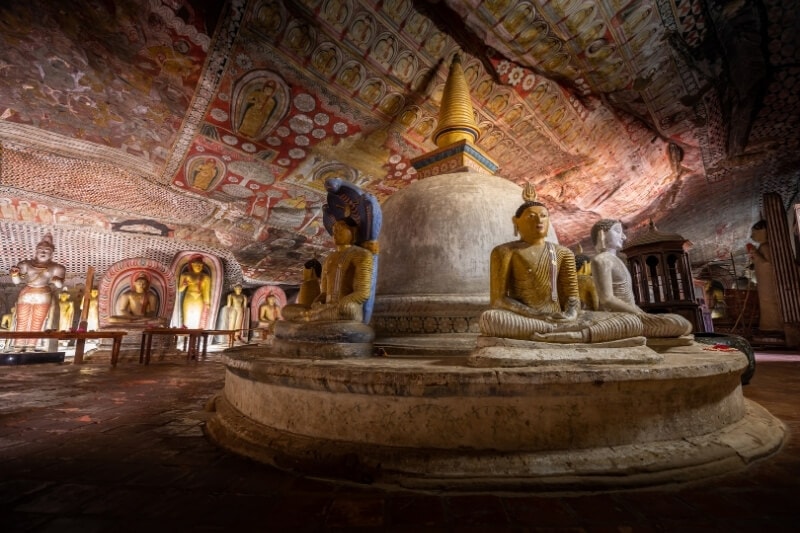
Another option is to stay in Dambulla, a much bigger town with a famous set of cave temples around 40 minutes south of Sigiriya. It doesn’t have an airport.
We stayed at a fairly new hotel called EKHO Sigiriya (Zinc Journey), largely chosen as it’s a short stroll to the rock which towers behind it. It’s a very affordable hotel with clean, comfortable rooms, although it does get busy in the restaurant at mealtime.
Visiting Sigiriya Rock

Located outside Sigiriya, Lion’s Head is considered by many to be the eighth Wonder of the World. The UNESCO World Heritage Site was once an ancient palace and fortress complex – one of the finest examples of ancient urban planning on Earth – and is of significant archaeological importance to Sri Lanka.
In the 3rd century BC, the rocky plateau served as a Buddhist monastery. In the second half of the 5th century, King Kasyapa decided to construct a royal residence there and after his death, it again became a Buddhist monastery until the 14th century, when it was abandoned.
Sigiriya is an unmatched combination of urban planning, water engineering, horticulture and arts. The site consists of cave and boulder gardens, some of the world’s oldest landscaped terraces, and a complex hydraulic system.
Today, Lion’s Head attracts visitors from all over the world who make the precarious climb 200 metres to the top to see the astonishing views and the fascinating ruins. There are over 1,500 small, often steep and uneven steps, and you do need a reasonable level of fitness to complete the climb.
We arrived early in the morning around 9am and there were few people around. By the time we came back down at around 11am, there were many tour buses. I have no idea how some people managed to get up given they were wearing stilettos or thongs, but they had paid for their tickets and were on their way !
There are signs along the track warning people to be quiet as noise upsets the many hornets in their nests in various places on the rock. The locals love to watch tour groups come through all yelling at the top of their voices, ignoring the warnings and being stung regularly!
We were joined by a couple of elderly ‘guides’ who insisted on helping me. Of course, we knew a generous tip was expected at the end, but to be honest I don’t think I could have done it without them and they were quite fun to chat with. We handed over 1,000 rupees each (about 6 USD) – I could see why they are so thin as they have been climbing that rock several times a day for over 20 years!
Elephant safari in Sri Lanka

One of the highlights of our entire trip was going on an elephant safari. Our hotel organised an independent tour company for us, and we were collected in a 4WD jeep with an open tray and seating for about 10 – although we were the only customers that day.
We headed to Kaudulla National Park, which is located about 50 kilometres north of Sigiriya and is part of the elephant corridor between the Minneriya and Wasgamuwa National Parks. Tour operators track the elephants’ movements as they move from park to park throughout the year, often following weather patterns and water supplies.
Kaudulla is Sri Lanka’s newest national park and we were not disappointed seeing at least 200 of these wonderful creatures peacefully feeding on the plains and at the edge of the lake.
There are around 6,000 elephants in Sri Lanka – the highest number of any Asian country. Poaching is still a problem, however, and whilst we were there two very famous Tuskers were murdered.
Only about two percent of the elephants have tusks thankfully, but that makes those 120 animals so terribly vulnerable. The people who committed this terrible crime were caught quickly during our visit ,but what a tragic waste of some of the world’s most marvellous animals.
Sometimes you will see elephants in the towns around this part of Sri Lanka being offered for rides. Do not support this. The animals are shackled and controlled, and there is nothing ethical about it, even in the so-called ‘orphanages’.
Other things to do around Sigiriya & the Cultural Triangle
- Climb Pidurangala Rock, which is next to Sigiriya, and meant to be the best spot to get photos of Lion’s Head (especially at sunrise). It’s not an organised tourist attraction however and has a fairly treacherous path, so it’s only suitable for the fit and adventurous.
- Visit the Golden Cave Temple at Dambulla.
- Visit Polonnaruwa, Sri Lanka’s former Medieval Capital.
Kandy – day 5
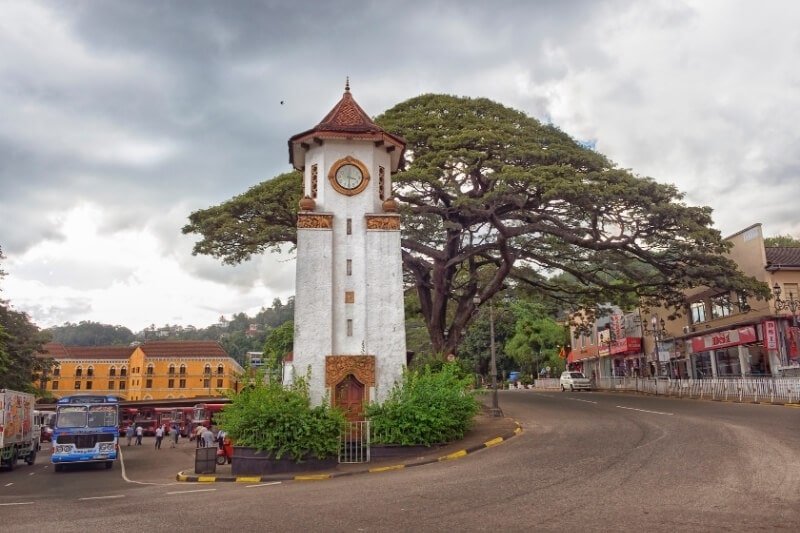
The Hill Capital of Sri Lanka is nestled in the misty hills of the central region and is the country’s most venerated city.
PromotedDon't miss out on today's trending deals!
Join thousands of users enjoying exclusive benefits right now.
A shrine holding the Tooth Relic of the Lord Buddha is set at the edge of the lake, which was built by Sri Wickrama Rajasingha, the last King of Kandy. The city winds around hills that surround the river and there is a lot to see, including The Royal Palace Complex, Royal Bathhouse, and Summer House and the truly beautiful Botanical Gardens.
We only spent one night here – in a tent room at The Elephant Stables Hotel – but two nights would have been better.
We had our hotel in Sigiriya organise a driver to take us on to Kandy. He was a pleasant and very careful driver but of course, his sister’s brother-in-law worked at the most fabulous gem store that we just happened to pass so in we went. Sri Lanka is renowned worldwide for its gems, especially sapphires and aquamarines, so I was curious to see what the fuss was about.
Ceylon Tea Trails – days 6 & 7
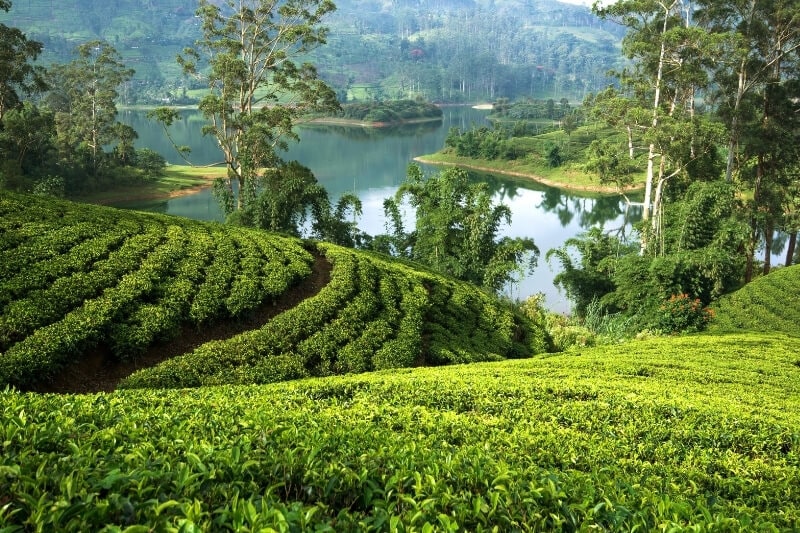
Ceylon Tea Trails is owned and operated by the Dilmah family and is the world’s first tea plantation resort. It is located about 40 minutes south/southwest of Hatton, which is about 4 hours south of Kandy.

CTT consists of five former tea plantation managers’ bungalows scattered around Castlereagh reserve. Each one has been transformed into an elegant luxury villa and can be booked as part of an all-inclusive package.
It’s not cheap – this was our splurge for the trip, but I figured we might not get to experience something like this again for a long time. It was worth every cent!
Tangalle – days 8 & 9

Most people who visit Sri Lanka hope to spend some time on the country’s much-famed beaches. The weather along the southern coast is usually good, making the numerous towns running from Yala National Park to Galle – over about 100 kilometres of coast – the most popular.
Having become a bit car sick on the drive into CTT, we were not looking forward to the 5-7 hour drive to Tangalle. Our driver from Kandy offered his services, but the option to fly suddenly seemed very appealing.
This was outside our budget, but we decided a 30-minute flight was a far better use of our time, so we booked two seats online with Cinnamon Air. It was a fantastic experience – heaps of fun and the views were incredible.
We decided to spend a few nights near Galle and a few in a more central spot near the town of Tangalle. I chose Taru Villas based on the beachfront location, affordability, beautiful decor (it’s owned by a lady architect), and great reviews. We were not disappointed. We loved every minute of our time there, especially the fantastic attention given to us by the manager, Mr. Ananda.
Tangalle is a bustling town that is only just starting to rebuild a thriving tourism industry after the Boxing Day Tsunami of 2004.
There is quite a bit to do in the area, including bird sanctuaries, Bundala National Park, Tangalle Lagoon and numerous beautiful beaches as well as Ashrams, temples and historic sites.
Talpe – days 10 & 11
Between Tangalle and Talpe, our next stop, there are a number of attractions including the Hummanaya blowhole, Dickwella Beach, Point Dondra, Wellamadama Fish Market, Parevi Duwa temple, Koggala Lake, Turtle hatcheries, and numerous other beaches and small towns.
Thus it pays to get a driver, even a tuk-tuk, to slowly take you along this route, taking in the sights as you go. If time permits, pause here for a few days and enjoy the many attractions around Mirissa Beach.
We chose to stay in Talpe based on its proximity to Galle and the reviews of the hotel we had chosen, The Owl and the Pussycat in Unawatuna. Perhaps we had been completely spoilt by Ceylon Tea Trails and Taru, but this was the only place on our trip that didn’t live up to expectations.
Despite being a beachfront hotel, the beach is not accessible due to the rocks, and there is not much else within walking distance. This is the case for many hotels in the area, so choose carefully. Many are located down long alleys on pretty but unusable beaches, so you have to order a tuk-tuk every time you want to go somewhere.
If we had our time again, we would stay longer in Galle or perhaps in Weligama or Mirissa instead.
Galle – days 12 & 13
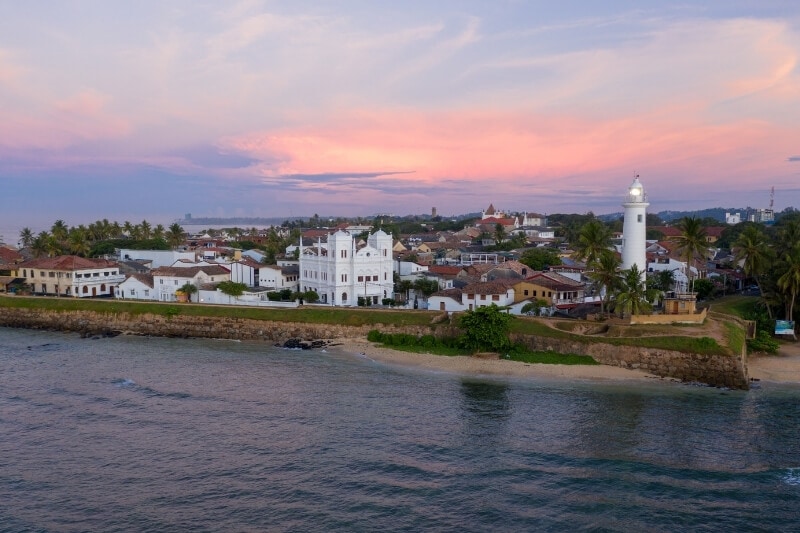
Galle is a fascinating town with an historic fort, which is in fact a small town in itself. It is situated on a large harbour on the island’s southern coast and dates back to the 13th century, possibly much earlier.
Galle became the island’s chief port during the period of Portuguese rule. Under Dutch rule, it was the island’s capital until 1656, when Colombo replaced it. The historic section of the city, containing the fort and other colonial-era buildings, was designated a UNESCO World Heritage Site in 1988.
In December 2004, most of Galle was destroyed or heavily damaged by the Boxing Day Tsunami, but it has undergone a recent revival. New boutique hotels, cafes, restaurants, trendy boutiques, bars and art galleries have popped up.
There are some stunning places to stay in Galle, from the incredible Amangalla Hotel, and a new Taru establishment called Fifty Lighthouse Street, which we popped in to see. There are even some very good Airbnbs.
Colombo – days 14 & 15

With a population of almost a million people, Colombo is another big, crazy capital.
A melting pot of old meets new, rickshaws and tuk-tuks jostle with trucks, buses and the latest sports cars. I’d not heard very positive things about Colombo, but although we spent two full days there I actually might have liked another day or two.
Sure, there are some dirty, dodgy bits, but there are also long tree-lined boulevards, picturesque lakes, modern hotels and converted historical buildings. And all by the sea, which is a focal point – especially for the locals.
We chose to stay at the Shangri-la where we took advantage of the discounted opening rates. Rooms are very comfortable and the restaurants and bars have incredible fit outs.
The hotel is at the top of what’s called Galle Face Green, a long strip of lawn where many locals gather in the evenings to enjoy market stalls and street performers.
→ Read more: Things to do in Colombo
Things to know when planning a Sri Lanka itinerary
Geography & demography
Sri Lanka is located off the coast of Southern India. It’s roughly the same size as Sicily and a bit smaller than Tasmania or Ireland. At 21.2 million people, it has roughly the same population as Australia.
Like Australia, there are many beautiful beaches and most of the population tends to live in coastal areas. Unlike Australia, however, the interior is green and mountainous and rich with industries such as gemstone mining and tea plantations.
People & culture
Seventy percent of the population is Buddhist, but you will come across large groups of Hindus and Muslims on your travels, as well as Christians. It’s quite a cultural melting pot really with numerous bells, calls to prayer and chanting ringing through the valleys, often at the same time.
Majority (74%) of people speak Sinhalese. It’s not an easy language to pick up, and not really similar to anything you may have heard before. Luckily English is widely taught in schools and most people understand it to a point. Like all developing countries, we found some people tried to be opportunistic whilst others were genuine in their desire to showcase their home country.
Some people don’t like having their photos taken, and it pays to be mindful of the adjustment that many communities are going through with tourism. Sri Lankans have not long recovered from a devastating civil war and the effects of the Boxing Day Tsunami are still evident.
Is Sri Lanka cheap?
Sri Lanka’s official currency, the Sri Lankan rupee, is pegged to the US greenback. If you’re American, English or even European, this won’t be an issue. But for many, this can make Sri Lanka one of the more expensive Asian destinations, especially for the big-ticket items such as airfares and hotels.
In saying that, cash is used on the ground and local meals and attractions that accept rupees are usually quite inexpensive. It’s not unusual to find lobster and beer by the beach or an amazing curry in a small restaurant for around 10 USD per head, including drinks.
It’s also interesting to know that there are significant differences in price for locals and tourists, and that dual pricing is openly displayed at many attractions. I understand and support the need to encourage locals to enjoy their own country (and they are not the only country to do this), but be aware that the variable can sometimes be as much as 9,000 percent.
Food in Sri Lanka
Oh, the food!
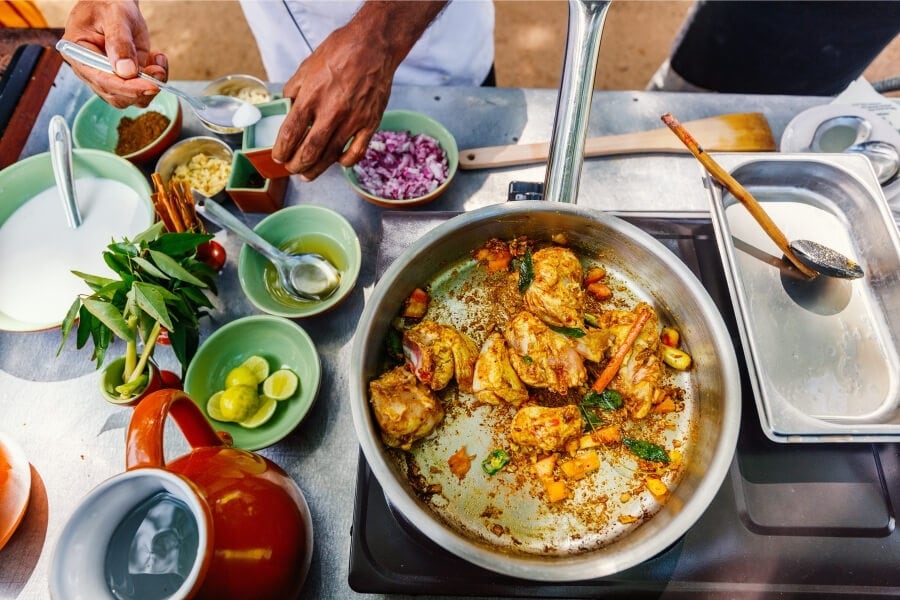
I’ve eaten curries all over Asia and probably the best to date, unsurprisingly, were in India. In saying that, no one does a Massaman like the Malaysians or a Beef Rendang like the Indonesians or a Green Chicken Curry like the Thais. But the Sri Lankans win the gold medal in the spice dish Olympics.
Sri Lankan curries are a huge production consisting of perhaps 8-12 dishes with the actual protein ‘curry’ only a small part. With it comes beetroot curry, pumpkin curry, eggplant various sambals, pickles, various other accompaniments – usually way too many to actually finish.
On our last night in Colombo we dined at the incredible Ministry of Crab. Owned by a couple of retired cricketers, this place, unsurprisingly, mainly serves crab. And it’s amazing. We shared a ‘large’ – one of their smallest – and it was as good as, if not better, than any chill crab I’ve had anywhere, including Singapore.
Sri Lanka 2 week itinerary: Final thoughts
We had a great time in Sri Lanka, but it was not without its challenges.
Part of its charm lies in its largely undeveloped beaches, towns and countryside, but the infrastructure problems are fairly significant. The train routes are still only servicing towns on the original tea routes established by the British and do not venture to many of the other places most visitors want to see. Driving is long and tedious, and flying is confined to a handful of destinations.
I often now describe Sri Lanka as Bali meets India. Or more specifically, it’s a bit like a tropical version of India without the crowds.
Time will tell if Sri Lanka can adapt to the growing demand from visitors to have an authentic yet viable experience.

Thanks for the wonderful review. I’ve been contemplating Sri Lanka for a while and this really helps. I appreciate that you covered different areas and transit between them. One potential fly in the ointment is that while I don’t mind paying tourist prices, I do mind paying sucker tourist prices, so that’s something my wife and I would have to discuss. In any case, thanks for the heads up and the comprehensive review!
Glad you found it helpful, Christian! Enjoy planning your own Sri Lanka itinerary 🙂