Bottomless wine, raucous hospitality, and the lure of the mountains – the joyful, free-spirited Georgia that many travellers seek out is absolutely real.
But it exists alongside rules, norms and practical realities that are far less romantic, yet essential to understand before you arrive.
I have lived in Georgia for over six years now and have been visiting the country for close to a decade. During that time, I’ve watched the country change in significant ways – and I’ve helped thousands of travellers navigate those shifts and plan their trips with confidence.
This guide brings together the questions I’m asked most often, including the things first-time visitors to Georgia tend to misunderstand or overlook.
Please note: This post contains affiliate links, meaning I may earn a commission if you make a purchase by clicking a link (at no extra cost to you). Learn more.
1. Visiting Georgia in 2026: What has changed?
Before getting into the practical details, it’s worth clearing up a few of the most common misconceptions about travelling in Georgia right now.
Insurance for Georgia is now mandatory
Health and accident insurance is now a legal requirement for entry to Georgia – and this applies to all visitors, including those entering under the visa-free regime.
Your policy must be valid for the full duration of your stay, with a minimum coverage amount of 30,000 GEL. Both Georgian and international providers are accepted. In practice, proof of insurance is more likely to be checked before departure (i.e. at the airport), but early reports suggest that immigration officials are also checking.
→ You can find a full breakdown of requirements here in my detailed Travel Insurance Guide.
Travel insurance has long been a requirement for travellers applying for a visa. Georgian immigration is known to be strict rather than flexible, so if you are travelling on a visa (rather than visa-free), make sure you read the conditions carefully and arrive with all required documentation in order.
→ For the most up-to-date visa requirements, refer to the official Georgian consular portal.
Also remember that Georgia tightly controls certain prescription medicines. Keep medication in its original packaging, carry supporting documentation, declare to customs on arrival. More information in this PDF.
Rules are evolving & enforcement is stricter than in the past
Georgia is in a period of transition, with systems around migration, labour and tourism becoming more structured as the country continues to develop. This shift is visible across many areas of daily life, including in rules and regulations that affect visitors.
Everything from overstay penalties to minor infractions are now more likely to be applied. Jaywalking, in particular, regularly catches visitors out.
I don’t think these changes are intended to restrict travel or dampen the experience, but to formalise it. Clearer rules and more consistent enforcement are inevitable, and in many cases a net positive.
Roads are improving, but overland transport remains fragmented
You might have heard about plans to modernise and centralise Georgia’s road transport system – including shifting longer journeys from marshrutka minivans to coach services. These reforms were due to come into force in 2026, but have now been postponed until 2027.
While the principle road transport system itself remains somewhat disjointed, significant investments in infrastructure mean the roads in Georgia are definitely getting better. Major works on the Rikoti Pass, which links eastern and western Georgia and was completed this past December, have reduced travel times and improved safety on one of the country’s most important corridors.
In the mountains, long-standing problem routes are also being upgraded. The Kobi tunnel and bypass road will soon improve year-round access to Kazbegi, while changes to the Abano Pass have made travel to Tusheti smoother. New and rehabilitated routes such as the Zagari Pass and Zekari Pass are gradually expanding options for travellers.
So while physical infrastructure is advancing, transport logistics have yet to catch up. Understanding this gap – and planning your trip with flexibility and patience – is crucial. More details about transportation below.
Georgia is not as ‘cheap’ as it once was
One of the most persistent misconceptions about Georgia is that it’s still possible to travel comfortably on a very tight daily budget. While the country remains excellent value by European standards, prices have risen significantly since 2022 in-line with inflation and cost of living.
This impacts everything from bus fares to bread. Entrance to the National Museum has just been bumped up to 40 GEL (~15 USD). In 2025, food and grocery prices increased more sharply than overall inflation – by around 8-12% YOY. In 2026, food pricing will be the subject of a government review.
This doesn’t mean Georgia has become expensive, but it does mean that older advice about ‘rock-bottom’ costs no longer applies in most areas, especially in cities and popular tourist areas. Budget travel is still possible with planning, but you will have to sacrifice on some things.
According to 2026 statistics, the average daily spend for travellers to Georgia is around 350 GEL or 130 USD. As a very broad guide, you should budget in the neighbourhood of:
- 40-60 USD per person per day (budget)
- 80-140 USD per person per day (mid-range)
- 250+ USD per day (high-end)
→ For a detailed breakdown of current prices and realistic daily budgets, see my full guide to travel costs in Georgia.
Peaceful protests do happen – and are easy to avoid
Public demonstrations have been a part of life in Georgia for as long as I’ve been here. In recent years, they’ve been more likely to attract international media attention. Without getting into the substance of the protests themselves, it’s worth understanding how they affect visitors – or, more often, how they don’t.
For the most part, demonstrations are pre-organised, peaceful, well-contained, and limited to specific locations at specific times – usually along Rustaveli Avenue in Tbilisi in the evenings. Outside of these areas, daily life continues as normal, and many travellers wouldn’t notice anything at all. The biggest impact for visitors tends to be temporary road closures or traffic disruptions, which are normally announced in advance and easy to plan around.
It’s sensible to avoid large gatherings, keep an eye on local updates, and follow official advice. Most travel advisories recommend avoiding protests as a general precaution.
Georgian hospitality is genuine, but expressed differently
Georgia is often marketed on the idea of hospitality, where guests are treated as a ‘Gift from God’. As a result, travellers have been conditioned to expect instant warmth or overt friendliness. In reality, everyday interactions in Georgia tend to be more reserved – people rarely smile or make small talk with strangers, which can be misinterpreted as unfriendliness.
This is most noticeable in the service industry, where norms are very different from what you might be used to. Interactions are typically direct and task-focused, with little emphasis on performative friendliness or cultivating rapport. If these are your first points of contact, it’s easy to come away with the wrong impression – even though this reservedness (sometimes borderline hostility!) is usually nothing personal.
In my experience, Georgia’s legendary hospitality shows up in different ways: in incidental interactions, chance meetings, and unexpected encounters. These are the moments where warmth and generosity tend to surface. This kind of hospitality reveals itself over time, and it’s reciprocal – you get what you give. Patience, repeat interactions and basic courtesy matter. Warmth doesn’t always look like Western-style service – and in Georgia, the relationships you form tend to be more rewarding precisely because they’re spontaneous and non-transactional.
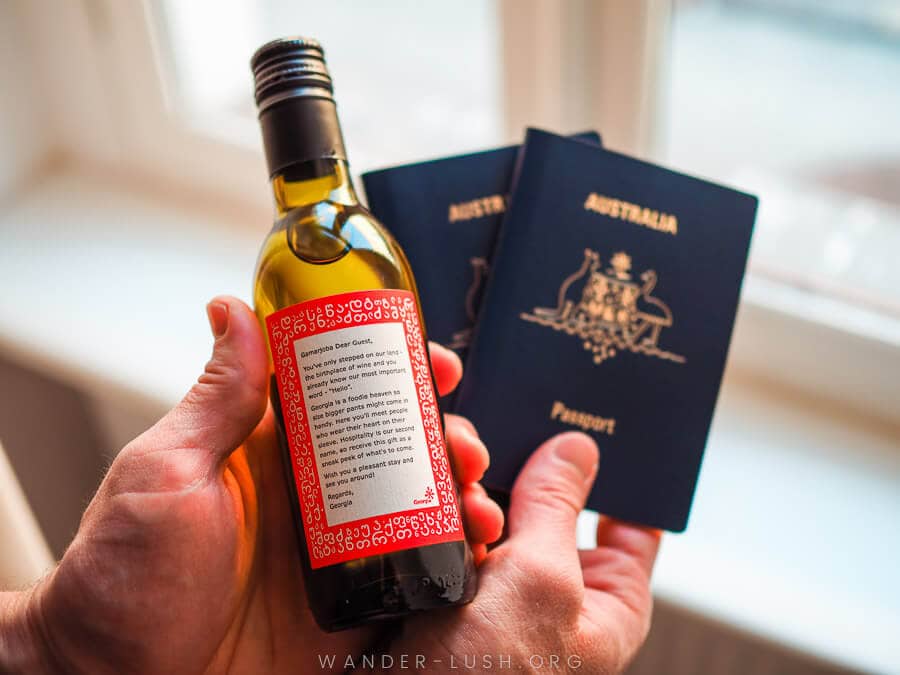
2. Basic Georgia travel tips to know before you arrive
A little preparation goes a long way when travelling in Georgia.
Always use a taxi app – and never take a taxi from the airport
One of the easiest ways to overpay – or start your trip in Georgia on the worst foot possible – is by accepting a ride from an unsolicited taxi driver. This advice is especially important at airports. Never accept a ride from a driver inside the terminal, particularly at Tbilisi Airport. Instead, use the airport bus #337, book via a rideshare app, or pre-arrange a private transfer with GoTrip.
→ More tips here in my Airport Arrivals Guide.
Airport or not, taxis in Georgia do not have meters, which means fares are negotiated in advance. To avoid confusion, awkward negotiations or inflated prices, it’s far simpler to book taxis through an app.
Bolt is the most reliable taxi app in Georgia (there is no Uber here). It operates in all major cities, is easy to use, and wait times are usually short. Fares are transparent, payment is cashless, and prices are very reasonable. If you want to tip, you can do so directly through the app. Maxim works as a backup in some locations, but Bolt should be your default.
Key takeaway: Always use an app to book taxis, avoid hailing cabs on the street, and never take a taxi directly from the airport terminal.
Buy a local SIM instead of relying on a global eSIM
While free WIFI is ubiquitous in Georgia, a local SIM is pretty much essential if you plan to use taxi apps, navigate with Google Maps, or self-drive. While global eSIMs are heavily promoted online (and yes, travel bloggers are incentivised to recommend them!), they are not always the best fit for Georgia.
For short trips of 7-10 days, an international eSIM such as Airalo might suffice. But because of the network eSIMS use, coverage can be patchy, especially in the mountains.
Local Georgian SIM cards (and eSIMS) are cheap, easy to obtain, and offer far better coverage and speeds. My preferred provider is Magti, which consistently offers the best combination of price, network coverage and customer service. A SIM costs 10 GEL, and an unlimited 5G data package costs 10 GEL for one week.
Avoid buying a SIM at the airport, where prices are higher and options more limited. Instead, visit a Magti branch in the city – registration is handled on the spot, and all you need is your passport.
→ For a full walkthrough, see my step-by-step guide to buying a SIM card in Georgia.
Key takeaway: A local Magti SIM offers better coverage, faster speeds and better value than most global eSIMs.
Cards work well in cities; carry cash for rural areas
Card payments, including contactless mobile payments (such as Apple Pay and Google Pay), are widely accepted across Georgia. In Tbilisi and other urban centres, almost all hotels, restaurants and shops accept card payments with no minimum spend or surcharge.
However, cash is still essential in some situations, including for tipping and small market purchases. Many guesthouses and smaller hotels only accept cash, and it’s commonly required for car rentals, private drivers, and other larger, one-off expenses. Cash also comes in handy for tipping (more on that below).
The Georgian lari (GEL) is the official currency, and it’s always a good idea to carry some notes with you, even if you expect to pay by card most of the time.
Key takeaway: Day-to-day spending in Georgia is largely cashless, but cash is still useful at both ends of the spectrum – for small payments (such as tips), and some larger expenses (such as car rental).
Use ATMs rather than exchanging money
It’s tricky to get your hands on GEL from outside of Georgia. The easiest and most cost-effective way to get cash on arrival is to simply withdraw lari directly from an ATM.
ATMs are widespread, even in small, remote towns. All accept Visa and Mastercard, while Bank of Georgia also accepts American Express. Withdrawal fees are usually low (3-5 GEL), but you should check with your own bank for any foreign transaction fees. Basisbank and CartuBank have no fees and higher withdrawal limits (up to 2,000 GEL for some machines). For peace of mind, try to use ATMs located inside bank branches (it’s truly a nightmare when a random ATM eats your card).
If you are arriving by air, avoid currency exchange counters at the airport. Instead, use one of the ATMs in the arrivals hall to withdraw cash – there are several right by the exit. If you do need to exchange money later, go to a bank or use a reputable exchange office such as Rico Credit.
Don’t confuse payboxes with ATMs! Payboxes are the plastic, jukebox-style machines found on many street corners. They are used for paying bills and topping up services – they do not dispense cash.
Key takeaway: Use ATMs, not exchange offices.
Tipping etiquette, VAT & the 10% service charge (it’s not a scam)
Tipping in Georgia is not mandatory, but it is generally appreciated (and when it comes to tourist spots, increasingly expected). In restaurants and bars, and for private guides and drivers, 10% is considered a polite tip if the service is good. That said, no one will chase you or confront you if you choose not to tip.
Tipping isn’t appropriate in every context. In more traditional settings – particularly when someone is offering help informally or as a gesture of hospitality – attempting to tip can be seen as impolite. I’ve been scolded more than once for this.
Georgia has a standard 18% VAT. Since 2024, restaurants are required to include VAT in menu prices, while in shops it has always been built into the display price.
In addition, many venues add a 10% service charge to the bill. This is not a tourist scam, and not unique to foreigners – it’s a widespread practice that applies to everyone. The service charge should be stated on the menu (sometimes in small print) and is separate from VAT.
It’s common knowledge that this service charge doesn’t really function as a tip in the way you might expect. It is usually pooled for incidentals and rarely passed onto staff. For this reason, if you receive particularly good service, leaving a small cash tip is still common – but entirely optional. When paying by card, staff will sometimes ask if you want to add a tip via the terminal.
Key takeaway: VAT is 18%, a 10% service charge is common and legitimate, and tipping is appreciated but not compulsory.
Tbilisi’s public transport works well – and you can tap on with your bank card
Tbilisi has an efficient and intuitive public transport system that makes it very easy to get around the city. Everything is hooked up to Google Maps for easy access to timetables and real-time navigation.
No tickets or passes are required (coin machines were retired in 2022): simply tap on using a contactless international debit or credit card (or your mobile), just as you would in many European cities. This is the simplest option on arrival. The fare is slightly higher when you pay this way – around 1.50 GEL per ride.
If you plan to use public transport regularly, it’s worth buying a rechargeable MetroMoney card for 2 GEL to take advantage of flat 1 GEL, 90-minute transfer fares. This card is good for the metro, buses and cable cars. It also works in Batumi, while Kutaisi and Gori have their own separate systems.
Key takeaway: Getting around Tbilisi is easy. Tap on immediately with a contactless bank card, or pick up a MetroMoney card if you’ll be using public transport regularly.
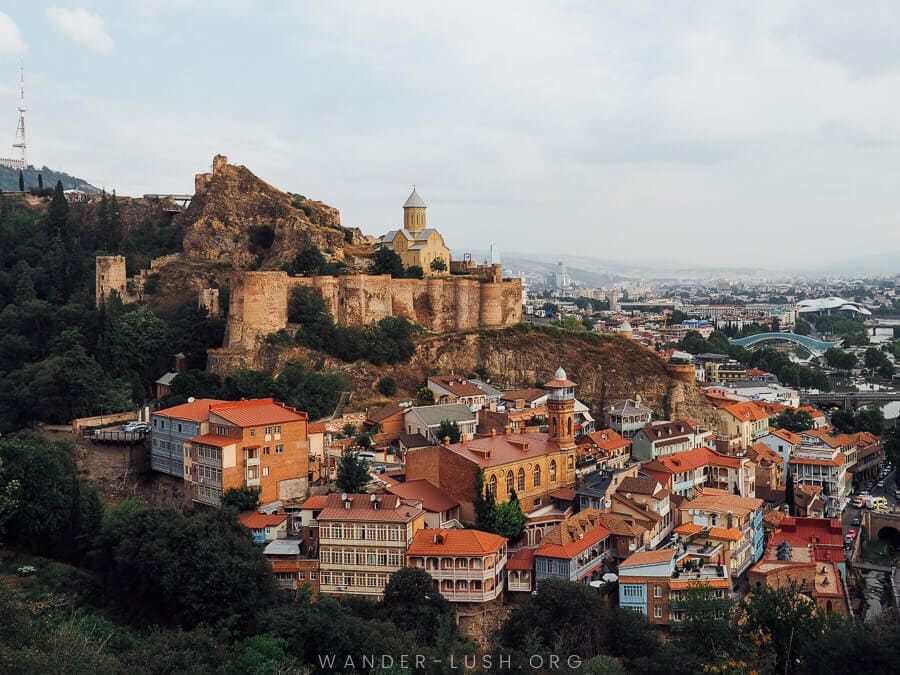
3. Timing your trip
In Georgia, when you travel can shape your experience as much as where you go, particularly when it comes to weather and access.
The best (and worst) times to visit depend on the region
Georgia’s climate varies dramatically by geography, and there is no single ‘best’ month that works for the whole country. Weather, crowds and costs look completely different depending on whether you’re in Tbilisi, the mountains, the Black Sea coast or the wine region.
Peak summer is the period most likely to disappoint first-time visitors in my opinion. It is the high season for international travel, and when temperatures rise (and air quality worsens) in cities like Tbilisi, locals intuitively head en masse to the coast or villages. This puts pressure on transport and accommodation nationwide, and prices rise accordingly.
By contrast, shoulder seasons are where Georgia really shines. Late spring (after Orthodox Easter, once the rains ease) brings mild temperatures, wildflowers, and far fewer crowds, making it ideal for early season hiking and sightseeing. Autumn (mid September to early November) is another excellent window, with beautiful colours, grape harvest celebrations, and a lively atmosphere. If you value flexibility and spontaneity, these periods are far more forgiving than summer. Winter can also work well for a Tbilisi-focused city break, or of course for a skiing holiday.
→ For more insights, see my month-by-month guide to Georgia.
Key takeaway: There is no single best time to visit Georgia – timing depends entirely on where you’re going. Late spring and autumn are my favourite times to travel, while peak summer is best avoided unless your itinerary revolves around hiking.
Some mountain areas are only accessible for a short window
Many of Georgia’s most celebrated mountain regions – including Tusheti, Khevsureti and Upper Adjara – are realistically accessible for only a few months of the year. Other regions such as Racha are accessible, but with reduced services in the off-season, while Kazbegi, Svaneti and Bakuriani remain open year-round – weather and road conditions permitting.
In general, the reliable window for mountain travel runs from late June to early October, with July-August offering the most stable conditions for both hiking and road tripping. Even then, conditions can change quickly and road closures do happen. GeoRoad is a good place to check for updates.
Key takeaway: Be sure to align your itinerary with what’s actually realistic at that time of year. Check road conditions before you set out, and be prepared to adjust your plans if the weather is not on your side.
Festivals are worth planning around, but dates are fluid
Georgia has a packed festival calendar, and timing a trip to coincide with a celebration can add enormous depth to your experience. From religious holidays to regional showcases and seasonal events, festivals are one of the greatest joys of travelling here.
That said, festivals in Georgia don’t always operate on a fixed or highly publicised schedule. Dates often shift from year to year, and detailed programs are sometimes announced at the last minute. Religious observances and folk festivals that follow the Orthodox calendar are easier to plan around.
Rtveli (the wine harvest) in autumn is absolutely worth travelling for. Other events are better avoided unless you’re prepared for traffic delays, especially around major pilgrimage sites.
Key takeaway: Georgia’s festivals are abundant and rewarding, but dates and details can be fluid. Plan with flexibility, and treat festivals as a bonus rather than a given.
How far in advance should you book?
Last-minute planning is the norm in Georgia, and supply still outstrips demand in most arenas. Outside peak summer season, accommodation and transport are easy to arrange at short notice, and even in July and August there is usually room to be spontaneous.
The main exception is in high-demand mountain regions and on popular trekking routes (especially Mestia-Ushguli), where there are a limited number of beds. Small boutique hotels also tend to fill up quickly, so if you have a specific property in mind, it’s best to book early. Larger hotels often offer good last-minute deals, especially in shoulder season.
As a general guide, you should look to book:
- Hotels & guesthouses: 3-6 months in advance for peak summer
- Hire cars: 3-6 months in advance
- Train tickets: As soon as tickets go on sale (usually ~3 weeks in advance)
- Private drivers: 5-7 days in advance
- Restaurants: Most do not require a booking – if they do, 3 days in advance max
- Marshrutka vans: Cannot be pre-booked – pay on the day
Key takeaway: While last-minute travel is still very possible in Georgia, accommodation and transport can fill up quickly in summer, so some advance planning is advisable for peak season and high-demand areas.
4. Transport & getting around
Most transport issues visitors encounter in Georgia come down to mismatched expectations.
Georgia is small, but getting around is not always easy
First-time visitors often assume that because Georgia is so small, getting around must be quick and straightforward. In reality, overland transport is fragmented and (naturally) primarily designed for local needs, not tourist itineraries. Journeys often take longer than expected (add 20-30% onto whatever Google Maps says), and direct connections don’t always exist.
Most long-distance travel relies on a mix of trains, marshrutka minivans and shared taxis, each with clear limitations. Trains are comfortable and affordable, but coverage is limited to the west, and journeys are slow by international standards.
Marshrutkas or fixed-route minivans form the backbone of Georgia’s road transport network. Larger coach buses do exist, but they’re relatively rare and tend to operate only on heavily travelled routes, such as between Kutaisi Airport and Tbilisi. Like most people who travel here, I have a love–hate relationship with marshrutka vans. They’re cheap and widespread, but typically uncomfortable. Being wedged into the back of a van in summer with no air conditioning while the driver barrels down the road is not unusual.
There is no centralised system for bus schedules or ticketing, which makes reliable information difficult to come by. (A large part of my work has gone into filling that gap with up-to-date transport guides.) As mentioned, reforms aimed at shifting longer journeys onto coaches were expected in 2026, but have now been postponed until at least 2027.
Key takeaway: Georgia’s overland transport system isn’t centralised or tourist-oriented. Expect limited direct routes, variable schedules and longer travel times – be flexible and avoid tight connections.
Road safety is not to be taken lightly
Official statistics show that road accidents and fatalities increased by 20% in 2025, continuing a long-standing pattern that places Georgia among the higher-risk countries in the region for road safety. There are many factors at play here, but a lot of the problem is down to the reckless driving style.
Speeding, aggressive overtaking, filtering to create unofficial lanes, and passing on blind corners are all common in Georgia, including on narrow, windy mountain roads. This is something I’ve become increasingly conscious of myself. I no longer have the stomach for long marshrutka journeys, and even short taxi rides in Tbilisi make me nervous.
When organising transfers, day trips or tours, road safety should always factor into your decision-making. Low-cost operators often prioritise volume over safety. Night driving is a hard no.
Seatbelts are only mandatory for the driver and front-seat passenger – but for obvious reasons I highly recommend buckling up if you are in the back seat.
Key takeaway: Road travel in Georgia requires heightened awareness. Choose transport providers carefully, avoid travelling after dark, and never get into a vehicle if you suspect the driver has been drinking.
Self-driving isn’t nearly as bad as some people make out
Given how challenging Georgia’s road culture can be, I’ve come to realise that I much prefer having control over how and when I travel. Buying a car is one of the best decisions we’ve made: as well as opening up more travel opportunities, self-driving allows you to slow down and opt out of situations that feel unsafe – something you can’t always do as a passenger.
If you’re confident behind the wheel and have prior experience driving abroad, then I say go for it. Here is my Georgia Road Trip Itinerary for inspiration!
Car hire can be disproportionately expensive in Georgia if you go through international brands. The Local Rent platform connect travellers directly with smaller rental companies, usually at significantly lower prices. I used this company constantly before we bought our own car.
→ In this guide, I unpack the ins and outs of driving in Georgia.
Key takeaway: Self-driving is the best way to explore Georgia if you want flexibility and independence. Renting through a local agent is far better value – but only consider hiring a car if you’re a confident, experienced driver who’s comfortable with unpredictable road behaviour.
GoTrip is ideal for long or scenic journeys
If you don’t want to drive yourself but also have no desire to spend hours in a fast-and-furious marshrutka, there’s a very good middle option in Georgia: GoTrip.
GoTrip is one of the most useful services I’ve come across in all my travels, and something I’ve personally relied on for years. I wish every country had a GoTrip (currently the Georgian-operated service is available here and in Armenia). You can read my honest write-up here.
Essentially the platform works like a long-distance Uber: you enter your route, select a driver and vehicle based on reviews and credentials, and lock in a fixed price upfront – no negotiation required.
The real advantage is flexibility. You can stop whenever and wherever you want, making it ideal for routes with lots of viewpoints or places of interest such as the Georgian Military Highway. Pricing is transparent and very reasonable, often significantly cheaper than hiring a driver ad hoc on the street, with the added reassurance of accountability and third-party support.
→ Visit the GoTrip.ge website and use their Trip Planner to explore routes around Georgia.
Key takeaway: If you’re not self-driving, consider hiring a car with a driver for longer journeys or mountain routes. It’s safer, more comfortable and far more flexible than marshrutkas.
Domestic flights in Georgia
Domestic flights in Georgia connect a very limited number of destinations, including Tbilisi (from Natakhtari), Batumi, Kutaisi, Mestia and Ambrolauri (Racha). Services are extremely limited, and travellers should not plan an itinerary around them.
Vanilla Sky is the only domestic carrier operating at the moment. Tickets are notoriously difficult to book, and flights are operated by small Let L-410 turboprop aircraft flying under visual flight rules – meaning departures depend on visibility rather than instruments. As a result, flights are frequently delayed or cancelled on the day due to changeable mountain weather.
Key takeaway: Domestic flights in Georgia are best treated as a bonus rather than a planning tool – routes are limited, tickets are hard to secure, and weather-related cancellations are common.
5. Safety in Georgia
Off the roads, Georgia remains a very safe destination – but like anywhere, it pays to understand the local context.
Georgia is very safe, but common sense still applies
Statistically and anecdotally, Georgia is an extremely safe country for travellers. Violent crime is rare, and tourists are seldom targeted. Tbilisi feels safe at all hours, which is not something I can say about many other capitals. As long as you exercise basic common sense, most visitors experience no safety issues at all.
That said, petty crime and scams do happen, particularly in areas that cater heavily to tourists. Always keep an eye on your belongings (common sense!), and always ask for a price before committing to a purchase at markets or even in restaurants/bars. Taxis are definitely the most problematic area – which is why using a taxi app in cities, or booking drivers through your accommodation in smaller towns and rural areas, is so important.
There is also a well-known bar scam in Tbilisi and Batumi to be aware of. A stranger – usually someone you met on a dating app – invites you for a drink at a certain venue, then pressures you to pay an outrageously inflated bill. Be cautious when accepting invitations from people you don’t know, suggest meeting at a place of your choosing, and avoid bars that don’t appear on Google Maps or have no reviews. Unless a venue is brand new, a lack of online presence is usually a red flag.
One area travellers don’t need to worry about is corruption. Georgia undertook a major anti-corruption drive in the early 2000s, and it was largely successful. Today, police corruption is extremely rare, particularly where tourists are concerned. Attempting to bribe a police officer is a serious offence.
Key takeaway: Georgia is very safe for travellers, but basic awareness applies. Use taxi apps, avoid dubious venues, and be cautious with unsolicited invitations.
Georgia borders Russia – a reality that shapes the country, but not day-to-day travel
Georgia’s geography is fixed, and so is its history. The country shares a long border with Russia and has a complicated, often painful relationship with its northern neighbour. This context matters politically and emotionally, but for travellers, it rarely affects day-to-day activities or safety.
There is no heightened risk associated with travelling in the country because of the border itself. Large stretches of the border lie in high mountain terrain, so you wouldn’t simply wander across by mistake. As long as you stick to established routes, obtain the appropriate permissions for visiting border zones and carry identification with you, then there is little to worry about.
The separatist regions of Abkhazia and Samachablo (South Ossetia) cannot be legally entered from Georgia. You should give these areas a wide berth, but their existence does not pose an inherent risk to visitors. Many of Georgia’s most popular destinations – including its premier ski resort, several hiking areas, a section of the coast, and not to mention a stretch of the main east-west highway, the E60 – lie close to the administrative boundary lines, yet remain fully accessible and safe for tourists.
Key takeaway: Georgia’s proximity to Russia is an inescapable part of its reality, but it does not define the travel experience. As with travel anywhere, it’s sensible to stay informed and check official government advisories before departure and during your trip.

6. Day-to-day realities
On a lighter note, day-to-day life in Georgia comes with a few practical quirks that are easy to adapt to once you know what to expect.
Adjust your daily rhythm & mealtimes
Georgia is late to rise, particularly in the cities. Mornings are quiet, businesses open late, and the days stretch well into the night, especially in summer.
Breakfast culture is a relatively new phenomenon, and thankfully there are now a good number of cafes that cater to early risers. Banks open at 10am, as do most shops and museums. Peak hours are from around 9am, and public transport is always very busy around 7-8pm on weekdays.
One advantage of this: Most hotels and guesthouses have a 12pm midday check-out time.
People tend to eat lunch and dinner a little later. The vast majority of restaurants open for lunch and keep cooking until late without an afternoon break, making it easy to grab a meal at almost any time of day.
In terms of a weekly rhythm: most businesses are open seven days, while most museums and heritage sites have Mondays off. Sundays are business as usual in Georgia.
Key takeaway: Don’t plan early starts around shops or cafes. Have breakfast at your accommodation where possible, save museums and galleries for the afternoon, and use mornings for outdoor activities or walking – especially in Tbilisi.
Take listed opening hours with a grain of salt
Google Maps is not always reliable: businesses move, adjust their hours, close temporarily or reopen under new management without updating their listings. It’s not unusual to arrive somewhere marked as ’open’ only to find it no longer exists.
Social media is usually more accurate as business owners update their Facebook or Instagram pages more consistently. This is also where owners are most responsive if you want to check if a place is actually open or make a reservation.
Finally, be aware that venues may open later than advertised or stop serving food unexpectedly – particularly if there’s a power or water outage. This is simply par for the course.
Key takeaway: Treat listed opening hours as a guide, not a guarantee. Check social media where possible, message ahead if something is important to you, and always have a Plan B.
Georgia is a physical destination
Georgia involves more walking, stairs and uneven terrain than you might anticipate. Broken pavements, steep hills, stairs without handrails and limited step-free access are common, even in Tbilisi. Being outdoors, moving around, actively exploring – these things are central to the Georgia experience, and infrastructure hasn’t necessarily developed with universal accessibility as a priority.
This became most clear to me when I travelled around with my dad, who found daily sightseeing quite physically demanding. Travellers with mobility issues, injuries or lower fitness levels may tire more quickly, so planning shorter days and using taxis where needed is key.
Key takeaway: Travelling in Georgia is not effortless. Pace yourself, plan conservatively, and don’t underestimate the physical demands of getting around.
Understand what a ‘guesthouse’ really is
Guesthouses are closer to a homestay than a conventional hotel, and are a common form of accommodation in rural Georgia. When I first visited in 2017, staying in a guesthouse almost always meant daily interaction with the host family: eating together, drinking wine, sometimes sightseeing or being invited to family events. As tourism has grown and platforms like Booking have professionalised the sector, that experience is now less common in my experience.
In smaller towns and villages, guesthouse owners can act as fixers, organising taxis and drivers, phoning ahead to reserve seats on marshrutkas, or helping you navigate logistics that would otherwise be difficult. If you’re travelling on the fly, staying at guesthouses is a good way to go.
Key takeaway: Guesthouses are still the crux of rural accommodation in Georgia, but expectations need updating. Some feel like homestays, others like small hotels. Guesthouse owners are an amazing source of local information, but personal interaction is no longer guaranteed.
Food culture & dietary needs
One thing that will never change is Georgia’s incredible food scene. It is far more nuanced than just khachapuri and khinkali – every region has its own dishes, and places like Samegrelo and Meskheti in particular boast very distinct cuisines.
A large number of Georgians fast for religious holidays, and because of this, the vast majority of restaurants, cafes and bakeries offer a ‘fasting menu’ (Samarkhvo), with items that are free from animal products.
While vegetarians and vegans can eat well, gluten-free and allergy-specific diets are less widely understood. With wheat flour, walnuts and dairy so deeply embedded in Georgian cooking, it can be a challenge. (As a sweet-tooth, my biggest issue is the lack of Georgian desserts!) Clear communication goes a long way here, especially at guesthouses where meals are prepared at home. If you have specific requirements, give plenty of notice and adjust your expectations.
Halal food is increasingly available in Georgia, and travellers will now find a fair number of eateries in Tbilisi, Kazbegi, Kakheti and other popular hubs.
In terms of general eating out, Georgian cuisine is designed to be shared, and meals are always served family style. English-language menus are standard. Service is often staggered, and plates may come out in an awkward order. Portion sizes are consistently generous, and over-ordering is common. It is not offensive to leave food on your plate. Take-home boxes are always available.
Key takeaway: Vegetarians and vegans will eat well in Georgia, but strict gluten-free or allergy-based diets require flexibility and advance notice. Portion sizes at restaurants are generally large, representing good value for money.
Tap water is generally safe to drink
Can you drink the tap water in Georgia? This is always the subject of debate among expats. Georgians love their spring and mineral waters (e.g. Borjomi), and for the most part, tap water is of a similarly good quality. Nine times out of 10 when you’re travelling in rural areas and small towns, it will be safe to drink the tap water.
Many people choose not to drink the tap water in Tbilisi. In this case it’s more about the quality of the pipes than the water itself. If in doubt, check with your host and switch to bottled water if you have any issues.
If you want to feel like a local, carry a reusable water bottle when you’re travelling so you can fill up at mountain springs and mineral geysers. This is a very popular pastime in Georgia, and you’ll often see springs on the roadside or in popular tourist areas.
Key takeaway: For the most part, tap water is safe to drink. If in doubt, locally bottled water is readily available and affordable.
Toilet talk
Public toilets are fairly widespread in Georgia, and are a mix of Western-style and squat (Asian-style) toilets. In tourist hubs, the fee to use public facilities is normally 1 GEL, sometimes payable by card only in Tbilisi. In bus stations and rural locations, fees are typically 20-50 tetri, so it’s worth carrying some coins with you.
Cafes, restaurants and shops are very relaxed about letting you use their facilities even if you are not a customer – far more so than in many other countries. Petrol stations along major highways are also a reliable option.
Toilet paper can be flushed in Georgia unless there is a sign indicating otherwise.
Key takeaway: Flush away. Carry coins for using public bathrooms outside major cities.
Be prepared for street dogs
Georgia has a large population of free-roaming street dogs. In the capital alone, estimates put the number at around 30,000. City dogs are generally calm, accustomed to people and rarely aggressive towards humans, though they can be territorial and occasionally hostile towards each other.
You’ll notice that many dogs have a coloured plastic ear tag. This indicates that the dog has been registered, vaccinated (including against rabies) and sometimes neutered. While this system isn’t perfect, it does mean that the majority of city dogs are monitored and pose a low risk to people.
For animal lovers, the sheer number of dogs can be confronting. Many are informally cared for by the community – it’s common to see food bowls and makeshift shelters – but some animals are clearly struggling. If you encounter a dog that appears injured or in urgent need of help, organisations such as Dog Organization Georgia may be able to advise or assist.
Outside cities, particularly when hiking, shepherd dogs may behave differently, especially when they are guarding their livestock. Keep your distance, and if you encounter an aggressive dog, keep still and call out for its owner.
Key takeaway: Street dogs are a part of daily life in Georgia. Most are vaccinated, tagged and used to people, but it’s wise to stay alert. Consider a rabies vaccination before travelling, especially if you plan to hike or spend time in rural areas.

7. Culture, etiquette & social norms
Georgia’s social norms are rooted in tradition, and a little cultural awareness goes a long way.
Georgia is more conservative than you might think
Georgia is, broadly speaking, a socially conservative country, particularly outside the major cities. Public displays of affection are uncommon, and being visibly intoxicated in public is viewed as shameful (more on drinking culture below). At the same time, the atmosphere is relaxed, and people tend to be forgiving of missteps, especially where visitors are concerned.
That conservatism becomes non-negotiable at religious sites. Orthodox churches, monasteries and convents – as well as mosques – have strict dress requirements. Men must cover their knees and shoulders (no shorts or singlet tops). Women are expected to cover shoulders and knees, and wear a head covering. In some rural settings, a long skirt is required rather than fitted trousers. In practice, a long jacket zipped up can suffice.
You can borrow items at most churches, but for hygiene and convenience, women should carry a lightweight scarf of their own. Keep in mind that many major tourist attractions – including Vardzia, and some archaeological complexes – contain active churches, and appropriate dress is required to enter. Visitors are expected to be quiet and respectful at these locations, and photography is often prohibited inside.
While there is no formal dress code outside religious settings, people generally err on the conservative side, especially in rural Georgia. Shorts are uncommon outside resort areas, and covering up in villages is an easy way to be respectful.
Key takeaway: Dress expectations in Georgia are conservative, especially outside cities and at religious sites. Pack clothing that covers shoulders and knees, carry a light scarf if you plan to visit churches, and adjust how you dress in rural areas.
Common social faux pas
Georgians are very forgiving, and visitors are rarely judged for getting things wrong. There are very few hard-and-fast social rules, though certain superstitions – such as going outside with wet hair – may still draw comment. (Hairdryers, by the way, are always provided, even the smallest of guesthouses. Maybe that’s why!)
A few pointers:
- Don’t interrupt a toast, especially at a supra (formal sit-down feast).
- Don’t eat khinkali with a knife and fork, always use your hands.
- Avoid blowing your nose loudly in public, it is considered impolite.
- Don’t whistle indoors, as it’s believed to bring bad luck.
- Avoid public displays of affection, which are considered inappropriate.
If you’re invited to someone’s home, it’s polite to bring a small something such as sweets, fruit or flowers – but avoid gifting bottled wine, as your host will likely prefer to serve their own. Taking your shoes off when entering a home is not a strict rule in most parts of Georgia.
Key takeaway: Outside of religious sites and supra feasts, good intentions matter far more than perfect etiquette in Georgia.
Money is often handled indirectly
Cash transactions in Georgia are often handled at the end of an interaction rather than upfront, and it’s sometimes done in a very subtle way. Guesthouses, for example, rarely ask for cash upfront. If you’re planning an early departure, it’s best to settle your bill the night before to avoid an awkward interaction – I’ve been caught out with this on many occasions.
Similarly, haggling isn’t a universal norm. Prices are fixed in shops, cafes and restaurants, while some flexibility exists in markets. When in doubt, it’s fine to ask politely.
Key takeaway: Pay later unless requested, and don’t assume prices are negotiable.
Interacting with locals
English is widely spoken in Georgia – particularly among under 35s and anyone working in tourism. Outside major urban centres, however, English proficiency (and/or confidence) drops off quickly, and having more in-depth or spontaneous interactions becomes harder without Georgian.
Language carries exceptional weight in Georgia. As one Georgian once put it to me, state, religion and language form a kind of holy trinity. The Georgian language has monumental significance as a marker of identity and sovereignty, and unlike many other post-Soviet countries, Georgia retained its language through periods of intense pressure. Making even a small effort with Kartuli ena goes a long way. Learning a few basic words or phrases is not only practical, it’s also seen as a sign of respect, and locals tend to respond warmly to it.
Georgians are generally open and curious, though conversations often warm up gradually. Personal questions are not considered intrusive (age, marital status, children… why don’t you have children?, when are you having children?), but money is rarely discussed. Politics and religion are better approached with sensitivity rather than as opening topics.
Russian is widely understood, particularly among the older generations, but it can be a sensitive subject. Starting with English is the most respectful approach, especially in cities. If you do speak Russian, using it politely and without assumption is generally fine. It’s common for Georgians to default to Russian when addressing foreigners – this happens to me all the time.
Key takeaway: English will get you pretty far in Georgia, but it won’t get you everywhere. Learning a few words of Georgian shows respect, breaks the ice, and often leads to smoother interactions.
Alcohol plays a visible role in social life, but participation is always optional
Alcohol, particularly wine, is an important part of the culture in Georgia, and is woven into practices such as the supra feast. Drunkenness is not at all the goal – it’s more about toasting, symbolism, and ritual.
That said, people do sometimes drink to excess, and visitors may feel pressure to participate. But you are never obliged to drink. Politely declining is acceptable, and giving a simple reason (even if it’s a white lie – ‘I’m taking medication’) is usually respected. Winery visits in Georgia are about culture and history as much as drinking, and non-drinkers are always welcome at wineries.
Key takeaway: Wine is woven into Georgia’s social rituals, but participation is not mandatory.
Travelling with children in Georgia
I regularly encounter families of all sizes and with children of all ages travelling comfortably around Georgia. Culturally, children are openly adored, and travelling with a child often softens interactions. Friends with young children have often warned me that people sometimes overstep personal boundaries when it comes to showing affection to little ones, so this is something to be aware of.
Supervision matters: steep drops, uneven surfaces and limited barriers are common at historical sites, for example. Accommodation is another consideration. Some hotels and guesthouses aren’t set up for children, particularly in older buildings, so it’s worth asking about stairs, balconies and room layouts in advance.
Key takeaway: Georgia works well for family travel, with plenty of kid-friendly activities and good medical care, but attentive supervision and planning are required.

8. Photography & drones
A few tips for the content creators.
Photography is welcome in most settings
Georgia’s approach to photography is very relaxed, and cameras are fine in public spaces and on the street. Unlike in some other post-Soviet countries, you are free to photograph marketplaces. People are usually relaxed about having their photograph taken in my experience, but it’s polite to ask first before taking a portrait.
Photography is restricted or prohibited at military installations, border areas and other sensitive sites – even if signage isn’t obvious. Some museums ban photography altogether, while others allow it without flash, so it’s always worth checking at the entrance. Many churches prohibit photography inside, and where it is allowed, visitors are expected to be discreet.
The Tbilisi Metro technically prohibits photography and filming. In practice, people (including me) sometimes get away with a quick phone photo.
Key takeaway: Photography is mostly welcome in Georgia, but restrictions apply at religious sites, museums, and on the metro.
Small drones don’t require a permit
In Georgia, it is legal to fly a drone, and small recreational drones under 250 grams do not require a permit from the Civil Aviation Agency to operate, provided you follow basic safety rules. I have been flying my DJI Mini for years without any issues. It’s rare to see ‘no drone’ signs in Georgia, but they do exist, especially at churches (including at Gergeti Trinity).
If you are travelling around the region, note that Armenia has similar drone regulations to Georgia, however you must apply for special permission to fly a drone in Azerbaijan. Without it, your drone may be held at the border.
Key takeaway: You don’t need a permit to fly a small recreational drone in Georgia, but you still have to follow aviation safety rules and avoid restricted areas.

Georgia Essentials
Here are the websites and services I personally use and recommend for Georgia. Check out my full list of travel resources for more tips.
TRAVEL INSURANCE: Insurance is now mandatory for all travellers to Georgia. Insure your trip with HeyMondo, my preferred provider for single-trip and annual policies. Get 5% off when you book with my link.
AIRPORT TRANSFERS: Most flights into Georgia arrive in the early hours. Airport taxis should be avoided at all costs. For ease, pre-book a private transfer from Tbilisi Airport to your hotel or from Kutaisi Airport to Tbilisi with my partners at GoTrip.ge.
SIM CARD: Magti is my preferred provider, with prices from 10 GEL/week for unlimited data. See this guide for all the details about buying a Georgian SIM card.
ACCOMMODATION: Booking.com is the most widely used platform in Georgia. Use it to find family guesthouses, private apartments, hostels and hotels around the country.
CAR HIRE: Find a great deal on a rental car in Georgia – use the Local Rent website to book through a local agent (prices start from $30/day).
PRIVATE TRANSFERS: GoTrip.ge is a terrific service for booking a private professional driver and car for the day. Use it for A-to-B transfers, a customised round-trip itinerary, or a multi-day trip. You can stop wherever you like for as long as you like without the fixed price going up.
DAY TRIPS & CITY TOURS: Use Viator or Get Your Guide to browse a range of day trips and city tours. For alternative itineraries with expert guides, I recommend Friendly.ge. Use the promocode wanderlush for 10% off.
WINE TOURS: For in-depth day trips to Georgia’s wine regions, I recommend Eat This! Tours. Use the promo code wanderlush for 5% off.
You might also be interested in…
- The ultimate Georgia itinerary: Four detailed & custom-designed itineraries
- Georgia Travel Guide: All of my 200+ posts plus my top travel tips
- Georgia travel tips: 25 essential things to know before you go
- Places to visit in Georgia: 50+ unique & underrated destinations around the country
- The best things to do in Tbilisi: Favourites, hidden gems & local picks
- 35+ best restaurants in Tbilisi: Where to eat Georgian food
- 15 best day trips from Tbilisi: With detailed transport instructions
- The best time to visit Georgia: Month-by-month guide to weather, festivals & events
I appreciate very much how comprehensive and easy to follow your posts are. Thank you so much for taking time to do these and sharing it with your readers. Cheers!
Thank you so much, Jem!
Hi, I’ve just read your travel guide by curiosity, just 2 days before leaving Tbilissi (the day after tomorrow), and after a 5 weeks trip here. I just wanted to tell you that it’s really good 🙂 It tells everything I’ve experienced during my stay ! I will definitely check your other guides for future trips in the caucasus ! Thanks.
Adrien
Thank you, Adrien! Glad I could help. Wishing you a wonderful trip!
Hi Emily, thanks so much for your detailed posts on Georgia. My husband and I are currently in Georgia as part of our honeymoon. Madloba!
Hello, thank you both! Great to hear that! I hope you’re enjoying your time here!
Hi Emily.
I just found this page after months of researching. Everything we need is on this page and is precise. We are also Australian and a family of six about to leave with a one way ticket to Europe, starting with Georgia first.
Glad you found me, Jos! Feel free to reach out if there’s anything else I can help with.
Safe travels!
Hi Emily and thanks for your amazing work! I’d like to ask you if to enter the country you need to provide any proof of vaccination, in specific I read that they may ask for proof of Polio Vaccine. do you know if this is correct? Thanks again!!!
Hi Pask, thanks for your comment!
Honestly I hadn’t ever heard this before, but I did some research and it does seem that an International Certificate of Vaccination might be requested for Polio if you are travelling from a high-risk area. I don’t know if/how this is enforced in practice.
I am not sure where you are travelling from, but if you are applying for a visa for Georgia, I would recommend reaching out to the consulate/embassy in your area for further guidance. If you are coming from the EU on the visa-free regime, then such a vaccination is not listed as an official requirement.
I hope this helps!
Hi Emily,
Thanks so much for your incredibly helpful blog. My husband and l are looking forward to returning to Georgia later this year – for the first time in 21 years! the country certainly seems to have changed a lot since our last visit.
This time, we will be accompanied by our 13 year old daughter. Do you know if she would also be expected to cover her hair/wear a long skirt in churches?
Thanks so much and keep up the good work!
Hi Heather, fantastic!
Yes, normally she would be expected to observe the same dresscode. Some churches might be more relaxed about it, but it would be polite and much appreciated.
I’d be very interested to hear your impressions of Georgia all these years later! Wishing you a wonderful trip!
Thanks for the reply Emily – I thought that might be the case.
Such a helpful and honest overview of Georgia! I love how you mix practical tips with real-life insights it makes planning a trip feel much less overwhelming. Definitely a must-read for anyone visiting for the first time.
Thank you, Sabin! Glad I could help!
Hi Emily, thank you for this amazing guide! We’re planning our visit for this summer and prefer to do a roadtrip. However some of the main roads like the E60 or E117 are in some spots quite close to the South Ossetia border. Do you know if it is still safe to use those roads?
Hi Flore – the E60 is Georgia’s main highway. There is no issue there. I address this explicitly under point 5 in this post.
Thanks for this list, very usefull.
Planning to go next summer with a rental car, so time enough to prepare. You advised Local Rent. They mention pretty much prohibited roads for rental cars. I want to go all the way up in Truso valley by car, they forbid it. But there are also companies who say it’s fine, with the right car (even Tusheti is allowed with the right car)
Yes, that’s why I also recommend alternative companies such as Martyna z Gruzja. The Truso road is in bad condition and collapsed this summer, leaving people stranded. The Tusheti road has been much improved in recent years, but you still need a robust car.
These are ‘off road’ routes that are not suitable for all cars, hence why some companies (not just Local Rent, but all the major names) prohibit driving there.
Go for one of the specialty rentals if Truso is on your list. Please check conditions before you set off. Enjoy the drive!
I’ve been curious about Georgia for a while, and these tips make it feel a lot more approachable.
Hi Emily. We’ll be arriving at Tbilisi airport at about 1 AM in September. Which travel option would be safe for traveling to Tbilisi city centre at that time of the night?
Thanks
Rajiv
Hi Rajiv – transfer or Bolt taxi. Do not use the airport taxis.
Here is a full guide: https://wander-lush.org/tbilisi-airport/
Hi again Emily. I get that airport taxis are a no-no. But are the private transfer & Bolt taxi options safe for travel at 2 AM in the night?
Thanks
Hi Rajiv, yes absolutely. Those are your only options at that hour. Bolt works 24/7.
Thanks Emily. And another big thank you for putting together this marvellous guide
The metro will be used heavily the first day (photographing station architecture and art installations). Can the daily pass be used that frst day for the 20 ride cap and then reloading the card for the remaining days which will be used only several times? Is photography permitted in the metro? I’m in the process of trying to secure permission for Baku (not allowed). Have a wonderful week.
Hi Bob, photography is not allowed in the Tbilisi metro – although they are nowhere near as strict as in Baku.
Most stations only have one platform, and you can transfer lines without tapping on again.
I think that should work – you could do a daily pass then reload with a 3-day pass for example.
Thanks again! By the way, how is currency exchange handled? Is withdrawing cash from an ATM the only way to get local currency, or are there also places in the cities where you can exchange your money (euros, dollars, etc.) for local currency — maybe even with a better exchange rate than the banks?
Hi Fred, yes there are currency exchanges everywhere but I recommend you use a reputable office such as Rico Credit.
Hi!
First of all, I want to compliment you on all the resources you provide—they’re a true encyclopedia for preparing a trip to Georgia. The thoroughness and 360-degree preparation are truly unmatched!
I’ll be traveling to Georgia from July 31st to August 21st, 2025. We’re two travelers and our plan is to explore the country backpacker-style, discovering every shade of nature and culture it has to offer.
With that in mind, I was wondering: is it necessary to book hostels/guesthouses in advance—whether in cities or mountain villages—or is it usually possible to find accommodation on the spot?
Hi Fred, thank you very much!
If you are flexible, you can quite easily book most places on the go. The only exception would be very small villages, such as those on the Mestia-Ushguli trek. In 99% of other places supply outstrips demand, so as long as you are not too particular, you can find a place to stay.
I hope this helps!
Wow! Just brilliant and so detailed. I mean not just this one but all your posts on Georgia. Just reading your blogs is good enough to get yourself fully covered and be aware about everything that is Georgia! Thank You so much! Travelling to Georgia for 7 days later this week and really looking forward to it!
Thanks very much, Binit! Wishing you a wonderful trip!
Emily
Your advice is so valuable and the detail on every subject is so good.
You are a good ambassador for Georgia
Thank you so much, Joanie! I appreciate that.
Hi Emily,
Thanks again for your amazing info about your adopted country!
We hope to arrive from Turkey via the Sarpi border and then take a marshrutka to Batumi. Is there an ATM at the border crossing, please, as we’ll need cash to pay for the Marshrutka? We’d prefer to have Lari before we leave Australia, but can’t find anyone we can buy it from!
Cheers,
Hilary and Danny
Hi Hilary and Danny, yes definitely you will find ATMs and exchanges at the border. I would recommend jumping on the city bus – you can tap on with any international card and pay the fare that way.
Hi Emily,
Your info is the best! But we don’t know anything about the mysterious toilet situation in Georgia. Do we flush the paper or bin the paper? There aren’t any signs in our guesthouses, so just wondering if you can help us?
Hi Alexandria! I should add this to the list. Normally flush is fine unless there is a sign indicating otherwise!
Hi Emily,
Thank you for these very useful tips. I have previously visited Georgia but found these tips very informative and useful for my return trip to Georgia in 2025! Keep up the good work!
Regards – James (South Africa)
Thanks very much, James! Glad to hear you are returning to Georgia!
What a great site with so much inspirational info. I really appreciate the amount of work you’ve put into this. I’m planning a business visit in September and it has inspired me to stay longer and bring my hiking boots!
Terrific to hear that, Gareth! Thanks for your comment.
Thanks for a fantastic guide to Tbilisi and Georgia, it has been priceless help for our first visit this last week!
Thanks so much, Johannes!
Hi Emily,
Fabulous article. This and the rest of your site is helping us considerably with planning our trip to Georgia this September. We love the detail you go into. Thanks heaps.
Thanks Ken, very happy to hear it!
Hi Emily,
First of all, I would like to thank you for sharing so many updated tips for a great discovery of Armenia and Georgia. Your website is definitely my 1st source of information for my oncoming trip to both countries.
From what I read on your website, you are away visiting Albania, etc at the moment, but could you possibly tell me if there is a train between Tbilisi and Yerevan on Monday, Oct 23. With the changes in the timetable, it is difficult to know for sure which is which between odd and even days. I asked the hostel people in Tbilisi, but they did not bother to check and said they did not know…
Looking forward to your answer.
Have a great time in the Balkans,
Guy (France)
Hi Guy, the timetable does indicate that there is a train on October 23 (Tbilisi to Yerevan). If you are in Tbilisi now, I would pop down to the station to check and buy tickets if you can.
Thanks very much for the well wishes. Safe travels!
Mrs Emily, I would like personally to thank you for this amazing blog. It has really helped me organise my trip to Tbilisi this November!
Thanks Eirini! So happy to hear that. Have a wonderful trip to Georgia!
Wow, this is a bunch of information…. It is not easy to find good information about Georgia as it is still an underestimated holday destination .
Thanks Jos! Glad you found it helpful.
Hello Ms. Wander Lush, your blogs have been my BIBLE for planning my trip to Georgia this September. Thank you for all the information for any possible question I had in mind. Really looking forward to the holiday!
Thanks Vinodini, so glad the site has been helpful. Wishing you a terrific trip!
Hi Ms Emily,
Me and my friend will be travelling to Georgia and Armenia this coming Friday. And I’m so lucky to find your blog about these two countries which is very informative and useful for our travel plans. We we’re able to arrange our trip smoothly because of your blog as our reference…such as taking overnight train for Armenia trip, group tours, souvenirs shops, food and budget tips. Keep it up and thank you so much.
Hello Jasmin, that’s so great to hear! Thank you for your comment. I hope you both have a wonderful trip! Safe travels!
Hi again Ms Emily.. just quick question, which one they prefer for currency exhange, euro or in dollars? Thanks again.
Hi Jasmin, it is better to withdraw local currency (lari) directly from an ATM if possible.
wow couldn’t find a better blog about Georgia,we are on our initial stage to plan a trip to Georgia from India and we have got the perfect itinerary from this blog,thank you so much Emily for this amazing blog, going thoroughly in and out of it.
Thanks so much Suchi!
Wow! Such an elaborate post! I just bumped on this link and with the information given here it sounds so easy to me now. I might plan a trip soon but do you recommend coming to Georgia with a 15month old?
Hi Akanksha, thanks! Georgia is generally a family friendly destination, you just have to be aware of a few things such as road safety. But there are certainly lots of fun things for families to do!
Thank you so much for your insight! I plan on traveling there with a group in May, do you have any travel tips for groups of 10?
Hi Jasmin – transport will be your biggest consideration. Feel free to email me with any specific questions and I will try to help out.
Thank u for ur guidance. We should book red bus tour or should we visit the places by ourselves?
Can we get Halal food easily in Tbilisi?
Hi Imran – it’s really up to you, but in my opinion walking around Tbilisi is bliss so I think it’s much better to explore on foot. You’ll see a lot more! There are plenty of Halal restaurants in Tbilisi, especially around Aghmashenebeli Avenue and Marjanishvili Metro Station. Enjoy your trip!
DIDI MADLOBA
I just moved to Georgia and your tips are extremely helpful. Well done, informative and interesting. I am so glad I found your blog. Thank you!
Thank you Lucie! Welcome to Georgia!
thank you very much for information
I am planning to travel to Georgia, Armenia and Azerbaijan next Spring. I cannot eat gluten. Is this going to be a problem do you think?
Hi Fiona,
There will be limitations but I think you’ll be fine as long as you plan ahead. A lot of guesthouses can cater to dietary requirements. Lots of dishes in this region are veg and meat based.