Sri Lanka, the Island of Dharma, is associated with verdant natural landscapes and deeply rooted traditions. Ethnic and religious differences are sometimes a source of tension, but there’s also immense beauty in the island’s diversity.
If your Sri Lanka itinerary involves making a beeline for the nearest beach or national park, you’ll surely miss out on the richness and vibrancy of Sri Lankan culture. Don’t make that mistake!
Instead, as guest author Juliet suggests, you should take your time to explore the island, dipping into some of the different cultural pockets.
Be sure to visit Kandy, the country’s official cultural capital, and a few of the island’s most important pilgrimage sites. Participate in the island’s culinary traditions, learn about Ayurvedic medicine, and join a festival or two!
About the author: Juliet is a passionate traveller and full-time blogger at Live Your Dream TODAY. She motivates readers to travel the world by sharing her personal itineraries, unique impressions, lesser-known tips, and fun-packed destination guides.
Please note: This post contains affiliate links, meaning I may earn a commission if you make a purchase by clicking a link (at no extra cost to you). Learn more.
6 fantastic ways to experience Sri Lankan culture
Sri Lanka is a little gem on the tip of South Asia. Surrounded by the Indian Ocean, this sun-kissed country is rich in unique cultural activities and open for tourists all year round. Every traveller must have heard something about crazy Sri Lankan traffic or the delicious local food scene.
It’s almost unbelievable how much variety this relatively small island has to offer visitors. Whether it’s watching elephants in their natural habitat, visiting UNESCO sites or making rice and curry with a local family, everyone leaves Sri Lanka with a tonne of cherished memories.
The best time to visit Sri Lanka is from mid-October up until April. The rest of the year is known as Yala monsoon season, which brings a lot of rain and rough seas for the central and southern part of the country. However, this doesn’t mean you shouldn’t come! Just make sure you plan an alternative itinerary that covers the northern areas that are especially beautiful in summer.
Thoughtful preparation is important, especially if you’re not familiar with local customs. Take some time to read and learn from other travellers’ advice unless you want to experience full-blown culture shock in Sri Lanka.
1. Climb Lion Rock in Sigiriya

One of the best ways to start your Sri Lankan trip is to go hiking in Sigiriya. Visiting the ancient city and its fortress is the perfect way to embrace the old culture. The hike only takes two to three hours round-trip depending on your pace.
Sigiriya Rock, also called Lion Rock, is a UNESCO World Heritage Site and a must-see for culture-hungry travellers. It is the historical residence of the King Kashyapa I who strategically chose this hill as his capital. Although most of the territory is now ruins, there are still pieces either preserved or restored. For example, the Lion’s paws that frame the last pathway to the top.
First, you walk through the peaceful king’s gardens with its lakes, still-functioning fountains, and lovely greenery. The first carved stone stairs appear, and your climb begins! On the way up, you see different parts of what used to be a palace and a gallery of exceptional ancient wall murals. You might even pass by a few local monks making their pilgrimage.
Soon after King Kashyapa was defeated, Sigiriya went back to being a Buddhist monastery just as it was centuries before it was named the new capital. The site was used as a monastery up until the 14th century. During that time, it welcomed plenty of monks and pilgrims who carved poems and their impressions in beautiful frescos on the Mirror Wall. To this day, people come to see an ancient version of graffiti that expresses an appreciation for Sigiriya’s beauty.
Knowledgeable guides meet visitors near the entrance and can tell you all kinds of interesting stories about the king’s residence. Guides can show you the exact place of the ancient throne, won’t let you miss the real crocodile that lives in the lake, and will walk you up the stairs all the way to the top. Your guide might even reveal how many concubines the king had and how they spent their time!
As an alternative, you can hike Pidurangala rock. Located less than two kilometres away from Sigiriya Fortress, it offers a wonderful view of the Lion Rock. People often climb up to watch either sunrise or sunset; there are much fewer tourists at these times. The entrance price is 10 times cheaper, the trekking distance is shorter, and there is a tiny temple at the foot of the hill to see as well.
Although the path to Pidurangala is shorter, there are some rough patches along the way that some might find challenging. If you’re travelling with small kids, better stick to Lion Rock as it’s safer and has easy stairs all the way to the top.
2. Learn about Ayurvedic traditions at the spice garden in Kandy

There are many spice gardens around Sri Lanka, but this one is free to enter and is located in the heart of the country, in Kandy. This city is essentially the geographical centre of the island and a popular tourist spot that you can’t miss. You might want to stay for a few days to visit the temples, stroll along the lakes, attend a local cultural performance, and much more.
A spice garden is something totally unique that you won’t find anywhere else outside of Sri Lanka. It literally breathes Sri Lankan culture – you can smell it right from the entrance! It’s closely associated with Ayurveda, an alternative medicine that has been practiced in Sri Lanka since the 3rd century.
Ayurveda came from Northern India together with the first introduction of Buddhism, and was integrated into the existing Sri Lankan medicine system (Deshiya Chikitsa), forming a new approach that is still used to this day.
When you arrive at Kandy’s spice garden, someone will meet you for the free tour. You’ll see various spices growing on trees or from the ground, most of them used by Sri Lankans for generations to cure all kinds of illnesses and injuries. Now they are also being exported to serve people outside the island.
Your guide will tell you all about the different herbs and trees, for which medicines they’re used, and how much they can grow per year. You get to see the workers peeling cinnamon bark and others forming natural pills. During the tour, you might get to taste some traditional tea and even try some ‘magical’ Ayurvedic ointment (the effects are surprisingly fast!).
Watch how herbal mixtures and potions are prepared in huge tanks, and maybe opt for a relaxing massage using handmade oils or creams. At the end, you’re welcome to buy some products to take home with you – a perfect authentic souvenir to remember your time at the spice garden.
3. Go on an ethical elephant safari in Udawalawe National park
Sri Lanka is all about nature. The island’s flora and fauna is an integral part of local culture, and you can literally find wildlife on every corner. You haven’t really been to Sri Lanka until you’ve visited one of the country’s national parks.
Watching wild animals in their natural environment is an unforgettable experience. Where else can you see whole families of elephants coming to the lake for an evening bath, or dozens of water buffalos in one place having a blast together? Crocodiles chilling under the sun and a cheetah sleeping on a tree branch? A bunch of deer eating their lunch in the bushes and baby warthogs crossing the road?
You’ll never forget the feeling of seeing a baby elephant a few feet away from you playing in the mud.
Two most popular national parks in Sri Lanka that offer safaris and are both ethically organised to preserve habitat and protect the wildlife: Yala and Udawalawe. The first is located on the south-eastern edge of the island and is known for cheetahs. The second is a bit further to the west, and serves as a home to hundreds of native Sri Lankan elephants.
Besides the big mammals, the island has a few dozen animal and plant species that can’t be found anywhere else in the world. This alone is reason enough to consider adding a Sri Lankan safari with a well-informed local guide to your trip itinerary.
4. Attend a cooking class with a local family
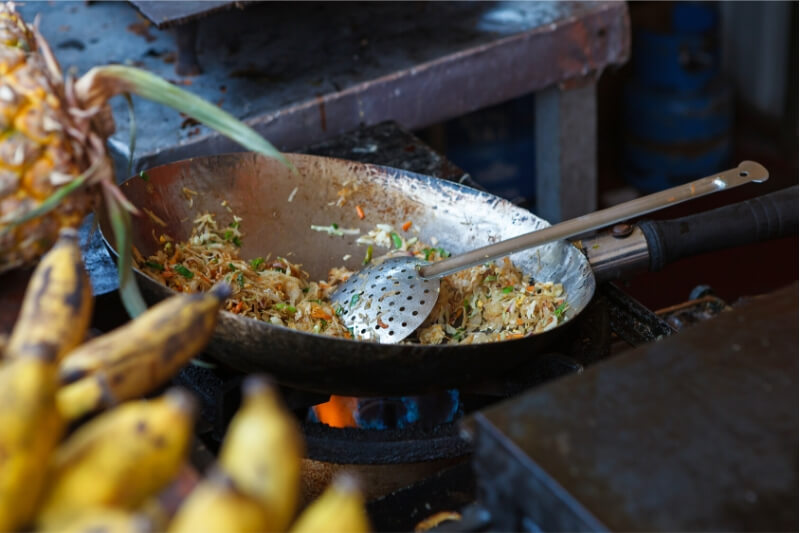
Every country has its own flavourful cuisine and traditional dishes, and Sri Lanka is no exception. Eating typical Sri Lankan food is a great experience indeed, but learning all about it from the inside is an entirely different thing!
This is where cooking classes come in handy. Get hands-on experience preparing Sri Lankan dishes the way locals do, and maybe even get your hands on a couple of traditional family recipes that have been followed for generations.
Opportunities for joining a cooking class present themselves in every city you visit, big or small. There are plenty of local chefs and home cooks alike who would love to share their skills and teach visitors their favourite dishes. They might even let you in on a couple of tricks along the way!
In most cases, Sri Lankan cooking classes involve preparing rice and curries. Rice has been a staple food here since the dawn of civilisation and remains part of Sri Lankan cuisine – although the years have brought a lot of variety into the side dishes.
If cooking rice and curries sounds somewhat boring, that probably means you’ve never had a good curry! Another reason to come to Sri Lanka: They know their curries.
Some hosts might take you to a local market to buy groceries for your class, which is another special cultural experience in itself. Watching vendors weighing out vegetables that you’ve never seen before and listening to the typical Asian market noise is a cool way to immerse yourself in Sri Lankan culture.
You might notice that you are treated differently in such places when you come with a local who knows the language and is familiar with the foods. Even if for a short period of time, you don’t feel like a tourist anymore – you are treated as a friend.
5. Visit Sri Lanka’s Buddhist temples

Buddhism is the main religion in Sri Lanka, and you feel its influence everywhere. You see carefully arranged shrines at forks in the roads, and hear the chanting from the nearest temple wherever you are staying.
Local temples are among the most popular attractions in Sri Lanka and most are open to tourists. There are plenty of them around the country and you can see a couple from almost every high point, including Sigiriya Rock and Pidurangala.
No matter what your religious beliefs are, visiting local temples is a nice way to peek into Sri Lankan culture and daily life. If you happen to be around on a Poya day, a public holiday that takes place every full moon, then there’s no better time to visit a temple. All the locals will be there singing, chanting, and paying their respects by bringing flowers and other offerings.
Consider visiting some rural temples in smaller cities and villages as well. Not only are they usually free of charge, but it’s here that you can see the most authentic rituals as locals come to worship Buddha and pray for their wellbeing without being intimidated by crowds of tourists.
6. Learn about tea traditions on a plantation

When you hear the name Sri Lanka, tea is most likely the first thing that comes to your mind. However, this wasn’t the case just 200 years ago.
Back in the 18th century, when Sri Lanka was called Ceylon and remained a British colony, the island was covered with coffee plantations. At some point a Scottish tea planter, James Taylor, introduced tea to Sri Lanka – but it wasn’t taken seriously until the coffee industry collapsed and something else had to take its place.
In the meantime, tea leaves were presented in the Botanical Gardens of Kandy merely as a unique plant.
There are plenty of online cultural activities you can do from home these days (including virtual tea tastings), but none come close to physically being somewhere like a verdant Sri Lankan tea field.
Watching tea leaves grow on huge plantations, smelling the distinctive aroma of what many stages later will become a cup of Sri Lankan tea, learning about the technical process of Ceylon tea creation… This is what travelling is all about.
Much of Central Sri Lanka’s highlands region is covered with tea plantations. When you come to Ella to see the famous Nine Arches bridge or climb Adam’s Peak, tea is all around you. You can’t miss it – unless of course you drive directly to the beach from the airport and stay there for your whole trip.
As long as there are plantations, there are also factories and workers to harvest and process the tea leaves. In Nuwara Elliya Estate, you’ll plenty of dedicated tea factories where you can join a free tour to see the machinery, witness the step-by-step process of tea creation, and ask all the questions you might have. You can even taste freshly brewed Sri Lankan tea and meet local workers when walking around the plantations.
Tea is something Sri Lanka is known for around the world, so don’t miss an opportunity to explore this side of the island.
Sri Lankan Culture Guide: Share it on Pinterest
You might also be interested in
- Local culture in Kerala, India
- Experience the culture of the Maldives
- Pakistani culture guide
- Fiji cultural experiences
More cultural travel inspiration
- World’s best destinations for cultural travellers
- 30+ amazing cultural experiences around the world
- Best cultural festivals around the world
- Best destinations for tea culture
- Best destinations for wine culture
- Unique food cultures around the globe
- My collection of cultural travel guides for 30+ cities and regions
- World’s best unique & underrated travel destinations
Sri Lanka is famous for its delicious food and also the herbs and spices. Sri Lanka has its own unique taste of spice which is widely used by all the families.