Take a deep dive into the Rainbow Nation’s history and heritage. Here are 6 Cape Town traditions every traveller to South Africa should try, as recommended by locals.
About the authors: Campbell and Alya have been traveling the world together since the day they met surfing in the Philippines in 2014, starting their travel blog, Stingy Nomads, a YouTube channel, and getting married along the way.
Please note: This post contains affiliate links, meaning I may earn a commission if you make a purchase by clicking a link (at no extra cost to you). Learn more.
Cape Town traditions
South Africa is widely known as the ‘Rainbow Nation’, a name that accurately reflects the complex cultural and ethnic diversity of the country. There is no better place to experience this cultural melting pot than Cape Town, one of the most beautiful cities in the world.
Many people visit South Africa to see the natural wonders: Table Mountain, the perfect white beaches, the Big Five animals in Kruger National Park, and the famous Cape Winelands.
With a rich history and citizens from European, Asian, Indian and African descent, the country also has an extremely interesting mix of cultures and cuisines to get any foodie excited.
South Africa is a young democracy, with all ethnic and linguistic groups only being part of the country’s liberal democracy since the fall of apartheid in 1994.
These events left plenty of places to learn about the country’s recent history, including Robben Island, where Nelson Mandela was imprisoned for 18 years, and the District Six Museum.
1. Do a wine tasting in the Cape winelands

Spectacular scenery and luxurious wine estates that produce a variety of top-quality wines at affordable prices makes the Cape Winelands in South Africa a dream destination for wine tasting.
Stellenbosch, a beautiful town located close to Cape Town, is surrounded by more than 150 wine farms. It was one of the first places where vineyards were planted for wine production in South Africa in 1679.
Wine tasting around Stellenbosch is one of the top bucket-list activities for foodies and oenophiles for good reason! Farms on the Stellenbosch wine route each have a tasting room, and you can go from farm to farm, usually tasting three or five different wines.
Tasting room staff are well-trained to assist you with the tasting and will tell you more about the farms and the wines. Tasting typically cost between $3 and $5, but many farms offer a free tasting if you buy a bottle of wine afterwards.
Most tasting room venues are beautiful and offer fantastic views. Some of the Stellenbosch wine estates also have world-class fine dining restaurants with menus by some of the top chefs in the country. You will also find some of the most peaceful boutique accommodations in the Cape on and amongst the wineries.
To do a wine tasting in the Cape Winelands, you can either rent a car and do a self-drive tour or go with a company as part of a group. Pick up from your hotel in Cape Town or Stellenbosch is usually included.
2. Learn to make Malay food in the Bo-Kaap
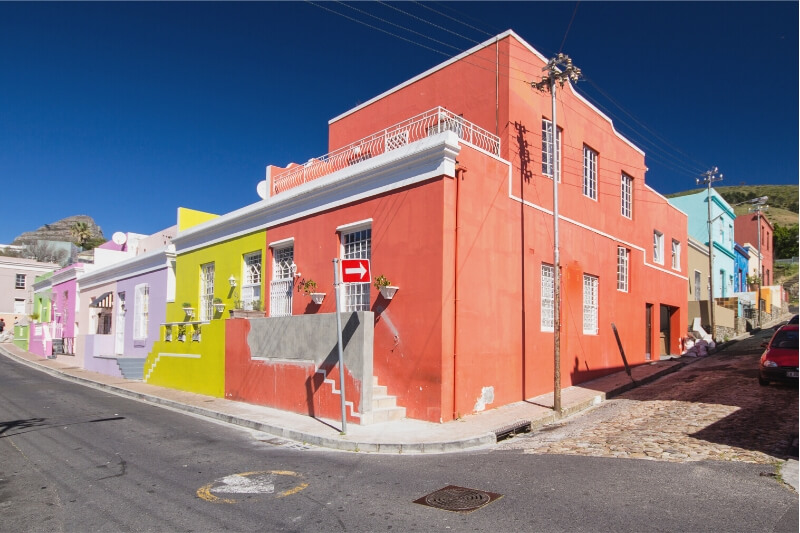
The colourful neighbourhood of Bo-Kaap is one of the oldest in the city and has become one of the most recognisable attractions in Cape Town.
The first residents of the Bo-Kaap were slaves brought to South Africa from Malaysia and Indonesia. When slavery was abolished, people decided to paint their houses in bright colours as a sign of freedom.
Bo-Kaap boasts fantastic regional cuisine in its local family-run Cape Malay restaurants. When you join a Malay cooking class inside one of the colourful houses, your host will teach you how to fold a spicy samosa, make a piquant bredie (stew), perfect a Cape Malay curry, or cook a traditional bobotie.
Walking the bright streets of Bo-Kaap is one of the most beloved Cape Town traditions and a must-do for all visitors.
3. Camp and Braai like a real South African

Two things South Africans love are the outdoors and to braai. Braai is the Afrikaans word for ‘barbecue’, and lighting a fire and braaing some meat is something many South Africans do every weekend.
There is no better way to experience this Cape Town tradition than by going camping, lighting a fire while admiring a beautiful African sunset, and drinking a nice glass of local wine at the same time.
There are plenty of safe, picturesque campsites within driving distance of Cape Town. Our tip is to check out Beaverlac or Khomeesdrift.
Prefer something more luxurious? Try glamping in a game reserve instead. The luxury tents at Sanbona Wildlife Reserve even have jacuzzi! At Sanbona, you can also join a Big Five safari and see 3,000-year-old bushman paintings.
Preparing for a South African braai is easy: Buy a bag of wood, fire lighters, matches, lamb chops, and a bottle of red wine, available at most supermarkets. At luxury tented camps, somebody will braai for you so you can sit back and enjoy.
When shopping for wine in Cape Town, try to find a good bottle of Pinotage. This red grape varietal was created in South Africa and pairs well with lamb.
4. Visit Robben Island where Nelson Mandela was imprisoned for 18 years
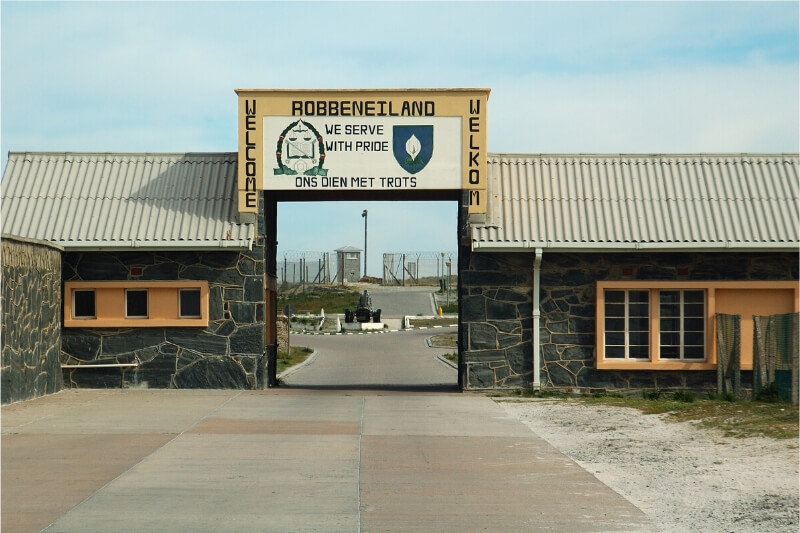
Robben Island is located close to Cape Town, 7km off the mainland in Table Bay. The island played an important part in South African history because it was used as a prison from the late 17th century to 1996 when apartheid ended. Many of the inmates were political prisoners.
Three former presidents of South Africa were once prisoners on Robben Island: Kgalema Motlanthe, Jacob Zuma, and Nelson Mandela. Nelson Mandela was imprisoned there for 18 of the 27 years he spent locked away before the fall of apartheid, paving the way for democratic freedom in the country. He was later awarded the Nobel Prize for Peace.
To get to the island, buy a ticket in the V&A Waterfront where you board the ferry or pre-book a tour and ferry tickets online. A former inmate will give you a tour, sharing first-hand information about the island’s history. In the cells, you can read the inmates’ stories.
5. Try a traditional food and wine pairing
Wine and food pairing is the process of matching food dishes with wine to enhance the dining experience. A great food and wine pairing creates a balance between the components of a dish and the characteristics of a wine.
Some of the best wines in the world come from the wine estates in the Cape Winelands. Since they are also home to many internationally recognised restaurants, pairing food and wine at these venues was a natural progression.
There are several interesting pairings you can do, such as a wine and biltong (South African dried meat snack) tasting at Durbanville Hills, wine and cupcakes at Delheim, and MCC (champagne) and nougat at Boschendal.
Chocolate and wine, however, is a firm favourite since these two pleasures both offer intense flavors. A correct pairing of these twin delights reveals hidden flavours.
Spier offers a great pairing with a local chocolatier, who creates special chocolates to complement each wine. Waterford, Lourensford and Durbanville Hills also have wine and chocolate menus to die for.
6. Watch a rugby match at Newlands or Cape Town stadium
South Africans are rugby crazy. The game is much more than a sport here. One of the biggest moments in national unity was when the South African team and current world champions, the Springboks, were crowned World Champions, cheered on by President Nelson Mandela, in 1995.
Newlands Stadium is the oldest stadium in South Africa and the second-oldest rugby stadium in the world. Watching the local rugby team, the Stomers, play at Newlands is one of the locals’ favourite Cape Town traditions and an unreal experience for visitors.
Buy a hotdog and soak up the buzzing atmosphere, cheering on with thousands of local fans. I’m sure you will leave here a big rugby and Stormers fan!
Parking is a mission at the stadium, so just grab an Uber from the city centre.

Cape Town traditions & culture: Share it on Pinterest
More cultural travel inspiration
- World’s best destinations for cultural travellers
- 30+ amazing cultural experiences around the world
- Best cultural festivals around the world
- Best destinations for tea culture
- Best destinations for wine culture
- Unique food cultures around the globe
- My collection of cultural travel guides for 30+ cities and regions
- World’s best unique & underrated travel destinations
A visit to Robben Island is not a cultural experience….tourists are getting sick and tired of people pushing the “Mandela brand” down their throats. Rather market the slave culture. What about the unique Cape architecture in building- and furniture design? Or enjoying West Coast seafood and the culture of people living from the sea? Mountaineering, fynbos and natural wonders as a cultural experience? Cape Towns theatre and arts culture?
Thanks Dawie for the extra suggestions – those all sound terrific!
You can not speak for all tourists, I think a visit to Robben Island is a huge cultural experience, not only does it give insight to the history of South Africa but you also learn a lot by seeing what people have gone through in this country. I don’t really care for architecture or seafood much cause you can see and eat that everyday.