The Zekari Pass – not to be confused with the Zagari Pass in Svaneti – is a high mountain road crossing the Meskheti Range between Imereti and Samtskhe-Javakheti in Western Georgia.
Located almost due south of Kutaisi, the road climbs from Baghdati through dense forest before emerging into the alpine zone at Zekari, 2,182 metres above sea level. The road then descends towards the mountain resort of Abastumani, tracing a route has been used by caravan traffic since ancient times.
Until recently, driving this route involved a long stretch of very rough mountain road. That changed in November 2025, when rehabilitation of the final 16-kilometre section between Kakaskhidi and Zekari was completed.
The road was asphalted and upgraded with retaining walls and safety barriers, creating a smooth, sealed route all the way from Kutaisi and Baghdati to the Zekari Pass.

But there is an important catch: The Baghdati-Abastumani connection is not yet finished. On the Samtskhe-Javakheti side of the pass, the road remains unsealed as it descends towards Abastumani, while a separate 16-kilometre bypass project around the resort is still under construction.
I drove the new road from Kutaisi to Zekari in August 2026. Even without continuing all the way to Abastumani, it makes for a fantastic scenic drive from Kutaisi: Around 2 hours each way, with almost no traffic, scenic switchbacks for days, and flawless mountain views from the top.
The engineering of the road itself is also something to be admired – I don’t think I’ve ever been so impressed by a road before!
In this guide, I’ll explain the different roads to Zekari Pass, current conditions on both sides of the ridge, transport options, and what you need to know if you are planning to continue over the pass to Abastumani.
Please note: This post contains affiliate links, meaning I may earn a commission if you make a purchase by clicking a link (at no extra cost to you). Learn more.
Kutaisi to Zekari Pass distances & travel times
We can think of this road in three separate stages:
- Kutaisi to Baghdati: 25 kilometres; 30-35 minutes – an existing sealed road connecting Kutaisi with the town of Baghdati in Imereti’s wine region.
- Baghdati to Zekari Pass: 48 kilometres; around 1 hour – the newly upgraded route via Kakaskhidi. Kakaskhidi is around 15 kilometres from Baghdati, while the Kakaskhidi-Zekari road itself is approximately 33 kilometres. The final 16-kilometre section was completed in November 2025.
- Zekari Pass to Abastumani: Approximately 15 kilometres; 40-60 minutes – this southern side of the pass is a different story. The road is still unsealed and quite rough, with reconstruction works ongoing. Despite the short distance, it is considerably slower than the new road on the Imereti side.
The total distance from Kutaisi to the Zekari Pass is around 73 kilometres or 45 miles, taking approximately 1.5-2 hours without stops.

The Zekari Pass therefore works quite well as an alternative day trip from Kutaisi, combined with lunch in Baghdati and a few detours. You can find my suggestions below.
From the pass, it is tempting to continue down to Abastumani – it is only another 15 kilometres – but for the moment, the condition of the southern road makes this a much more serious drive. The paved road starts again near the Sakalmakhe trout restaurant just outside the resort, but in between, there is around 10 kilometres of very rough road, with trucks causing further delays.
Important: The new road from Baghdati to Zekari does not pass through Sairme. There is a separate, older road from Baghdati to Sairme and onwards towards Zekari Pass, and many older maps and travel guides refer to this route instead. I explain the difference below.
Which road goes to Zekari Pass? New Kakaskhidi road vs old Sairme road
There is a lot of confusing and outdated information online about the road to the Zekari Pass.
To clarify: There are now TWO roads from Baghdati towards Zekari. The new road – and the one you want – runs via Alismereti and Kakaskhidi. It does not pass through Sairme.
The older road branches off towards Sairme, then approaches Zekari Pass from a different direction. It is sealed as far as Sairme and the sulfur pools, but the final section beyond the resort is unsealed.
One complication is that the new road is not yet fully mapped on Google Maps. At the time of writing, Google can route you as far as Kakaskhidi, but does not recognise the completed road between Kakaskhidi and Zekari. The full road does appear on MapsMe.
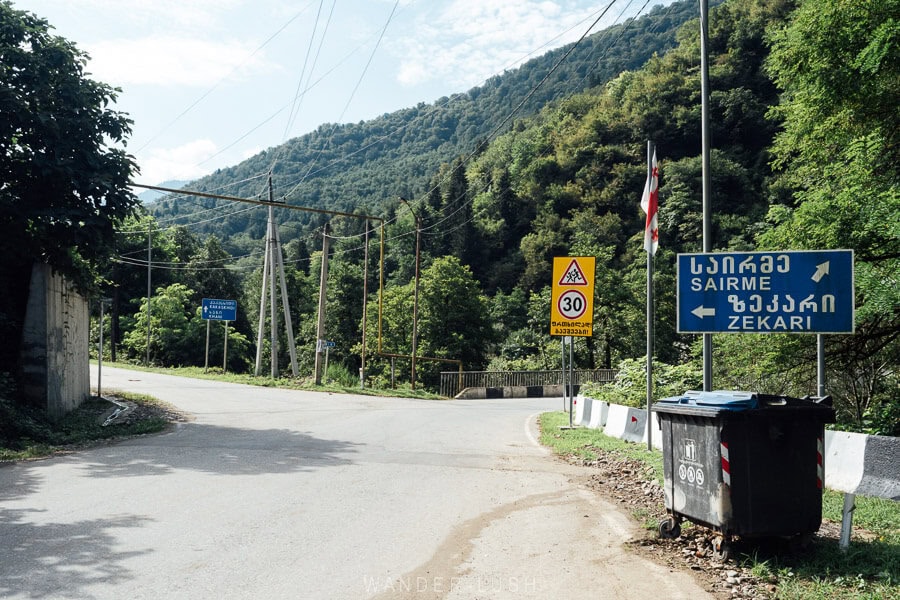
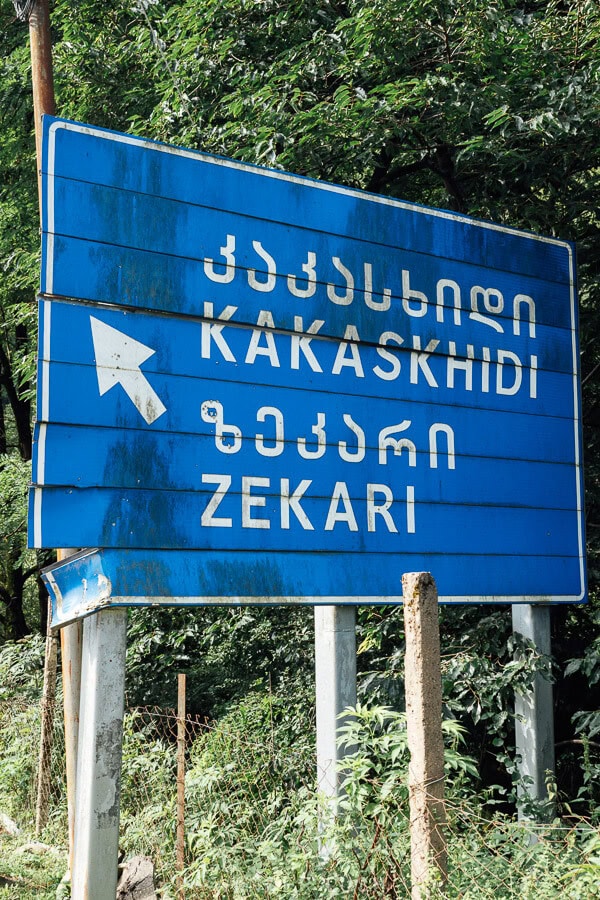
To locate the new road: Drive south through Baghdati. Shortly after the Mayakovsky Museum and before Tskaltashua restaurant, you will reach a junction. The road to the right leads towards Sairme. Take the road to the left, signposted for Kakaskhidi/Zekari (pictured above).
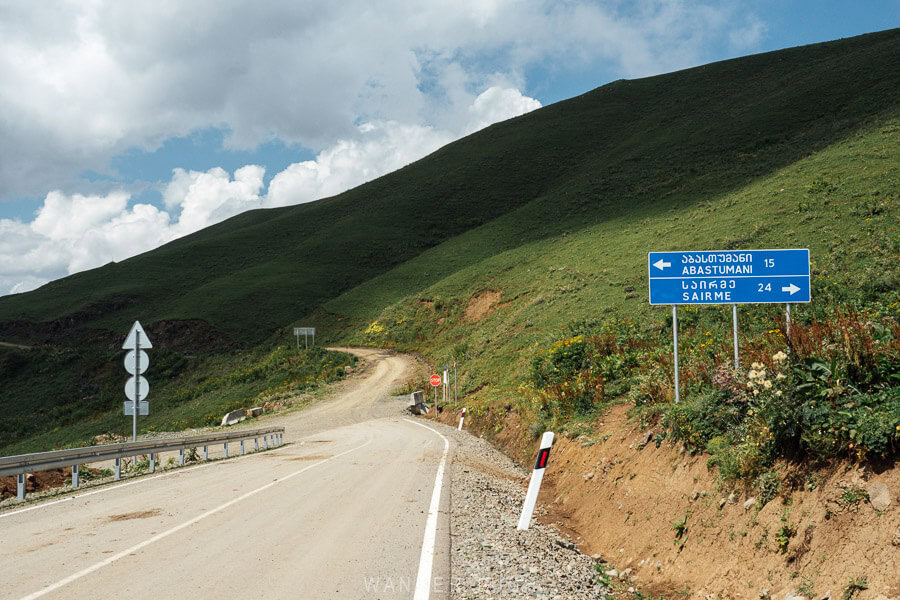
If you are approaching from the south, the two roads meet again just before the pass. This junction is easier to identify: The new Baghdati road is asphalted (pictured above, foreground), while the old road towards Sairme is dirt.
Current Zekari Pass road conditions (2026)
The road from Kutaisi to Baghdati is fully sealed and straightforward. It is entirely asphalt from Baghdati to the pass.
For the first part of the drive, the road stays relatively low, following the river through the forest. There are a few small waterfalls beside the road, but otherwise this section is fairly uneventful.
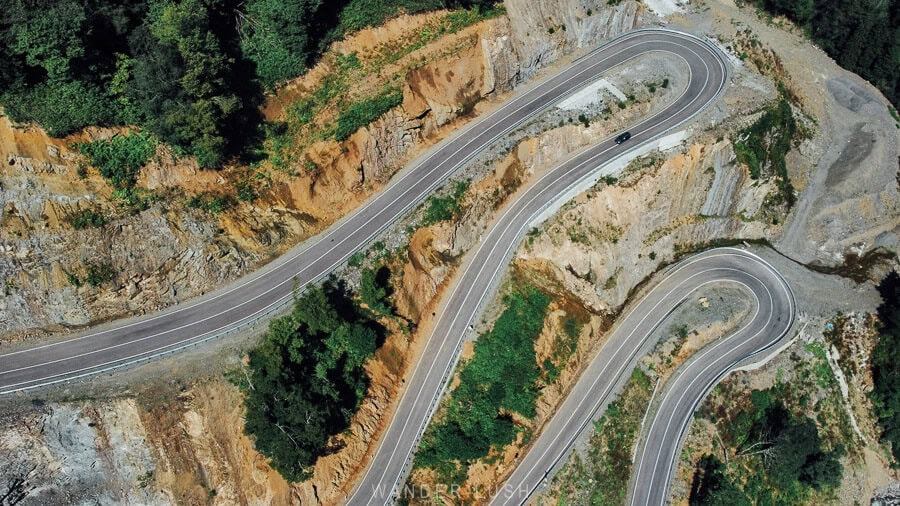
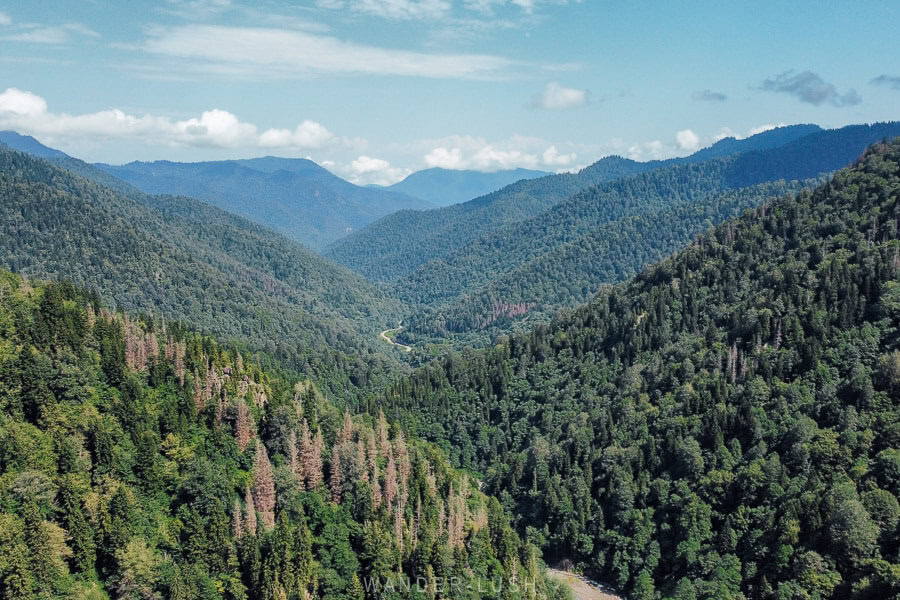
The real drama starts when the road begins to climb. It gains elevation fairly quickly through a seemingly endless series of switchbacks – in several sections, the tight bends are stacked vertically with three or four hairpins visible from the bottom as you look up the cliff face. At the top, there are points where you can stop and look back down at the road, coiled up like a spring.
It is absolutely spectacular.
Eventually you emerge above the treeline. There is a clearing on the right shoulder just before the pass where you can pull over for a view. There is nothing to mark the pass itself yet – no sign or cross or small chapel, as is customary in Georgia. I’m sure those will come later.
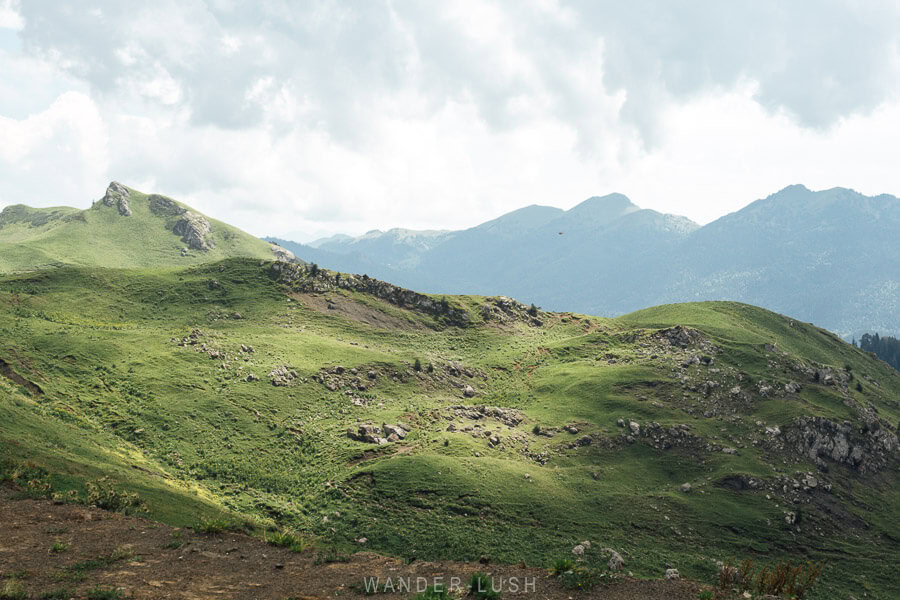
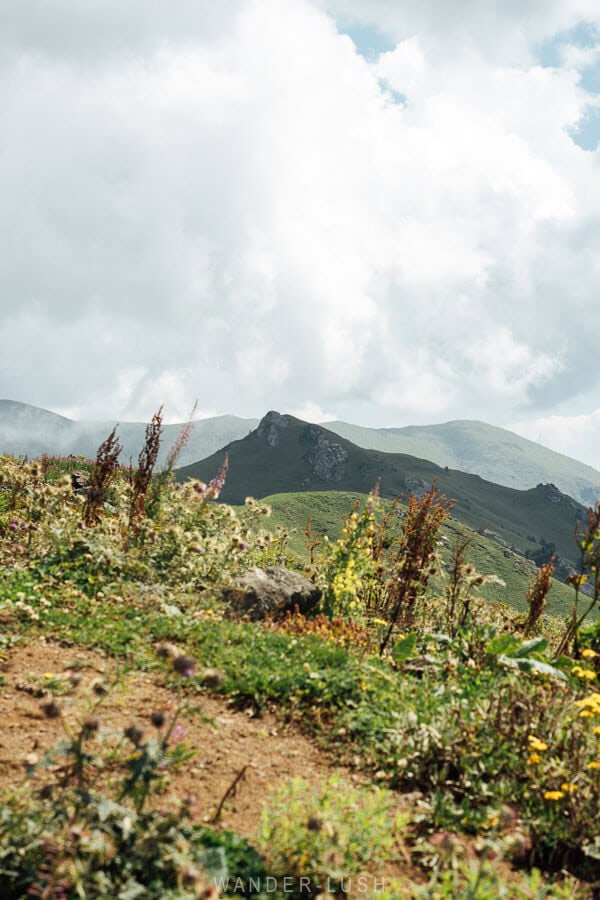
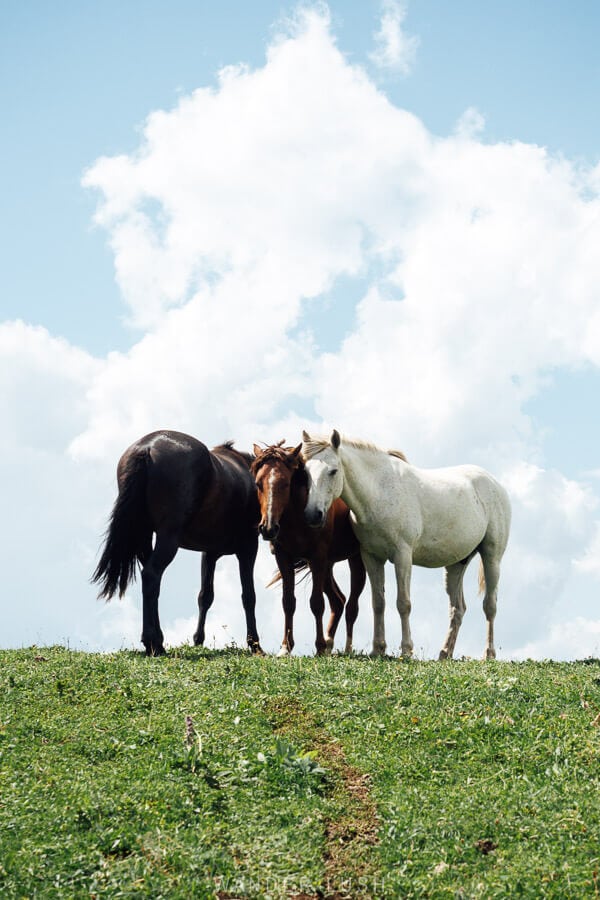
The forest gives way to open alpine and volcanic-looking terrain, bristling with wildflowers during summer. This is grazing country, with cows somehow clinging to impossibly steep slopes, groups of horses huddled together against the wind, and small seasonal shepherd houses scattered across the hills.

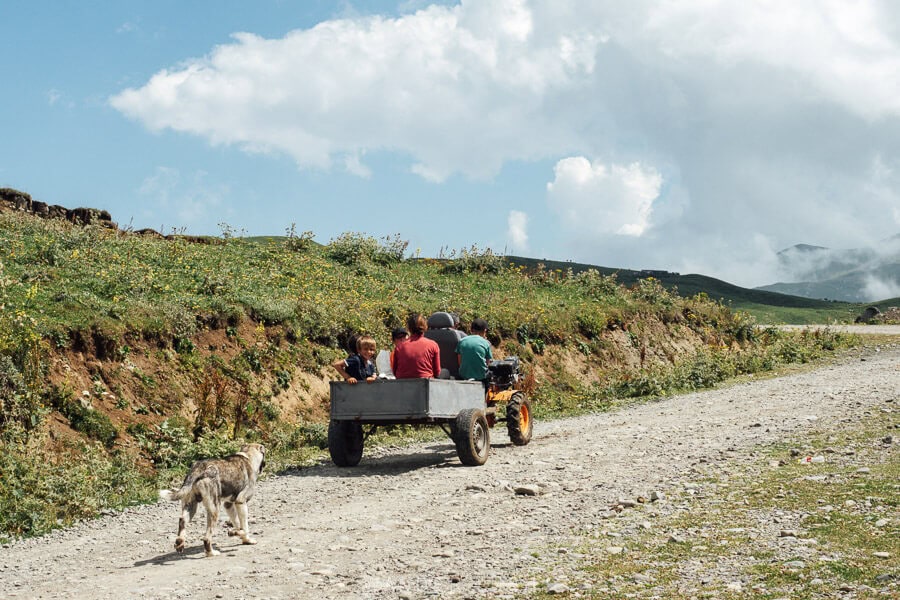
When we drove the road in August, we only encountered half a dozen other cars. Near the pass, we saw a shepherding family coming back from the fields with their dog before piling into a tractor – otherwise, there is very little infrastructure or activity.

The new road is in very good condition overall, with fresh white lane markings, frequent signs, safety barriers along the entire length, and enough space for two cars to pass comfortably. The gradient reaches around 10% in places, so there are some steep sections, but nothing especially difficult in normal summer conditions.
There are already a few small areas where the road shoulder has been damaged. The bigger hazard is rockfall: Much of the road is cut directly into steep cliffs, so keep an eye out for loose rocks on the asphalt, particularly after rain.
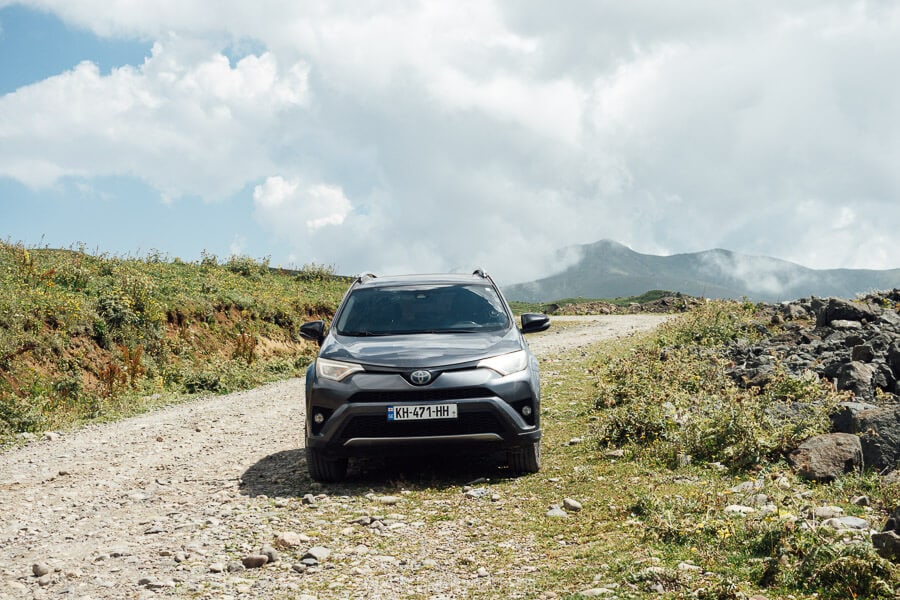
Beyond Zekari towards Abastumani, conditions change dramatically. The road on the southern side is still unsealed and rough (pictured below), with reconstruction works ongoing. This section is due to be finished in autumn 2027.
Watch our video: Driving the new Zekari Pass road
Published soon.
Do you need a 4WD for the Zekari Pass?
No, you do not need a 4WD to drive the new Baghdati–Zekari road. The road is fully asphalted all the way to Zekari Pass, and a regular 2WD car is perfectly suitable in good weather.
This changes if you plan to continue over the pass towards Abastumani. For this section, I recommend a high-clearance 4WD.
PromotedDon't miss out on today's trending deals!
Join thousands of users enjoying exclusive benefits right now.
The road from the Zekari Pass down to Abastumani is currently unsealed, with a rough surface of gravel and exposed rock. There are steep sections that can become slippery in wet weather, as well as large loose stones that could damage a low-clearance car.
In short: Any normal car is fine for Baghdati to Zekari Pass and back. If you want to drive all the way through to Abastumani, use a high-clearance 4WD.
When is the Zekari Pass open?
The Zekari Pass is a seasonal mountain road. At 2,182 metres above sea level, snow, ice and poor visibility can make the upper sections unsafe outside the warmer months.
As a general rule, I would consider early to mid-June through October the main season. Depending on snowfall, the road might be accessible earlier or remain open into November – but I would not plan a trip around this without checking conditions first.
Historically, the Roads Department has imposed winter restrictions on both the Zekari Pass and the Tskaltashua-Kakaskhidi-Zekari road during periods of heavy snow. In some cases, only high-clearance/off-road vehicles have been permitted. In other cases, the pass has been closed completely.
If you are travelling in early June, late October or November, check the latest road restrictions on GeoRoad before setting out, and be prepared to change your plans if the weather turns.

How to travel the Zekari Pass: Transport options
Rental car
Hiring a car and driving yourself is by far the best option in terms of price and convenience. The drive between Kutaisi and Zekari is not an overly challenging one, but to drive in Georgia at all, you should be someone who is confident on the roads.
Local Rent currently prohibits driving the old Sairme-Abastumani road and restricts its vehicles to paved roads. The new Baghdati-Kakaskhidi-Zekari road is fully asphalted and is not specifically listed as a prohibited route. However, you should confirm this with the agent at the time of booking.
Martyna z Gruzji is a reputable Kutaisi-based company that has no restrictions on this road for certain vehicle categories. Use wanderlush when you book for a 10% discount.
GoTrip
GoTrip operates on this route, with private drivers available for the entire journey down to Abastumani/Akhaltsikhe from Kutaisi.
Marshrutka vans / shared transport on the Zekari Pass
There is no shared transport on the new road that I know of. Marshrutka vans running between Kutaisi and Abastumani take the main highway via Borjomi and Akhaltsikhe.
Important things to know before you go
Mountain weather can change quickly. We had rain on our descent, which reduced visibility considerably in places, although we still felt comfortable driving on the new asphalt road. Clouds and fog can descend quickly around the pass, so don’t rely too heavily on the forecast for Kutaisi or Baghdati.
Check current road conditions before setting out. GeoRoad publishes temporary restrictions and closures, particularly during periods of bad weather and at the beginning and end of the season.
Bring a jacket. It can be chilly at the top of the pass, even in August.
Watch for livestock. The upper section passes through active summer grazing areas, with cows, horses, shepherds and dogs on or close to the road. Closer to Baghdati, there are signs to watch out for wild deer.

Fuel up in Baghdati. There are no petrol stations or other services on the mountain section.
Mobile coverage is patchy. We had signal during the first part of the drive and again around Zekari, but there was a substantial section in between with no reception at all (even with a Magti SIM). Download a map before leaving Baghdati, and be prepared to be offline.
There are plenty of places to stop. Traffic is extremely light and there are numerous places where you can safely pull off the road for photos. Avoid stopping on the switchbacks themselves.
Where to stop along the way
There is not a huge amount to see directly beside the new Zekari road, but there are several worthwhile stops and detours around Baghdati and the surrounding valleys.
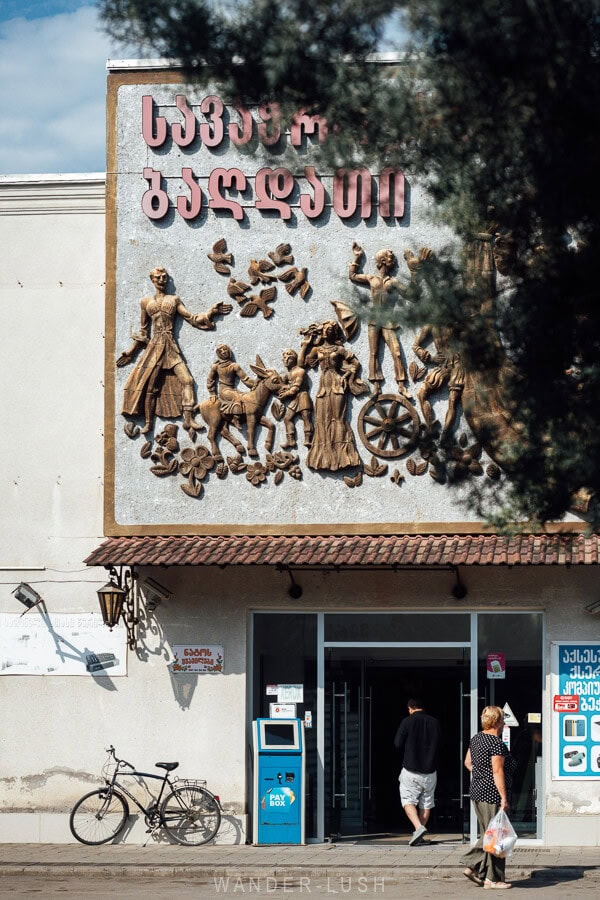
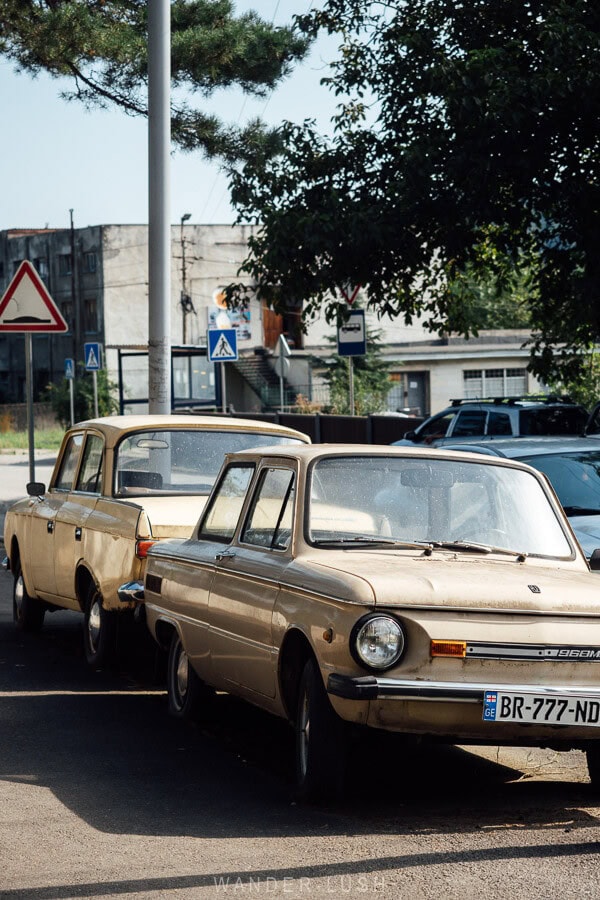
Baghdati: Before heading into the mountains, spend some time exploring Baghdati itself. This small town has an interesting collection of Soviet-era architecture, monuments, and the Vladimir Mayakovsky House-Museum. For lunch, I recommend Cafe Glitsinia, a sweet community-minded cafe in the centre of town.
Khani: The village of Khani and its valley make a worthwhile detour if you have extra time. Its claim to fame is the Khani Stone Winepress, a three-compartment winepress carved directly into a huge boulder and thought to date to the Middle Ages. It measures roughly 3.5 metres long and still has the channel through which the pressed wine once flowed. Nearby, Gulashvani Forest Park is a five-hectare grove containing around 30 species of conifers from around the former USSR, planted in 1961.
Kvasakdara: This group of volcanic stone pillars sits at around 2,205 metres above sea level, south-east of Sairme. The formations are remnants of volcanic rock shaped by erosion, with panoramic views across the Meskheti Range and the Tsablaristskali valley. This is not on the new Baghdati–Zekari road: You need to detour briefly onto the old Sairme route. The upper road is rough, so a 4WD/high-clearance vehicle is required.
Sairme South: Another detour along the old Sairme road. The spa and hotel complex has indoor and outdoor thermal pools filled with naturally carbonated mineral water, along with other wellness facilities. If you only want to drive the new Zekari road, I would not make the detour purely for Sairme, but it is an option if you want to turn the journey into a longer day (or overnight) trip.
Why is the Zekari Pass road being developed?
Finally, if you are curious about why this remote road is being developed…
The Zekari Pass upgrade is part of the much larger Baghdati-Abastumani project, a state infrastructure scheme designed to make a shorter north-south connection between Western Georgia and Samtskhe-Javakheti.
One of the main strategic goals is to improve access from central and western Georgia to Türkiye via the Vale border crossing. Once the Baghdati-Abastumani connection is finished, the Roads Department estimates that journeys from central Georgia towards the Turkish border will be shortened by around 90-120 minutes.
The project is also designed to improve connections between Imereti, Samtskhe-Javakheti and Ajara, make Abastumani (where there is a lot of development – including a new Rooms Hotel) easier to reach, and to stimulate tourism in the region.
Reconstruction of different parts of the Baghdati-Abastumani road has been underway since at least 2018. The most difficult part was the high-altitude Kakaskhidi-Zekari section, described here.
The final 16 kilometres (km17-km33) were divided into two construction lots, both awarded to Georgian company New Road LLC by the Roads Department. Work on the first lot was contracted in April 2021, and the entire 16-kilometre section was finally completed in November 2025 – roughly 4.5 years later.
Progress was much slower than planned because of the extremely difficult geography and geology. The two construction contracts underwent a combined 63 amendments. The finished 16-kilometre section cost approximately 65 million GEL, fully financed from Georgia’s state budget.
More travel resources for this area
Georgia travel resources I recommend
Planning a trip to Georgia? Here are 5 resources I use & recommend.
- Mandatory insurance: Cover.ge. Get a budget-friendly health & accident insurance policy that meets Georgia’s new entry requirements. Use wanderlush for 5% off.
- Private transfers in Georgia: GoTrip.ge. Find a professional, English-speaking driver. Prices are locked in when you book & you can stop wherever you want.
- Hiring a car in Georgia: Local Rent. Save money when you rent directly from a local agent. Pick-up & drop-off are available from any address.
- Tbilisi tours & day trips: Friendly.ge. Knowledgeable guides, safe drivers & creative itineraries. Use wanderlush for 10% off.
- Accommodations: Booking.com. The biggest selection of properties in Georgia, including guesthouses in rural areas.
All comments are moderated and may take a little while to appear. If you’ve submitted your comment, I’ve got it!