Discover a different side of the Maldives beyond the all-inclusive resorts. Here are 9 wonderful ways to experience Maldivian culture, history and cuisine, and support ecotourism while enjoying the islands’ unrivalled nature.
Thanks to Amy Alton for being here to share her experiences in the Maldives. Amy has spent the last six years circumnavigating the globe on her sailboat, travelling thousands of miles and visiting dozens of countries – often stopping in some of the most remote locations in the world. She shares her adventures on Out Chasing Stars.
When the Maldives comes to mind, you might automatically think of sandy beaches, clear water, and celebrity honeymoons. Known for its all-inclusive resorts, the string of atolls in the Indian Ocean is certainly a stunning beach destination.
Celebrities often honeymoon in the Maldives, and Instagrammers fill their feeds with luxurious shots of over-water bungalows and 5-star dining experiences. It often feels like a vacation in the Maldives might be unachievable for most people, but that’s not the case. There are options beyond the all-inclusive resorts if you know where to look.
- Also read: Things to do in Mauritius beyond the beach.

Please note: This post contains affiliate links, meaning I may earn a commission if you make a purchase by clicking a link (at no extra cost to you). Learn more.
Maldives essentials
Best time to visit the Maldives
The Maldivian islands straddle the equator. The weather is very hot and still, with temperatures ranging from 24-32 degrees Celsius year-round.
November to April is the dry season, so you’ll have more sunny days to enjoy the beach and water activities.
Where to stay in the Maldives: Guesthouses & boutique hotels
Tourism in the Maldives started in the 1970s by offering exclusive – and isolated – resorts. The government had a ‘one island, one resort’ policy, where properties were built on private, uninhabited islands. This meant that resorts were separated from local villages. Employees lived in resort dorms, and visitors barely saw the ‘real’ Maldives as a result.
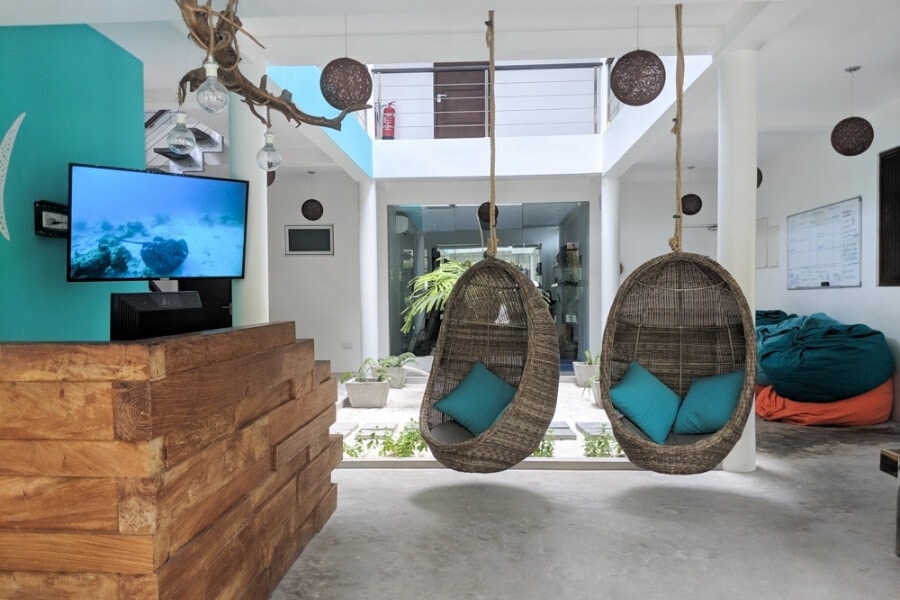
In 2009, government regulations changed, allowing for the opening of guesthouses on inhabited islands throughout the country. Now, instead of taking day trips by boat from luxury resorts, visitors to the Maldives can stay in one of the villages.
Just remember: Alcohol is not allowed in the Maldives outside of resorts and you can not bring any in with you.
- Sala Boutique Hotel (Malé) → Book here
- Coco Cottage – Local Style (Guraidhoo) → Book here
- The Barefoot Eco Lodge (Hanimaadhoo) → Book here
- Sandy Heaven Maldives (Gulhi) → Book here
- Hulhan’gu Lodge (Himmafushi) → Book here
Transport in the Maldives
Most international flights arrive in Malé, the capital. If you’re coming from the US, you will have to connect through Europe, the Middle East, or maybe even India or Sri Lanka.
There are quite a few domestic airports around the islands, but the schedule is often minimal and may require an overnight in Malé. Ferries are available for the adventurous traveller who’s willing to withstand a bumpy ride. Schedules aren’t widely available online, so it’s best to check times locally.
9 ways to experience the real Maldives – unique things to do
As tourism in the Maldives has opened up beyond the resort islands, travellers now have more opportunities to interact with local culture and support ecotourism projects while enjoying the islands’ diverse nature.
Here are 9 unique things to do in the Maldives for an enriching travel experience.
Visit the UNESCO Baa Atoll Biosphere Reserve

Baa Atoll, a small atoll about a third of the way down the island chain, is a recognised UNESCO World Biosphere Reserve. It’s one of the largest collections of coral reefs in the Indian Ocean, and that makes it an excellent habitat for plankton. The plankton attracts megafauna, most notably the manta ray.
Up to 1,600 individual manta rays have been identified in Baa Atoll, making this one of the largest gathering sites in the world. Scuba divers and snorkelers can swim with the creatures as they soar in loops and frenzied clouds to feed on the plankton.
Environmental organisations such as the Manta Trust have worked with the Maldivian government and local resorts to protect the species and promote eco-tourism in the area. The best times to see these manta ray gatherings are May through December.
A day trip to the Hanifaru Marine Protected Area is the best way to see the manta rays. Nearby Dharavandhoo island has an airport and several guesthouses available, and there are plenty of islands in the Baa Atoll that also have guesthouses.
Swim with the whale sharks
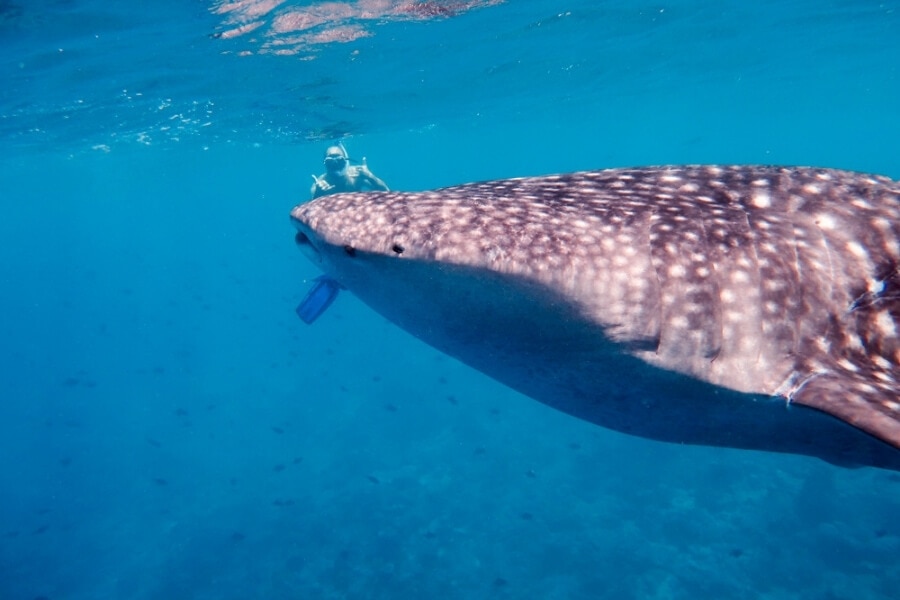
Manta rays aren’t the only megafauna in the Maldives. This is the only place in the world where you can see whale sharks year-round, and one of the best places to do it is Ari Atoll.
Dhigurah Island is the home base for the Maldives Whale Shark Research Programme, which helps to develop initiatives to protect the whale sharks and manage tourism in the area. Dhigurah and its neighbouring island, Dhangethi, both have quite a few guesthouses and dive shops that operate trips to the outer edge of the atoll where the whale sharks live.
As with most places where whale sharks frequent, there are rules and regulations in place to protect the animals. Only a few boats are allowed near one whale shark, and there is a limit on the number of swimmers that can be in the water at once.
Even if you don’t see a whale shark, your trip should take you along the outer edge of the reef for a snorkel. You are likely to see manta rays, sea turtles, and a variety of fish.
PromotedDon't miss out on today's trending deals!
Join thousands of users enjoying exclusive benefits right now.
- Want more? How about swimming with whale sharks in Nosy Be, Madagascar?
Discover local culture in Malé

The Maldivian capital of Malé (Male) is one of the most densely populated cities in the world. Located on a small islet, it’s literally outgrowing the island!
Male has a few culturally significant landmarks. The Old Friday Mosque was completed in 1658 and is primarily built from coral. It’s on the UNESCO World Heritage tentative list for its unique construction methods and advanced building techniques. Nearby, the Royal Graveyard is the final resting place for many of the country’s national heroes and royal rulers.
The Mulee’aage is the residence of the Maldivian President. On the grounds of the property is the tomb of Abul Barakat Yousef Al-Berberi, a scholar who brought Islam to the Maldives.
Learn about Maldivian history on Utheemu

For a history lesson on Maldivian national heroes, visit the Utheemu Ganduvaru Palace on the island of Utheemu. This is one of the more northerly islands in the chain, located near the Hanimaadhoo International Airport.
The Utheemu Palace is the birthplace of Muhammad Thakurufaanu. In the 1500s, the Portuguese had a short occupation of the Maldives and attempted to convert the local people to Christianity. Muhammad Thakurufaanu and his two brothers escaped and came back later with a navy to fight off the Portuguese.
Muhammad Thakurufaanu then became Sultan of the Maldives, and today his birthplace is a museum. Visitors can walk around the grounds and see some basic but beautiful buildings and taste water from the well.
Taste traditional Maldivian food
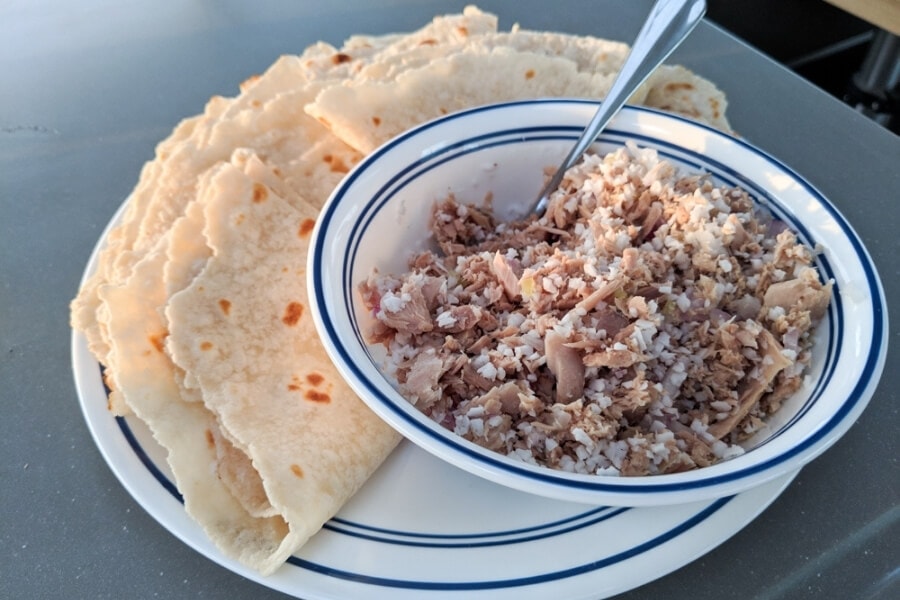
Tourists who stay in all-inclusive resorts may have fine dining – but they probably won’t get to eat like a local or experience the Maldives’ traditional cuisine. Here are a few dishes to look out for when exploring Male and the local islands.
Kothu is a traditional street food of South Asia, and the Maldives has its own version. Roti, a traditional flat bread, is sliced up and fried with vegetables, chicken, and eggs.
Mashuni is a traditional breakfast food that consists of tuna, onions and coconut served with a Roti flatbread. Tuna fishing and canning is the nation’s second-largest industry (behind tourism) and an important part of Maldivian food.
It’s incredibly hot in the Maldives, and locals often cool off by drinking lemon juice. This beverage is similar to lemonade, but not as sweet. When you’ve been walking around the island all day and need to cool off in a cafe, ask for lemon juice – it’s a specialty.
Quench your thirst with a unique Coca-Cola
It may sound odd to recommend buying a bottle of soft drink in the Maldives where you might be more inclined to try a tropical cocktail (or a lemon juice!). But Coca-Cola in the Maldives is totally unique.
This is the only facility in the world that uses desalinated water – sea water that has had the salt taken out – to make the soda. The factory is located on Thulusdhoo island and is open for tours, but you can buy the local Coca-Cola in any island convenience store.
Just remember to recycle your bottle/can when you’re done.
Visit a traditional lacquered wood workshop

On Baa Atoll, an important part of Maldivian crafts – a dying skill – can be seen on Thulhaadhoo island.
Liyelaa Jehun is the practice of applying lacquer to wood. This art was brought to the Maldives from mainland Asia and is still practiced by a few people today. The wood is turned, lacquered and polished manually using natural tools such as sticks and palm fronds.
Beautiful jewellery boxes and vases made from lacquered wood are the perfect authentic souvenir to take back home.
Go scuba diving on a live-aboard boat
If you’re a diver, you should definitely look into a live-aboard boat in the Maldives. The dive boats pick up and drop off guests from Male, meaning you can avoid the hassle of inter-island transportation (which can be difficult to navigate).
A live-aboard will enable you to see multiple dive sites without additional costs. An all-inclusive resort is already expensive, but add on a few dives and your costs climb significantly. Most of these tours include dives in Ari Atoll, so you’ll likely get to see the whale sharks too.
Go swimming on a bikini beach
If you aren’t staying at an all-inclusive, private island resort, it’s important to understand and respect the local culture of the Maldives. Being a Muslim country, it is quite conservative.
While every island has beautiful sandy beaches, visitors must dress modestly. There are designated ‘bikini beaches’ on islands frequented by tourists. If you want to wear a bathing suit and go for a swim, this is where you should do it.
Have you been to the Maldives? What other local experiences would you recommend to travellers?
All comments are moderated and may take a little while to appear. If you’ve submitted your comment, I’ve got it!