Spain is home to some of Europe’s most beautiful cities – from its Mediterranean metropolises to ancient hubs hidden away in the hills.
Each of Spain’s regions and autonomous communities has a distinct culture and character, and no where does this manifest itself more clearly than in the skylines and back alleys of the country’s great cities.
Narrowing down this list of beautiful cities in Spain to just 26 was a challenge – every Spanish city has its own particular charms, oftentimes born from centuries of Moorish, Christian and Jewish influence.
This article brings together Spain’s urban standouts, each of which is more than worthy of a place on your travel wish list.
Please note: This post contains affiliate links, meaning I may earn a commission if you make a purchase by clicking a link (at no extra cost to you). Learn more.
The most beautiful cities in Spain
In no particular order, here are 25 of Spain’s most beautiful cities – as chosen by me and seasoned Spain experts.
1. Madrid

Madrid is often bypassed in favour of Barcelona, its coastal sister, or some of the romantic Andalusian cities south or foodie capitals of the north.
That is such a mistake!
Madrid is a stunning city, as befits the world-class capital it is.
Take the lovely El Retiro park in the heart of the city, its lake and rowboats welcome respite from all that art-admiring in the three extraordinary museums that make up the city’s Golden Triangle of Art: the Prado, the Reina Sofia and the Thyssen-Bornemisza.
The city’s sweeping tree-lined avenues, bordered by exquisite architecture, contrast with the narrow streets of Old Madrid, where arcades and markets jostle cobblestones and ancient street signs.
The arcades lining the sweeping Plaza Mayor, the city’s ancient main square, have seen much history, from inquisitorial tribunals and public executions to bullfights and second-hand markets. Today, the arcades are home to typical tapas bars and traditional restaurants.
Madrid is one of those cities whose beauty can also be seen from above, from viewpoints such as the Mirador of the Palacio Cibeles, the restaurant of the Eurostars Madrid Tower, or the top of the Círculo de Bellas Artes just above the Gran Vía, Madrid’s traditional shopping street.
By Leyla from Women on the Road
Where to stay in Madrid: An affordable boutique hotel is the Hostal Oriente, right next to the Opera Metro (Teatro Real and Royal Palace).
2. Toledo
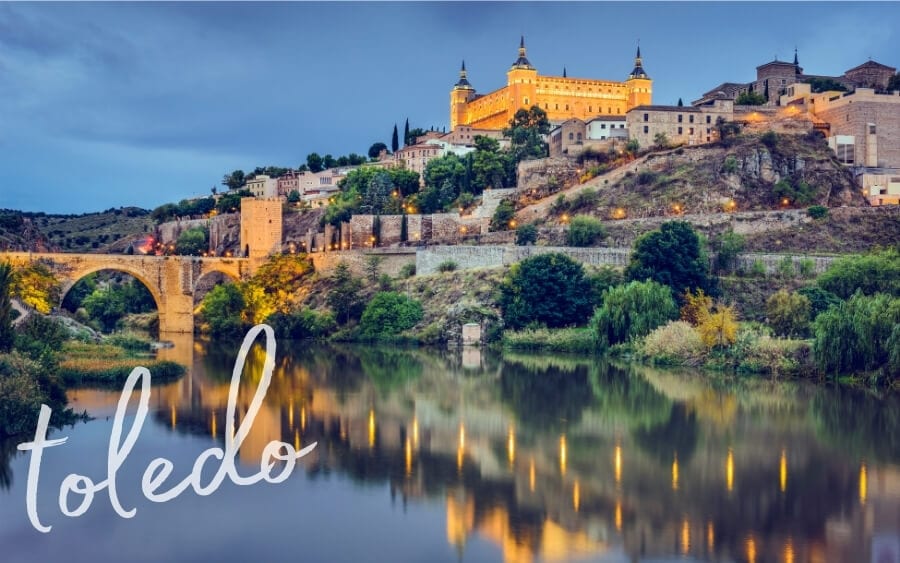
Known as Spain’s Imperial City, Toledo is an ancient city in central Spain and a popular day trip from Madrid. Being home to the court of the Holy Roman Emperor put Toledo on the map – but alongside its religious prominence, this was also known as the City of Three Cultures thanks to the tripartite influences of Castilla-La Mancha’s Jewish, Muslim and Christian residents.
In a story that plays out across many different towns and cities in Spain, each of these three groups brought their own architecture and traditions to Toledo. In 1986, the city was named a UNESCO World Heritage Site for the sheer richness of historical monuments contained within its boundaries.
Seated atop a mountain and surrounded on three sides by the emerald-green Targus river, Toledo’s beauty is undeniable. The streets of the old city guard an abundance of architectural gems, including the Alcazar castle, the cathedral and the Zocodover marketplace.
Moorish and Christian influences still permeate Toledo’s cuisine and make this a much sought-after destination among foodies. Don’t leave without trying a piece (or two) of Toledo marzipan, the city’s most famous sweet.
Where to stay in Toledo: For an unforgettable experience, treat yourself to a night at the Casa Palacio Rincón de la Catedral, a luxurious boutique hotel set inside one of the most beautiful buildings in Toledo.
3. Cordoba, an undeniably beautiful place in Spain
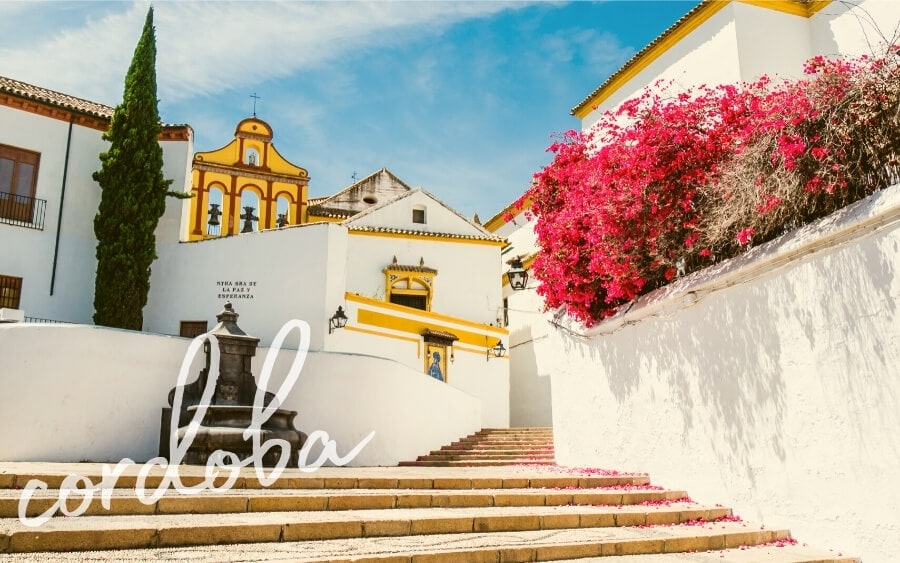
With more UNESCO Sites than any other city in Europe, Cordoba (Córdoba) embodies all the beauty and brilliance of Andalusia, one of Spain’s most culturally vibrant regions.
The city is best known for its spectacular Moorish architecture, including the one and only Mezquita-Catedral. This mosque-church with iconic candy-striped arches is one of Cordoba’s four World Heritage Sites and a must-see.
The historic centre of Cordoba, the Medina-Azahara – a vast palace-city on the western outskirts – and the Festival de los Patios, an annual spring festival that pays homage to Cordoba’s courtyards, are also recognised for their cultural value.
Some of the most beautiful spots in Cordoba include the eight-arched San Rafael Bridge, the lofty Roman walls that enclose the old town, and the narrow streets of the old Jewish Quarter. The city has no fewer than a dozen Fernandine churches, many of which were converted from mosques (like the Mezquita) and boast a unique synergy of architecture as a result.
Where to stay in Cordoba: Set behind a historic facade on the Plaza de las Tendillas, H10 Palacio Colomera features breezy Cordoba-style walkways, an outdoor pool, and elegant rooms with city views.
4. Barcelona

From its instantly recognisable gridded city plan to the tiny mosaic details at Gaudi’s Park Guell, Barcelona is a visual treat from every perspective. From the white-sand Barceloneta beach to the cactus-strewn hills of Parc de Montjuic, Barcelona has a little bit of everything.
Capital of the autonomous community of Catalonia, Barcelona’s history dates back to the Roman period. The city’s position on the Mediterranean coast has enriched it with influences from every corner of the globe and even today, Barcelona is still known as a hub for cutting edge creativity and craftsmanship – all of which has left an impression on the skyline.
There is far too much to see and do in Barcelona to condense into a shortlist. Highlights include paying pilgrimage to the iconic Sagrada Familia, admiring the interior of the opulent Palau de la Música, strolling down the leafy Las Ramblas, and shopping at the vibrant La Boqueria market.
Where to stay in Barcelona: Located just 200m from the Sagrada Familia, Ayre Hotel Rosellón boasts a rooftop pool terrace with panoramic city views and a complimentary breakfast.
5. Zaragoza
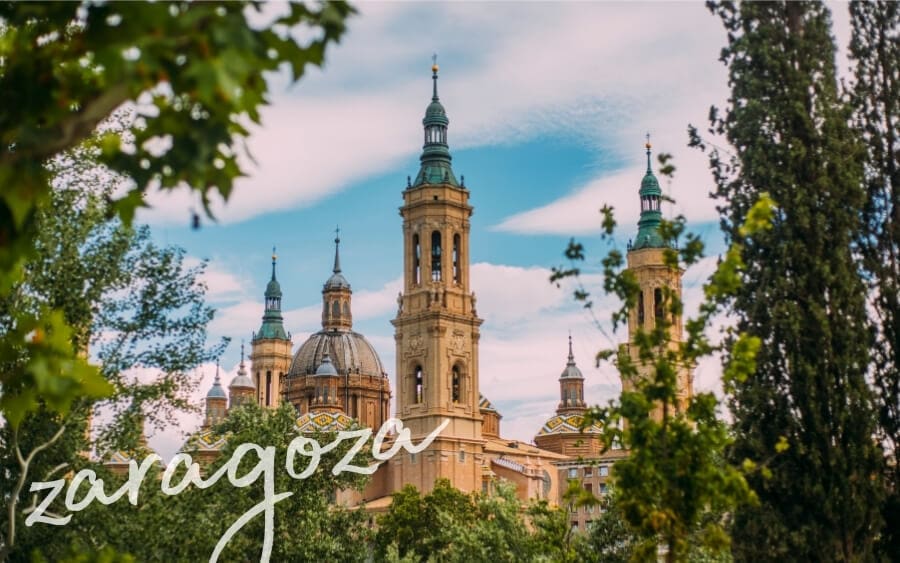
Located in the northeast, beautiful Zaragoza is one of the most underrated cities to visit in Spain. Not only is it historic and architecturally acclaimed, but it also has some of the tastiest food in the country.
Zaragoza is a very old city. It was founded in 25 BC and is still home to many ancient sites. Some of the most popular are the Museo del Foro de Caesaraugusta (a Roman Theatre), the Palacio de la Aljafería (an 11th-century palace), and the Basílica de Nuestra Señora del Pilar, which dates back to the 17th century.
Zaragoza is famous for its river, the Ebro, which runs through the centre and is crossed by several spectacular bridges. Another thing the city is known for is its museums. A can’t-miss institution in this Spanish city is the Educational Museum of Origami.
If you’re looking to relax, be sure to head to Parque Grande Jose Antonio Laborde, a large green space where visitors will find sculptures, fountains, restaurants and more.
By Megan & Aram from Megan Starr
Where to stay in Zaragoza: Some of the best hotels and Airbnbs in Zaragoza are located right in the city centre. A recommended hotel is Alfonso Zaragoza, a 4-star property with modern decor and a rooftop pool overlooking the city.
6. Alicante
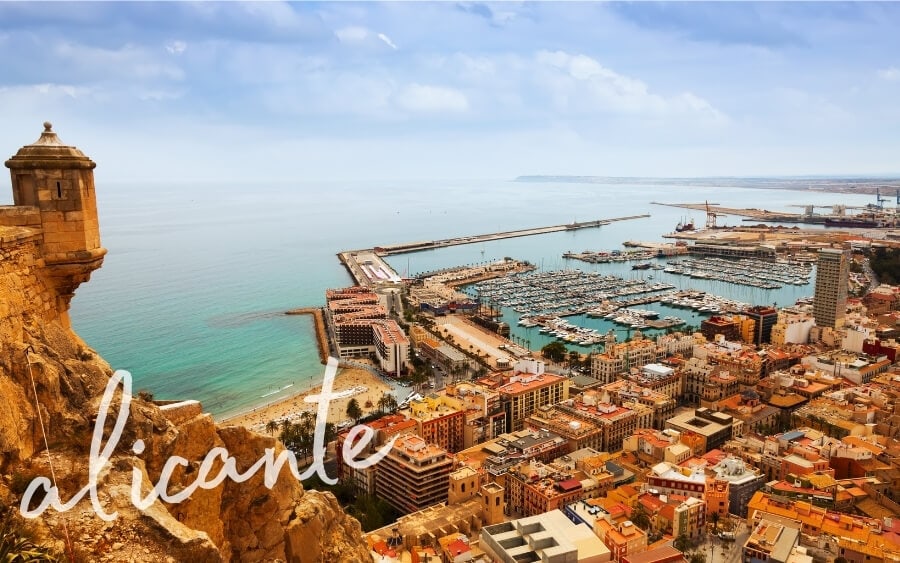
As everyone knows, Spain is rich with beautiful cities – but one of the most incredible is Alicante on the Costa Blanca. An ancient port city reborn as one of the country’s most popular destinations, Alicante is the perfect destination for exploring the southern coast.
This charming seaside city offers visitors pristine beaches, delicious tapas, and great attractions such as the historic castle fortress, Santa Barbara Castle. In fact, some of the best views in the city are of the beaches or the castle. They can be enjoyed from any of the many rooftop bars, hotels, or an Alicante Airbnb that has a balcony or roof deck.
One of the most beautiful places in Alicante is Explanada Promenade, a colourful walkway lined with palm-trees that hugs the coastline. Any visitor should take a breathtaking stroll from the marina to Postiguet Beach. On the left are benches, cafes and boutique hotels while the right side offers sea views and rows of sailboat masts in the marina. The path around Alicante’s marina is dotted with sculptures that further add to the beauty of the area.
Hiking to Santa Barbara Castle is another must-do activity in the city. You can even start in the Old Quarter and admire the street art and gorgeous architecture along the way. The light hike takes you through native plants and trees or you can ascend using the funicular.
Once atop the historic fortress, you’ll have the ultimate view of the city and sea below. If you time your visit for sunset you’ll be rewarded with the most incredible hues of red, orange, and hazy purple rays over the Mediterranean Sea.
By Derek & Mike from Robe Trotting
Where to stay in Alicante: Hospes Amérigo is a top choice for its views of Alicante Cathedral and Santa Bárbara Castle from the rooftop spa.
7. Malaga

Malaga is located in the south of Spain on the Costa del Sol, one of the most popular tourist areas in the country. Like other cities in the region, Malaga reflects a strong Moorish influence in its architecture and culture.
Malaga’s seaside location means you can easily combine a beach trip with lots of sightseeing and learning about local history. Make sure to visit the Alcazaba, an 8th-century fortress overlooking the city. Then there is the impressive Malaga Cathedral and the Castillo de Gibralfaro, another famous local landmark.
Malaga is actually surrounded by the impressive mountains of the Axarquia. Take a day-trip to Competa or Frigiliana, some of the most famous white villages in the area for incredible views.
Of course a trip to Malaga is not complete without a day on the beach. Malaga has plenty of city beaches, but for some of the best swimming and sunbathing opportunities head to Marbella or Nerja, popular Spanish beach towns nearby.
By Victoria from Guide Your Travel
Where to stay in Malaga: Check out the Hotel Soho Boutique Bahía Málaga if you’re looking for a central location and reasonable prices. The views from this hotel are stunning and it’s a great compromise between luxury and budget.
8. Huesca, a beautiful small city in Spain
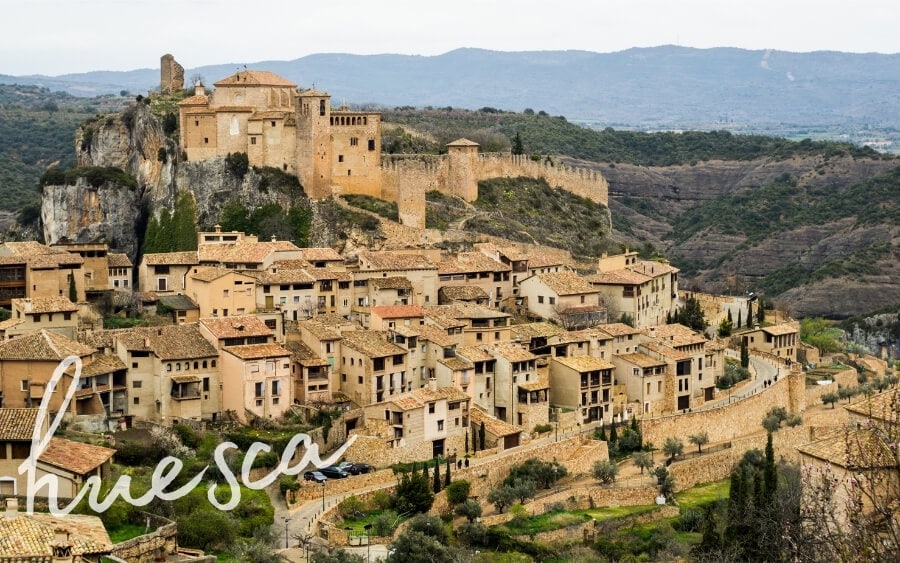
Located in north-eastern Spain’s Aragon community, the walled city of Huesca is one of the smallest provincial capitals in the country. But don’t let its diminutive stature and modest population fool you – this is one of the prettiest places in all of Spain.
Huesca sits atop a plateau at the foot of the Sierra de Guara mountains, its stone houses and castle walls cascading down the foothills and giving the city its distinctive profile. Finger-like rock formations rise up behind the low-lying rooftops. One of the best ways to experience the charm and character of Huesca is to simply wander the streets without any particular destination in mind.
Huesca is best known for its historic churches and monasteries, which number in the dozens. Don’t miss the Huesca Cathedral or the Monastery of San Pedro el Viejo, one of the oldest Romanesque churches in the region.
Where to stay in Huesca: Hotel Pedro I De Aragon is well positioned in the city centre, walking distance from all major landmarks. Rooms are simple but comfortably furnished.
9. Valencia
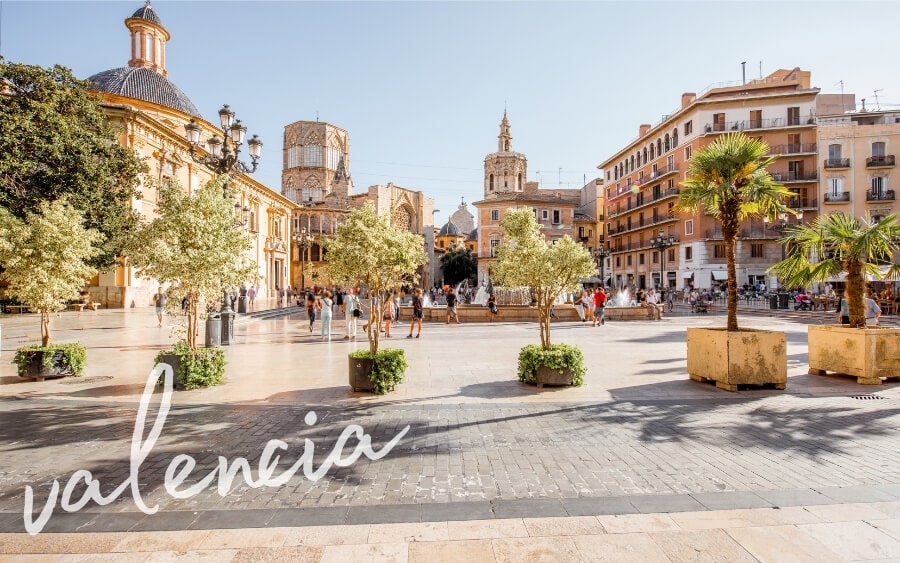
Spain’s third-largest city, Valencia has a lot to offer visitors. One of the most gorgeous European cruise ports, Valencia is close to miles of pristine golden beach just a short trip from the city centre. With more than 300 days of brilliant sunshine and blue skies every year, it’s no wonder why Valencia is considered one of the best places to visit in Spain in any season.
Located on the southeastern coast, Valencia has a rich heritage that traces back to ancient Roman times. Since then, Valencia has gone through countless rulers, each bringing their unique customs, language and religions.
Travellers flock to Valencia to experience the best of Spanish history, culture and food. The Church of San Nicolas De Bari’s beauty is often compared to the Sistine Chapel, with its magnificent frescoes and exquisite altar featuring gold columns. Other top attractions are the Valencia Cathedral and the Mercado Central, home to an impressive 100-foot-tall dome and an array of local produce.
Be sure to take a walk (or bike ride) through the Turia, a network of leafy parks that extends through the centre, all the way down to the City of Arts and Sciences, one of the 12 Treasures of Spain.
By Ellie from Ellie’s Travel Tips
Where to stay in Valencia: Stay in one of the city’s top 5-star hotels, Palacio Vallier. This beautiful accommodation is located in the old quarter area of El Carmen and offers luxurious amenities and a spectacular rooftop terrace.
10. Seville
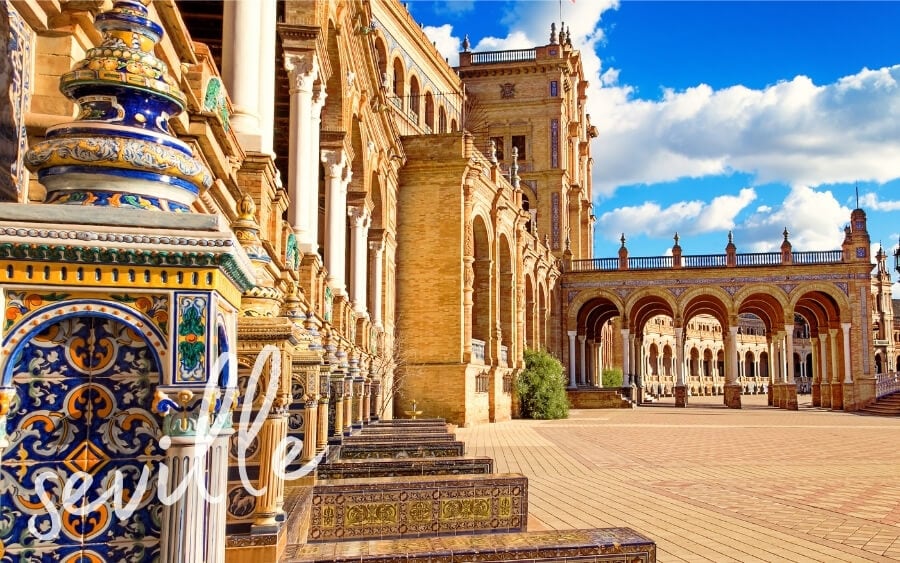
Sublime Seville, located in the picturesque southern region of Andalusia, is one of Spain’s largest cities, awash with architecture in the Moorish style, home to the country’s largest cathedral, several UNESCO World Heritage Sites, pretty urban parks, and incredible wining and dining.
Seville (Sevilla to the locals) has an interesting history not only as a leading cultural centre, but as the home of Spanish exploration in the New World (it even once housed the mint that processed all the gold and silver from the Americas). Today it stands apart as one of the most cosmopolitan cities on the Iberian peninsula.
There is a treasure trove of things to do in Seville. Start with a saunter through the labyrinth of medieval streets and charming narrow alleyways in the bohemian El Barrio de Santa Cruz neighbourhood, before exploring Plaza de España to glance at the gorgeous buildings (paying close attention to the vibrant tile work).
At sunset, head to one of Seville’s sumptuous and historic tapas bars for a glass of red wine and some Solomillo Al Whisky (prime cuts of pork with whiskey sauce.) Still ‘hungry’ for more? End your evening with a traditional flamenco show and then dance on over to one of Seville’s rooftop bars. Hotel Doña Maria‘s rooftop is a prime position to have a sip of sangria in the shadow of Seville Cathedral at night.
By Caroline & Neil from CK Travels
Where to stay in Seville: A recommended mid-price hotel to stay at is Adriano Boutique Sevilla, set in an 18th-century building. The location is in the heart of Seville, meaning all the main attractions are walkable, and it features typical Andalusian design and a roof terrace.
11. Girona

Girona is located in the north-east of Catalonia. Although it’s less well-known than the region’s biggest city of Barcelona, Girona is definitely worth a visit.
Girona’s medieval old town is filled with beautiful Gothic churches, narrow pedestrian streets and tree-lined avenues. The city’s cathedral is an excellent reflection of Girona’s history – an amalgamation of Romanesque, Gothic and Baroque, although the city’s origins stretch as far back as Roman times.
As Girona is not a particularly touristic destination (despite its newfound Game of Thrones fame), so there is a level of authenticity to the shops and restaurants that makes it a particularly appealing place to visit.
The old and new towns are separated by the River Onyar, which is in turn overlooked by rows of colourful buildings. The bustling Plaza de la Independencia is always a hive of activity
Girona is a great city to visit with kids – they will love the huge medieval walls that surround parts of the city, sections of which can be walked along for excellent views into gardens, across rooftops and, on a clear day, off to the Pyrenees in the distance.
Given Girona’s proximity to the coast, it’s easy to combine a Costa Brava family holiday with a day trip to the city – but it definitely warrants a longer stay.
By Annabel from Smudged Postcard
Where to stay in Girona: If you’re visiting Girona in summer, it’s worth considering a stay at Hotel Nord 1901. Located in the old town, this boutique hotel has a small garden and an outdoor pool.
12. Pamplona, another of the most beautiful cities in Spain

Pamplona (Pampeluna) is famously the stomping ground for one of Spain’s most vibrant and iconic festivals, the Encierro or Running of the Bulls. It’s a tradition that dates back to at least the 14th century and a major tourist draw.
But when her streets aren’t crowded with raging cattle, mad competitors and tourists, Pamplona is a charming city that showcases beautiful architecture and distinctive Basque culture.
When visiting Pamplona, focus your energy on the Navarrería, the oldest part of the city that was first established by the Romans. Eat lunch at one of the outdoor cafes on the gorgeous Plaza del Castillo overlooking the stone pavilion before visiting Pamplona’s Gothic Cathedral, which features beautiful cloisters.
Pamplona’s location at the crossroads of Barcelona and San Sebastian makes it an ideal pit stop when driving across northern Spain towards the Basque Coast.
Where to stay in Pamplona: Pamplona Catedral Hotel offers chic, spacious rooms in the heart of the old town.
13. Segovia
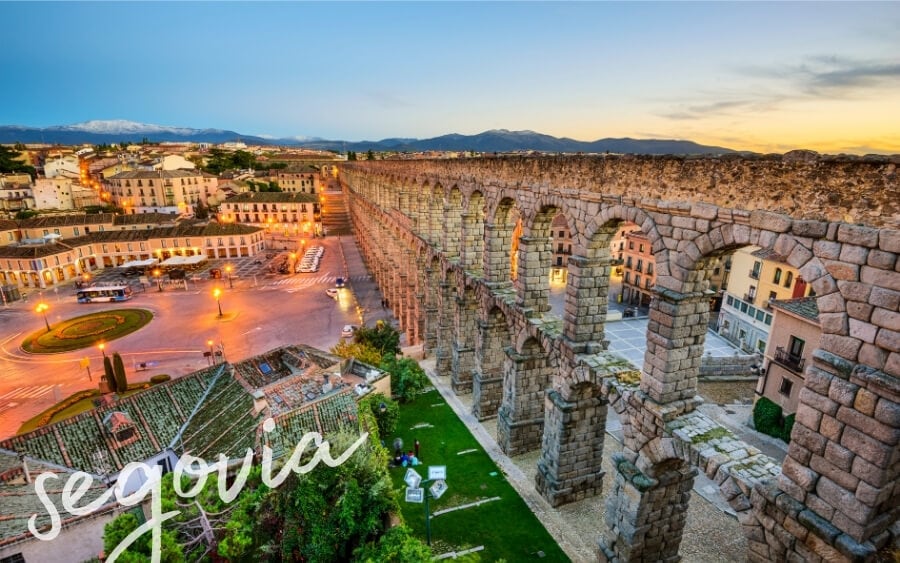
Famous for its historical buildings and rich cultural heritage, Segovia is an enchanting city defined by its magnificent Roman grandeur. It is a city wrapped up in various myths and legends, most notably the one that says Segovia was founded by Hercules himself. Segovia’s city centre is a UNESCO World Heritage site, a testament to its historical architecture.
Segovia is a warm and welcoming European city with sandstone and terracotta buildings, all framed by green rolling hills that provide beautiful vistas from various viewpoints. Understandably, Segovia is very popular with photographers.
There are various historical landmarks to visit. A particular standout is the iconic Roman Aqueduct – built around 50 BC, it is extraordinarily well-preserved. Other must-see attractions are the 16th-century Gothic church and 11th-century castle, the Alcázar.
By Jessie from Pocket Wanderings
Where to stay in Segovia: For a beautiful and authentic hotel, choose the San Antonio el Real. Located next to the aqueduct within a converted monastery, visitors can enjoy spacious rooms and stylish surroundings. The hotel also offers exceptional dining provisions, with the opportunity to try the famous suckling pig of Segovia.
14. Oviedo

Oviedo, the capital of Spain’s northern Asturias region, is one of the most beautiful cities in Spain and the entire Iberian peninsula. It is also one of the most underrated.
Beautifying Oviedo seems to have always been an objective of the city’s inhabitants. When the Asturian kings established their pre-Romanesque churches in Oviedo in the 8th century CE, they placed them all in spectacular surroundings. These exquisite structures are so stunning they have been declared UNESCO World Heritage Sites.
Every period in Oviedo’s storied history only added to the city’s beauty. This is evident in the imposing architecture: ornate Baroque, delicate Renaissance, and brooding Gothic. These different styles can best be appreciated in the Cathedral of the Holy Savior that boasts all three on its facade and interior.
In modern times, the city planners ensured Oviedo had numerous outdoor green areas. Oviedo is truly a city of parks. One of the most beautiful is the Campo de San Francisco, a lush, verdant oasis in the city centre with many walking tracks, trees from around the world, a small lake, and a pleasant cafe from which to enjoy nature.
Nearby are the wonderful Jardines de la Rodriga and Jardines del Campillin, both with spectacular views of the city.
By Talek from Travels With Talek
Where to stay in Oviedo: An excellent accommodation in Oviedo is the 5-star Barcelo Oviedo Cervantes, which averages 70 USD per night depending on the season. The hotel is close to Campo de San Francisco and you can walk through the park to access all the beautiful highlights of Oviedo.
15. Bilbao
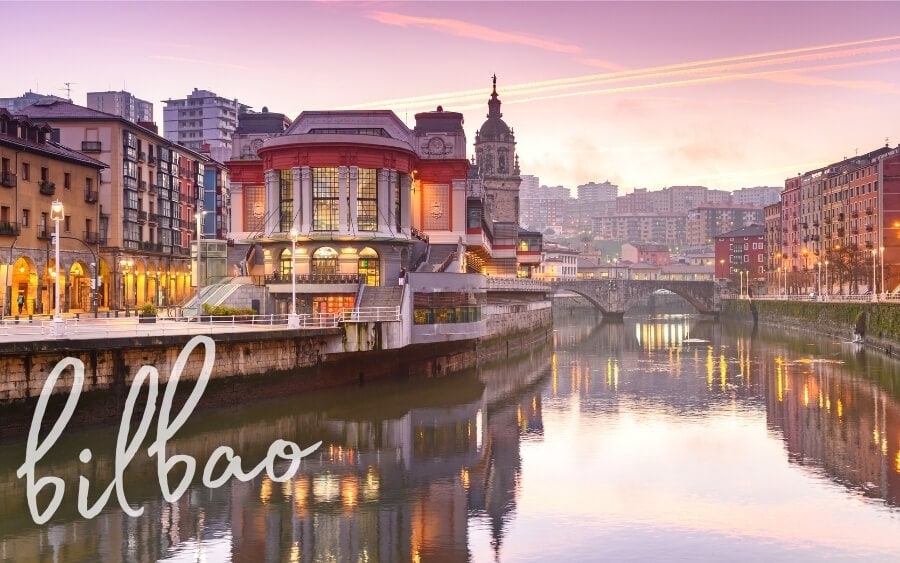
Once a polluted industrial city, Bilbao was in decline until 1992. In that year, an agreement between the Basque Administration and the Guggenheim Foundation to build a new museum in Bilbao was signed.
The Guggenheim Museum is now a tourist hot-spot, making Bilbao a must-see city in Northern Spain.
After the museum, another must when visiting Bilbao is La Ribera Municipal Market. Home to more than 60 merchants, it’s one of the largest covered markets in Europe. Stalls selling seafood, meat, vegetables, fruit and cheese share the 10,000-square-metre space with pintxos bars. The bars are busiest at lunchtime, with locals and tourists alike enjoying the variety of bite-sized pintxos and local Spanish wines.
Another must-do is to wander the Seven Streets (Siete Calles) in the Old Quarter of Bilbao (Casco Viejo), which is located on the right bank of the Nervion River that runs through the city. The historic streets now boast excellent shopping, and this is also where you will find many of the city’s best bars and restaurants.
By Jane & Duncan from To Travel Too
Where to stay in Bilbao: Bilbao has an accommodation option for every traveller. The-4 star Hotel Gran Bilbao is well-located for visiting La Ribera Market and the Seven Streets.
16. San Sebastian
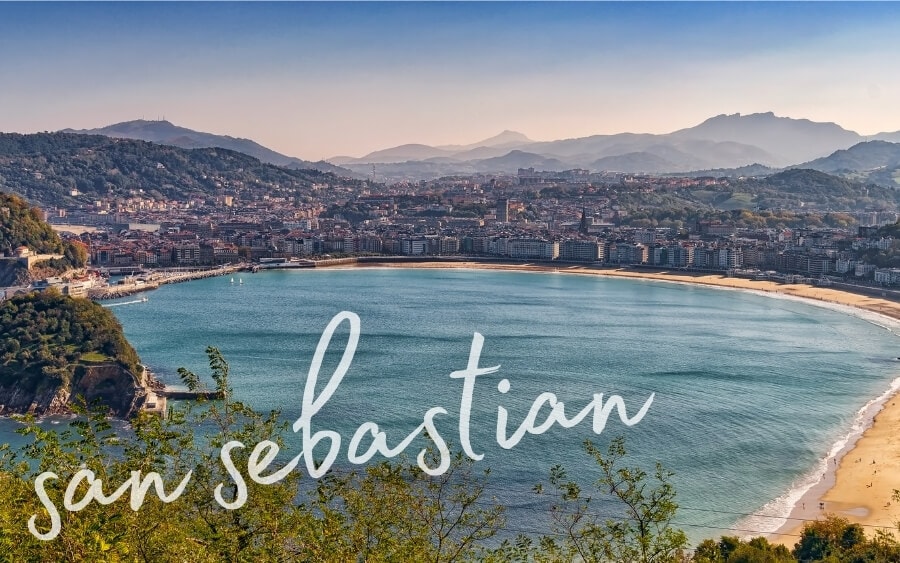
San Sebastian (known as ‘Donostia’ in Basque) is one of the largest cities in the autonomous Basque Community in the northernmost part of Spain, close to the French border. Not only is it famous as a culinary hotspot (thanks to nearly a dozen Michelin star restaurants), it’s also a prominent centre for Basque region culture and arts.
A full three days is enough time to soak in some of the best attractions in San Sebastian, be it going on a pintxo crawl in the old town (Parte Vieja), exploring the city centre, and marvelling at the Basque sculptures all over town.
Enjoy the epic views by riding the funicular to Monte Igueldo or hiking up Monte Urgull, and go on a boat ride to Santa Clara Island, peeking out at the sparkling waters of the Concha Bay or riding the waves at Zurriola beach, a surfers’ paradise.
If you have more time to spare, a road trip along the Atlantic coast from San Sebastian to Bilbao is one of the most beautiful yet underrated routes in Spain, with several stops along the way at small Basque villages and nary a tourist in sight.
By Paroma from Year of the Monkey
Where to stay in San Sebastian: Located on the edge of the Amara neighbourhood walking distance from the river, Zenit San Sebastian is a 4-star hotel with a gorgeous rooftop sun terrace and hot tub.
17. Palma de Mallorca

Mallorca’s lively capital city, Palma, is often regarded as a jumping-off point for a holiday on the Balearic Island. But there are plenty of reasons to prolong your stay. Located on Spain’s southeastern coast, Palma rests on the edge of the sparkling Mediterranean Sea. And while it’s easy to spend all your time sunning yourself on the city’s beaches, there’s much more to see if you venture further inland.
The historical heart of Palma is where you’ll find Placa Major, with its curbside cafes and lively summer scenes. Wander the surrounding streets and you’ll find them brimming with boutiques that’ll steal your attention for hours. Weave your way around the city, taking in the diverse architecture, historical buildings that represent the city’s turbulent past, and thriving art scene.
As you make your way back towards the port you’ll come across Mallorca’s most prominent landmark, the Catedral-Basílica de Santa María de Mallorca. Join the locals for a waterside picnic here, or find shelter at the public gardens nearby.
Due to its connections with the rest of the island, Palma is among the best places to stay in Mallorca, too. For an enjoyable day trip, take the Soller train to the town of the same name. The vintage railway is a unique way to explore the island’s backcountry and is a hit with kids too.
By Nadine from Le Long Weekend
Where to stay in Palma: Hotel Cort is located in the heart of the old town and offers a truly unique experience. Spend days exploring, then come back for a drink on your private terrace, or a meal in the excellent onsite brasserie.
18. Sagunto
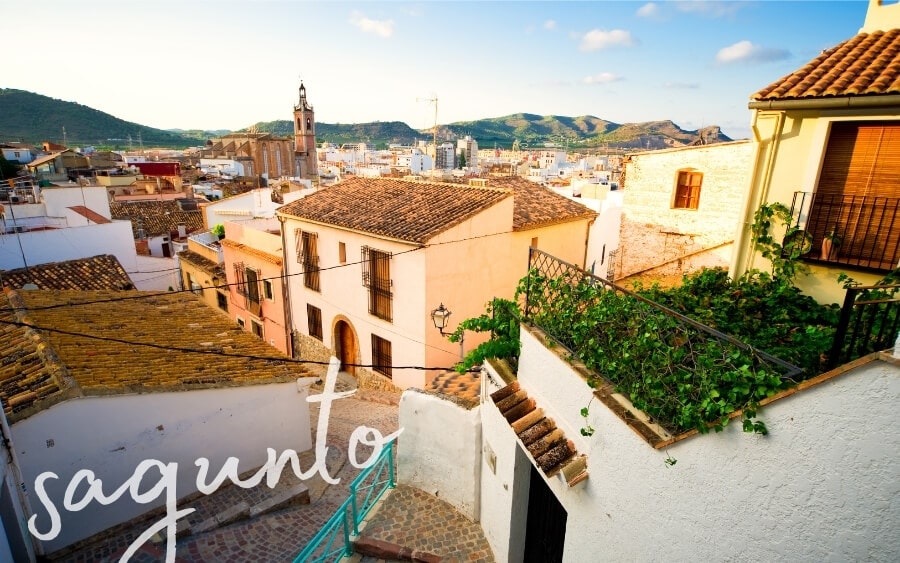
Tucked away in the foothills of the Parc Natural de la Serra Calderona, north of the bustling city of Valencia, the quiet city of Sagunto is another of the most beautiful in Spain.
Smaller Spanish cities such as Sagunto are overlooked but provide a taste of typical Spanish life for those willing to venture beyond the popular hotspots. The people of Sagunto are very friendly to visitors, and it’s not uncommon for strangers to ask you to join in a game of fútbol in one of the local fields.
As well as the hospitality, another thing that makes Sagunto so beautiful is the mix of old Spanish charm and ancient Roman ruins scattered within and above the city. Sagunto is full of narrow streets that wind up and down the hills. Throughout the city, you will find vibrantly coloured buildings, nearly all of them with that lovely classic red-clay roof that you see in many a Spanish town.
On the highest hill above the city you’ll find the ancient Sagunto Castle, built over 2,000 years ago by the Romans. Taking in the sweeping views the castle provides is a must-do when visiting.
For more on Sagunto, see this detailed 2-day Sagunto Itinerary.
By Christen from Travel Wander Grow
Where to stay in Sagunto: When visiting Sagunto, stay at the B&B Domus Atilia. It offers great views of the castle, free breakfast, a terrace, and top-quality service. On top of that, this B&B is another nice way to get a real feel for the Spanish culture and daily life in Sagunto.
19. A Coruna

Dating back to prehistory, A Coruna (A Coruña) is the second-largest city in the region of Galicia and one of the best places to visit in northern Spain. It served as the political capital of the Kingdom of Galicia in the 16th-19th centuries, and today, it is the industrial and financial hub of the northern region.
A Coruna is packed with stunning historical spots, viewpoints overlooking the rugged coastline, incredible places to eat, and much more. But what makes this beautiful Spanish city so amazing is the combination of traditional and modern, as well as the laid back yet vibrant atmosphere.
Some of the landmarks that shouldn’t be missed are the Tower of Hercules (a lighthouse dating back to Roman times and a UNESCO World Heritage Site), the Castle of San Anton, the Town Hall, and the entire old city, which is A Coruna’s most charming precinct. There are also plenty of visit-worthy museums in the city including the Fine Arts Museum, National Museum of Science and Technology, and Military Museum.
For those looking for some relaxation, A Coruna is home to beautiful parks and gardens such as Jardínes de Méndez Núñez, and fantastic beaches where one can soak up the sun, including Riazor Beach, Lapas Beach, and Matadoiro Beach.
By Or from My Path in the World
Where to stay in A Coruna: A lovely hotel that offers views of Riazor Beach is the cosy Hotel Brisa.
20. Santiago de Compostela
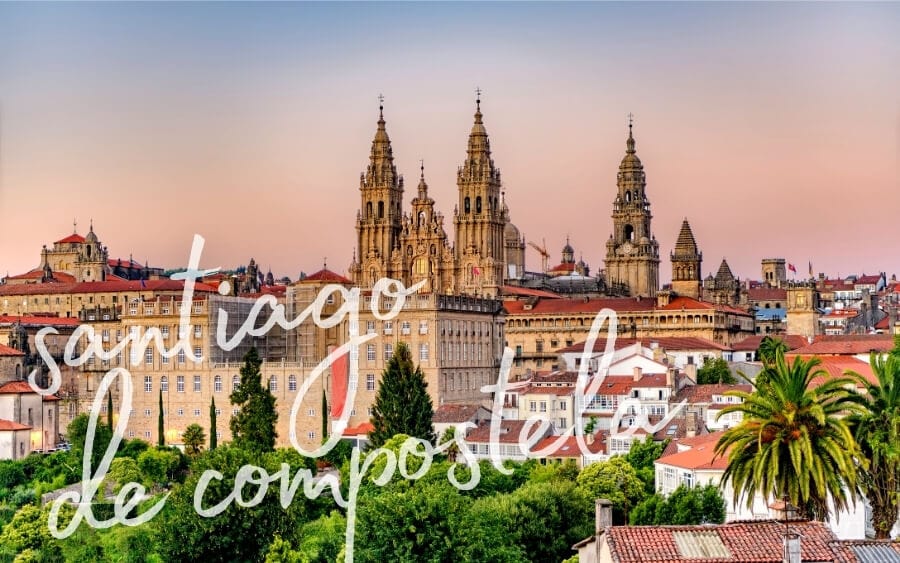
Santiago de Compostela, the main city in Galicia, is world-famous for being the final stop on the Camino de Santiago, AKA the Way of St. James – a holy pilgrimage that sees pilgrims walking from a variety of different places to reach the city in a journey of self-discovery and spirituality.
The city became a UNESCO World Heritage Site in 1985. The main sight is the beautiful cathedral, where you can spot the Crypt of St. James and where the Cathedral museum is also found. The view of Obradoiro Square from the terrace of the museum is impressive. Make sure to also visit the Hostal de Los Reyes Católicos, which has been providing accommodation for pilgrims since the 16th century.
Other places worth exploring are the Mercado de Abastos and the beautiful Parador Santiago de Compostela, a five-star hotel with a gorgeous interior (you’re welcome to walk in just to see it).
Other than that, the city is a pleasant place to stroll around and get lost in the multitude of narrow alleys. Breathe in the festive atmosphere and feel the sense of achievement the pilgrims bring whenever they reach the final point of their walk.
By Claudia from My Adventures Across The World
Where to stay in Santiago de Compostela: One of the best places to stay in Santiago de Compostela is A Quinta da Auga, a wonderful hotel with cosy rooms, a restaurant and a spa. It is, however, located a bit outside of the city centre.
21. Granada
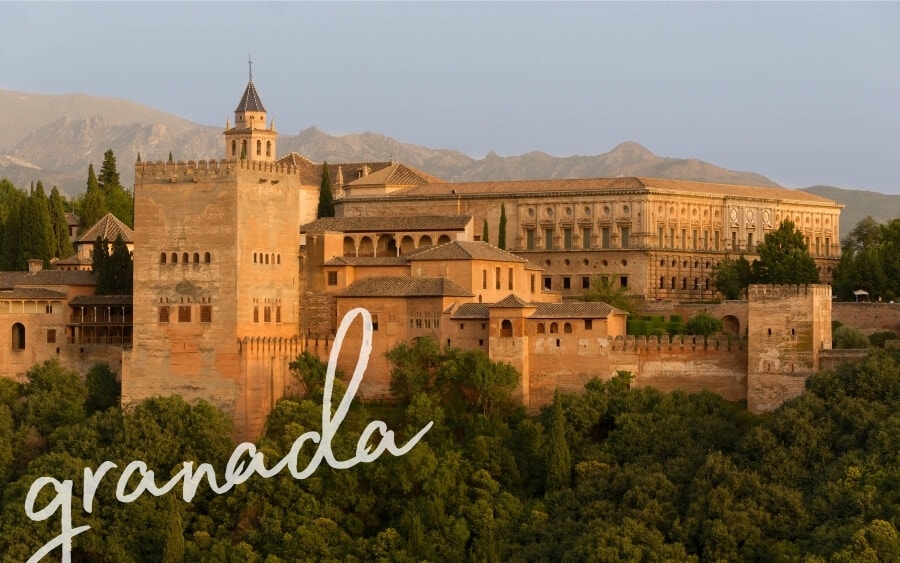
Granada is constantly voted ‘One of the Most Beautiful Cities in Spain’.
Granada is rich in history and culture shaped by Muslims, Jews and Christians, and there is evidence of this around every corner. Albaicin is the old Arabic Quarter with narrow, winding cobbled streets and whitewashed houses covered in potted flowers. Sacromonte has the ‘Gypsy Quarter’, cave houses, and authentic flamenco shows. And the former Jewish Quarter, Realjo, has great street art.
But it’s the hilltop UNESCO World Heritage site that is Alhambra – a stunning Moorish palace with Islamic architecture, magnificent palaces, courtyards, gardens and fortifications – that attracts most visitors to Granada. At sunset, head to San Nicolás for a stunning view of the Alhambra and Granada city as a whole.
Granada is overlooked by the soaring, often snow-covered peaks of the Sierra Nevada mountains and is only about 70 km from the sea, so it’s possible to go snow skiing and swimming on the same day!
Granada is a ‘working city.’ It’s not just a tourist attraction, and so you’ll get to experience an authentic Spanish way of life and sample some of the best tapas in Spain too!
By Maureen from “So Many Places! So Little Time”
Where to stay in Granada: The historic 5-star Alhambra Palace is highly recommended because of its location close to the Alhambra and terrace with stunning views.
22. Cadiz
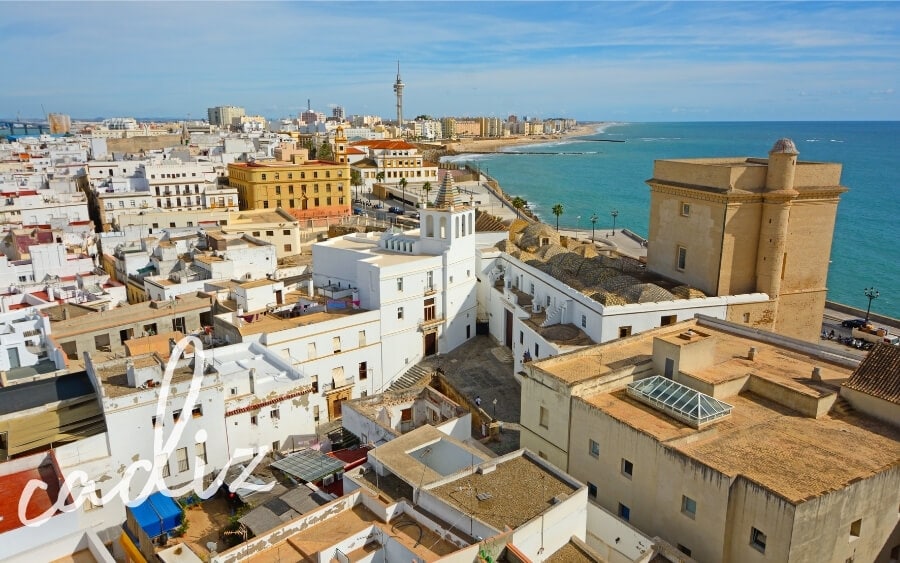
Founded by the Phoenicians and one of the oldest settlements in Europe, the Andalusian city of Cadiz (Cádiz) is a peninsular beach town on the southern coast of Spain. Describing Cadiz in a way that does it justice is a very tricky task. Alongside its rich historical past, Cadiz is charming, quaint, and a place of extraordinary beauty with an authentic Spanish feel.
There are 17th and 18th century castles in Cadiz, including the Castillo de San Sebastian and Santa Catalina, remains of a Roman settlement, including a Roman Theatre, and incredible panoramic views from the Tavira Tower (Torre Tavira), the highest point in the city.
If you want to get a glimpse into local life and sample fresh regional produce, head to Mercado Central, a lively food market located in the heart of the Old Town. Make sure you don’t leave Cadiz without going to a flamenco dinner show – get ready to be dazzled by this powerful art form whilst you work your way through a delicious plate of traditional tapas.
For experienced riders and those learning how to surf, Cadiz is also home to La Caleta, considered one of the best urban beaches in Europe.
By Milene & Paul from Surf and Unwind
Where to stay in Cadiz: If you’re looking for a place to stay, consider booking the 4-star Parador de Cádiz, a modern hotel that overlooks the bay right in the Old Town next to Parque Genovés, just steps away from the beach.
23. Leon

Leon (León) is the capital of the province of Leon, nestled in the northwest of Spain. Its origins date back to 29BC when it was the military encampment for a legion of the Imperial Roman Army, namely the 6th Victorious Legion. Leon’s name derives from the Latin for Legion – legio – and not from lion as is often assumed.
Throughout the years the city has been home to the Romans, the Goths and the Moors. A commercial centre for most of its medieval years, Leon declined and is now experiencing something of a comeback.
A trip to Leon is highly recommended for its architecture, food and festivals. The city hosts numerous celebrations including Holy Week.
Architecturally, the three main draws are the Cathedral (Santa Maria de Regla), the Basilica of San Isidoro, and the Convent of San Marcos. The former was built over during the 13th century with an impressive Gothic look and some of the best and most numerous stained glass windows from the period.
The latter is now a convent turned Parador – one of the state-owned luxury hotels where Pilgrims on the Camino de Santiago often blow their budget for one night of luxury while passing through town!
By Dave from DaveChant.com
Where to stay in Leon: Whilst fairly expensive, the Parador Hostal San Marcos, the convent-turned-hotel, is the standout for a stay in Leon.
24. Marbella

Marbella is no doubt one of the most beautiful cities in Andalusia. The capital of the Costa del Sol, the city is probably most well-known for its marina: Puerto Banús. It’s famed for fabulous nightlife, luxury shops, and elegant restaurants. This, in turn, means the marina is often filled with extravagant yachts and a few celebrities…
However, there’s far more to Marbella than meets the eye! For example, it has a rich history which goes all the way back to the Roman Empire. You can visit the remains of Roman baths just outside the modern city centre.
Visiting Marbella’s old town is also like stepping back in time. Some of the charming narrow streets are still surrounded by an ancient wall, which was built to protect the old Arab ‘Medina’.
Furthermore, the natural beauty of Marbella is quite stunning. Twenty-seven kilometres of coastline culminates in 24 soft sandy beaches, all with great amenities. This said, the crowning jewel has to be the Sierra Blanca mountains, which provide the most breath-taking backdrop and frame the city.
By Rachel from Earth’s Magical Places
Where to stay in Marbella: If you’re looking for somewhere to stay in Marbella, nowhere could be better than the Nobu Hotel. Although on the expensive side, this 5-star accommodation offers a perfect location, chic modern and stylish rooms, and world class facilities thanks to the gorgeous pool, and onsite restaurants.
25. Santander
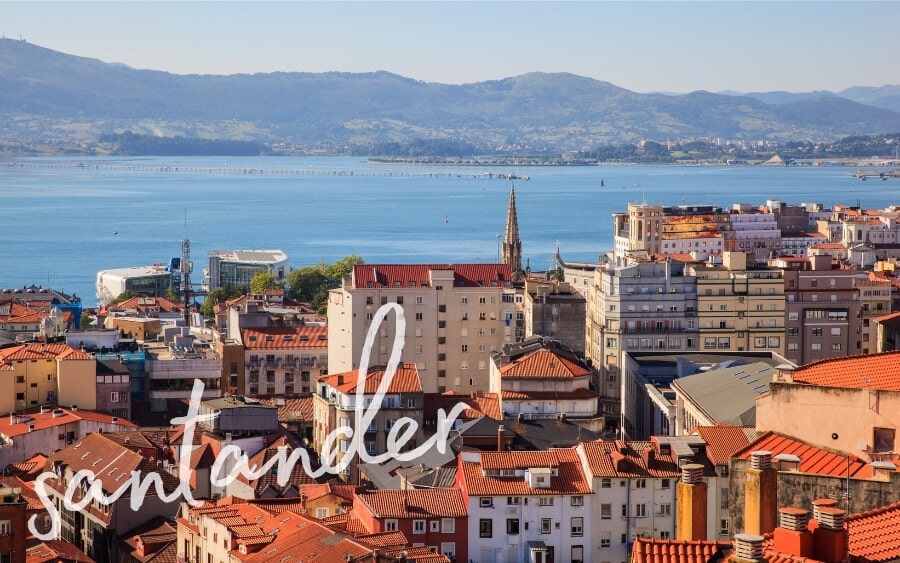
Santander is a gem among Spanish cities. This elegant city on the northern coast captivates visitors with its majestic atmosphere, beautiful architecture, charming terraces, and, of course, the bay, recognised as the most beautiful in the world. The Bay Bahía de Santander is a must-visit for views of the endless sea and mountains.
Santander is home to some of the best and most beautiful beaches in northern Spain, all with fine, golden sand. This city has everything a traveller could dream of: interesting historical sights, unique places to stay, parties, and delicious Spanish tapas. Be sure to take a stroll along the Paseo de Pereda, a sprawling street in the centre, with a long promenade parallel to the pier line.
On a walk, you can enjoy the splendour of the bay. An important attraction nearby is the Pereda gardens or Jardines de Pereda. Both the promenade and gardens are dedicated to the Cantabrian novelist José Maria de Pereda.
If you’re drawn to the sea, don’t miss the Maritime Museum, the Museo Marítimo del Cantábrico, which is dedicated to the maritime heritage of Cantabria. Its collections, considered the most complete in Spain, offer a global look at marine biodiversity and explore the relationship between humans and the Cantabrian Sea over the centuries.
In the evening, head to Calle Vargas, an area full of restaurants where you can try typical Santander seafood dishes: famous fried calamari, shellfish, and mussels.
By Sasha from The Alternative Travel Guide
Where to stay in Santander: Hotel Chiqui is a great place to stay in Santander as all rooms have sea views. It also features an infinity pool.
26. Santa Cruz de Tenerife

The coastal city of Santa Cruz de Tenerife is located in one of Spain’s most beautiful regions, the Canary Islands, off the coast of West Africa. The best time to visit is in February for Carnival of Santa Cruz de Tenerife, one of the country’s biggest and most vibrant festivals.
Santa Cruz offers visitors the perfect blend of amazing history, culture and nature. Life centres on the bustling port. Wide boulevards radiate out from the gorgeous Plaza de España, and around the city you’ll find beautiful beaches including Las Teresitas.
Other iconic monuments in the old town centre include the baroque Palacio de Carta, the Old Hospital, and the Church of the Immaculate Conception. Beyond the bright lights, UNESCO World Heritage-listed San Cristóbal de La Laguna and Teide National Park make ideal day trips.
A little bit glam but with a soft natural side, Santa Cruz de Tenerife is a true beauty and the perfect base for exploring the Spanish islands.
Where to stay in Santa Cruz: Hotel Taburiente S.C.Tenerife is located next to García Sanabria Park and offers guests a rooftop pool with views of the Atlantic Ocean.
Spain essentials
Here are some helpful websites and resources you can use to organise your trip to Spain.
FLIGHTS: Find affordable flights to Spain on Skyscanner.
VISAS: Use iVisa to check if you need a tourist visa for Spain and apply for an expedited visa online.
TRAVAL INSURANCE: Insure your trip with HeyMondo, my preferred provider for single-trip and annual travel insurance.
SIM CARD: Buy an eSIM and data package for Spain online before you go. My top choice is the Eurolink eSIM from Airalo (prices from $5).
CAR HIRE: Find a great deal on a Spain rental car using Discover Cars.
ACCOMMODATION: Find the best hotel deals in Spain on Booking.com, or find a unique Airbnb. See my list of the best Spain Airbnbs here!
CITY TOURS & DAY TRIPS: Book skip-the-line tickets, day tours and city excursions on Viator.
FOODIE EXPERIENCES: Find the best food tours and cooking classes in Spain. Use the promocode EMILYLUSH to get 10% off your booking.
SPAIN GUIDEBOOK: Pick up a copy of the latest Lonely Planet guidebook for Spain.
More Europe inspiration
- Most beautiful places in Portugal
- Romantic destinations in Greece
- Most beautiful cities in Italy
- Beautiful places in Croatia
- Beautiful places in Turkey
- Unique city break destinations in Europe
- Most beautiful places in Slovenia
- Most beautiful places in Montenegro
- Most beautiful places in Croatian Istria
Thank you for your post.
Thank you for your post.
Beautiful post! Your informative blog about beautiful cities in Spain and their amazing attractions has nudged me to apply for a Spain Visa. I have been sitting in my home for most of the last year due to lock-down like restrictions. And due to work from home policies, I never had to step out of my house much. But, once in a while, I feel like getting out and exploring. What better way to enjoy a tourist experience than by visiting Spain. I would gladly visit this beautiful country and make some beautiful memories for life.
Amazing list! Spain is one of the most attractive travel destinations in Europe, full of beaches, monuments and delicious food. The cities are so diverse, but each one worth visiting. It is a pity that time only limits us in our travels.
Outstanding post!
Thank you Talek! And thanks for your contribution!