A hand-picked list of the most beautiful Danube river cities and towns to visit in Europe.
The second-longest river in Europe, the mighty Danube flows through no fewer than 10 countries: Germany, Austria, Slovakia, Hungary, Croatia, Serbia, Romania, Bulgaria, Moldova and Ukraine.
Winding its way 2,850 kilometres (1,770 miles) from the Black Forest to the Black Sea, this legendary river is a gateway to some of the most magical landscapes, captivating small towns and timeless capital cities in Central and Southeastern Europe.
Whether you’re river cruising, road tripping or even on a cycling or kayaking adventure, there are dozens of Danube destinations to capture your imagination. Here are 20 of the very best towns and cities on Danube, as chosen by travel experts.

Please note: This post contains affiliate links, meaning I may earn a commission if you make a purchase by clicking a link (at no extra cost to you). Learn more.
Danube river capital cities
There are four capital cities on the Danube: Vienna, Bratislava, Budapest and Belgrade.
1. Vienna, Austria

The capital of Austria, Vienna is an aristocratic city and the ideal place to visit if grand palaces, stately opera houses and meticulously-groomed gardens are your thing.
Its refined appearance today belies the fact that it suffered catastrophic damage during WWII. Thankfully, some of the buildings were spared, and others carefully reconstructed after the war. Today, cultural pursuits take centre stage, with musical performances, classical dressage and theatre being among the best things to do in the city.
Vienna is very walkable, so don your walking shoes and hit the renowned shopping streets, scale the spire of St. Stephen’s Cathedral for spectacular views and discover treasures within the Natural History Museum before immersing yourself in the tropical butterfly garden nearby.
Once you’re ready to rest, seek out one of Vienna’s famed coffee houses and indulge in a slice of warm apfelstrudel or decadently rich chocolate Sachertorte.
One of the best times to visit Vienna is in the winter months when the city is adorned with sparkling lights and festive decorations. Vienna’s Christmas markets are commonly regarded among the best in the world, and you’ll find them popping up in many city squares and palace gardens from late November onwards.
Where to stay: Book a room at the budget-friendly Hotel Domizil to experience traditional hospitality in the centre of the city.
By Nadine from Le Long Weekend
2. Bratislava, Slovakia

Less than 100 kilometres downstream from Vienna, Bratislava is the biggest city in Slovakia and the only capital in the world that borders on two countries. It also happens to be the smallest of the capital cities on the Danube by population and is often overlooked by travellers as a result.
The picturesque Little Carpathian mountains frame the river city, which stretches out over both banks of the Danube. One full day in Bratislava is enough time to take in the main sights of this compact and walkable city. You can easily stay longer and use it as an alternative base to explore other towns, cities and wine regions on an organised or DIY Bratislava day trip. Devín Castle is the most popular attraction on the city limits and can be reached in under an hour by river boat.
A walking tour of Bratislava’s compact old town provides a great introduction to Slovakian history. Most culminate at Bratislava Castle, where you get a picture-perfect view of the Danube river, the unusual UFO Bridge and the colourful district of Petrzalka just beyond. From the high castle yard, you can gaze at the church steeple belonging to St. Martin’s Cathedral, where 19 Hungarian monarchs were crowned during Bratislava’s time as the capital of the Hungarian Empire. The cathedral and the Blue Church are both must-sees.
Where to stay: Loft Hotel is one of Bratislava’s most popular accommodations and is an ideal place to stay within walking distance of the old town.
3. Budapest, Hungary

One of the best-known Danube river cities, Budapest is a fabulous city and a must-visit in Central Europe. Hungary’s political and cultural capital, Budapest is defined by the Danube that washes through the city centre, dividing the city into two districts, Buda and Pest, and giving it one of its most recognisable landmarks, the Chain Bridge.
Almost all the best things to do in Budapest revolve around the river. The centre of the city and its waterfront promenade, a UNESCO World Heritage Site since 1987, holds dozens of treasures: Buda Castle, Fisherman’s Bastion and Central Market Hall, to name just a few. The twinkling lights of the Hungarian Parliament building reflected on the surface of the water at dusk is a classic motif of the city.
Water also flows beneath the surface: There are more than 80 geothermal springs coursing under Budapest, many of them tapped for the city’s legendary thermal baths, which date back to the Ottoman era. The Gellert and Széchenyi Baths (the latter being the largest medicinal bath in Europe) are among the best known.
Visit the Dohány Street Synagogue (the biggest synagogue in Europe), have a tipple at one of the infamous ruin bars, and ride the above-ground trams.
Budapest is a perfect city break destination and a great jumping off point for exploring other magical places in Hungary.
Where to stay: For the full experience, stay in one of Budapest’s charming Airbnbs in the city centre.
4. Belgrade, Serbia

Strategically located at the confluence of the Danube and Sava rivers, Belgrade has served as a capital of many sovereign nations and kingdoms over the course of its history – including as the capital of Yugoslavia from 1918 to 2006.
The flash point for no fewer than 115 wars, the city has been razed and rebuilt 44 times, giving the river city a unique urban landscape that combines the historic (e.g. Belgrade Fortress) with the ultra-modern (e.g. Avala Tower).
As Serbia’s largest and most important city, Belgrade offers visitors unique insights into various chapters of Balkan history, from the prehistoric Vinčas through to the Yugoslav era and modern-day Serbian culture. The House of Flowers, a museum and mausoleum dedicated to the late Yugoslavian ruler, Josip Broz Tito, is a particularly interesting visit.
Other must-dos in Belgrade include the monumental Saint Sava Temple (Serbia’s biggest church), admiring the monolithic concrete architecture in New Belgrade, bike riding along the Belgrade riverfront, and spending a few hours wandering the streets of Zemun, a charming town within the city.
Where to stay: Boutique Hotel Museum is a short walk from Republic Square in the heart of the city.
Other major cities on the Danube
Aside from the capitals, there are a number of other charming Danube river cities – each with its own captivating maritime history and breathtaking river views.
5. Novi Sad, Serbia – one of the most underrated cities on the danube

European Capital of Culture for 2022, Novi Sad is a city of art, architecture and heritage. Serbia’s second most populous city and the biggest city in the autonomous Vojvodina province, Novi Sad showcases northern Serbia’s unique culture and history, and doubles as the perfect starting point for exploring the part of the country that stretches along the Hungarian and Romanian borders.
Novi Sad’s top attractions include the majestic Petrovaradin Fortress, a 17th-century fortification that hovers above the Danube atop a sheer rocky cliff. In summer, Petrovaradin hosts one of Eastern Europe’s most popular music festivals, Exit Festival.
On the opposite riverbank, the compact city features an old town, Stari Grad, with rows of pretty Hapsburg-style facades painted in pastel colours and arranged around tidy town squares. The Gothic Name of Mary Church is one of the most recognisable landmarks – look closely at the roof and you’ll see it’s decorated with Zsolnay ceramic tiles, the very same tiles used for St. Stephen’s Cathedral in Vienna and Matthias Church in Budapest.
There are other things that tie Novi Sad to nearby European cities on the Danube. Like Vienna, this is a city of cafes, with a multitude of sidewalk eateries lining the streets of the old town. As the gateway to several of Serbia’s underrated wine regions, Novi Sad is the perfect place to drink in local vino culture, perhaps with a day trip to nearby Fruška Gora, where mountain hiking trails and vineyards are both in ample supply.
Where to stay: For convenience and value, stay in a self-contained apartment. Bianca Apartment has an ideal location.
6. Gyor, Hungary
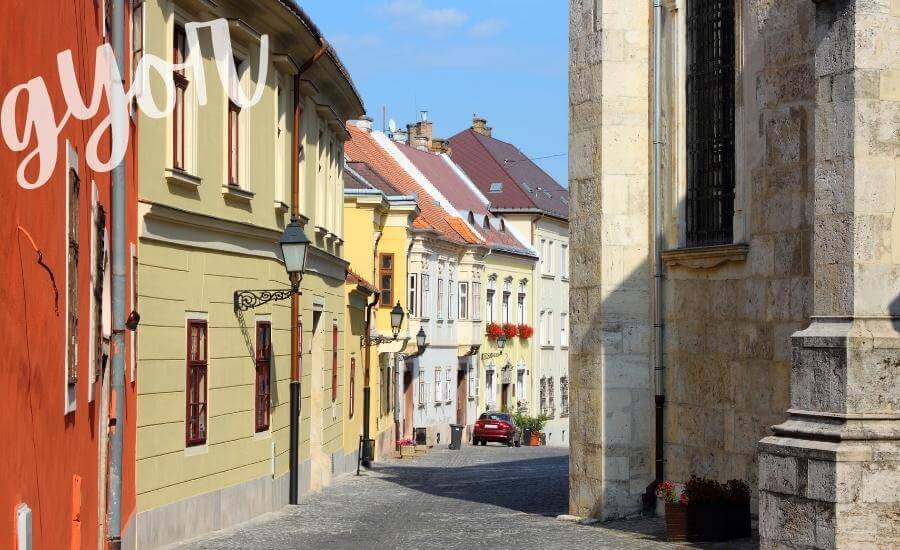
Gyor, Hungary is one of the most underrated cities in Central Europe. Located halfway between Budapest and Vienna (120 km from either city), Gyor makes a perfect pit stop between the two capitals, with international trains stopping here every hour.
The historic city of Gyor is one of the oldest in the region, with the first human settlement dating back to the 5th century BC. Today Gyor is known as the ‘pearl of Baroque architecture’ thanks to its hundreds of heritage listed buildings. The majority are located in the centre, within a walking distance of each other.
The most important buildings in Gyor, however, are its churches, especially the Cathedral Basilica of the Assumption of Our Lady and Saint Ignatius Benedictine Church, both impressive examples of Baroque church architecture.
The best thing to do in this Danube city is wander around and explore all the corners of the vibrant old town. There are so many beautiful buildings that you will be busy admiring them all. Once you’re done with sightseeing, find a seat at one of the numerous cafes and soak up Gyor’s perfect Central European vibe.
Where to stay: If you’re looking for a place to spend the night, Hotel Capitulum is a good option, with spacious rooms and a location right in the heart of the old town.
By Kami from Kami and the Rest of the World
7. Ruse, Bulgaria
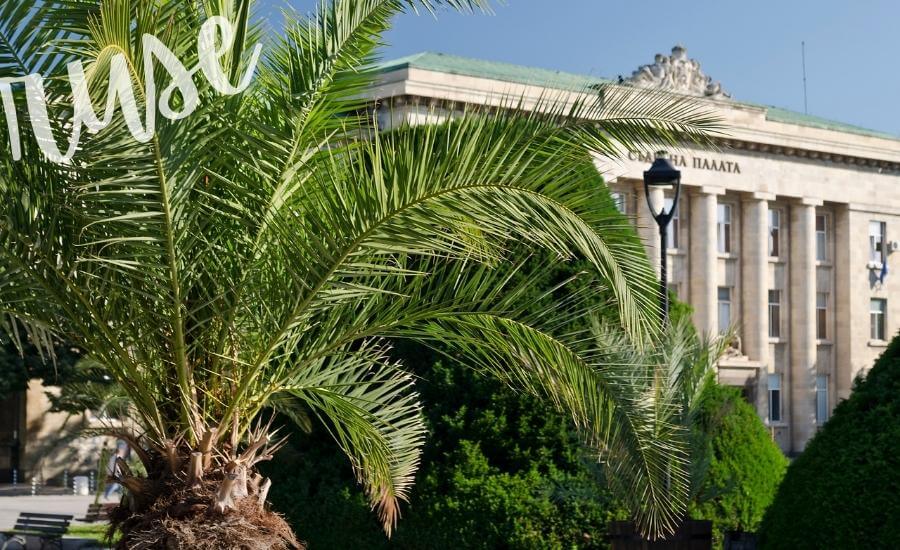
Ruse is the biggest and most important Danube city in Bulgaria. Thanks to its geographical location, Ruse has been considered the gateway for Western cultural and political influences in Bulgaria since the 19th and early 20th centuries. Indeed, Ruse is like no other city in Bulgaria – you won’t find any typical Bulgarian National Revival architecture, but rather Neo-classical, Neo-Baroque and Neo-Rococo buildings instead. This has earned Ruse the nickname, ‘Little Vienna’.
The city is famous for the bridge over the Danube river that connects Bulgaria with Romania. It was the only bridge between the two countries until 2013. One of the best attractions in Ruse is the local Historical Museum, where you can view a display of Thracian treasure from Borovo (383–359 BC).
Other interesting museums to visit in Ruse are the Transport Museum and the Eco Museum, which also has an aquarium. Another popular thing to do in Ruse is to stroll along the riverbank promenade or relax in the Youth Park and enjoy the lovely Rosarium.
Just outside Ruse, a 25-minute drive from the city, you’ll find one of the most famous attractions in Bulgaria, the 13th-century Rock-hewn Churches of Ivanovo, a UNESCO World Heritage Site.
Ruse can be easily visited on a day trip from Bucharest in Romania or from Veliko Tarnovo in Bulgaria. It’s also the perfect starting point for a road trip in Bulgaria and should be a compulsory stop on any itinerary in Bulgaria or the Balkans.
Where to stay: Vega Boutique Hotel is a lovely place to stay in Ruse. Located in the heart of the city on one of its most iconic streets, Alexandrovska, it’s a stone’s throw from the Monument of Liberty.
By Daniela from Ipanema Travels
8. Linz, Austria

One of Austria’s most charming cities, Linz is located on the Danube river in Upper Austria. It might not be the typical destination travellers put on their Austria itinerary, however, the city has a lot to offer.
Once a Roman fortress and an important medieval trading centre called Lentia, Linz has slowly become an important cultural centre in modern-day Austria. It’s home to the renowned Johannes Kepler University, many schools of art and music, and the Academy of Industrial Art Design.
Moreover, the city is rich in historic buildings, most of them in Baroque style. Some of the most famous include the St. Martin’s church, the old town hall, the old castle, and the main square with the monument to the Holy Trinity.
Art lovers will adore the riverside Lentos Kunstmuseum and its modern art collection, whereas the striking Ars Electronica focuses on modern technology and life in the future.
On the left bank of the Danube river, you’ll find one of the many famous landmarks in Austria and a popular tourist destination in Linz: The Pöstlingberg. This 500-metre-high hill offers a viewing platform over the city and the Pöstlingberg pilgrimage church.
Where to stay: If you’re looking for a hotel close to the main attractions, Hotel Schwarzer Bär is the perfect choice. This 4-star hotel has an excellent location right in the centre of Linz’s old town.
By Alina from World of Lina
9. Regensburg, Germany

Regensburg is a prominent city in eastern Germany at the point where the Regen and Naab rivers flow into the great Danube river – or Donau, as they call it in Germany. Its history dates back to the Stone Age before the Romans developed the city into an important seat of power for the Holy Roman Empire.
One of the most fascinating things about Regensburg is the visible blend of history in the city’s architecture. A highlight while exploring is seeing the remains of old Roman walls and towers embedded into the sides of medieval structures. The historic centre of Regensburg is such a fine example of an original and preserved medieval city, it was awarded UNESCO World Heritage status in 2006.
Aside from exploring and enjoying Regensburg’s historic charm, no trip is complete without visiting the Gothic Regensburg Cathedral, the Scot’s Abbey, the Thurn and Taxis castle grounds, and the Document Neupfarrplatz – which offers an excellent look at Regensburg’s history.
Don’t forget to grab a sausage from the oldest sausage hut in the world and eat it on the bank of the Danube river. After you’ve finished, you should cross the old stone bridge for amazing views of Regensburg and the water.
Where to stay: Bohemian Hotel is a locally-owned, small boutique hotel in the heart of the old town. It combines rustic medieval history with modern class and hospitality.
By Susanna from Curiosity Saves Travel
10. Drobeta-Turnu Severin, Romania – Gateway to the Iron Gate

The Romanian city of Drobeta-Turnu Severin was founded more than 2,000 years ago. There are traces of the Romans all around the city – the most known is the bridge over the Danube built by Apollodorus of Damascus to expedite the passage of Roman troops during the second war with the Dacians. Drobeta-Turnu Severin’s local museum offers wonderful insights into this period of history.
Other places in Drobeta worth visiting are the Severin Citadel and the Water Tower. Legend says there’s a tunnel under the Danube that connects the citadel on the Romanian bank to the Serbian side.
The Water Tower museum shows visitors how it was used to supply water from the Danube to the city. The most interesting exhibition is on the third floor, showing what daily life on the sunken island of Ada-Kaleh was like. This island disappeared underwater after the construction of the Iron Gate.
If you visit Drobeta-Turnu Severin, you shouldn’t miss a boat trip along the Danube Gorges. Some of the highlights include caves, Mraconia Monastery and the carved face of King Decebalus, the largest sculpture in Europe. Almost directly opposite the statue stands Tabula Traiana, a reminder of Traian’s victories in the area.
The most beautiful sights are created by nature itself. The Danube Gorges also includes the Danube Boilers, where the river is throttled by straight, high rock walls. Before the dam was built, the water produced vortices and appeared to be boiling. Now it is much more peaceful and a nice spot to relax.
Where to stay: A great accommodation option in the city centre of Drobeta-Turnu Severin is Nest Guesthouse.
By Raluca from Travel With A Spin
11. Tulcea, Romania – Gateway to the Danube Delta

The city of Tulcea in Romania is an interesting place to visit on the river Danube, mainly because it’s the starting point for most adventures in the Danube Delta.
Tulcea itself has a few interesting sights, including a long walking promenade along the waterfront. There are a couple of interesting churches, including the Cathedral of St. John the Theologian and St. Nicholas Cathedral, plus nice town squares and parks to peruse, many of which have interesting statues. Tulcea has many pleasant restaurants that serve local specialities. One must-try dish is the river fish Ciorba, a traditional soup that highlights local produce.
The top thing to do when visiting Tulcea is to book a river safari and head into the wilderness of the Delta Dunarii, a UNESCO World Heritage Site. You can book a tour by speedboat or take a more leisurely ride on one of the many ferries that venture out towards the Black Sea.
Where to stay: One of the best places to stay in Tulcea is Prestige House, which is located on the bank of the river near to all the central sights.
By Richard from RJOnTour
12. Vukovar, Croatia
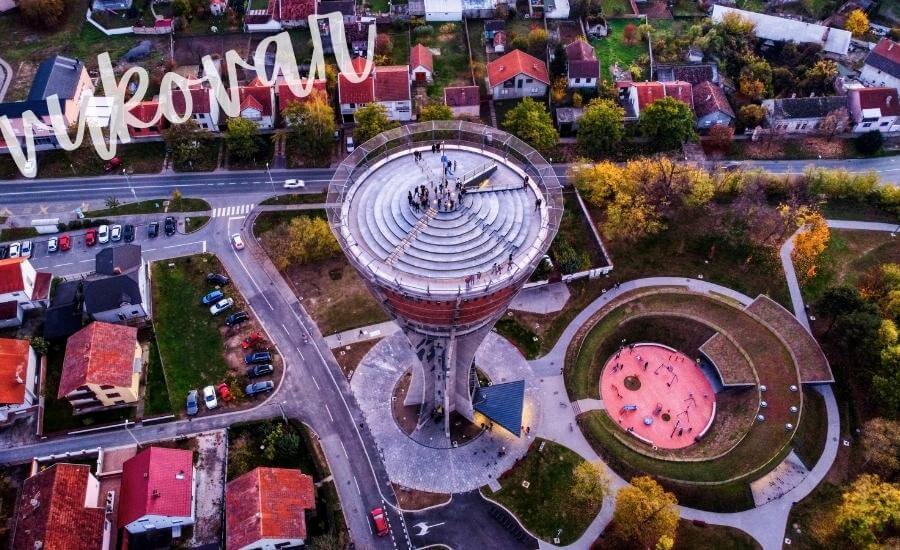
The Danube river forms part of Croatia’s eastern border, dividing the picturesque Slavonia region from Serbia. Though not always considered a must-visit place in Croatia, the small city of Vukovar has a particular charm and a fascinating history.
The Danube is Vukovar’s lifeblood and connection to the rest of Europe. The entire city revolves around its port, the largest river port in Croatia, where the Vuka and Danube rivers meet. Water views can be found from both the handsome Castle Eltz, perched overlooking the river, and the Vukovar Water Tower, a Brutalist concrete monolith.
Much of Vukovar’s historic architecture was damaged in the Croatian War of Independence in the 1990s. Some are still in ruins, while other notable landmarks including the Franciscan monastery, the Orthodox church of St Nicholas and the palace of Syrmia County have been rebuilt. Vukovar was part of the Habsburg Monarchy from the 18th century and so boasts a number of stunning Baroque buildings in the same style as other cities in the region.
Don’t miss the Vučedol Culture Museum, one of the top institutions in the country and a must-do in Croatia. Sitting right on the riverbank, it affords amazing river panoramas as well as interesting archaeological exhibits. Visit in late August to catch the Vukovar Film Festival, the only festival of its kind that unifies the Danube river countries.
Vukovar is located 30 minutes from Osijek or 3 hours from Zagreb by road. It’s an ideal pit-stop before crossing the border into Serbia or Bosnia and Herzegovina.
Where to stay: Villa Martini offers private apartments walking distance from Eltz Castle.
13. Izmail, Ukraine

Izmail is a city in the Odessa Oblast of Ukraine, on the banks of the Danube river. The town was founded in the 12th century by merchants from Genova and was later named after the Ottoman Grand Vizier, Izmail.
Because of its strategic location, Izmali has long served as an important trading centre. Control of the city has changed hands many times, from Genoa to the Ottoman Empire, Moldava to the Russian Empire, and finally to Ukraine.
There are a few interesting things to see in Izmail. The most famous attraction is the Diorama Sturm Fortress, which holds a panoramic canvas describing an assault on Ismail fortress in its museum collection.
Another great place to visit if you want to learn about the Danube is the Museum of History of the Ukrainian Danube Shipping Company, which has exhibitions about the history of Izmail and its development in connection to the waterway.
One of the coolest things to do in Ismail is to stroll along the Danube boulevard and Izmail promenade. You can even have a coffee or eat dinner whilst looking out at Romania, which lies on the opposite bank of the river.
Where to stay: If you’re planning to spend a few days in Izmail, you should stay at Zeytun Hotel, which offers great service and awesome food.
By Ania from The Travelling Twins
Beautiful towns along the Danube river
Here are just a few of the most beautiful towns on the Danube.
14. Donaueschingen, Germany

The confluence of the Breg and Brigach rivers marks the official start of the Danube. Donaueschingen is well-aware of the significance of being the birthplace of Europe’s second-longest river and one of the world’s most international waterways. So it’s no surprise that there are quite a few Danube-themed things around town.
Though the confluence is a short walk east of Donaueschingen centre, there’s a bubbly spring in the town centre named the Donauquelle, which can also be considered the source of the Danube. There at the St. Johann Church, there is a beautiful allegorical monument where the ‘mother’ of the Danube – the Baar region – points her ‘daughter’ Danube towards the Black Sea to the southeast.
If you feel inspired by this statue and enjoy cycling, there’s good news: Donaueschingen is also the start of the Danube Cycleway. Alternatively, you can kayak the entire river down starting here. And if neither of those things sound appealing, you can enjoy a scenic train ride either west on the Black Forest Railway or east on the Danube Valley Railway instead.
Before you depart, be sure to enjoy a Weizenbier at any restaurant or the local Fürstenberg brewery, which has operated since 1283. Pack a sweater, even if you’re going in summer – Die Baar region just happens to be the coldest part of Germany.
Where to stay: The Wyndham Garden Hotel has vistas of the Brigach river and is both close to the train station and the centre of Donaueschingen.
By Iris from Mind of a Hitchhiker
15. Durnstein, Austria

The beautiful town of Dürnstein, with its turreted walls and cobblestoned streets, is a popular day-trip destination about an hour’s drive by car from Vienna. It’s also reachable by boat, or via a well-coordinated train-bus schedule. The town is a favourite rest stop for cyclists who bike the stunning 30-kilometre section of the Donauradweg, the Danube Bike Path between Krems and Melk through the Wachau Valley.
In 2000, the Wachau was added to the UNESCO list of World Heritage Sites in recognition of its architectural and agricultural history. The region is famous for its production of apricots and grapes, both of which are used to create specialty wines and liqueurs.
The Wachau is the source of Austria’s most prized dry Rieslings and Grüner Veltliners, made from grapes grown on the steep stony slopes overlooking the Danube. By the 15th century, there were 50 wine producing abbeys in the Wachau. The monks built special paths along the riverbank to transport the wine – paths that have since become part of the Donauradweg. Today, many visitors come to Dürnstein just to taste the Wachau’s specialty wines and liqueurs.
But not every visitor to Dürnstein has enjoyed their stay. Undoubtedly, Richard the Lionhearted found it decidedly unpleasant. Looming over the town, the ruins of the Kuenringer Castle (where King Richard was imprisoned during the winter of 1192-1193) offers a glimpse into the history and architecture of the Middle Ages.
If you’ve ever ridden a bicycle, give serious consideration to a bike-and-boat experience along the Danube. The Danube Bike Path is mostly flat, daily distances are easily manageable, the scenery is impressive, and your boat is your floating hotel moored in a different location each day.
By Anne from Packing Light Travel
16. Melk, Austria

The small town of Melk, Austria sits on the south side of the Danube river in Austria’s beautiful Wachau Valley. Located 88 kilometres (55 miles) west of Vienna, the town is easily reached by car in about an hour or by train in around 50 minutes.
One of the most charming villages to visit in Austria, Melk has a long history, starting with a Roman garrison. The magnificent 11th century Melk Abbey overlooking the village soon became one of the crown jewels of the Wachau Valley and one of Europe’s greatest sights. You can tour parts of the abbey on your own, but it’s worth joining a guided tour for a modest fee, simply because of its size and intriguing history.
From the Abbey, walk down into the village where there are several cafes and restaurants. One of the best spots for lunch is Rathauskeller Melk, serving excellent Austrian food and crisp white Austrian wines.
To add to a great day trip, take the ferry boat from Melk on the south side of the Danube to Spitz, Weißenkirchen or Dürnstein. They’re all on the north side of the river. Tickets are inexpensive and can be purchased online or at the boat dock.
Where to stay: Hotel Restaurant Zur Post in Melk has a great location and very tasty breakfast – a great choice for an overnight stay.
By Lori from Travlinmad
17. Esztergom, Hungary

Located in northern Hungary on the southern bank of the river Danube, Esztergom is one of the oldest towns in the country and home to the biggest basilica in Central Europe.
This charming town can easily be visited as a day trip from Budapest. There are trains, buses and boats that connect it to Hungary’s capital. Of course, you can also rent a car to travel here.
Did you know that Esztergom was the capital of the country from the 10th until the mid-13th century? It was also the former seat of the Constitutional Court of Hungary. The most important place to visit is the majestic Esztergom Basilica, the seat of the prímás (Primates) of the Roman Catholic Church in Hungary. Located on Castle Hill, it offers outstanding views of the city and the Danube. While visiting the church is free, you need to pay to check out the treasury, cupola and crypt.
The Castle Museum is right next to the Basilica and is also charming to visit. In the Watertown part of Esztergom, you can visit another terrific institution, the Christian Museum housed in the Primate’s Palace.
If you feel hungry, there are many restaurants to choose from in Széchenyi Square, one of the city’s newest sights which was completed in 2006.
Where to stay: Since Esztergom is only 45km from the capital, it makes sense to visit as a day trip from Budapest. If you prefer to spend a night or two here, Aradi Apartman offers lovely views of the town and is located close to the basilica. It’s also just one minute walk from the beach.
By Cris from LooknWalk Travel
18. Szentendre, Hungary

Szentendre is an enchanting town on the Danube river in the outskirts of Budapest. While it originates from Roman times, a lot has happened since then. Since the 17th century, Szentendre has been significantly influenced by Serbian refugees and has become a cultural melting pot between West and East, Balkan and Carpathian Basin, and different religions, with both Catholic and Orthodox Christianity represented.
Today, the town is popular among artists, and you can explore many small galleries and museums. Don’t miss the Hungarian Open Air Museum where you can experience the different regions of Hungary.
Marzipan lovers will enjoy the Szabó Marzipan Museum where you can buy samples of the sweet to take with you home. Take a stroll along the Danube river before getting lost in the charming streets of Szentendre old town, then try some local food at one of the restaurants.
Most travellers go on a day trip to Szentendre from Budapest. Even though you can easily see most of what the town has to offer in a day, taking an extra day or two will help you slow down and truly experience the place.
Where to stay: Reserve a room at the lovely Mathias Rex Hotel in the historic centre of Szentendre, a short walk from the train station.
By Linn from Brainy Backpackers
19. Krems an der Donau, Austria

Krems an der Donau (‘Krems at the Danube’, or simply Krems) is a riverside town in Austria’s Wachau Valley. With direct train routes to Vienna, it makes a great base for exploring the surrounding area. First mentioned in 995, Krems has a long and fascinating history. Exploring the town can easily take up a couple of days of your itinerary.
Wander down the Krems Art Mile to discover local art and culture – there are no fewer than 10 museums, galleries and churches to visit. If you have time, make an appointment at the Gozzoburg Museum to view murals from the 13th century. It takes a bit of coordinating but is a worthwhile experience. Spend some time relaxing and people watching in the town squares, and be sure to see Steiner Tor, the gate to the old town walls, originally built in the 15th century.
As Krems is a wine producing town, it’s worth heading to a local winery for a tasting while you’re there. Weingut Stadt Krems is a popular spot. There are also a number of hiking and cycling trails around town, making it easy to access other towns in the Wachau Valley. Just north of Krems, you can explore the Senftenberg Castle Ruins, which offers stunning views of the surrounding vineyards and countryside.
Where to stay: Klinglhuber Suites is located in the heart of the city, plus it has an outdoor pool and serves delicious breakfasts.
By Roxanne from Faraway Worlds
20. Kelheim, Germany

Kelheim, Germany is a Bavarian town located at the confluence of two rivers, the Danube and the Altmühl. Roughly halfway between Regensburg and Ingolstadt, it’s a great place to stop for a day or two.
There are three main reasons to visit Kelheim. First and foremost is the river. The waters of the Danube are dwarfed by huge limestone cliffs on both sides and there are stunning views from the riverboat that you can jump on in town.
The boat takes visitors through the gorge to the Weltenburg Monastery, a monastic brewery that has been operating for about 1,000 years. The beer garden is right in the middle of the monastery and the waitresses are dressed in traditional dirndl. It’s the perfect place to sip a Kloster Barock Dunkel (dark beer) or the traditional Kloster Lager and snack on a pretzel.
The third sight to see in this charming town sits high atop the banks of the Danube. Liberty Hall (or Befreiungshalle in German) was commissioned by King Ludwig I to commemorate a victory over Napoleon during the Wars of Liberation. It’s a memorial worth climbing to, if only to gape at the spectacular views from the top.
Where to stay: Kelheim is walkable and the perfect size for a one or two-night stay. The best accommodation is the Dormero Hotel, which is right in the heart of the old town and very close to both river walks.
By Corinne from Reflections Enroute
If you haven’t already read it, Emily, I suggest Claudio Magris’s Danube. It’s a good one. Peace.
Thank you!