Georgia is usually associated with one drink above all: Wine.
Not many people realise that the country also has a long and fascinating relationship with tea. It certainly came as a surprise to me – and ever since visiting my first tea farm back in 2020, I’ve developed a bit of an obsession with Georgian tea.
From a prince smuggling seeds home from the Far East and a tea master recruited from China to establish plantations on the Black Sea Coast, to Soviet-era tea fields later swallowed by weeds and a new generation painstakingly reclaiming the old bushes – it is certainly an enthralling story!
Over the past few years, I’ve followed Georgia’s tea trail through Guria, Imereti and Adjara, visiting farms and museums, tracking down old research institutes and historic estates, and learning how this once-massive industry rose, fell, and is now being reborn.
In this practical guide, I’ll show you where to experience Georgia’s tea culture for yourself – with practical advice for visiting my favourite tea farms and tea-related sites, plus tips for planning your own trip along the Georgian Tea Route.
Please note: This post contains affiliate links, meaning I may earn a commission if you make a purchase by clicking a link (at no extra cost to you). Learn more.

Georgian tea basics
Tea-growing regions: Guria, Imereti, Samegrelo & Adjara
Tea types: Black, green, white & oolong, plus blueberry leaf (no matcha!)
Harvest season: April to October
Best time to visit: May to September
Heart of Georgia’s tea country: Guria, particularly around Ozurgeti
What makes Georgian tea special?
One of the world’s northernmost tea-growing regions: Georgia is almost at the climatic limit for commercial tea cultivation – but the wet weather, acidic soils and humid subtropical climate of the country’s west create ideal conditions for Camellia sinensis.
An unusually long season: New growth starts in spring and harvesting can continue from around April into September. In October, the bushes flower, in November they seed, and in winter they are dormant.
Cold winters act as pest control: Frost naturally stops common pests in their tracks, meaning growers can get away with using fewer or no chemicals.
Slow-growing, distinctive flavours: Cooler conditions mean that Georgian tea develops relatively slowly. This creates smooth, aromatic teas that are comparatively less bitter.

A Soviet tea powerhouse: At its peak, Georgia produced around 95% of the Soviet Union’s tea, with the harvest reaching 152,000 tonnes in 1985.
The seed of neighbouring industries: Tea plants from Georgia helped establish commercial production in Turkey’s Rize region and provided the original stock for Azerbaijan’s tea industry.
Old bushes given a second life: Rather than planting entirely new gardens, most producers today are reclaiming Soviet-era plantations and bringing decades-old bushes back into production.
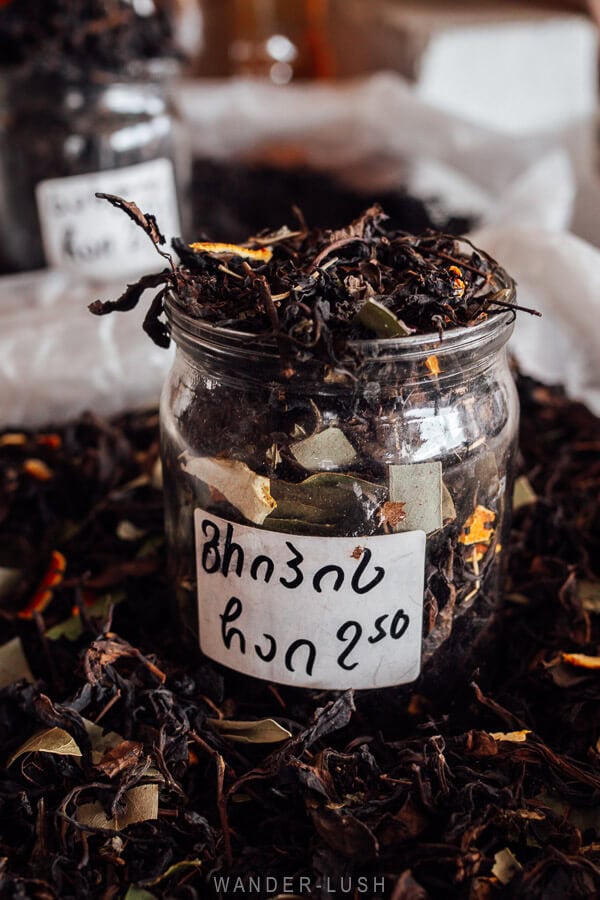
A Georgian curiosity – blueberry leaf tea: Several producers in Western Georgia also make fermented blueberry or bilberry-leaf tea. It isn’t technically tea – there’s no Camellia sinensis involved – but the young leaves are rolled and oxidised much like black tea, producing a naturally caffeine-free, slightly savoury infusion.
Best tea farms & tea experiences in Georgia
No two tea farms in Georgia are completely alike. Each producer has their own story and way of doing things, and much like visiting wineries, the experience is quite different from one place to the next – from Soviet-era factories to modern facilities, family dining tables to polished tasting rooms.
Several of the farms below form part of the Guria Tea Route, a network of producers centred around Ozurgeti. There is also a broader Tea Cultural Route linking tea destinations across Western Georgia and Tbilisi – I offer my suggestions on how to follow them later in this guide.
These are the tea farms I have personally visited and recommend.
Tenitea
- Kveda Bakhvi, Guria (15 mins outside Ozurgeti)
- Tours on request; 2-3 hours; from 80 GEL pp; book via the website
- My pick for a complete hands-on, field-to-cup tea experience
Tenitea is a special place for me – I’ve visited several times now, and the Tenieshvili family are some of the loveliest hosts in Georgia. Taste-wise, their green and white teas are definitely my favourite.
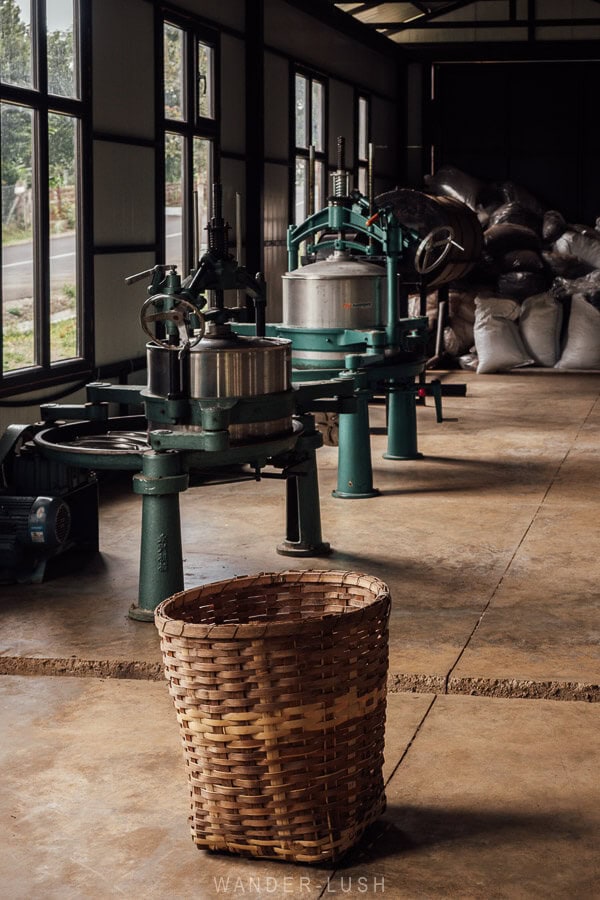
Dato Tenieshvili has been producing tea in Kveda Bakhvi for more than 25 years. He started out using old Soviet-era machinery that he modified himself, including a water-powered wooden tea roller. Recently the farm has added modern processing equipment and a solar installation with support from the Green Guria project.

Dato runs the farm together with his son, Gabriel. Gabriel is the one who leads the tea experiences – and what I love about Tenitea is that you can follow the whole process from field to cup. One of the plantations is directly across the road from the family home and factory – a big, flat expanse of tea fields where, in season, you might see women in characteristic Gurian hats bobbing up and down through the bushes as they pick leaves.
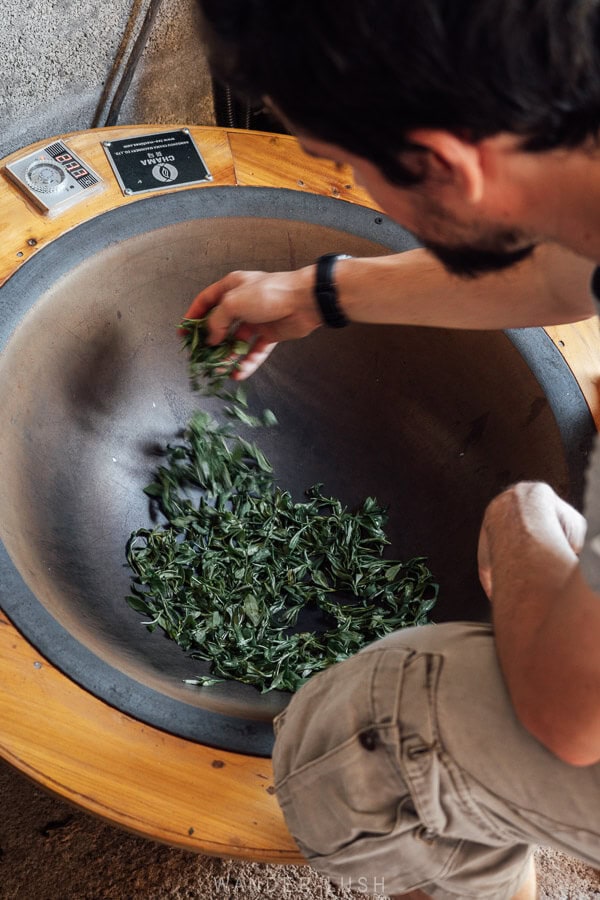
On my most recent visit, we started by picking our own shoots before carrying the leaves back across the road to process them. Then we made green tea by heating and rolling the fresh leaves by hand. Production is circular and nothing goes to waste – Gabriel even makes cosmetic tea seed oil, which you can purchase onsite.

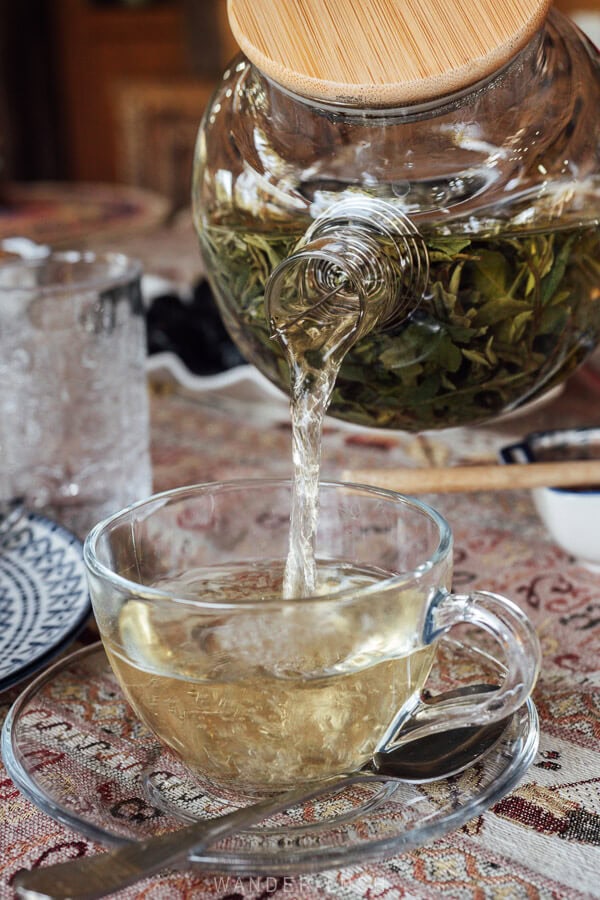
Afterwards, we wandered around the rest of the property, visiting the small vineyard and duck pond, before sitting down on the verandah to taste several of the family’s teas. This included the green tea we had just made ourselves, served alongside homemade dried fruit and preserves and a very generous Gurian lunch featuring the most epic Gurzeli khachapuri I’ve ever had. The setting is absolutely beautiful.
Komli
- Tsitelmta, Guria (10 mins outside Ozurgeti)
- Tours on request; 1.5-4 hours; from 60 GEL pp; book via the website
- My pick for an overnight stay, history & hospitality
Komli was the first tea farm I ever visited in Georgia, so it will always have a special place in my heart.
Owner Lika Megreladze is now a friend of ours – but even on that first visit I remember being completely enthralled by her stories about Georgian tea and her own family’s connection to it. Along with the Tenieshvilis, she was one of the first people to spearhead tea tourism in Guria.
If you want to understand the human side of the tea story – not just how the leaves are grown and processed – Komli is a wonderful choice. Tea runs through three generations of women here. Lika’s mother, Meri, worked at the nearby tea institute, while her daughters, Nino and Mariam, are now helping to carry the family tradition forward.
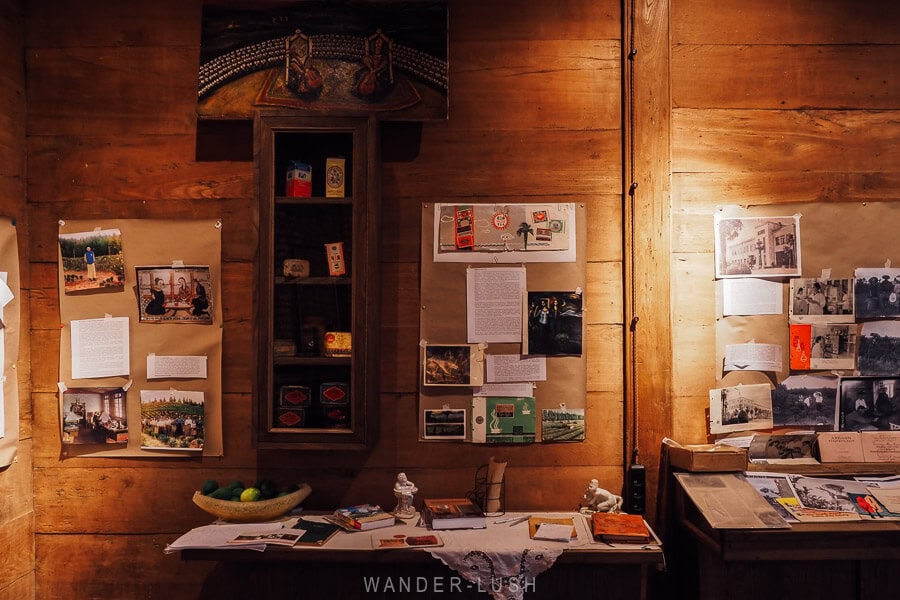
Lika has transformed the family’s wooden oda house into a wonderful two-room tea museum. One room tells the family story – quite a harrowing tale in parts – while the other traces Georgia’s broader tea history through her extraordinary personal collection of photographs, documents, old packaging, tea tins, and other ephemera.
Outside, there is a small tea garden to explore and forage. The property opens onto a meandering, fairytale-like riverside – it’s truly magical setting – and there’s a very photogenic bamboo grove. Lika even makes jam and pickles from the young shoots.
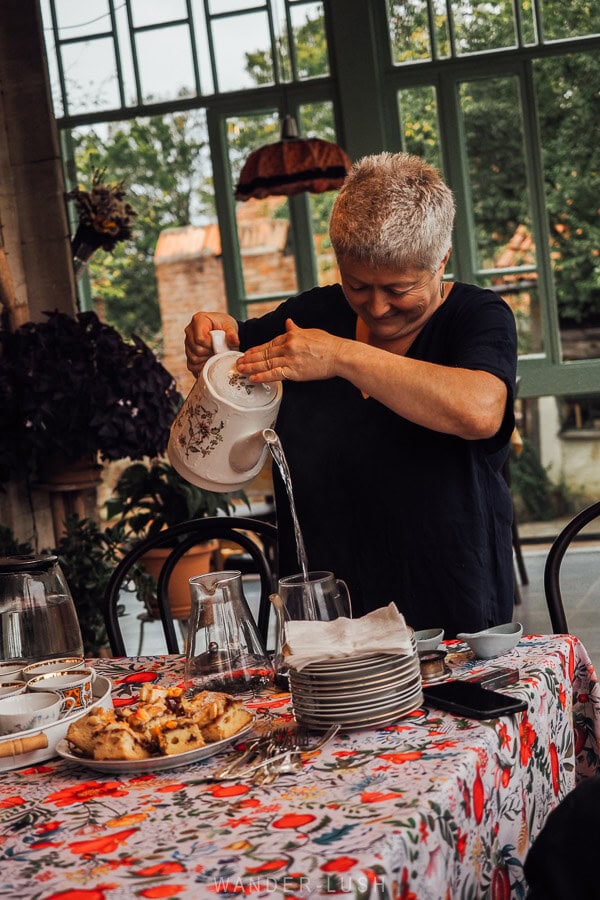

Tea tastings take place in a beautiful new Japanese-inspired pavilion overlooking the garden. You can also stay overnight in one of Komli’s distinctive barrels, and arrange lunch or dinner, served around a long table on the verandah. Believe me, Lika’s cooking is really something else.
Sisters Zhgenti
- Melekeduri, Guria (10 mins outside Ozurgeti)
- Tours on request; 1.5 hours; from 50 GEL pp; book via Instagram
- My pick for cascading tea fields & photo opportunities
Sisters Lana and Inga Zhgenti have one of the most beautiful tea plantations I have visited in Georgia. If you want tea fields with a bit of drama – and plenty of photo opportunities – this is the one I would choose.
Instead of growing on a flat piece of land, the tea bushes here tumble down a steep hillside above the Skurdumi Valley. From the top, you look across row after row of green tea with the valley stretching out beyond – it is incredibly photogenic (even in the rain!).
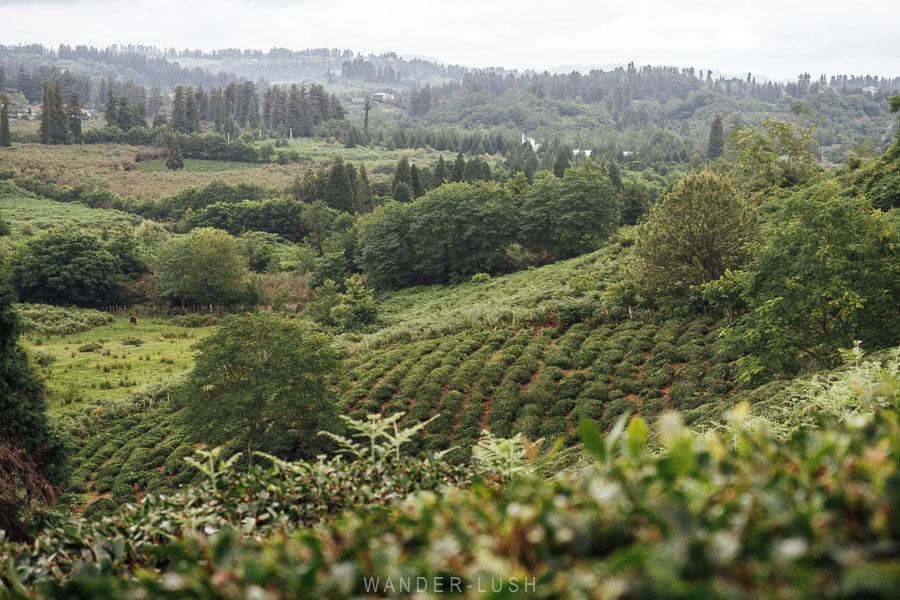
The experience here is quite intimate and laid-back. You can walk through the plantation, visit the small factory and sit down for a tasting with the sisters. If the weather is good, they can set up right among the tea bushes; otherwise, tastings are held back at the family home.
When I visited, we also did a Gurian khachapuri masterclass, shaping the distinctive crescent-shaped cheese-and-egg bread before baking it in a clay dish over the hearth. The sisters have plenty of ideas for the future too, including plans for a tea spa.
Taba Tea Estate
- Melekeduri, Guria (10 mins outside Ozurgeti)
- Tours on request; 1.5 hours; from 60 GEL pp; book via the website
- My pick for a polished tea degustation
Taba Tea offers a more polished and structured experience than the family-run farms above, with a dedicated tasting space and a strong focus on the tea itself.
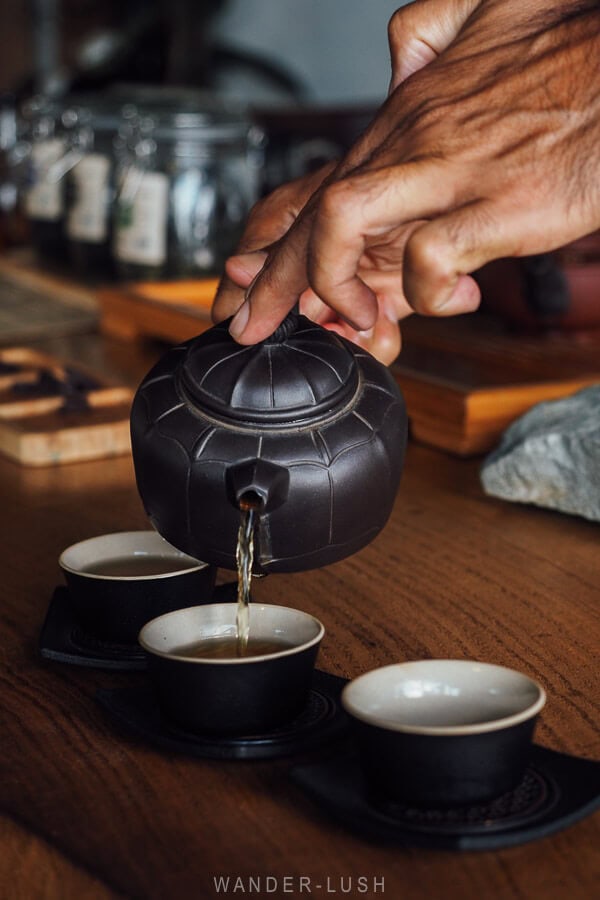
The main experience is a formal, sit-down degustation where several teas are served side by side. If you are interested in comparing different styles and learning more about processing and production, this format will probably appeal to you. Taba is one of the more popular stops in the area, so visits tend to run on a tighter schedule, with groups often arriving back to back. Don’t expect to linger over lunch – tours are fairly concise in my experience.

Across the road from the house, you can walk through restored tea fields first planted in the Melekeduri area in 1933. Taba has been rehabilitating these historic plantations and now processes its teas in its own factory.
They produce black, green and other speciality teas, as well as one unusual product: Chocolate infused with Georgian black tea.
Renegade Tea Estate
- Gumati, Imereti (20 mins outside Kutaisi)
- Tours on request; 2 hours; from 50 GEL pp; book via the website
- My pick for an easy tea experience near Kutaisi
There is a bit of a cliche in Georgia that foreigners arrive, fall in love with the country, and end up starting a winery. But in this case, it was tea.
Renegade Tea Estate was started in 2017 by a group of Estonian and Lithuanian friends who came to Georgia with no background in tea farming. They went on to rehabilitate around 40 hectares of abandoned Soviet-era plantations in Imereti and build a small-scale organic tea operation around them.
Today they produce teas mainly for export, including black, green, white, oolong, yellow and roasted styles. Part of what makes Renegade interesting is that they approach Georgian tea with fresh eyes, experimenting with different processing methods while working with old Soviet-era bushes.

Their visitor estate in Gumati is around 20 minutes’ drive from Kutaisi, making it an easy day trip. The two-hour guided experience includes a walk through the plantation, a look inside the small factory and a tasting, with plenty of explanation about Georgian tea history and what it actually takes to bring an abandoned plantation back into production. One of the highlights of my visit was meeting one of the women pickers who had worked on the same tea fields during the Soviet period and is now employed here again.
If you are curious about Georgian tea but do not have time to travel down to Guria, Renegade is a nice introduction – and it is particularly interesting if you want to see how an old plantation has been given a completely new life.
Tips for visiting tea farms
Always book ahead: These places are small family-run businesses, not walk-in attractions. Contact the owner in advance (3-7 days out, ideally) to arrange a tour and/or a meal. English is spoken at all the above mentioned farms.
Visit during the growing season: May to September is the best period for seeing actively growing tea fields and, depending on the farm, harvesting or processing.
Wear closed-in shoes: Fields are uneven and it can be quite muddy after rain. Gurian hats are usually provided for the experience – if you want to buy your own, you can find them at the bazaar in Ozurgeti.
Buy tea directly from the producer: Most farms sell their own packaged tea, and buying on-site is one of the easiest ways to support small producers.
Tea museums, teahouses & historic tea sites in Georgia
Farms and tastings are one way to explore Georgia’s tea culture. Me being me, I find the relics of tea’s early days and the vestiges of the Soviet-era tea industry just as interesting. There are also a few museums in Georgia where the collection touches on tea.
Anaseuli Tea Institute & plantations, Guria
If small family farms tell the human story of Georgian tea, Anaseuli shows the scale and ambition behind the industry.
Just outside Ozurgeti, Anaseuli has been a centre for subtropical agricultural research since the early 20th century. An agricultural research station operated here from 1901, and in 1937, it became the All-Union Scientific Research Institute of Tea and Subtropical Crops – an institution that would play a major role in developing Soviet Georgia’s tea industry.
Researchers here worked on breeding cold-resistant varieties and hybrids, optimising harvesting methods and adapting processing technologies to help Camellia sinensis feel at home.

Part of the old Soviet institute complex is now abandoned. I have explored the main building myself and it is quite extraordinary – a huge, decaying Tskaltubo-like structure fringed by towering palms, with old laboratories, offices and all sorts of remnants inside.
Nearby, you can also find Soviet-era mosaic fountains and other traces of the original campus. Please be very cautious if you choose to enter any of the abandoned buildings.
Around Anaseuli, you can find huge tea fields (experimental plantations that date to the time of the institute), and a dendrological park containing more than 100 species of subtropical plants.
Goraberezhouli Eristavi Estate, Guria
AKA Eristavi Palace, this estate in Chokhatauri belonged to the Eristavi family, one of Guria’s prominent noble houses. Mikheil Eristavi was among the earliest people to experiment with tea cultivation in Georgia, producing a rudimentary tea from as early as 1840.
Today, the Eristavi residence and defensive walls stand among an extraordinary dendrological park containing camellias, giant sequoia, ginkgo, camphor trees, and other species introduced during its botanical heyday. The estate sometimes hosts events, including the Gurian Wine Festival.
Lao Jin Jao’s House in Chakvi, Adjara
Chinese tea specialist Lao Jin Jao lived in Chakvi for around three decades after arriving in Adjara in 1893. Working initially under the merchant Konstantin Popov, he helped establish tea nurseries and plantations, introduced Chinese cultivation and processing expertise, and was involved in creating an early small tea factory. Tea produced under his direction in Chakvi went on to receive a gold medal at the Paris Exposition in 1900.
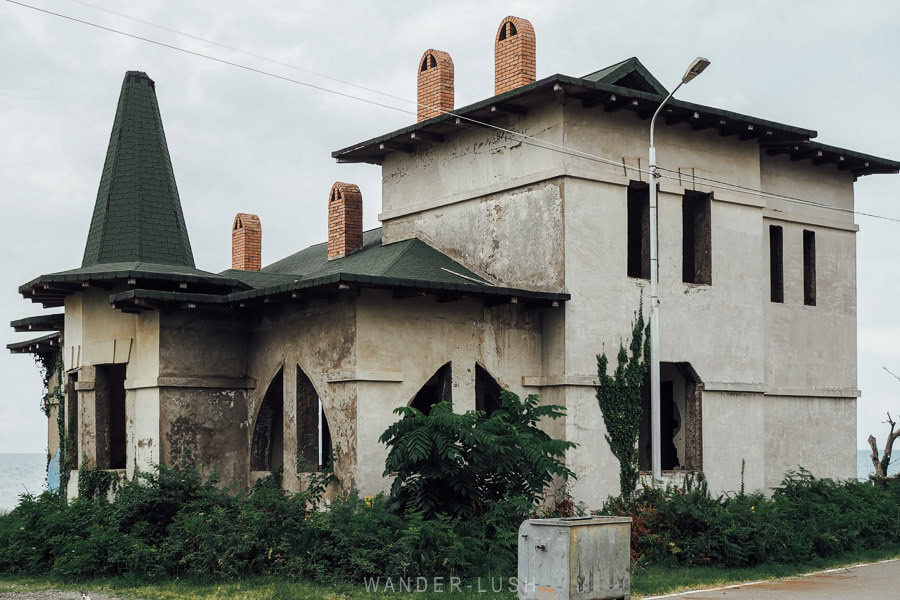
His distinctive house still stands near the railway in Chakvi, and has held cultural-heritage status since 2016. It has long been abandoned and in terrible condition. The building is now being restored as the Lao Jin Jao Georgian Tea House-Museum – opening date TBC.
Bitadze Tea Museum, Tbilisi
Hidden in a basement on Tabidze Street in Sololaki, the Bitadze Tea Museum is one of my top things to do in Tbilisi.
The museum and shop are run by tea technologist Shota Bitadze and his son Giorgi, two figures closely connected with Georgia’s modern tea revival. Shota travelled to China during the post-Soviet period to study tea production, then worked with growers back in Georgia to help establish the Georgian Organic Tea Producers Association.

Inside the shop, shelves and cabinets are packed with vintage tea boxes, photographs, old packaging, and other ephemera documenting the rise, fall and revival of tea. Giorgi is normally on hand to talk visitors through the collection.
The shop sells loose-leaf tea from small producers around Western Georgia, including black, green, white and herbal tisanes – a great Tbilisi souvenir. Tea tastings and ceremonies can also be arranged.
Tea Room, Kutaisi
Tea Room is a tiny specialist tea shop on Kutaisi’s Tabidze Street run by Beka Barambia, a local tea grower and entrepreneur with his own tea farms in Imereti.
Beka serves his own tea alongside brews from other producers, including Tenitea. Loose-leaf tea is sold by the gram. Contact Beka through Instagram to arrange a tea tasting.
Khariton Akhvlediani Museum of Adjara, Batumi
Batumi’s main regional history museum was founded in 1908, and today holds around 180,000 objects relating to the history, culture and natural environment of Adjara. Among its specialist collections is material on the subtropical crops that transformed the region’s economy – including tea, citrus, bamboo and tung oil.
Most interesting are objects associated with Lao Jin Jao – Chinese books, porcelain and bronze vessels, chopsticks, a samovar, and the distinctive straw hat he wore while working in the plantations.
Nobel Brothers Technological Museum, Batumi
This museum occupies the former Batumi office of the Nobel Brothers’ oil company, and primarily documents the extraordinary technological and industrial development of Batumi in the late 19th and early 20th centuries.
Tea was part of that transformation too, and the museum has a substantial strand dedicated to the development of the plantations around Chakvi.
Where to buy Georgian tea in Tbilisi
Specialist shops: Khurjini, Kona, Tea Republic, Teamania
Supermarkets: MountTea at Europroduct/Agrohub, Gurieli at Carrefour
Markets: Dezerter Bazaar for bulk loose-leaf tea (also sold at most bazaris around Georgia)
Online: Tea Country, Kona, Teanium, individual producer websites
Georgian tea map
How to plan your own Georgian Tea Route
Georgia’s Tea Route is not one continuous route with a defined start and finish. It is a network of tea farms, historic sites and other experiences, with the biggest concentration around Ozurgeti in Guria.
While it is possible to visit as a day trip from Batumi (a 1.5-hour drive one-way), if tea is the main purpose of your trip, I would base yourself in Ozurgeti for two nights and give yourself two full days.
A good combination is Tenitea + Taba Tea or Sisters Zhgenti on the first day, followed by Komli + Anaseuli on the second. You can easily stop at the Eristavi Estate on your way in or out of Guria.
→ See my complete Guria travel guide for where to stay, transport, restaurants and other things to do around Ozurgeti


For a longer tea-themed trip, you can add Kutaisi, Chakvi and Batumi.
In Imereti, tour the Renegade Tea Estate and visit Beka Barambia’s Tea Room, then spend two days around Ozurgeti visiting the Gurian farms. Then, continue to Chakvi and Batumi for the origins of Georgia’s commercial tea industry. That makes for a very comfortable 3-4 day Georgian tea itinerary.
Go with a guide
Timothy Merkel runs Georgian Tea Makers and can help organise tea-focused experiences around Georgia.
A brief history of Georgian tea
Georgia’s tea story is relatively young compared with its 8,000-year-old wine traditions. In little more than a century, tea went from an agricultural experiment to one of the country’s most important industries – before almost disappearing altogether after the collapse of the Soviet Union.
Tea before Georgia grew its own
Tea reached the Caucasus through trade long before Georgia had plantations of its own. By the 19th century, tea drinking was increasingly popular throughout the Russian Empire, yet virtually all of it had to be imported from Asia.
That prompted experiments with growing tea closer to home. Western Georgia, with its high rainfall, acidic soils, warm summers and relatively mild Black Sea winters, looked particularly promising.
The beginnings of Georgian tea
Pinning down exactly when the first tea bush was planted in Georgia is surprisingly difficult. Different versions of the story credit a Gurian prince, a foreign sailor and botanists experimenting with exotic plants during the first half of the 19th century.
What is clear is that tea was being cultivated experimentally in Western Georgia by the middle of the century, including in Guria, Samegrelo and around Sukhumi. These early gardens proved the plant could survive here. Growing tea into a viable industry took several more decades.
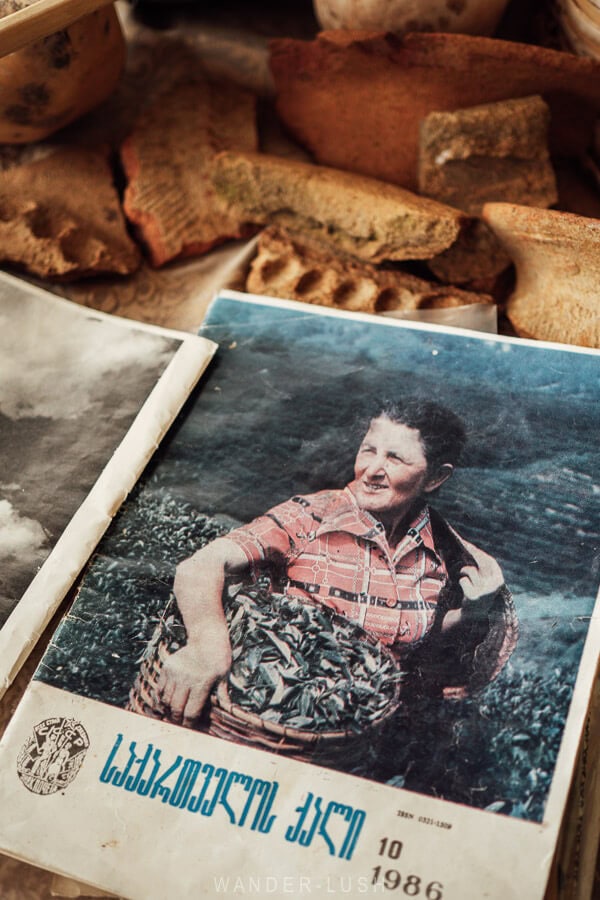
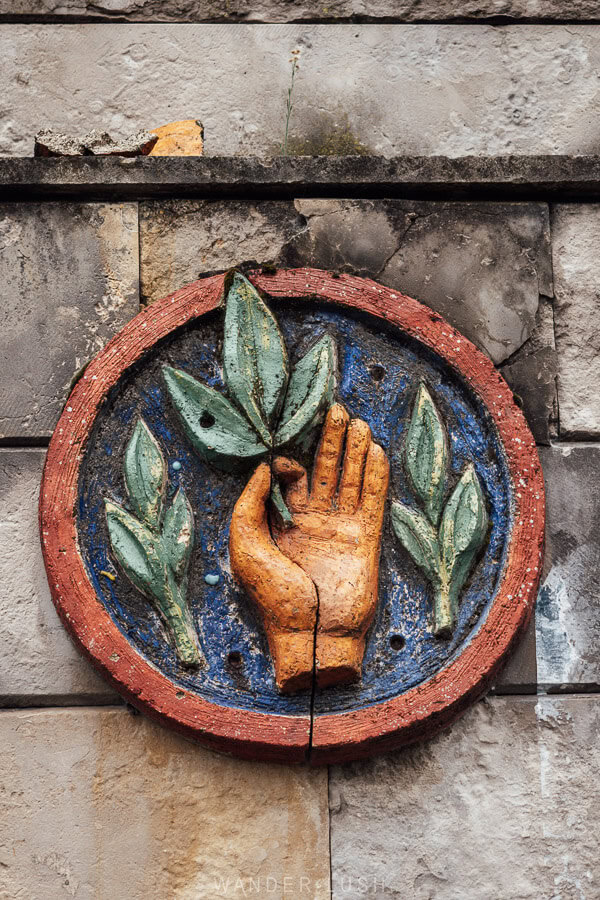
The major breakthrough came around Chakvi, north of Batumi. In the early 1890s, tea merchant Konstantin Popov acquired land and invested in commercial plantations. In 1893, he recruited a group of Chinese tea specialists, including Liu Junzhou – whose name is rendered locally in several forms, most commonly as Lao Jin Jao.
Drawing on Chinese expertise, Lao helped establish plantations and refine cultivation and processing methods. By the second half of the 1890s, tea was being produced commercially at Chakvi, and in 1900 it received a gold medal at the Paris Exposition.
Tea’s Soviet heyday
Under the Soviet Union, tea cultivation expanded on an enormous scale across Guria, Adjara, Imereti, Samegrelo and Abkhazia.
Research institutes developed cultivars specially adapted to local conditions, while collective farms, factories and entire communities grew around the industry.
For generations of families in Western Georgia, tea became part of everyday life. Picking provided seasonal employment, factories processed huge quantities of leaves, and tea-growing towns became economically intertwined with the industry.
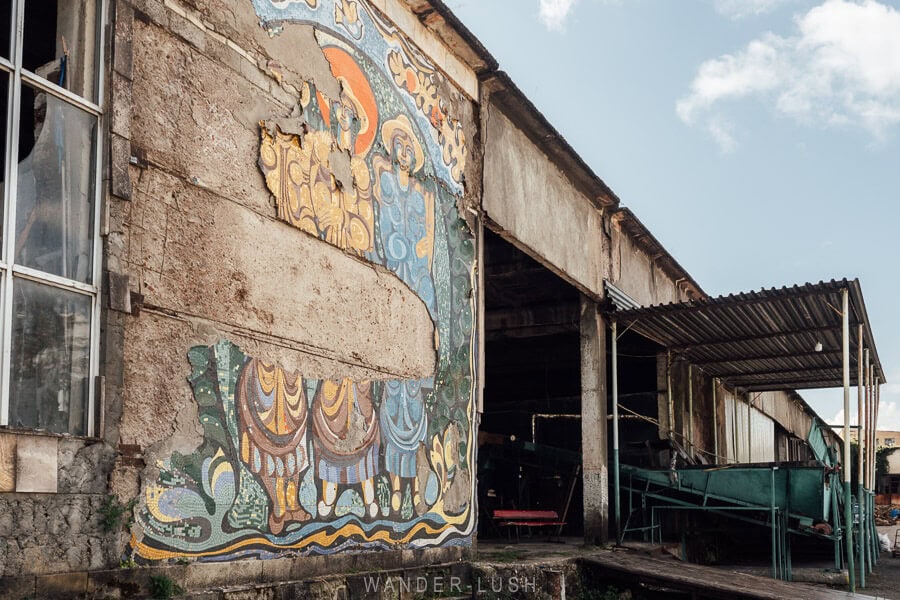
By the 1980s, almost 70,000 hectares were planted with tea and around 180,000 people were involved in the production chain. The harvest peaked at approximately 152,000 tonnes in 1985.
But this extraordinary scale came at a cost. The Soviet system rewarded quantity over quality – hand-plucking gave way to mechanised harvesting, and Georgian tea became known as an everyday, mass-market product.
The collapse of Georgia’s tea industry
When the Soviet Union dissolved in 1991, the system supporting tea disappeared almost overnight.
Georgia lost its guaranteed market – factories shuttered, equipment was dismantled or sold for scrap, and many plantations simply stopped being tended. From the 1985 peak, annual production had fallen to roughly 1,800 tonnes by 2014.
The physical traces of this period are still visible across Western Georgia. Old factories stand empty, former plantations have disappeared beneath blackberry vines, and other fields were cleared for more profitable crops such as hazelnuts.
Yet the tea itself proved remarkably resilient. In many abandoned plantations, bushes planted decades earlier kept growing beneath the weeds.
The revival of Georgian tea
The new Georgian tea industry looks very different from the Soviet one. Producers today concentrate on small-batch, higher-quality teas, often hand-picked and made in styles ranging from traditional black and green tea to white and oolong.
Some growers have established new gardens, while others are reclaiming old plantations that had been abandoned for decades. The industry remains tiny compared with its Soviet-era peak: Georgia harvested 2,600 tonnes of tea leaves in 2024.

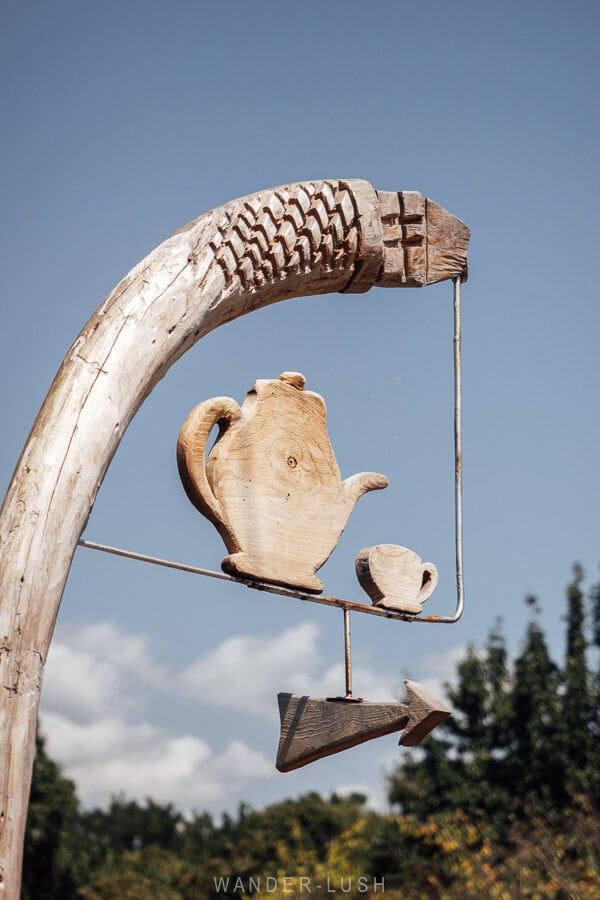
Tea is beginning to reclaim a cultural role, too. Tea-making families are preserving old equipment and stories from the industry, small producers are opening their gardens to visitors, and historic sites around Chakvi and Batumi are reconnecting today’s tea scene with the people who established commercial production more than a century ago.
You might also be interested in…
- The ultimate Georgia itinerary: Four detailed & custom-designed itineraries
- Georgia Travel Guide: All of my 200+ posts plus my top travel tips
- Georgia travel tips: 25 essential things to know before you go
- Places to visit in Georgia: 50+ unique & underrated destinations around the country
- The best things to do in Tbilisi: Favourites, hidden gems & local picks
- 35+ best restaurants in Tbilisi: Where to eat Georgian food
- 15 best day trips from Tbilisi: With detailed transport instructions
- The best time to visit Georgia: Month-by-month guide to weather, festivals & events
All comments are moderated and may take a little while to appear. If you’ve submitted your comment, I’ve got it!