Georgia’s smallest region has always punched above its weight when it comes to food and culture. The same can be said of its craft traditions.
Across Guria, secret tea gardens, tiny wine cellars, backyard pottery workshops and small farms are keeping heritage skills and rural industries alive. Some preserve knowledge that has almost been forgotten, while others are adapting old practices for a new generation.
And because Guria is so compact, you can experience a surprising variety in just a few days.
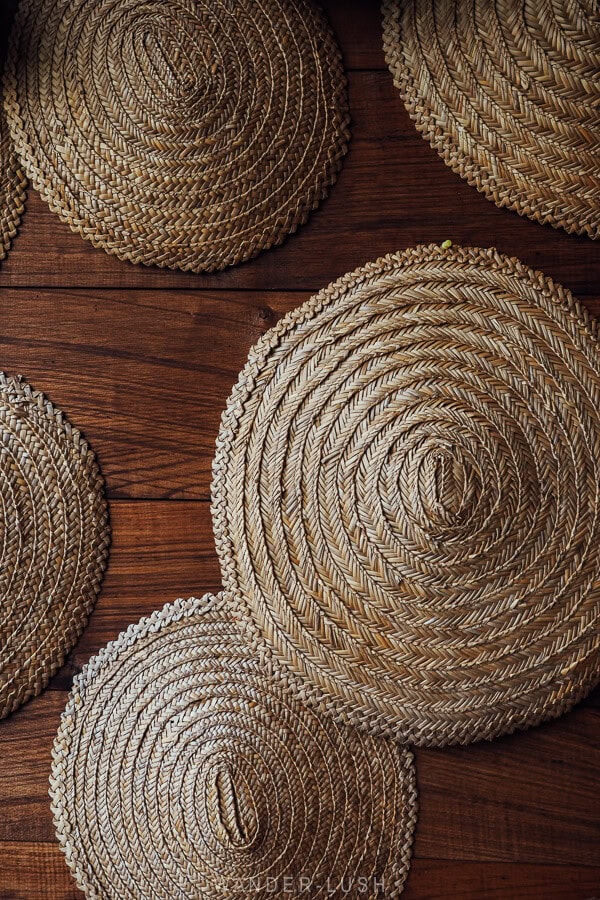
I was recently invited to travel through all three of Guria’s municipalities – Ozurgeti, Chokhatauri and Lanchkhuti – as part of a media trip connected with Green Guria, an EU-supported rural development project implemented by CENN.
If you’re interested in Georgian crafts and seeing how things are made, this is a route for meeting the people behind some of the region’s most distinctive products and traditions.
Transparency: Green Guria covered my transport, accommodation and experiences on this trip. I created this article independently and, as always, all opinions and recommendations are my own.
Please note: This post contains affiliate links, meaning I may earn a commission if you make a purchase by clicking a link (at no extra cost to you). Learn more.

The Guria Maker’s Trail
Time needed: 2-3 days
Area: Ozurgeti, Chokhatauri & Lanchkhuti
Getting around: Self-driving is the easiest option
Prior reservations: Essential for tastings, meals & workshops
Best time to go: Late spring through autumn
1. See Gurian tea being made by hand
Despite the commercial industry fading out decades ago, tea is still a huge part of Guria’s physical and cultural landscape.
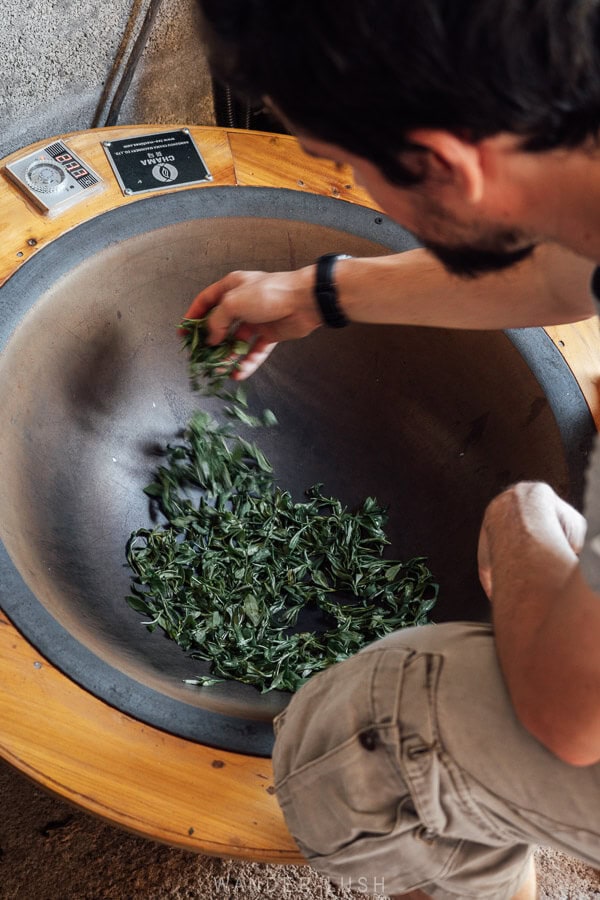
What’s particularly interesting about its revival is the return to small-batch production. Instead of the mechanised, quantity-driven model of the Soviet period, most producers today favour picking, sorting, rolling and processing leaves by hand, often using knowledge passed down through families connected with the old industry.
A growing number are now opening their farms up to visitors, making tea one of the easiest traditional processes to see – and try – for yourself in Guria.

In the village of Kveda Bakhvi, Tenitea is a working family farm. Dato Tenieshvili has been making tea for more than 25 years and now works alongside his son, Gabriel. The plantation, family home and factory all sit together, and in season visitors can pick fresh shoots before doing some of the processing themselves, including rolling leaves by hand to make green tea.
The handmade and mechanical sit side by side. Dato salvaged and adapted equipment after the collapse of the Soviet tea industry, including a wooden roller he rigged to run on hydropower. More recently, Green Guria is supporting the farm with solar panels and new processing equipment.

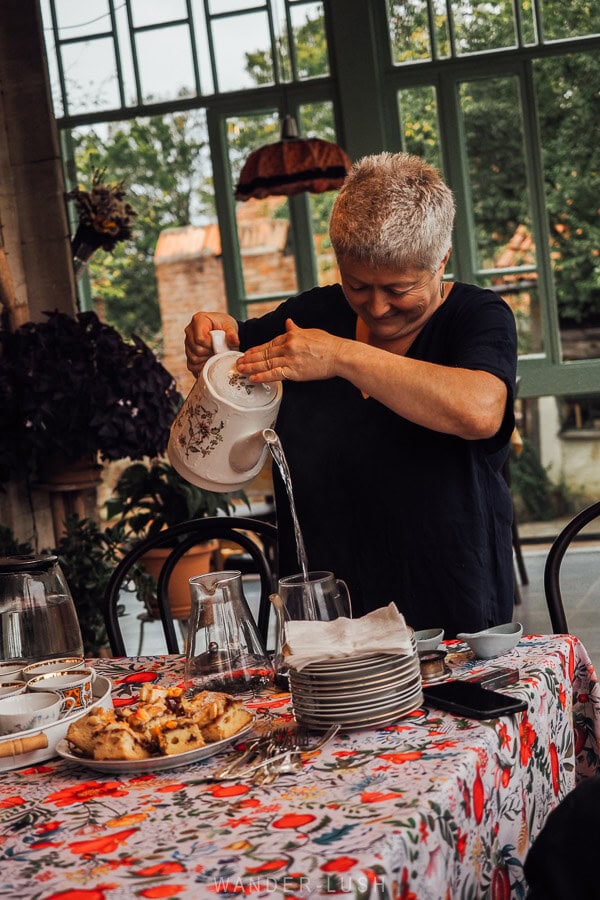
At Komli in Tsitelmta, the focus shifts to the people behind the industry. Lika Megreladze has built her project around the family’s old Gurian oda house, with accommodation, food, a tea garden and a small two-room museum. One room tells the story of the house and family, the other is filled with photographs, packaging, documents and objects connected with Georgia’s tea industry.
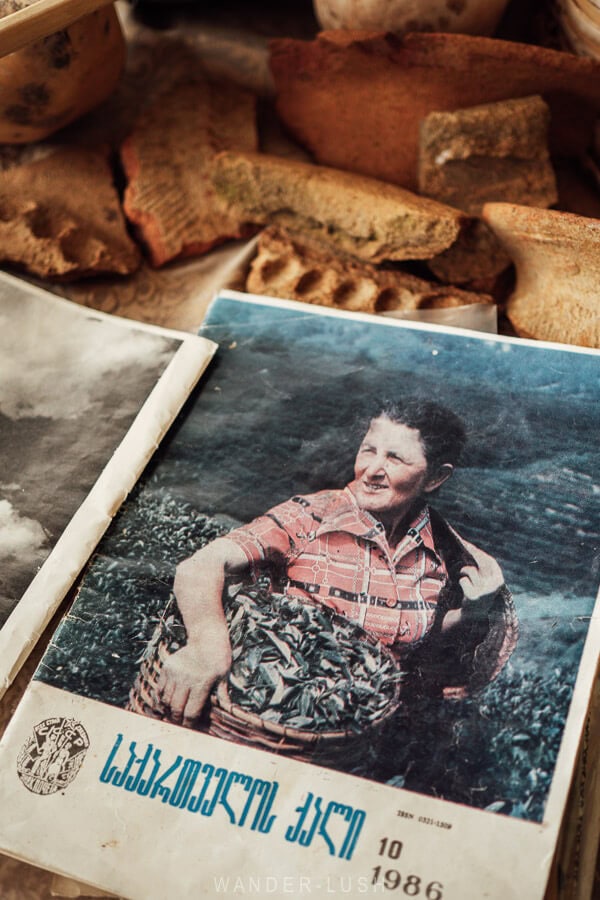
And a few villages away in Melekeduri, Taba Tea is bringing fields first planted in 1933 back into production. Visitors can walk through the plantation before sitting down for a structured tasting in the dedicated tea house.
For the full history, plus more tea farms and historical sites you can visit, see my detailed guide to Georgian tea.
2. Taste Guria’s rare grapes
Guria’s wine scene feels a world away from the more established wine route in Kakheti.
The landscape in the west is wetter and wilder, and traditionally vines were not always planted in neat rows. Under a special type of cultivation called maghlari, vines were trained to climb high into trees – something you can still see in old village gardens today.

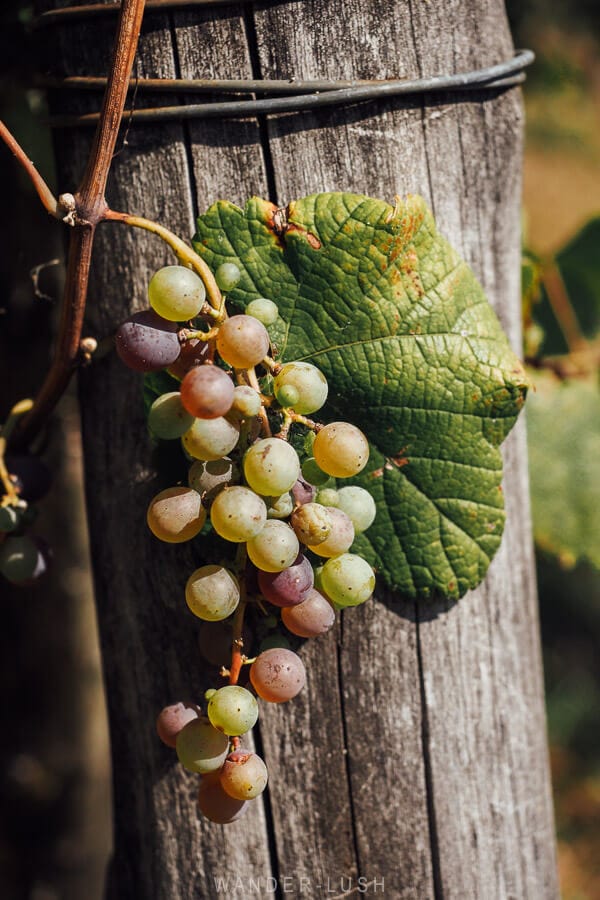
The harvest comes later, too. Chkhaveri, Guria’s best-known grape, can ripen well into November. Beyond Chkhaveri there are old Gurian varieties that many visitors will never have heard of: Jani, Skhilatubani, Sakmiela, Mtevandidi, and more.
Dato’s Wine (Kobidzeebis Marani) in Erketi is one place I would not miss. Davit and Tariel Kobidze’s family has old vines on the property, including Chkhaveri that have been tended by several generations. Davit began propagating Chkhaveri in the 1990s, when there was little commercial incentive to plant it, and later established a collection vineyard containing around 20 historic Gurian grape varieties.
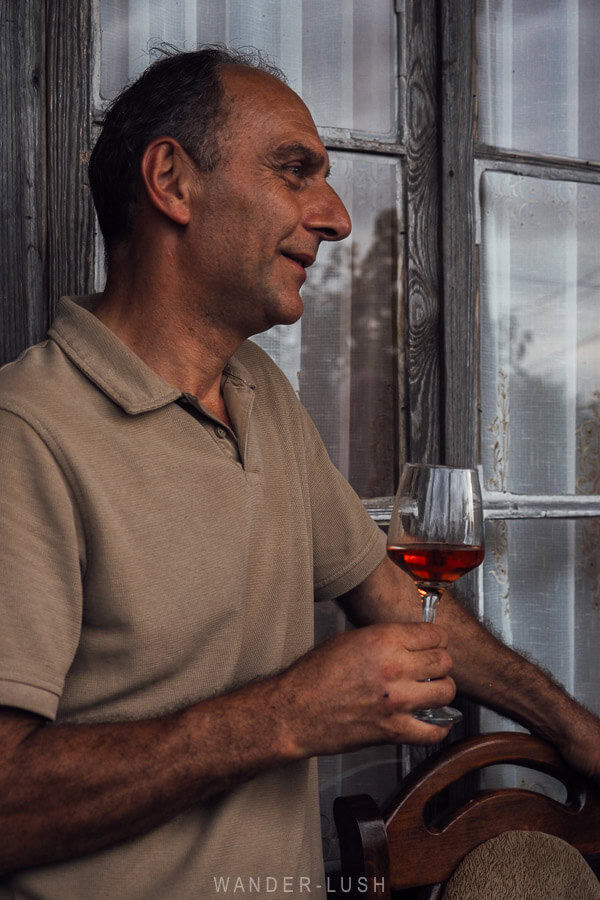

He makes an unusual and delicate amber Chkhaveri. Chkhaveri is a red-skinned grape normally used for red or rosé wines – but Dato produces a tiny quantity in an amber style. Part of the fruit comes from a Chkhaveri vine that is more than 100 years old, with production limited to around 1,000 bottles.
At RTO Winery in Jvartskhma, Vitali Kilasonia’s family has been making wine since the 1970s. The cellar now has a dedicated tasting space where visitors can sit down with the family over a table laden with food.
Besik Meparishvili returned to his family village of Phartskhma in 2010 and began restoring the old house and traditional marani to create Meparishvili Wine Cellar. A few years later, he replanted the vineyard with historic Gurian varieties. Today the family makes several wines, including different expressions of Chkhaveri alongside Sakmiela, Tsolikouri and Chumuta.
3. See Guria’s village industries at work
Tea and wine are relatively well-known, but Guria is associated with other things too. Hazelnut orchards now cover large parts of the region, fruit is dried and preserved in homes, goat milk is turned into cheese, and silk production – once important enough to support a large factory in Chokhatauri – survives today on a much smaller scale.
At Kala’s Farm in Akhalisheni, the focus is on goat farming and cheese production. Milk from other families in the surrounding villages who keep their own animals is also used for fresh and aged goat cheeses infused with different spices and flavours. Guests can even try a goat’s cheese khachapuri!


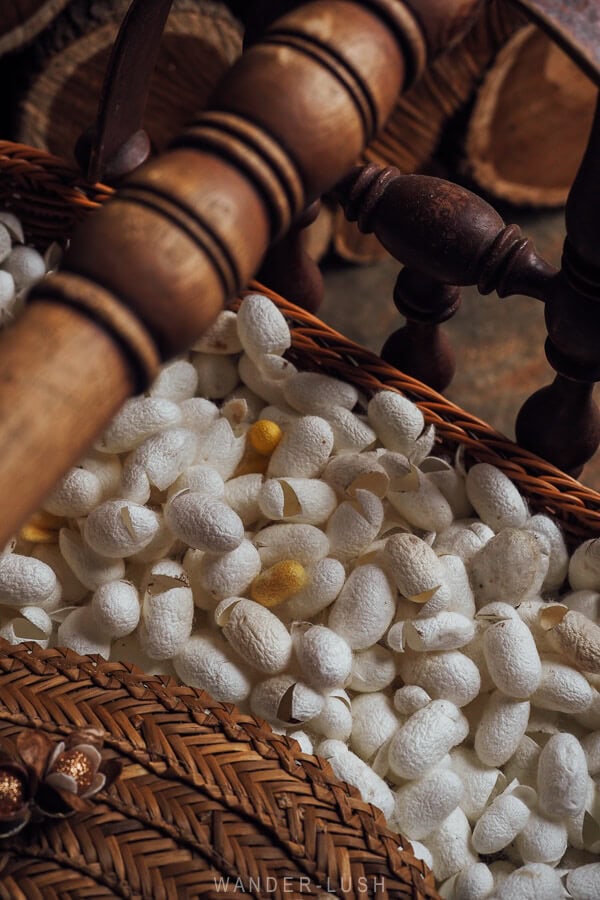
Also at Kala’s Farm, a group of local women are reviving another once-important rural industry: Silk. Silkworms are raised in Guria on a very small scale, with the threads used for different handicrafts. Like tea, sericulture was once widespread across Western Georgia before all but disappearing from everyday life. The huge abandoned Soviet-era silk factory in nearby Chokhatauri is a reminder of how important the industry once was.
In Khidistavi, Skijis Sakhli grew out of another Gurian staple: Fruit. The name translates roughly as ‘House of Skiji’ (skiji being an old Georgian word for dried grapes). Founder Daka Berdzenishvili opened the business when she returned to her ancestral home from Tbilisi, starting with dried fruit, and later employing more women from the community as she expanded production into jams and fruit teas.


At Georgian Kalata in Gvimbalauri, the same idea plays out on a much larger scale. I already knew this brand well – I often buy their products at their shops in Tbilisi – but I had no idea that everything was being made here in Guria.
Inside the factory, local ingredients move through every stage of production. We watched hazelnuts being threaded onto strings before being dipped into huge vats of thick tatara to make churchkhela.
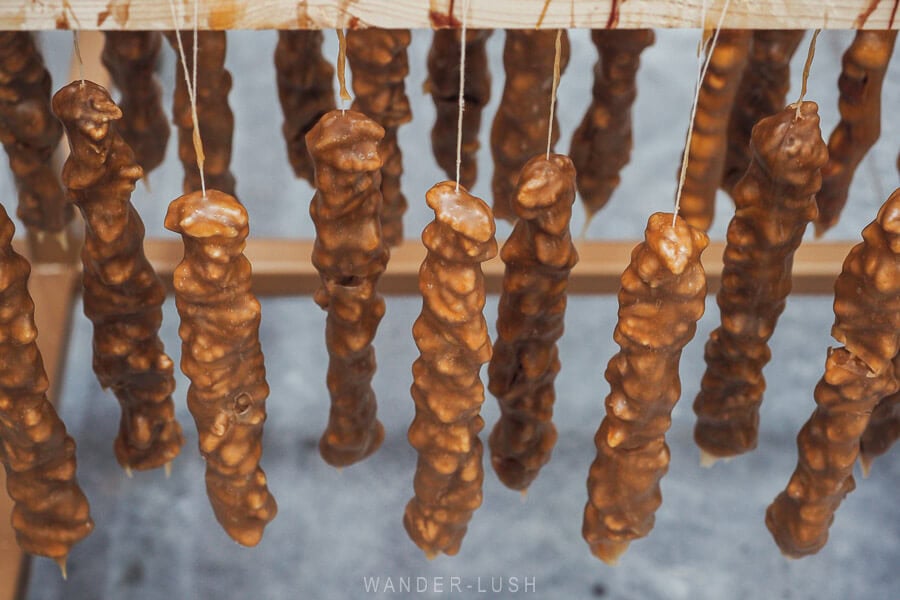
Hazelnuts are especially significant here: Orchards cover large swathes of Guria, including land where old tea plantations were cleared to make way for a more profitable crop.
4. Meet one of Guria’s last village potters
Pottery has a long history in Atsana, but today Bichiko Chkhaidze is one of the few people carrying the tradition forward. His father worked with clay, wood and metal, and after spending years in Tbilisi, Bichiko returned to the village in 2010 to work alongside him.
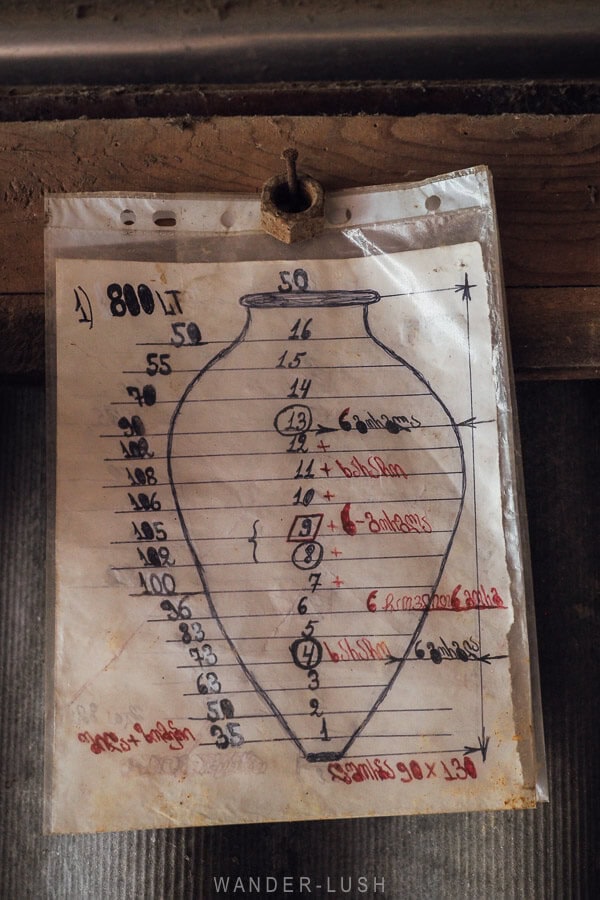
At Bichiko’s Craft House, everything from pitchers and cooking pots to tone ovens and qvevri is shaped by hand using clay from the Sakrameti quarry in nearby Aketi. His wife also works at the wheel and leads pottery classes for visitors.
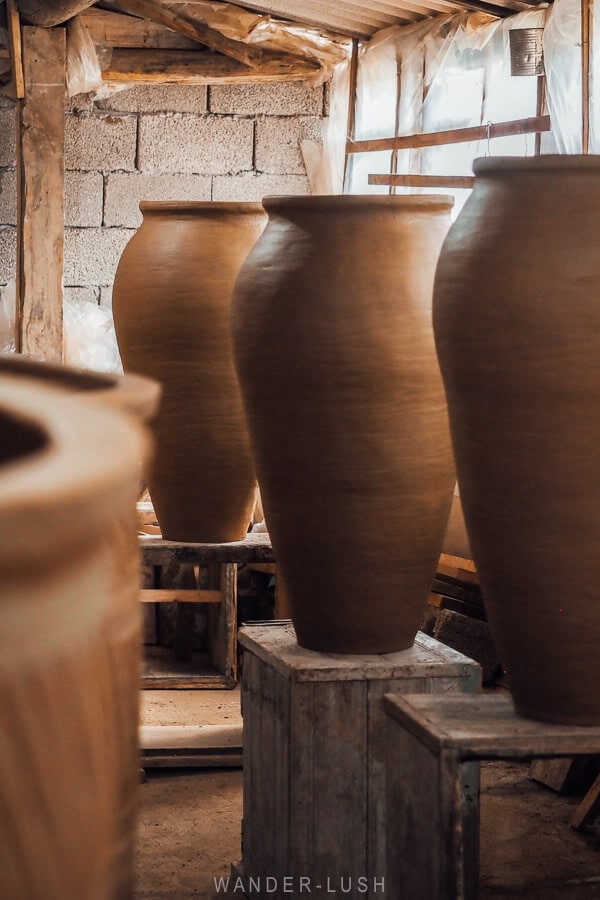
For firing, Bichiko uses an enormous wood-powered kiln that is more like a small building than an oven. Part of the structure is dismantled and rebuilt around each firing to contain the heat.
Production is seasonal, with the warmer, drier months from May to September best suited to working with the clay and firing up the oven.
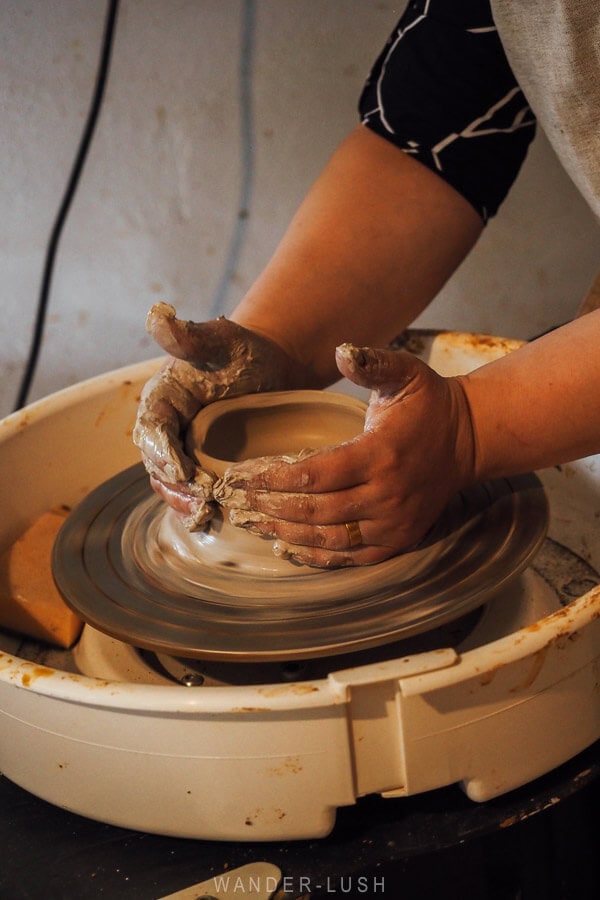

This was the third qvevri workshop I have visited in Georgia, and it’s always interesting to see how building techniques vary from one family to the next.
There is a lovely connection with Guria’s wine revival here, too. As more families return to old grape varieties and traditional winemaking, demand for locally made clay vessels is growing with it. In this way, one tradition is helping another survive.
5. Stay close to the source
Some Gurian families are also using their land in a different way – adding cabins and cottages to village and riverside plots. For travellers, this means more opportunities to stay close to the makers.
Near Ozurgeti, Babitouli offers three wooden cottages surrounded by greenery, and is well positioned for the tea-growing villages around Melekeduri, Bakhvi and Tsitelmta.
Dato’s Wine also has two cabins on the family property in Erketi, while Skijis Sakhli offers accommodation alongside its food and cooking experiences in Khidistavi.
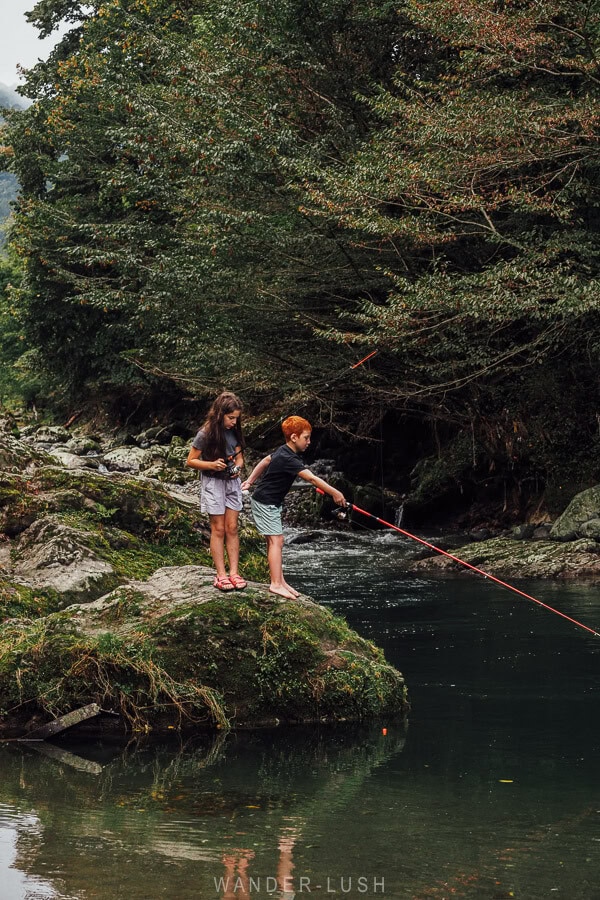
At the other end of the trail, Guria Glamping in Junmere was developed on family land and has two glamping domes, each sleeping up to four people. There is also space for camping and picnics.

Planning your Guria Maker’s Trail
Call ahead: These are working farms, family homes and small workshops rather than attractions with regular opening hours. Tastings, meals, masterclasses and general visits should always be arranged in advance.
Travel by car: These businesses are spread across villages and public transport is not practical for getting around.
Late spring through autumn is the best time to go: Tea farms are active through the warmer months and Bichiko’s pottery production is seasonal. If you’re particularly interested in wine, consider the end of autumn, when Guria’s late-ripening grapes are harvested.
More ways to explore Guria
This material has been produced with the assistance of the European Union. Its contents are the sole responsibility of CENN and do not necessarily reflect the views of the European Union.
All comments are moderated and may take a little while to appear. If you’ve submitted your comment, I’ve got it!