The ultimate list of places to visit in Georgia (the country).
Georgia might be small in size and still relatively under the radar on the global tourism stage, but let me tell you: there is a huge amount to see and do here.
Described by John Steinbeck as a “kind of second heaven” – the sliver of Earth God supposedly set aside for himself – Georgia really is as diverse and beautiful as people make it out to be.
In the north, the dramatic peaks of the Greater Caucasus form a natural border, giving way to fertile valleys, high plateaus and semi-desert landscapes in the east. To the west, ancient Colchic forests, tea fields and humid river valleys spill down from the Lesser Caucasus towards the Black Sea Coast.
From the so-called Georgian Arctic to the Georgian Dolomites, the Georgian Amazon and the Riviera of the Caucasus, this is a country of striking contrasts – and no two regions feel quite the same!
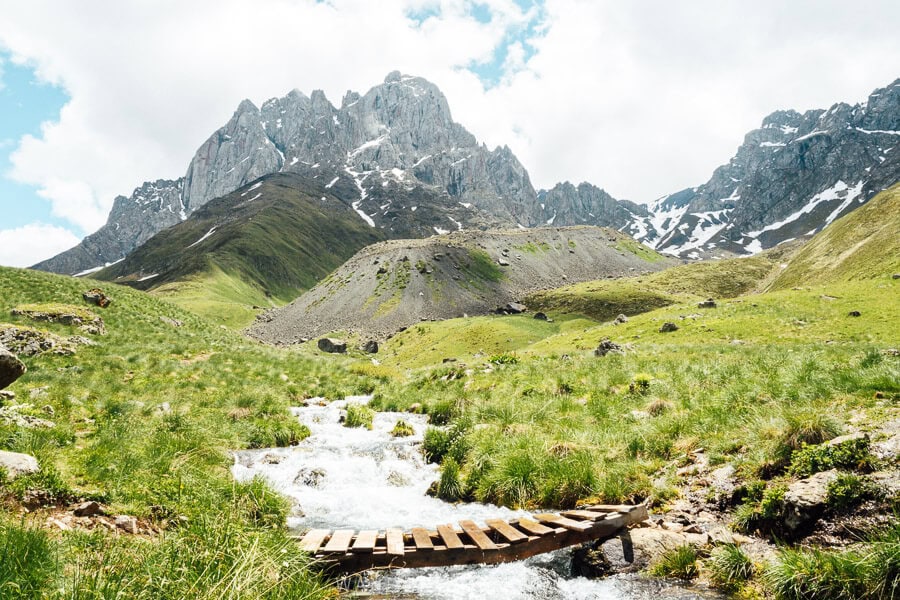
Having lived in Georgia for more than six years and travelled extensively across the country, I’ve been fortunate to visit all of its accessible municipalities.
This guide brings together 50 places to visit in Georgia – from essential cities and classic highlights to quieter towns, cultural landscapes, and lesser-known corners.
To make planning easier, the list is organised by region, starting with the capital and moving outwards. Every place featured is somewhere I’ve personally visited, researched, and written about. Where available, you’ll find links to detailed destination guides that include practical transport notes and insider tips.
If you’re planning your first trip to Georgia, think of these places as the building blocks for a rewarding trip.
→ If you’re specifically looking to avoid the most popular stops, see my separate guide to alternative destinations.
Put it all together: See my Georgia Itinerary for recommended transport routes, my Georgia Road Trip Itinerary for a flexible self-drive option, and my Georgia Travel Guide for more essential trip planning tips.
Looking for even more Georgia inspiration? Sign up here to get a free copy of my 25-page ebook, 365 Things to Do in Georgia:
Please note: This post contains affiliate links, meaning I may earn a commission if you make a purchase by clicking a link (at no extra cost to you). Learn more.
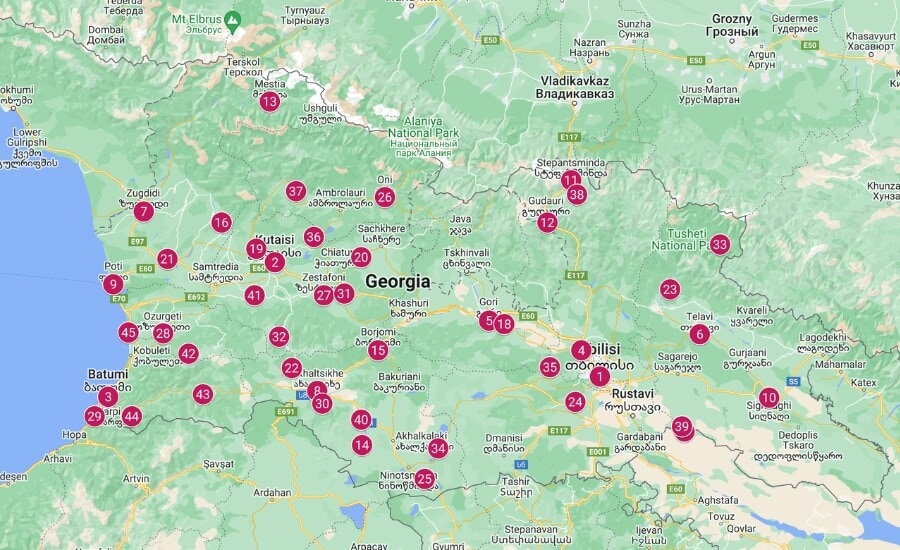
Map of places to visit in Georgia
Click the map of Georgia below to open an interactive version in Google Maps. You can then click on any city or place and find the link to my corresponding blog post.
Tbilisi
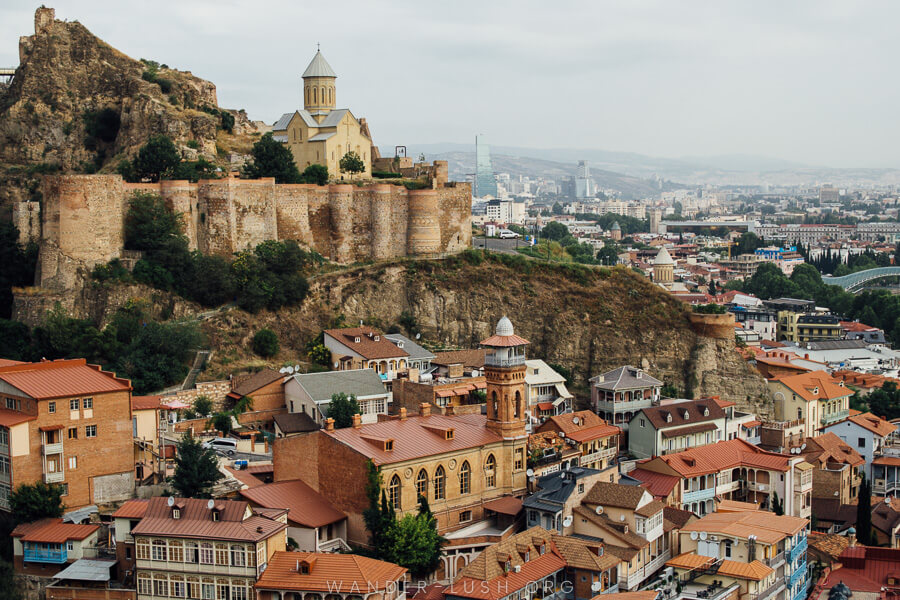
No trip to Georgia is complete without a few days in Tbilisi. The capital blends Persian bathhouses, Orthodox churches, Art Nouveau mansions and Soviet relics with a fast-growing scene of wine bars, specialty coffee shops, restaurants, galleries, and creative spaces.
It’s a city best explored on foot: wander the neat streets of Sololaki, browse the Dry Bridge flea market, and ride a cable car or two for sweeping views over the rooftops. Equal parts historic and contemporary, Tbilisi sets the tone for the rest of the country.
→ See my Tbilisi guide for 52 essential things to do in the capital.
Kazbegi & the North-East Highlands
Mtskheta: The old capital

Just 20 km north of Tbilisi on the way to the mountains, Mtskheta is one of Georgia’s oldest cities and the most popular day trip option. Once the kingdom’s capital and the heart of early Georgian Christianity, it’s packed with some of the country’s most important religious sites.
The UNESCO-listed Historical Monuments of Mtskheta include the grand 11th-century Svetitskhoveli Cathedral and the hilltop Jvari Monastery, famous for its sweeping views over the confluence of the Aragvi and Mtkvari Rivers. Compact, walkable and steeped in history, it’s an essential stop on any first trip to Georgia. To beat the crowds, spend a night here and enjoy golden hour in the cobbled old town.
→ See my full Mtskheta day-trip guide for highlights and alternative things to do.
Sabaduri Forest & Tbilisi National Park: Hiking trails near the capital
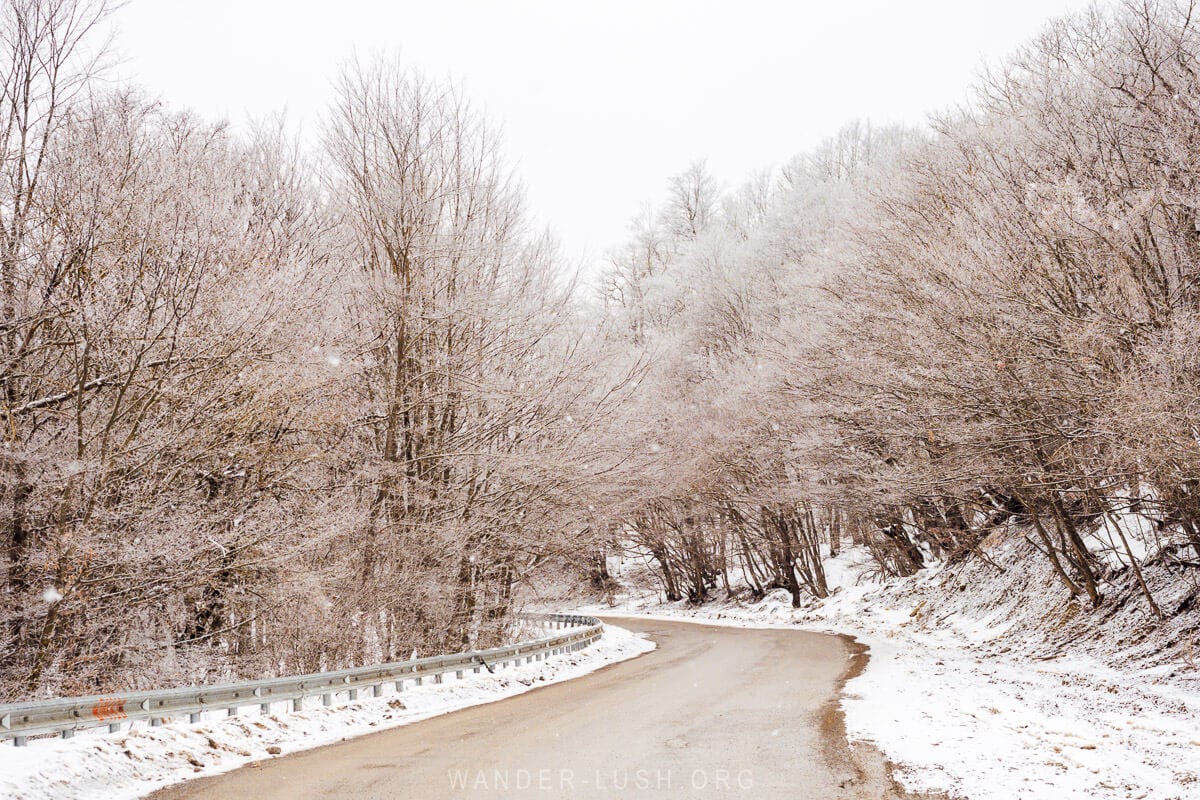
Just an hour from central Tbilisi, Sabaduri Forest sits on the periphery of Tbilisi National Park – a vast protected area stretching across the hills north of the capital. Known for its seasonal colour, Sabaduri’s oak and beech trees turn deep gold in autumn and transform into a snow-dusted landscape in winter, drawing locals for weekend drives.
But the park extends well beyond its most photographed groves. Newly marked trails climb towards the Zedazeni Monastery ridge, loop through mixed forest above Tskhvarichamia, and connect to viewpoints overlooking the Tbilisi Sea. Sabaduri works as a scenic stop on a road trip north to Kazbegi, or as a day hike.
The Military Highway: Georgia’s best road trip

Whoever said it’s all about the journey rather than the final destination must have been referring to the drive from Tbilisi to Kazbegi. As iconic as Gergeti Trinity Church is, it’s really just a small taste of the landscapes you’ll see along the way.
The historic Military Road – Georgia’s only open connection with Russia – winds through gorges, past reservoirs, and through high passes as it twists and turns deep into the Greater Caucasus. You need a full day for all the stops: Ananuri Fortress, the mosaic-covered Friendship Monument at Gudauri, mineral travertines, and sweeping viewpoints. Whether you self-drive or hire a driver for the day, this is easily one of the most scenic drives in the Caucasus and a highlight of any trip north.
→ See my full Georgian Military Highway guide for 12 roadside stops.
Gudauri: Georgia’s main winter resort

Located off the Georgian Military Highway, Gudauri is one of four ski resorts in Georgia and the go-to for winter sports and snow time near Tbilisi. What began as a Soviet-era ski station has grown into a lively high-altitude winter village.
While New Gudauri – with its apartment blocks and apres-ski bars – is the base of choice for most visitors, quieter ski-in lodges can be found in Old Gudauri and along the Military Highway. In between runs, hitch a ride on the Gudauri-Kobi Cable Car for impeccable views of Mkinvartsveri (Mount Kazbek), the highest peak in north-east Georgia at 5,054 metres. Outside ski season, Gudauri is more of a quick scenic stop than a destination in its own right.
→ See my full Gudauri guide for tips on skiing, transport, and more.
Kazbegi: Stepantsminda & Gergeti Trinity Church
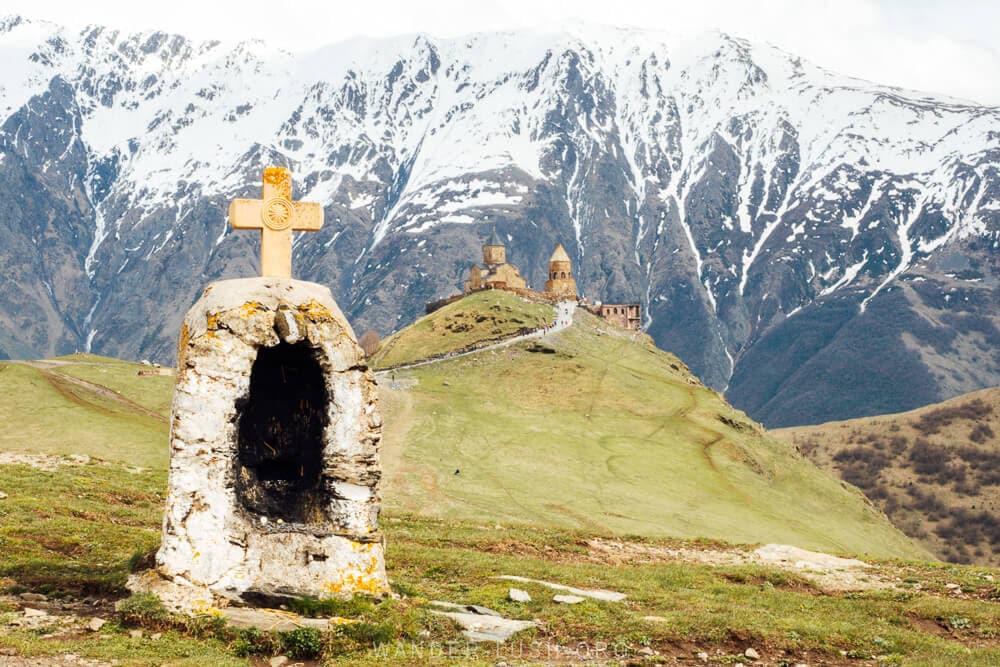
With Gergeti Trinity Church set high on the hillside beneath the towering Greater Caucasus, Kazbegi (AKA Stepantsminda) is Georgia’s most recognisable mountain scene – the image that ends up on every postcard. Under four hours from Tbilisi, this is the most accessible mountain area in the east – and it does get busy during summer as a result. Nonetheless, it is a spectacular destination for day hikes and scenery.
The short walk up to Gergeti is practically a rite of passage, while longer trails branch into the nearby Juta, Truso and Sno valleys. The hamlet itself is small, but with a surprisingly excellent food scene. Stay or dine at Rooms Kazbegi, the retrofitted mountain sanatorium that has become the country’s most-coveted hotel. For a taste of the mountains, Kazbegi works as a day trip, but ideally you should spend a couple of nights here to enjoy the wider region.
→ See my Kazbegi guide for hikes, viewpoints and everything else you need to know before you go.
Sno Valley & Juta: The Georgian Dolomites
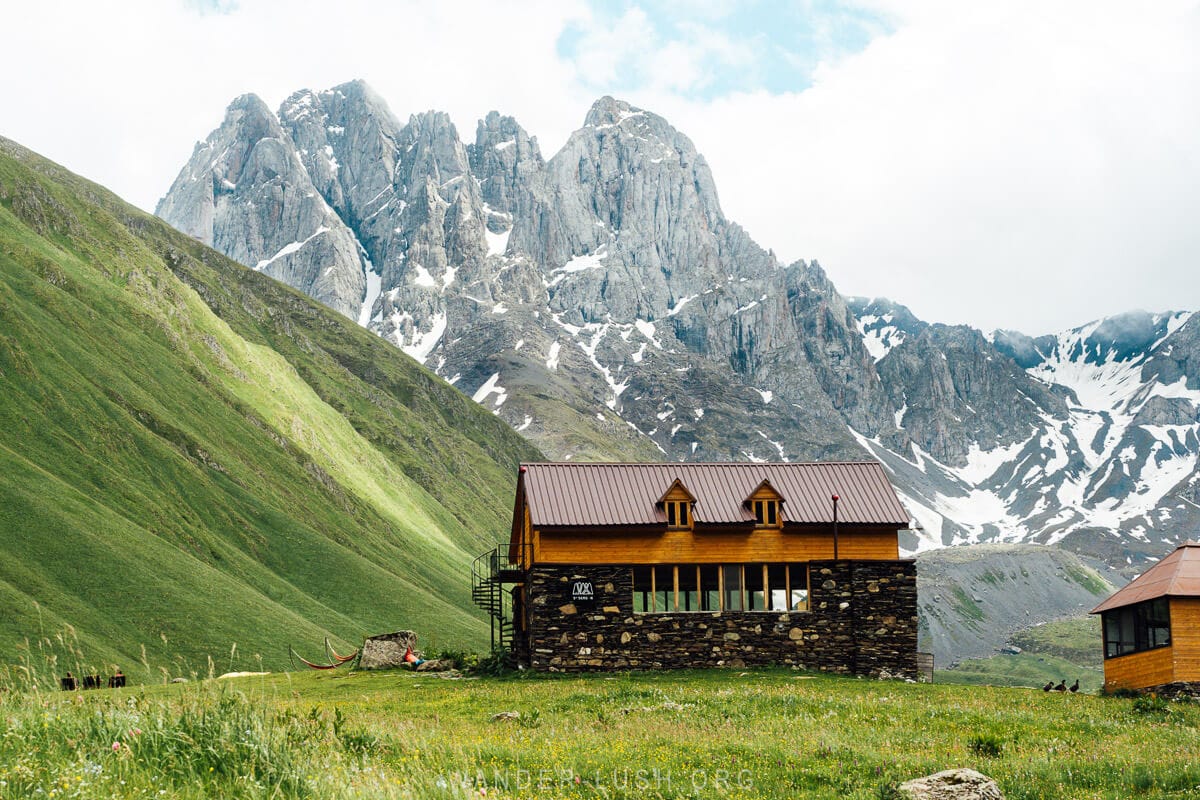
If hiking and big mountain scenery are high on your Georgia wish list, Sno Valley and Juta are hard to beat. Dubbed the ‘Georgian Dolomites’, this side valley off the Military Highway is defined by tapered stone peaks, alpine meadows, and the dramatic Chaukhi Massif.
A gentle day hike leads through Juta Valley towards the mountains, while nearby Sno village hides one of the region’s quirkiest sights: a meadow dotted with giant stone head sculptures created by a local artist. With shuttle transfers available to the trailhead from Kazbegi, this is one of the most convenient day hikes in the region.
Khevsureti: Fortified villages in the north
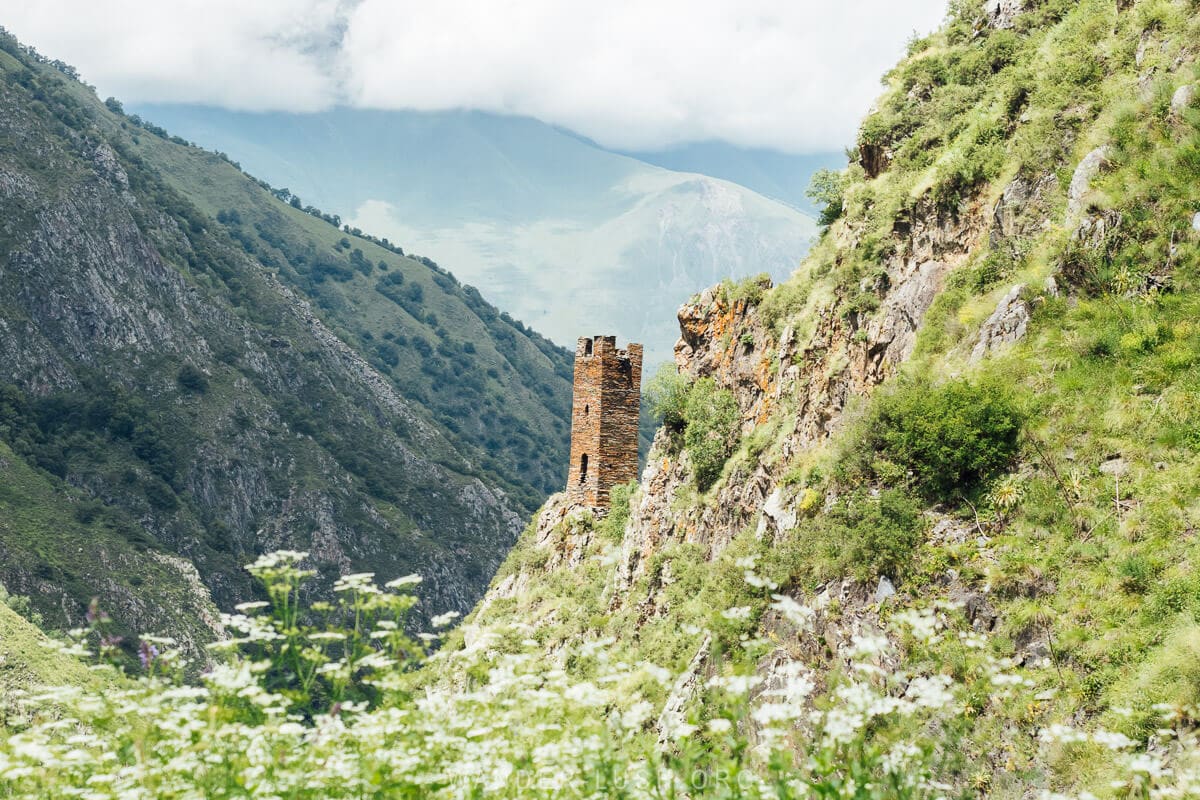
Combining the dramatic scenery of Tusheti with the tower-studded heritage of Svaneti – but without the development or crowds of Kazbegi – Khevsureti is arguably Georgia’s most balanced mountain destination. Closer to Tbilisi and easier to explore in a few days, it offers deep valleys, wildflower meadows, and a scattering of medieval stone villages that feel completely untouched (despite having been restored!).
The fortified settlement of Shatili and the hilltop stronghold of Mutso are the region’s standouts, while solitary defence towers dot the mountains like lone sentinels. Like Tusheti, access is seasonal, but the roads are gentler and open for longer, making this a rewarding and relatively accessible adventure in the Greater Caucasus.
Omalo & Tusheti: Georgia’s most remote mountain destination

Tusheti is widely considered Georgia’s most remote mountain region, set high in the Greater Caucasus beyond the Abano Pass. Reaching it still takes commitment (you need four days minimum for this trip), but the road is getting better every year. The reward for the long drive is a landscape of towering mountains, medieval stone towers, and tiny villages that feel, at times, completely cut off from the modern world.
Most people come for multi-day hikes and horse trekking between settlements such as Omalo and Dartlo, but Tusheti is just as compelling culturally, with distinct traditions, food, and architecture. It is a summer-only destination, and one of the country’s last genuine off-the-grid experiences.
→ See my Tusheti guide for road conditions, guesthouses and planning tips.
Pankisi Valley: Kist culture & cuisine
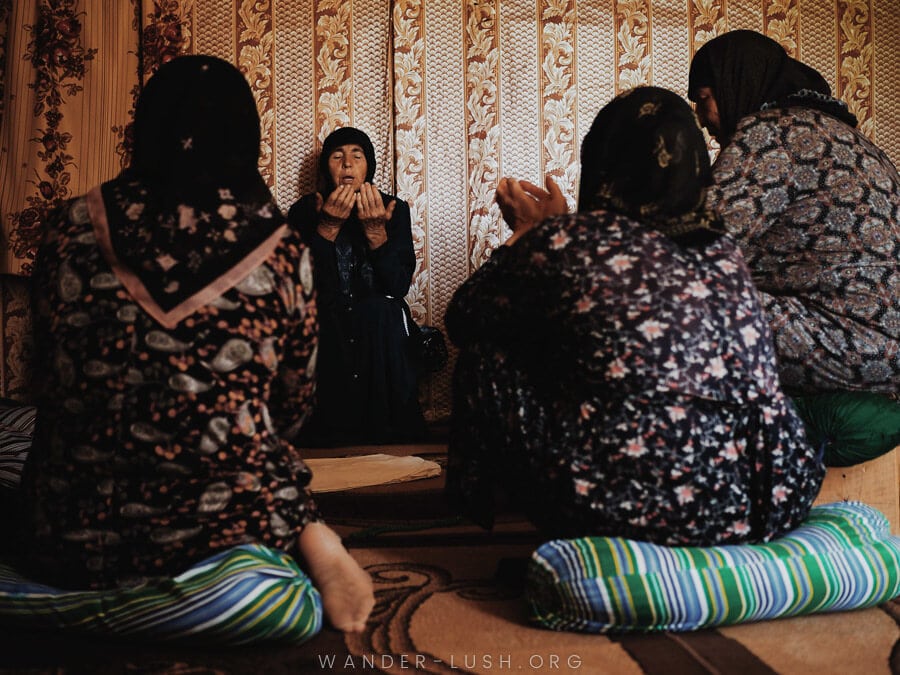
Set in the foothills of the Greater Caucasus beneath Tusheti, Pankisi Valley is one of the most culturally unique corners of Georgia – and a place that’s very special to me. It is home to the Kists, whose ancestors migrated to Georgia from Chechnya two centuries ago. Visiting them offers a rare chance to learn about their language, religion and traditions firsthand.
Family-run homestays (including Nazy’s Guest House) can organise guided village walks, horse riding, and visits to the local mosque and museum. Home-cooked meals are eaten with the family. The Friday morning women’s Sufi Zikr ceremony is a must. A couple of days in Pankisi is a nice way to break-up a journey across the east – it’s less about sightseeing, and more about slowing down and connecting.
→ See my Pankisi guide for homestays, cultural experiences and practical tips.
Kakheti
Telavi: Hub of the wine region
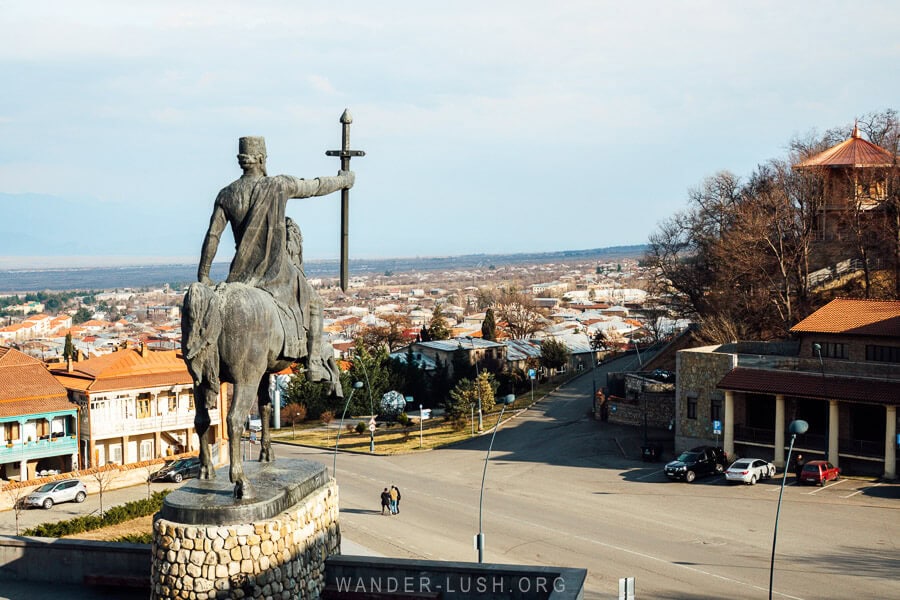
Telavi is the biggest city in Kakheti and my preferred practical base for exploring Georgia’s wine country. Set in the heart of the Alazani Valley amongst the vineyards, it has a relaxed, lived-in feel – and a more local vibe compared to Sighnaghi – with just as many good restaurants, wine bars, and family cellars.
Historians often refer to Telavi as the most ‘medieval’ city in Georgia because it’s the only place where monuments from four historical periods stand intact side by side – including the palace of King Erekle II, with its excellent local history museum. Telavi is a transport hub and from here, it’s easy to visit sites on both sides of the river, including Alaverdi Cathedral, Ikalto Academy, and the Tsinandali Estate.
→ See my full Telavi guide for transport tips, hotels and more.
Sighnaghi: Kakheti’s charming walled town
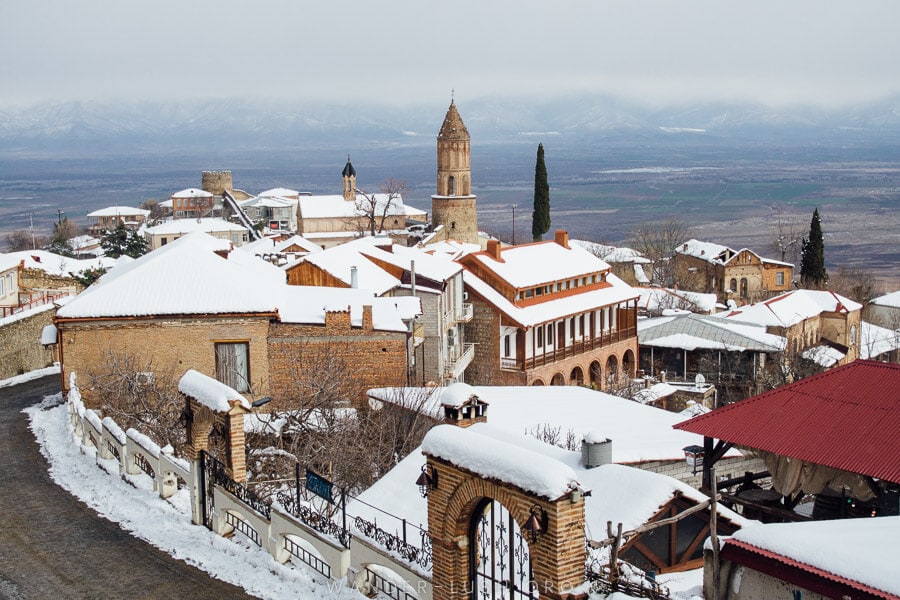
Set on a hill high above the Alazani Valley, Sighnaghi is Kakheti’s prettiest small town, wrapped in stone ramparts and blessed with sweeping views of the vineyards and distant Caucasus. Marketed as the ‘City of Love’, it’s undeniably charming if not a bit naff, with cobbled streets, colourful balconies, and cosy wine bars.
It can feel a little polished and touristy compared to other parts of the region, so what I like to do is arrive in the late afternoon (after the tour buses have gone) and spend the night. Golden hour lights up the valley, and Bodbe Monastery and the ramparts are much quieter in the early morning.
→ See my alternative Sighnaghi guide for things to do beyond the city walls.
The Alazani Valley: Georgian wine country
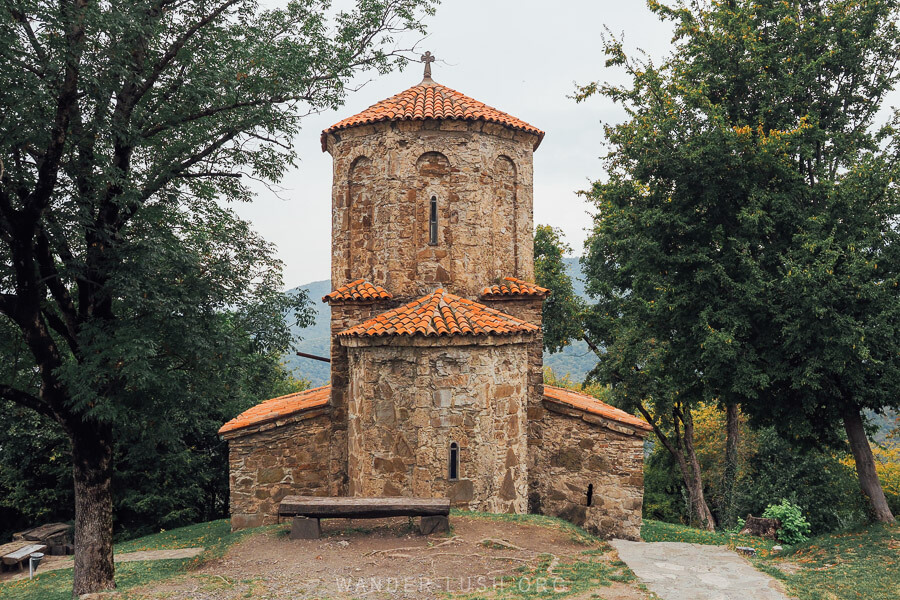
Along with mountains, wine is the other essential ingredient in any Georgia itinerary. The Alazani Valley – the broad, fertile basin that forms the heart of Kakheti – is home to the country’s famous Wine Route and the majority of Georgia’s vineyards and cellar doors.
Family maranis and larger estates line both sides of the river, offering tastings of traditional qvevri wines made using an 8,000-year-old clay-vessel method alongside modern European styles. Even if wine isn’t your thing, the valley is worth visiting for its scenery and heritage alone: hilltop monasteries, cave complexes, and quiet country roads thread between fields and vines, with the Caucasus rising in the distance. Base yourself in Telavi, Gurjaani or Sighnaghi, or simply explore on a day trip from Tbilisi.
→ See my Kakheti itinerary for ideas on how to spend your time in the wine region.
Dedoplistskaro: Kakheti’s wild side

Kakheti is Georgia’s largest region and incredibly diverse. When you’ve had your fill of wine cellars and monasteries, head southeast to Dedoplistskaro. This small frontier town is the gateway to the wild, semi-desert landscapes of Vashlovani.
Closer to town, there are limestone gorges, ruined hilltop fortresses, and a scattering of quirky Soviet-era monuments. If you’re into photography and urbex, the abandoned Big Shiraki air field outside Dedoplistskaro is a must. Travellers craving solitude, wildlife encounters and something completely different from the usual wine-soaked Kakheti circuit will love it here.
→ See my Dedoplistskaro guide for things to do in and around the town.
David Gareja & Udabno: Mysteries in the desert

Founded by a 6th-century monk and his followers, David Gareja is a network of cave monasteries carved directly into the desert cliffs of eastern Georgia and north-western Azerbaijan. The complex of rock-hewn chapels and faded frescoes unfolds across the stark semi-desert landscape of Udabno, where mineral deposits create naturally colourful ‘rainbow hills’.
The road to the main David Gareja (Lavra) Monastery is sealed, while a 4WD is required for the more remote Natlismtsemeli. This is one of the most unusual day trips from Tbilisi, and pairs well with a Kakheti road trip if you’re travelling in spring, autumn or winter.
→ See my full David Gareja guide for the latest access updates.
South of Tbilisi & Shilda Kartli
Rustavi: A former Soviet monotown

Just south of Tbilisi (and accessible by public bus for a couple of GEL), Rustavi is Georgia’s third-largest city and one of my favourite off-beat day trips. Built as a Soviet ‘monotown’ around the vast Rustavi Metallurgy Plant, it feels like a living time capsule of industrial Georgia.
Expect microdistrict apartment blocks, monumental Stalinist architecture, and plenty of mosaics and bas-reliefs scattered across theatres, schools, and sports complexes. The urban park is spectacular for a sunset stroll – and if time allows, you can spend the night at the retro Hotel Rustavi.
→ See my full Rustavi guide for architecture highlights, mosaics, and other things to do.
Asureti: A former German colony

Founded in the early 19th century as part of Catherine the Great’s colonisation programme, Asureti was one of several Swabian German settlements established in Kvemo Kartli. The main street is lined with Fachwerk half-timbered houses, culminating with a grand restored Lutheran church – echoes of a community that endured deportation and dispersal in the 20th century, yet left an indelible mark on the landscape.
Bahnhof Station serves proper German fare inside a restored railway building, while the abandoned Kolkhoz Success wine cellar is a must-visit for urbexers. Each autumn, Oktoberfest returns to the village – a small but spirited celebration that pays tribute to its Swabian roots.
→ See my Kvemo Kartli guide for a complete route through the region.
Bolnisi: Georgia’s oldest Church & an emerging Wine scene

Just 45 minutes south of Tbilisi, Bolnisi is home to one of Georgia’s most important early Christian landmarks. Bolnisi Sioni, dating to the 5th century, is among the oldest surviving churches in the country and is famed for its distinctive inscriptions and stonework.
Today, the town is quietly re-establishing itself as a wine destination. The Bolnisi PDO is one to watch, with small producers reviving vineyards linked to the Swabian settlers who established the town of Katharinenfeld in the 19th century. A compact centre brimming with preserved German architecture, an excellent museum, and easy access to nearby Dmanisi (see below) make Bolnisi a fun day trip or a base for exploring the wider area.
Dmanisi Museum-Reserve: Georgia’s most important archaeological site

Dmanisi is one of the world’s most significant archaeological sites. Excavations here uncovered 1.8-million-year-old hominin fossils – the oldest ever discovered outside Africa – rewriting the story of early human migration. Layered directly on top are the ruins of a medieval Silk Road city: outlines of streets, house foundations, a hilltop citadel, and an early basilica all spread across a windswept plateau.
Just 30 minutes south of Bolnisi, the Museum-Reserve is an easy detour if you have your own car. The excavation site and small museum are only open during the summer season – contact staff in advance to arrange a visit. You need around two hours to walk through the nearly two million years of history. Truly a remarkable place to visit in Georgia.
Gori: More than the Stalin Museum
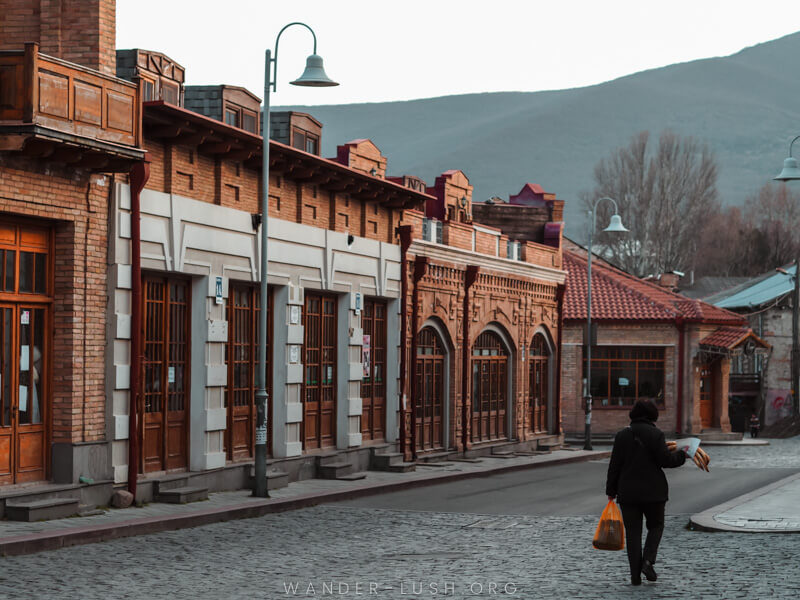
Best known as the birthplace of Joseph Stalin, Gori is Georgia’s dark-tourism mecca and home to the Stalin Museum, which includes his childhood house and personal armoured train carriage. Love it or loathe it, it’s one of the country’s most unusual attractions.
But there’s more to Gori than its Soviet connection. The compact city sits beneath an impressive hilltop fortress, with sweeping views over the Shida Kartli plains, and makes a convenient base for visiting nearby Uplistsikhe cave city and the vineyards of Kartli.
→ See my full Gori guide for transport tips, alternative museums, and where to eat.
Uplistsikhe: Georgia’s oldest Cave City
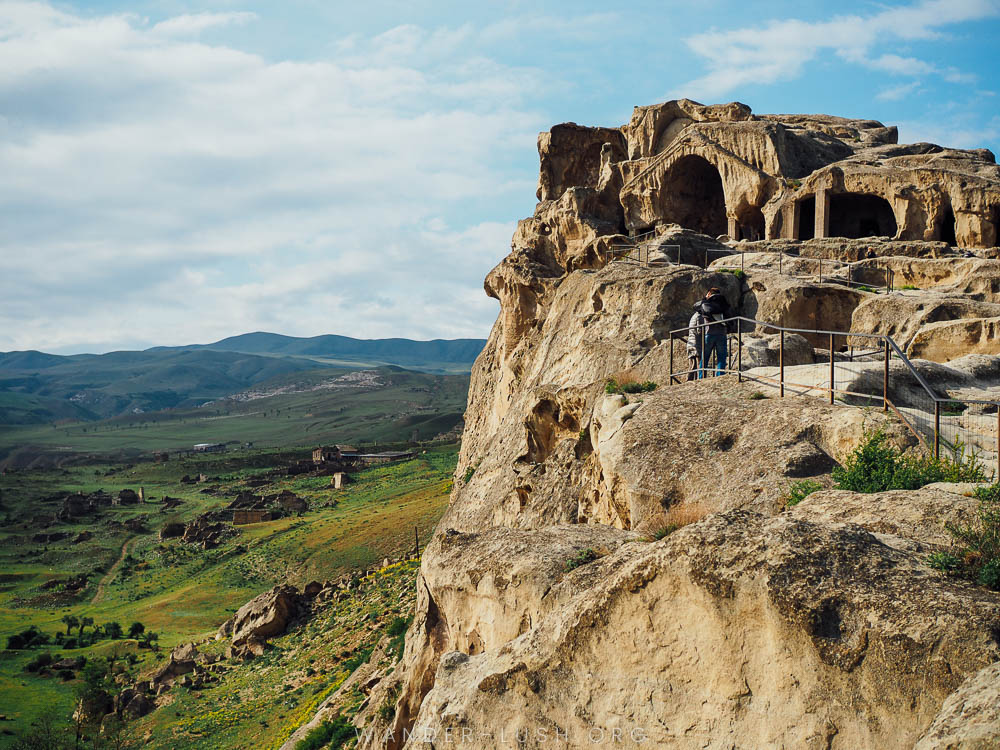
One of Georgia’s oldest settlements, Uplistsikhe is a sprawling rock-hewn cave city carved into the cliffs above the Mtkvari River. It is not quite as impressive as Vardzia, but it is far more accessible. The site spreads horizontally across the hillside in a maze of tunnels, chambers and grottos that are surprisingly fun to explore on foot.
Easy to reach from nearby Gori, it pairs well with Gori and/or Mtskheta for a full-day trip from Tbilisi. Use GoTrip to plan a DIY day trip from Tbilisi that includes both.
→ See my full Uplistsikhe guide for transport advice and tips for your visit.
Rkoni Valley: Autumn hiking trails

Close to Gori, Rkoni is one of several quiet valleys that cuts deep into Shida Kartli. This one is dotted with tiny villages and old churches, and is one of the best places for an easy hike near the capital, especially in autumn when the trails glow with colour.
A short walk from the end of the road leads to Rkoni Monastery, rebuilt after Timur’s armies sacked it in the 15th century, and a beautiful stone Tamar Bridge arcing over the Tedzami River. Add a handful of lesser-known chapels and you’ve got a simple, rewarding autumn escape.
→ See my Rkoni day trip guide for trail details and tips (published soon).
Kutaisi & Imereti
Kutaisi: The cultural heart of Georgia
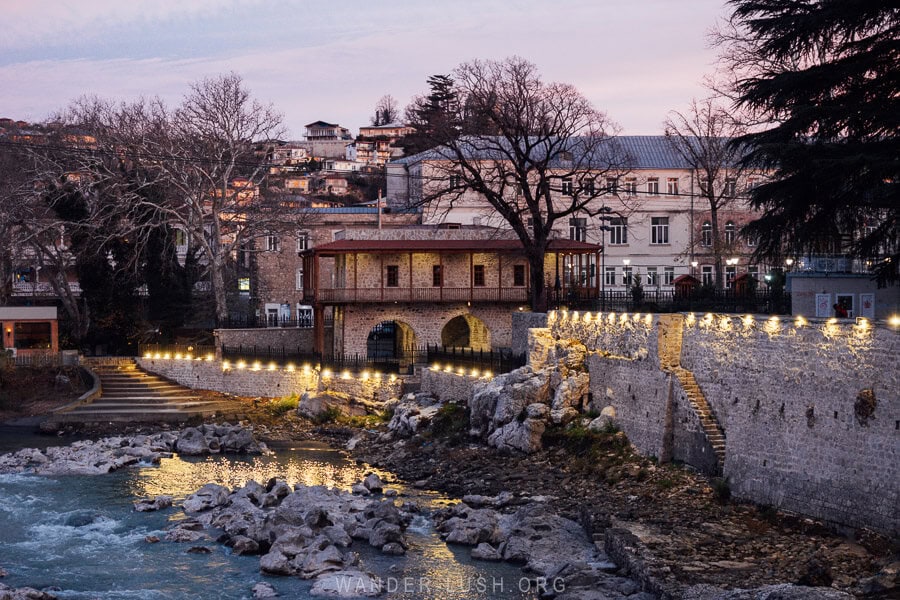
Georgia’s fourth-largest city, Kutaisi often gets overlooked by travellers flying in and out of the airport – which is a big mistake! One of Europe’s oldest continuously inhabited cities, it has long been the cultural heartland of Georgia, shaped by centuries of myth, literature, music and poetry – and later heavy industry.
Centred around the roaring Rioni River, it’s an easygoing small city of leafy parks, lively markets, terrific restaurants, cute specialty museums, and historic churches, with a scruffy charm that grows on you fast (I should know – I live here!). Its central location also makes it the ideal base for exploring Western Georgia, from Tskaltubo’s sanatoria to Chiatura’s cable cars, the Black Sea coast, and the mountains of Racha and Svaneti beyond.
→ See my Kutaisi guide and suggested itinerary for insider tips.
Gelati & Motsameta: UNESCO Monasteries

A UNESCO World Heritage Site, Gelati Monastery was established in 1106 by King David the Builder and is one of the oldest and most important churches on this side of the country. Conservation works on frescoes painted in the 12th-17th centuries are ongoing – and wider restoration works to the complex mean that is is currently only open to visitors on Sundays.
Nearby, Motsameta Monastery has a modest interior by comparison – but its cliffside location is more impressive. Join a half-day tour to the monasteries for a guided introduction, or follow the trail between the monasteries before walking all the way back into Kutaisi via the railroad tracks for an easy half-day of semi-urban hiking.
Tskaltubo: Semi-abandoned Soviet spa town
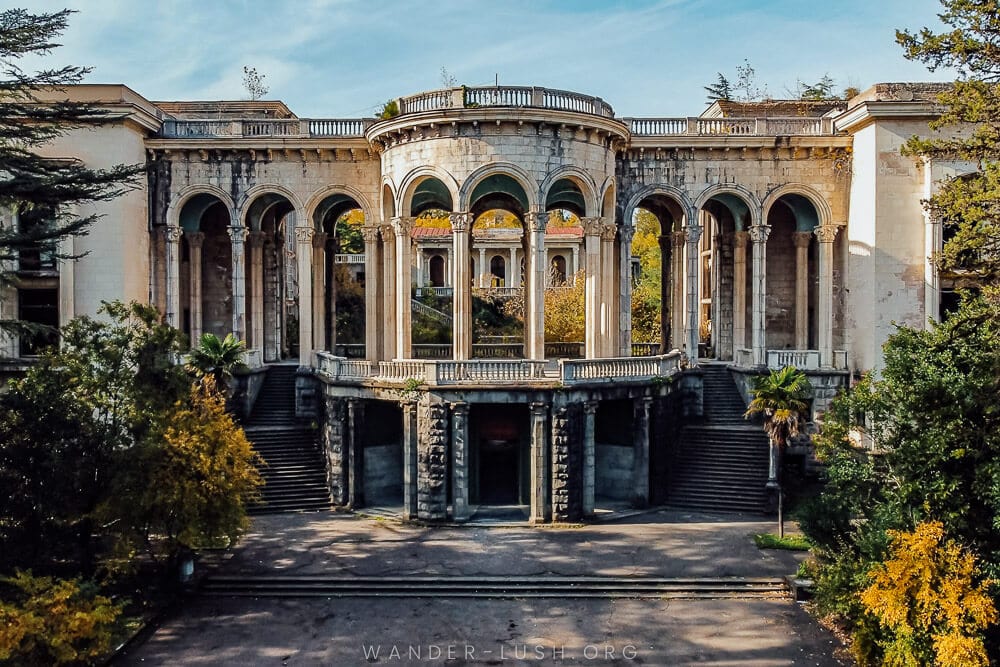
Just west of Kutaisi, Tskaltubo is a former Soviet spa town built around naturally warm mineral springs once dubbed the ‘Waters of Immortality’. In its heyday, thousands of visitors arrived each year to stay in grand sanatoria, many of which still ring the leafy central park.
A handful have been restored, while most sit beautifully decayed, their colonnades, staircases and cavernous halls slowly reclaimed by nature. Part spa resort, part open-air museum of Soviet architecture, and endlessly fascinating to explore – it’s my favourite place in Georgia. For the full Tskaltubo experience, stay the night at Legends Resort.
→ See my full Tskaltubo guide for details about all the sanatoriums and a suggested walking route.
Chiatura: The city of cable cars
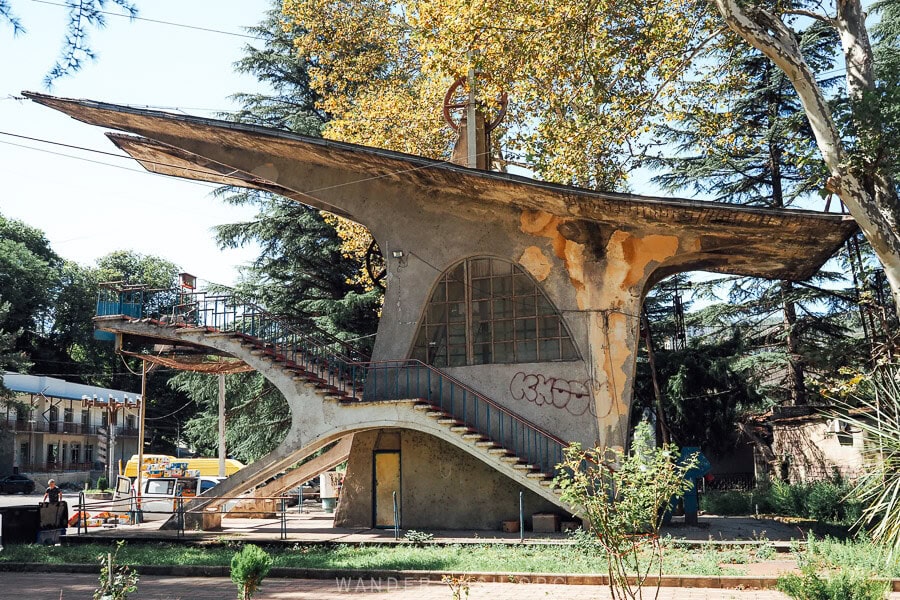
Built around vast manganese mines, Chiatura is one of Georgia’s most surreal post-Soviet landscapes and a must-visit for urbexers, photographers, and history buffs. The city is famous for its network of cable cars – nicknamed ‘Stalin’s rope roads’ – which once ferried workers across the gorge, and still rattle overhead today alongside newer gondolas.
Apartment blocks cling to cliffs, and abandoned cable car stations with magnificent concrete forms dot the centre, popping up between new parks and renovated buildings. Chiatura pairs easily with nearby Katskhi Column, Sachkhere and/or Zestafoni for a memorable day trip from Kutaisi or road stop when travelling north into Racha.
Vani: On the Trail of the Kingdom of Colchis

An hour’s drive from Kutaisi, the Vani Archaeological Site is one of Georgia’s most important ancient settlements, identified as a major centre of the Kingdom of Colchis between the 8th and 1st centuries BC.
The Vani Archaeological Museum sits directly beside the ruins and displays gold jewellery, coins and other artefacts found in burial sites – including the original Tamada toastmaster statue, a tiny bronze figure raising a horn who has become a symbol of Georgian hospitality. The modern halls and thorough didactics place this museum firmly amongst the country’s best. Combined with a visit to the Vani Sulfur Pool – a natural hot spring in a field – or a nearby winery, it makes for an offbeat day out.
Samegrelo, Guria & Adjara (Western Georgia)
Martvili & Balda: Canyons & waterfalls
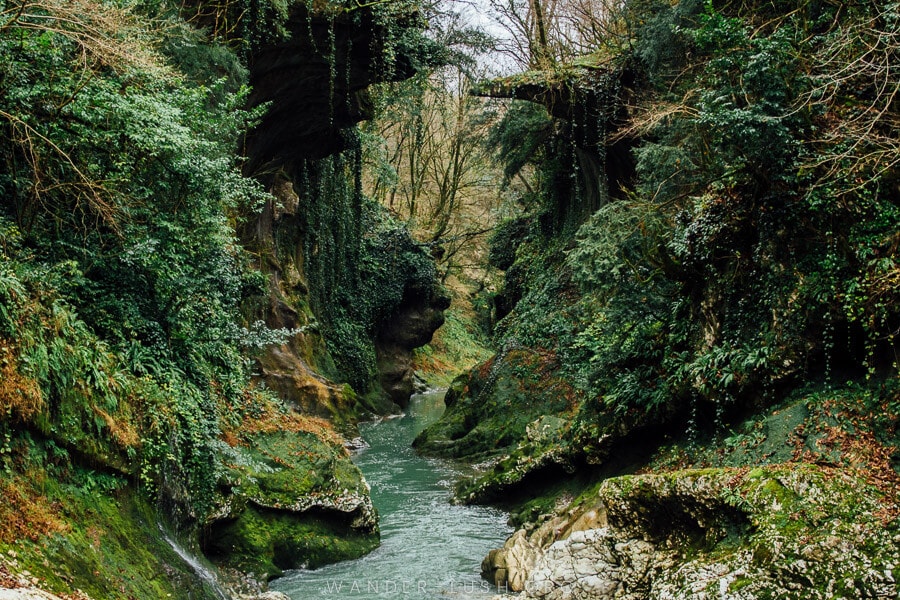
The canyons and waterfalls of Western Georgia are a classic excursion from Kutaisi. Martvili Canyon, Okatse Canyon and Kinchkha Waterfall are often bundled together with Sataplia or Prometheus Cave. Martvili is my favourite, with its mossy rock walls and milky-turquoise water, while Okatse is all about scale – a deep, dramatic canyon with a long suspended walkway floating above the canopy.
This corner of Samegrelo is far more rewarding if you explore beyond the ticketed sites. Travelling independently allows you to slow down and discover quieter stretches of the Abasha River around Balda, informal swimming spots, towering waterfalls, and hiking trails. The town of Martvili itself is a good base, with its lively Friday market and the beautiful 7th-century Martvili Monastery, reached by cable car.
→ See my alternative guide to exploring Martvili (published soon).
Zugdidi: Samegrelo’s royal connection
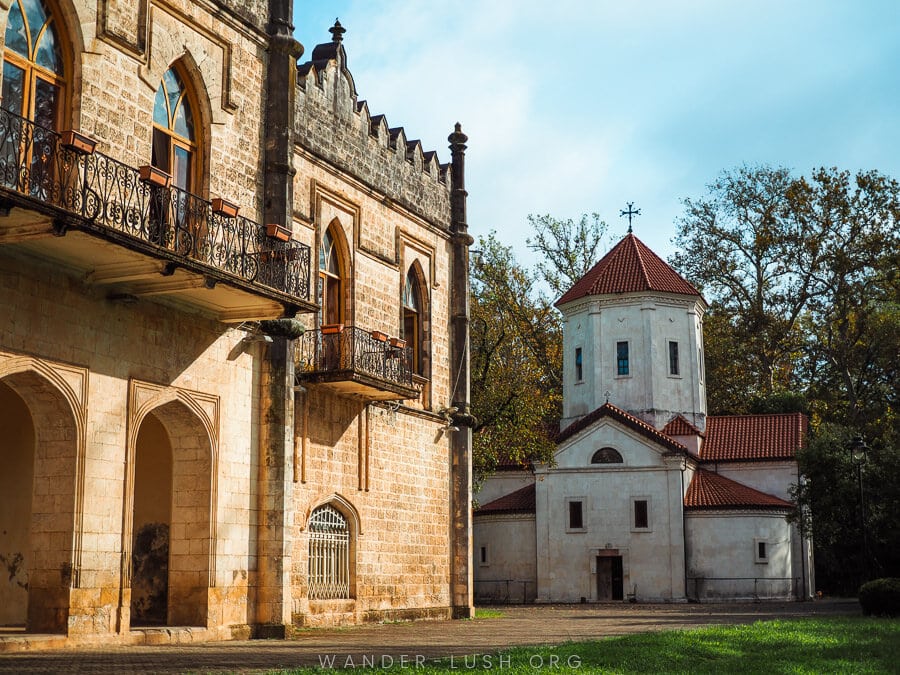
The largest city in Samegrelo, Zugdidi is the best place to experience Megrelian culture and cuisine. Many travellers pass through on their way to Svaneti, but it’s worth stopping here to taste the region’s rich food traditions (fiery adjika is the ingredient of choice here), the Soviet-period mosaics around Rukhi, and Zugdidi’s laid-back local life.
The standout sight is the eclectic Dadiani Palace complex, once home to Samegrelo’s ruling family and now a set of museums. Samegrelo has a fascinating history and an unlikely Frech connection – the story unravels with the Napoleon Death Mask, held in the museum collection. The former palace garden is now a beautiful park, with walking trails and a cafe. Compact and easy to reach by train from Tbilisi, Zugdidi makes a convenient and characterful overnight stop.
→ See my full Zugdidi guide for restaurant recs and more things to do.
Ozurgeti & Guria: The Georgian Tea Route
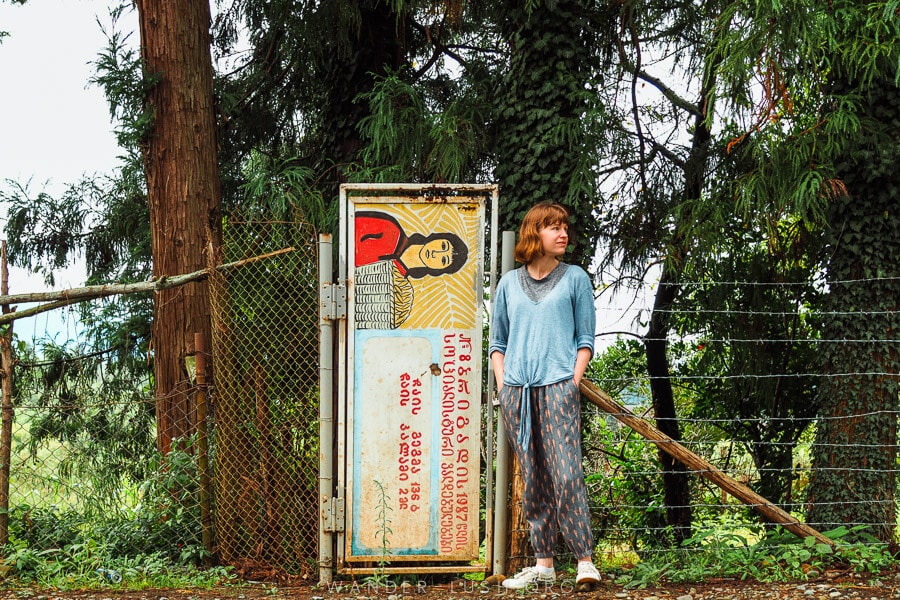
Everyone knows about Georgia’s Wine Route, but few people realise there’s a Tea Route too. Guria, a small, lush corner of Western Georgia, was once one of the world’s biggest tea producers, and today its overgrown plantations sit alongside a new wave of family-run micro estates reviving the craft.
The regional hub, Ozurgeti, is a low-key base with colourful street art, interesting architecture, and easy access to tea fields, abandoned factories, and mountain retreats such as Bakhmaro. With a couple of nice guesthouses and winery-accommodations, it works best for slow travellers road tripping between Kutaisi and the Black Sea.
→ See my Guria guide for a list of tea estates and other things to do in the area.
Bakhmaro & Gomismta: The kingdom of clouds
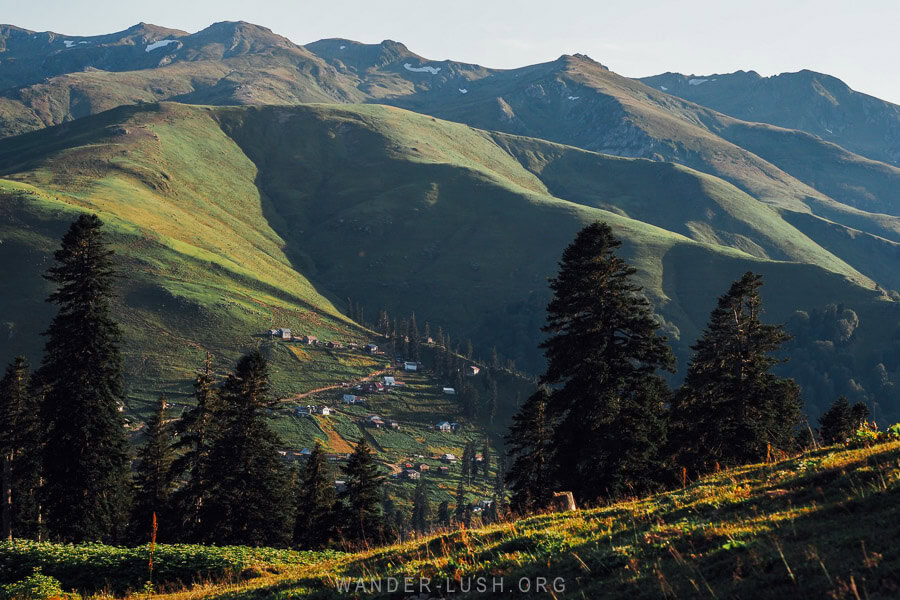
At 1,950 metres above sea level, Bakhmaro is the highest climactic resort in Georgia and one of two popular mountain destinations in Guria region, the other being Gomismta. This is an off-the-beaten path mountain destination, beloved by locals for its sublime summer sunsets and backcountry skiing and snowcat expeditions in winter.
Bakhmaro is famous for its mineral waters, spruce forests, and A-frame cottages. Cloud chasing is a popular pursuit – cool air rising off the Black Sea mingles with the Meskheti Range’s alpine atmosphere to plaster the mountaintops in a thick blanket of cotton wool mist. Visit on August 19 for the annual the Bakhmaro Cup, a lively horse race and cultural celebration. With newly sealed roads now reaching both Bakhmaro and Gomismta, it’s easier than ever to visit.
→ See my complete guide to visiting Bakhmaro for festival tips and other things to do.
Tago: Glamping in the mountains above Batumi
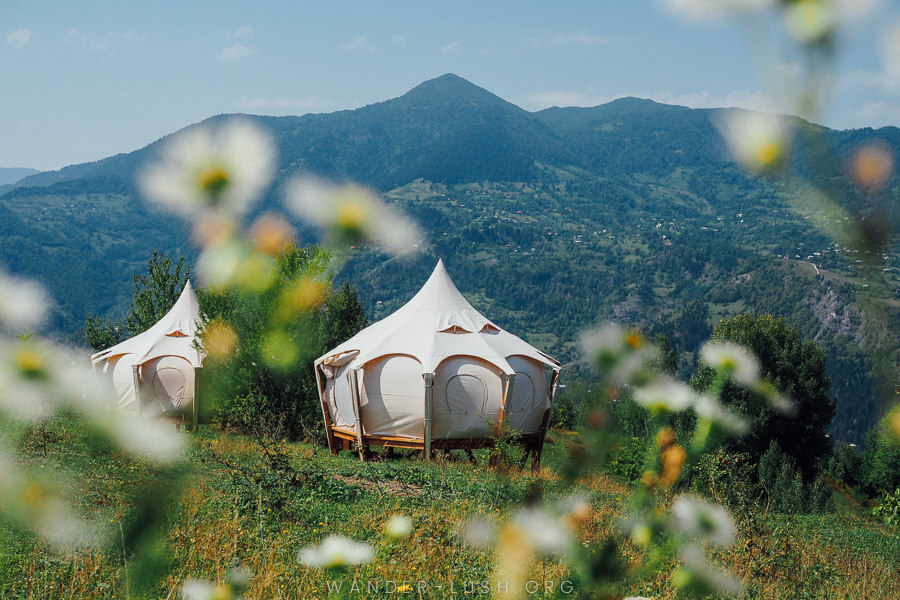
A couple of hours inland from Batumi, the road climbs into the hills and the subtropical coast gives way to waterfalls and wineries – then eventually to alpine pastures and scattered villages. While Merisi has emerged as a hotspot thanks to its photogenic A-frame cabins, Khulo is a natural gateway to Adjara’s highland region, easy to reach thanks to regular buses from Batumi and a fully sealed road.
My pick of the specialty stays here is Glamping Tago: a handful of lotus bell tents set high on a ridge opposite the town, with incredible views across the valley – an unlikely but perfectly placed mountain escape. Beyond Khulo, the road narrows and turns wilder on its way to the Goderdzi Pass, marking the edge of a more remote Upper Adjara.
Batumi & the Black Sea Coast
Batumi: Gateway to the Black Sea
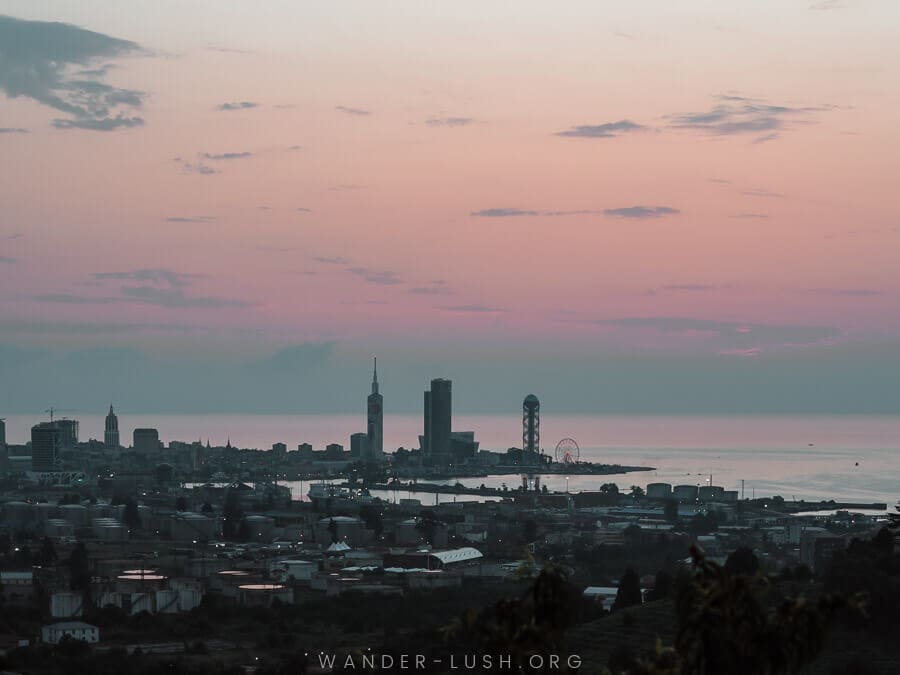
Batumi is Georgia’s main Black Sea resort and one of the country’s most dynamic cities. Often dubbed the ’Las Vegas of the Caucasus’, it pairs a long pebble beach and palm-lined boulevard with bold modern architecture, street art, and an increasingly cool cafe scene.
Beyond the glitz of the waterfront, you’ll find a charming Old Town and a beautiful mosque. The lush Batumi Botanical Garden is worth the trip alone, and Batumi also has good access to the mountains and national parks of Adjara. Regional Adjarian dishes, including the famous boat-shaped khachapuri, are a highlight of any visit. It’s best to avoid the peak summer months, when traffic alongside the coast is gridlocked – the autumn months (especially September, ’Velvet Season’) are ideal for quieter streets and swimming on the beaches to the north and south.
→ See my full Batumi guide for things to do, transport, hotels, and day trips.
Tsikhisdziri: Beach bars & secret swimming coves

If you’re actually looking to swim in the Black Sea, head north to Tsikhisdziri. This tiny seaside village trades pebbly city beaches for rocky cliffs, clear water, and a surprisingly lush, tropical landscape of bamboo groves and banana trees.
Below the ruins of Petra Fortress, swimming decks and hidden coves dot the shoreline, while a handful of faded dachas and old mansions add to the slightly forgotten-resort feel. It makes for a relaxed beach stop or overnight detour along the coastal road between Batumi and Kobuleti.
→ Read more in my Tsikhisdziri guide (published soon).
Shekvetili: Dendrological Park & a softer side of the Black Sea

If you enjoyed the Batumi Botanical Garden, Shekvetili’s counterpart is the Dendrological Park – a vast landscaped area where mature trees transplanted from across Georgia and beyond are arranged around bird ponds and open lawns.
Beyond the park, sandy beaches backed by tall pines give this stretch of coast a calmer feel than Batumi or Kobuleti’s promenade. A handful of restaurants and guesthouses line the road, while the Paragraph Resort & Spa Shekvetili sits at the luxury end. Shekvetili works as either an easy day trip north of Batumi or a quieter base on the Black Sea.
Poti: ‘Little Paris’ on the Black Sea
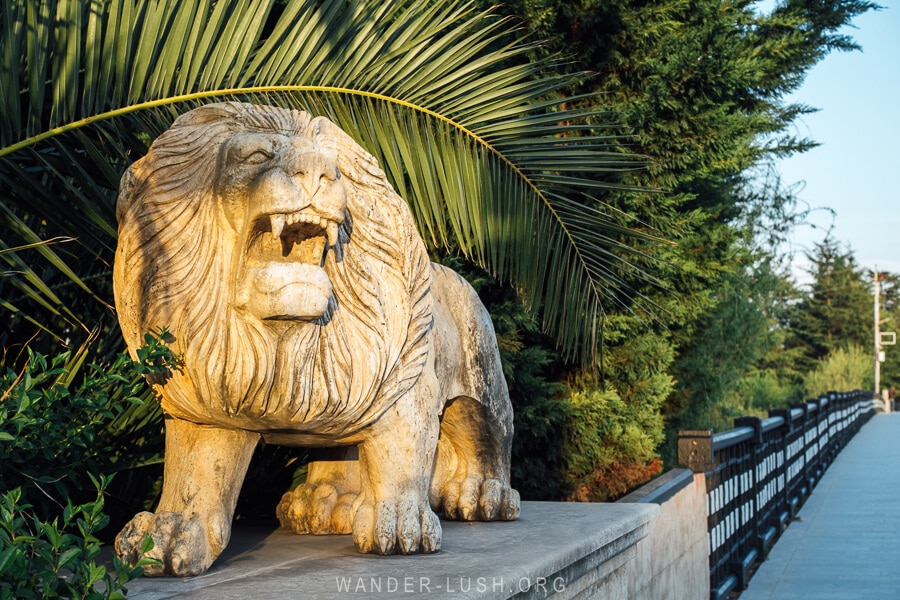
Otherwise known as Georgia’s ‘Little Paris’, Poti is an underrated port city at the northern end of the coast, with elegant streets, Art Nouveau facades, and a surprisingly European feel. Planned in the early 20th century by German architects, its tidy grid of boulevards, heritage buildings and unique cathedral feel quite different from other cities in Georgia.
Climb the candy-striped lighthouse for views over the sea and wetlands (this is the spot where Jason and his Argonauts are said to have landed in the Kingdom of Colchis), then explore nearby Kolkheti National Park, a vast landscape of marshes and birdlife. Poti is on the main east-west train line, and makes for a relaxed, low-key alternative to busier Batumi.
Kolkheti National Park: The Georgian Amazon

Part of the UNESCO-listed Colchic Rainforests and Wetlands, Kolkheti National Park protects one of Georgia’s most remarkable landscapes. A biodiversity hotspot – home to some of Europe’s oldest broad-leaved forests and more than 1,100 species of vascular plants – it spans 30,000 hectares, over half of which is wetlands that serve as critical nesting and resting grounds for endemic and migratory birds.
There are no hiking trails or campsites here – Kolkheti is explored by speedboat instead. Guided trips run along the snaking Pichori River and across Paliastomi Lake, with departures available from both Poti and Anaklia. The dense, waterlogged forest has earned the area its nickname the ’Georgian Amazon’.
→ Find contact details for the visitors centre and more tips in my Kolkheti National Park guide.
Anaklia: Surreal seaside sculptures
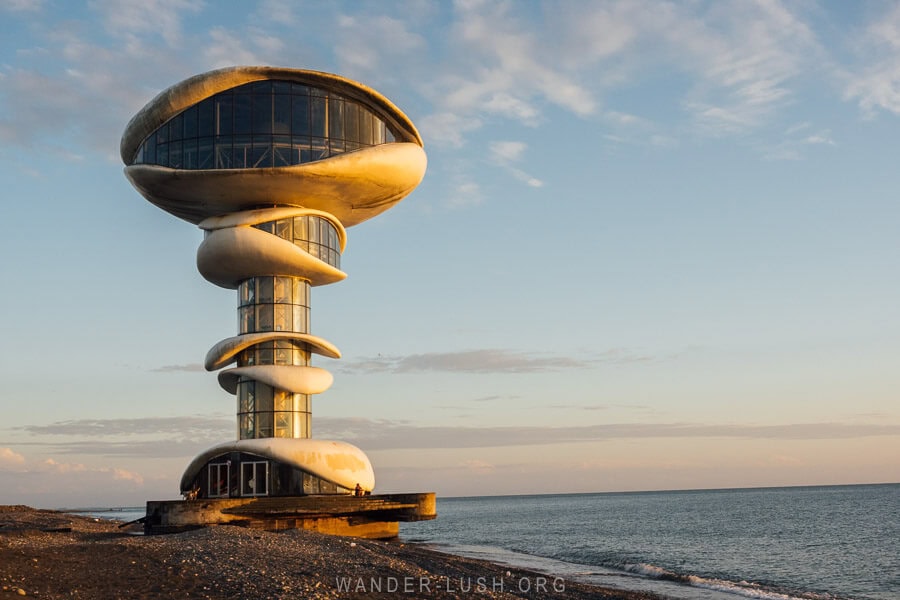
At the far northern end of Georgia’s Black Sea coast, Anaklia has some of the country’s only proper sandy beaches and an oddly unfinished, almost dystopian feel. Once earmarked to become a Batumi-style resort, the grand plans stalled, leaving behind surreal architecture, empty boulevards, and weather-beaten hotels along the shore.
The abandoned Anaklia Tower and the long wooden Ganmukhuri Bridge add to the strange, liminal atmosphere. Quiet, windswept and wholly untouristed, it’s an intriguing coastal detour from nearby Zugdidi.
Svaneti & the North-West Highlands
Upper Svaneti: Mestia & Ushguli
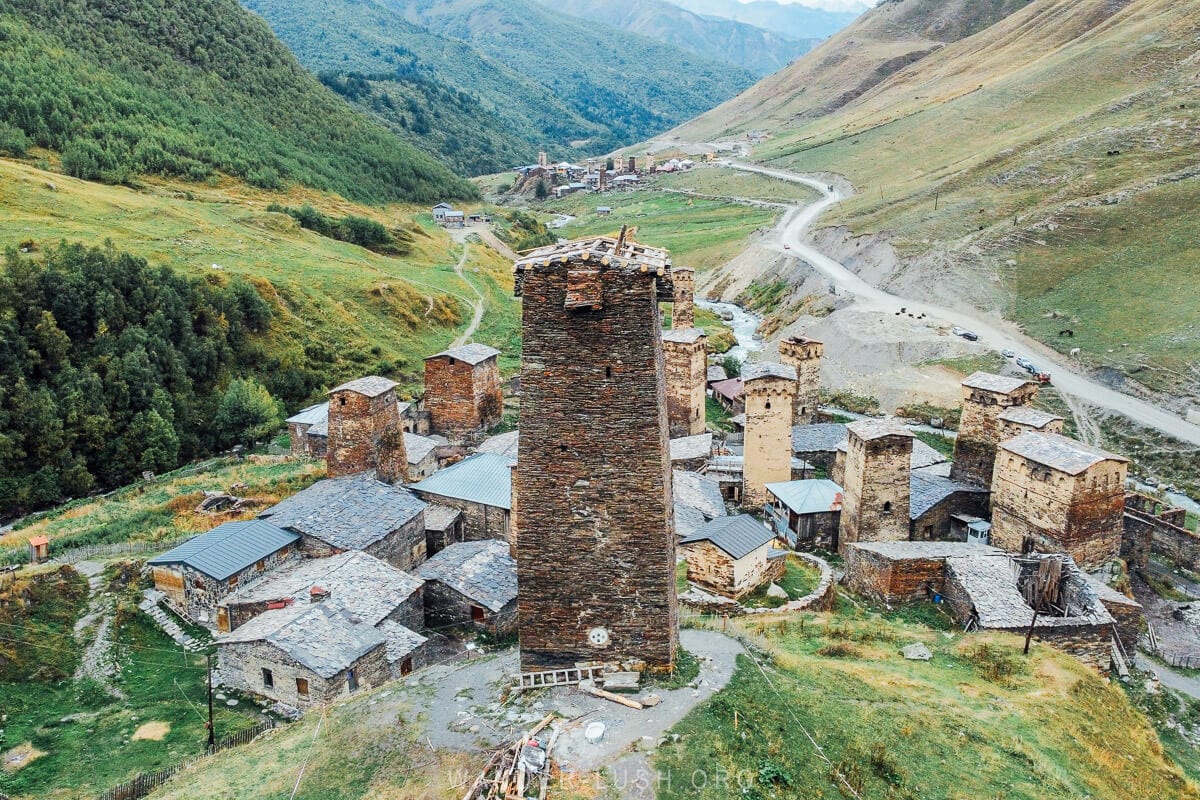
The jewel in Georgia’s crown, Upper Svaneti is the country’s most iconic mountain region – a landscape of glaciers, alpine meadows, and hundreds of medieval stone defence towers scattered across remote villages. Known best for its day hikes and the multi-day Mestia to Ushguli trek, it’s as rich culturally as it is scenic, with Svan food and traditions to enjoy off the trail.
Mestia works best as a base for a balance of hiking and museums, while nearby Ushguli – one of Europe’s highest inhabited settlements – delivers the classic postcard views of fortified towers backed by Mount Shkhara, the country’s highest peak. Allow at least three to four full days to explore, ideally renting your own car to drive a loop through the region.
The Mestia-Ushguli Hike: Crossing Svaneti on foot

This four-day trek links Mestia with Ushguli, traversing high pastures, river valleys and glacier-fed river crossings in the heart of Upper Svaneti. Although parts of the route run parallel to the road and Tetnuldi Ski Resort, the trail does break away into more remote terrain – most memorably to visit the towering Adishi Glacier then descend into the picturesque Khaldechala Valley.
Remote hamlets such as Adishi and Khalde provide simple guesthouse stops along the way, with tower houses and Svan culture aplenty. July and August offer the most reliable hiking conditions, but September and early October can be especially beautiful, with autumn colours and fewer people on the trail.
→ See my Mestia-Ushguli guide for a first-hand account of the hike + tips (published soon).
Becho Valley: Alternative hiking near Mount Ushba
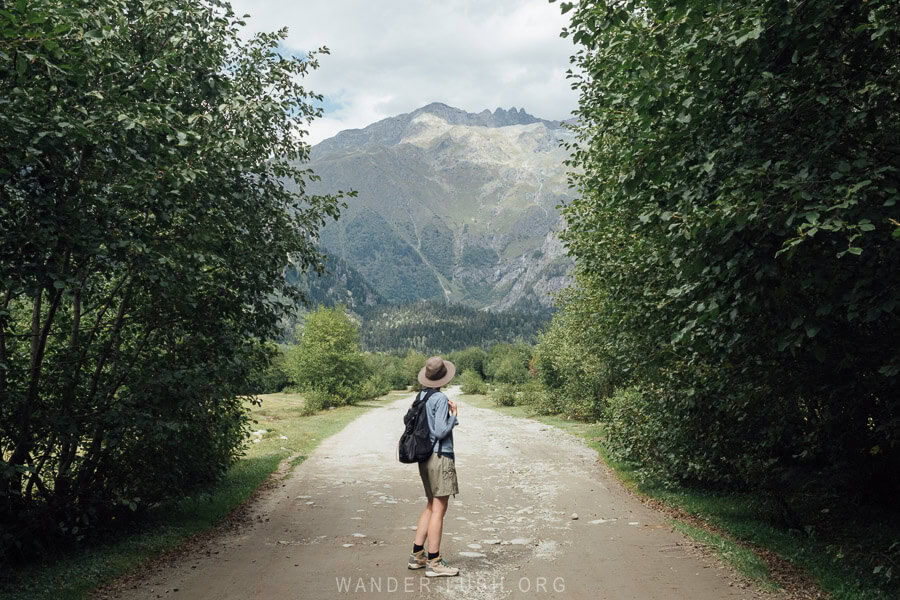
Most people drive straight past Mazeri on their way to Mestia – which is exactly why you shouldn’t. Sitting in the quiet Dolra (Becho) Valley, this small cluster of villages feels calmer, with a front-row view of mighty Mount Ushba rising almost vertically above the rooftops.
Mazeri is an ideal first or last stop in Svaneti, especially if you want a gentle walk rather than a big trek. The classic outing is the Shdugra Waterfall hike, a mid-level valley trail with constant Ushba views, or you can simply wander partway to the Hikers Cafe for trout baked in dough with Svan salt and a lazy lunch in the sun.
Lower Svaneti: Old resorts & a new road

As the name suggests, Lower Svaneti is the lowland half of Western Georgia’s famous highland region. Compared with Upper Svaneti – Mestia and Ushguli – it receives very little attention, but with the new sealed road now open on both sides of the Zagari Pass, that’s likely to change. This area has huge hiking potential, plus urbex sites such as the former Muashi Resort.
Lower Svaneti is an ideal overnight stop between Kutaisi and Ushguli. In Sasashi, JorJ’Inn – a beautifully renovated guesthouse – is easily the best place to stay, while nearby Lentekhi is worth a quick stop for a proper Svanetian kubdari before continuing on to Racha-Lechkhumi or back towards Kutaisi.
Oni: Synagogues & slow travel in Racha

Next door to Svaneti in the western highlands, Racha and Lechkhumi are two underrated mountain regions that are surprisingly easy to reach from Kutaisi. This is slow-travel Georgia at its best: quiet hiking trails, family wineries, alpine villages, and almost no crowds.
The small town of Oni is a natural base for exploring Racha. It was once home to one of Georgia’s largest Jewish communities, a legacy still visible in the monumental Oni Synagogue, built in 1895 and among the largest in the Caucasus. A charming local museum documents the town’s multicultural past. Oni has a handful of guesthouses and small kitchens serving Rachan specialities – cured ham and garlic-heavy shkmeruli. From here, it’s easy to visit both the lowlands of Racha – Tskhrajvari, Nikortsminda Cathedral, Shaori Lake, Ambrolauri and the wine villages around Khvanchkara – plus the dramatic highlands.
→ See my Racha–Lechkhumi itinerary for wineries, hikes, and road trip stops.
Lechkhumi: Limestone pillars & rare wines
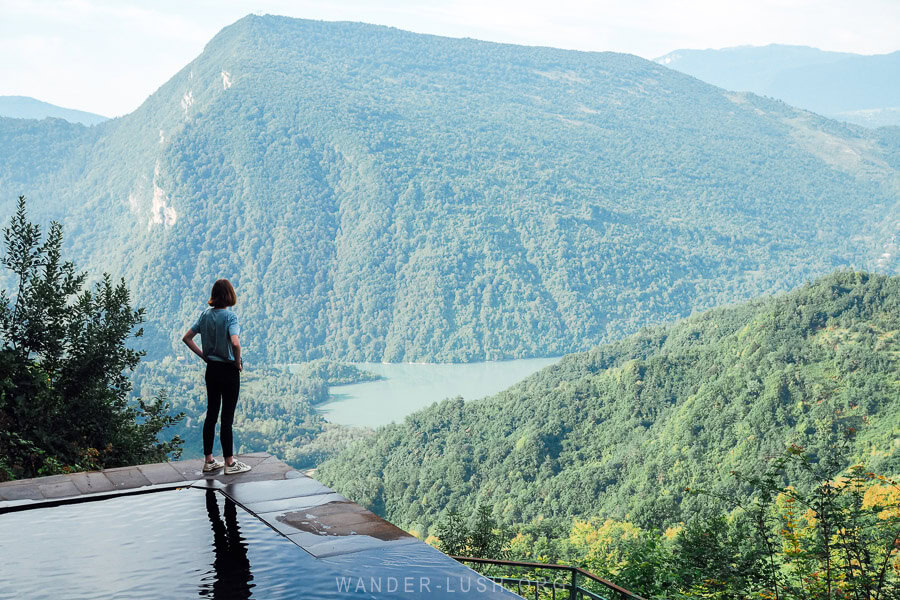
West of Oni, historic Lechkhumi links Racha with Lower Svaneti and is well and truly off the beaten tourist trail. The landscape here is less forested and more rocky, with limestone formations and sheer walls that tower over the winding road. On sloped terraces, vines struggle against thin soils and elevation, yielding small quantities of distinctive mountain wines such as Tvishi and Usakhelouri. Family-run winery restaurants such as Tchrebalo offer a chance to sample them.
In the village of Lailashi, the ruins of Georgian Orthodox and Armenian Apostolic churches sit alongside a preserved synagogue. The Okronishi Decorative Fountain (Lailashi Secret Pool) is an impressive infinity pool fed by icy mountain springs. Further along, a new walking trail leads to the base of the Sairme Pillars, a cluster of brittle limestone towers rising up from the forest floor.
Borjomi & Samtskhe–Javakheti
Borjomi: Hot springs & Romanov history
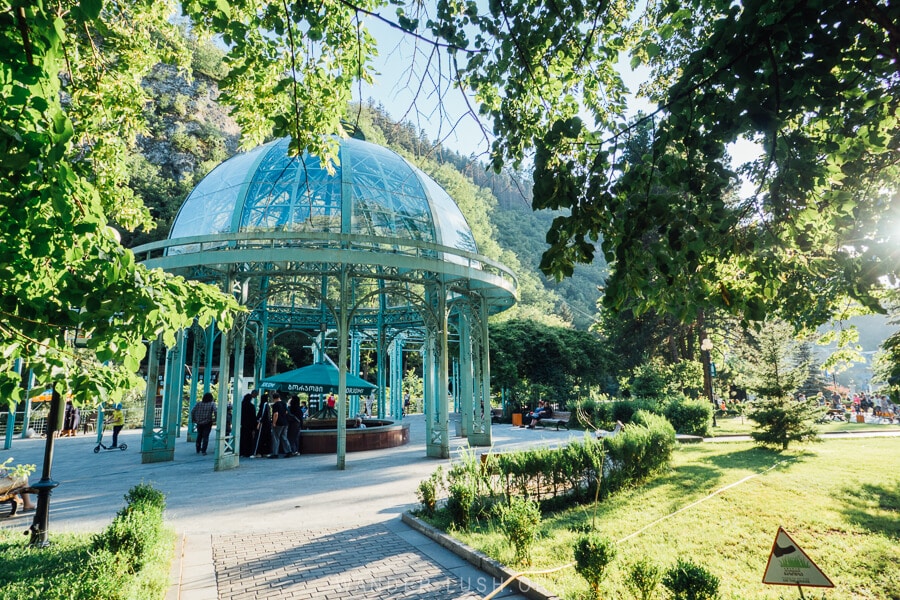
Nestled in a forested valley almost in the middle of the country, Borjomi has long been Georgia’s classic summer retreat. Known for its fresh mountain air, mineral waters, and leafy parks, it was favoured by the Romanovs as a health retreat, and later developed into an imperial spa resort before serving as a Soviet sanatorium.
Life still revolves around Central Park and Ekaterina’s Spring, where you can fill a bottle of Borjomi straight from the source, soak in open-air thermal baths, or ride the cable car for a view. It does get busy here in summer, so it works best for an autumn trip (for colourful foliage) or for early season spring hikes in the nearby Borjomi–Kharagauli National Park.
Borjomi-Kharagauli: Four-seasons hiking in Georgia’s biggest national park
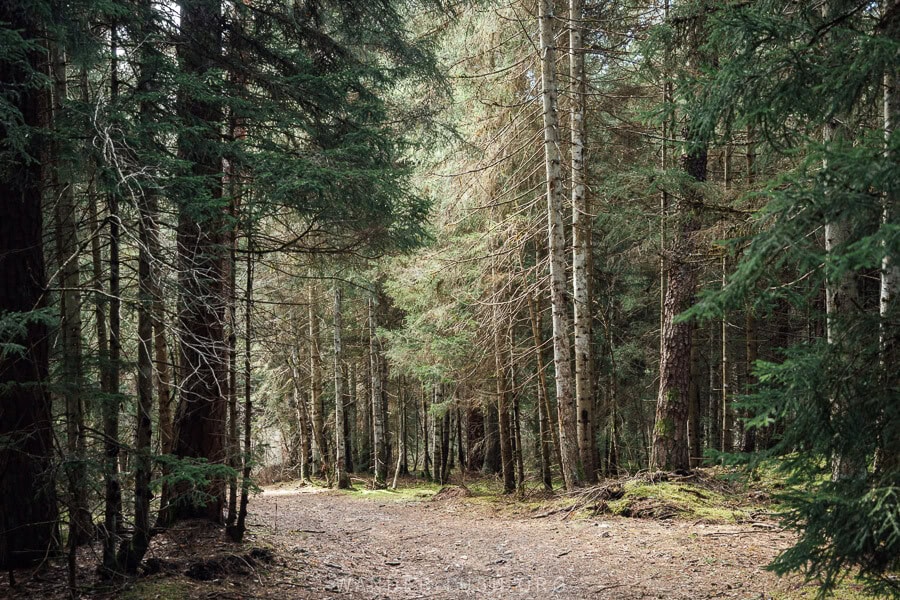
Covering around 1% of Georgia’s territory, Borjomi-Kharagauli spans more than 85,000 hectares of forested ridges and alpine meadows in the Lesser Caucasus. It has one of the country’s most established trail networks, with clearly marked routes ranging from short loops near Likani to multi-day traverses linking Borjomi and Kharagauli.
Day hikes such as the Footprints Trail climb steadily through mixed woodland, while longer routes – including the St Andrew’s Trail – cross higher ridgelines and connect a series of mountain shelters and designated campsites. With varied elevations and well-maintained infrastructure, the park works year-round, whether for a half-day winter snowshoe expedition from Borjomi, or a structured multi-day trek in spring shoulder season.
Bakuriani: Snow forests & skiing

A short, winding drive uphill from Borjomi, Bakuriani is Georgia’s original ski resort, surrounded by pine forests and alpine meadows. The road up is gorgeous in any season, climbing through deep woodland before opening onto wide, green (or snow-covered) slopes. Look out for the former Libani Sanatorium on the way.
In winter, Bakuriani transforms into a laid-back, family-friendly ski resort with gentle runs and sledging hills, while summer brings cool air and easy hikes through the surrounding hills. It works well as a relaxed base for snow trips or as a side trip from Borjomi.
→ See my full Bakuriani guide for tips and recommendations.
Akhaltsikhe: The castle city
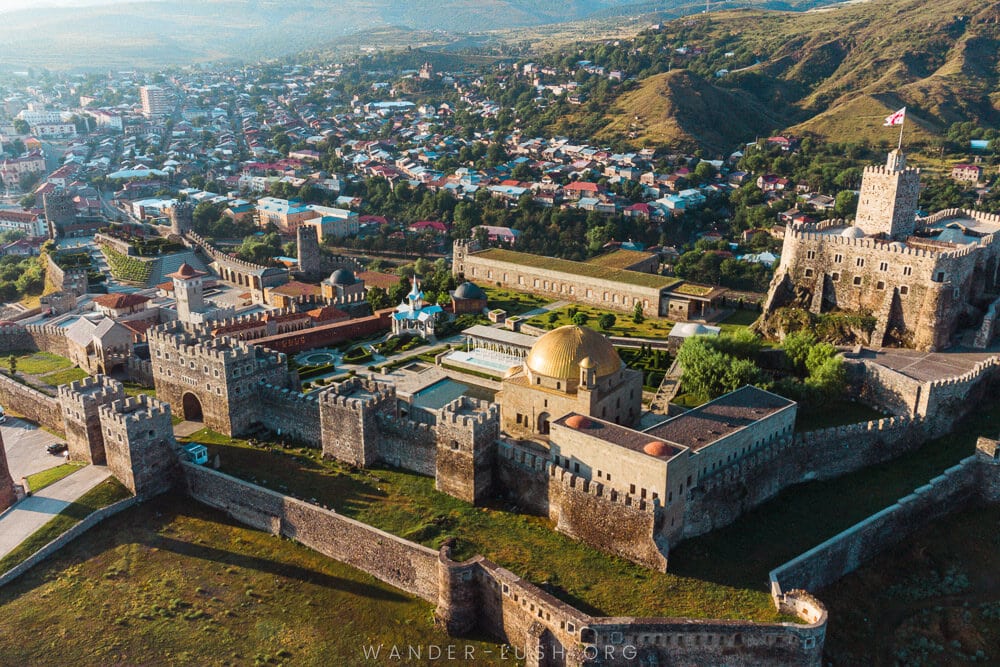
Akhaltsikhe is the main gateway to historical Samtskhe-Javakheti and a convenient base for visiting Vardzia cave city and the surrounding monasteries and fortresses. This corner of Georgia is known for its distinctive food culture (tenili string cheese, apokhti dried meat), and spectacular fortresses such as Khertvisi and Tmogvi.
The city’s centrepiece is Akhaltsikhe (Rabati) Castle, a sprawling complex of restored towers, domes, gardens, and Ottoman-era buildings that reflect the region’s layered, multicultural past. Akhaltsikhe works especially well as a one or two-night stay on a Georgia road trip, or as a final stop before crossing the border into Armenia or Turkiye.
→ See my full Akhaltsikhe guide for transport tips, day trips and places to stay.
Vardzia & the Meskheti Highlands: The mystic south

Carved into a sheer rock face above the Mtkvari River, Vardzia is Georgia’s most spectacular cave city – a 500-metre-long honeycomb of tunnels, chapels and living quarters spread across 13 levels. Built in the 12th century as both a monastery and defensive refuge, it once functioned as a fully self-contained town, complete with bakeries, irrigation channels, and wine cellars. Walking the stone corridors and climbing between chambers feels like exploring a medieval labyrinth.
Arrive at opening time to avoid the crowds and heat. To see the caves lit up after dark from the marked viewpoint, spend a night at the nearby Vardzia Resort. There are myriad other things to see and do nearby – from the megalithic ruins of Saro to Amphora Beer, a craft brewery where beer is made in clay vessels.
→ See my Vardzia guide for insider tips for visiting the cave city and beyond.
Paravani Lake: Georgia’s largest natural lake
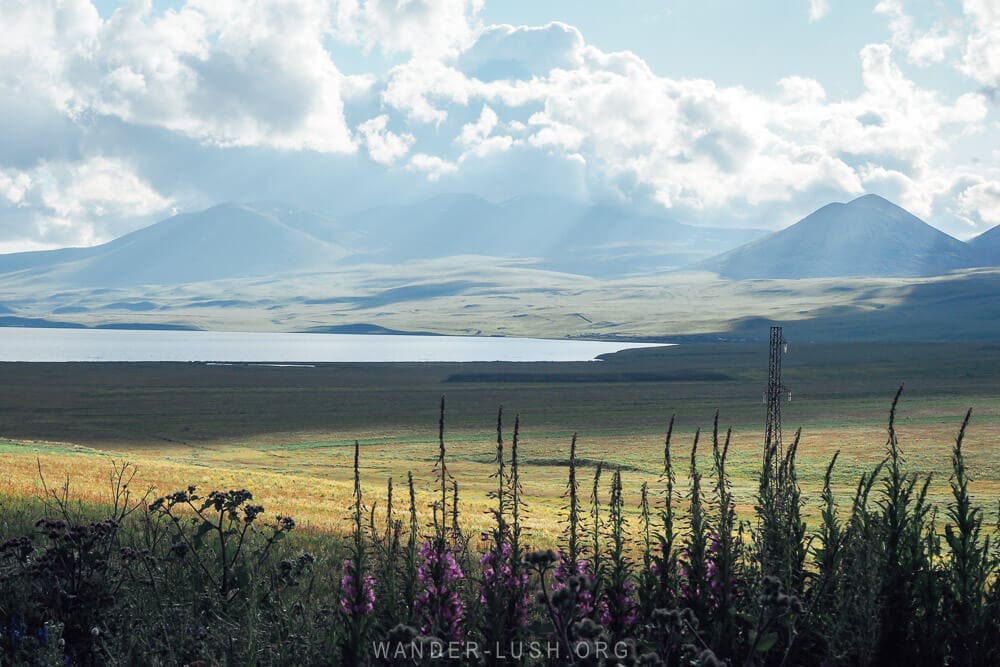
The Javakheti Protected Areas form a wild lattice of more than 70 volcanic lakes scattered across Georgia’s southern high plateau. Dubbed the ‘Georgian Arctic’, this is a stark, high-elevation landscape of empty steppe, extinct cones and steel-blue water. It’s one of the country’s top birdwatching destinations, but you don’t need binoculars to appreciate the scenery.
Hop between lakes along the Armenian and Turkish borders, each with its own mood and birdlife. Paravani Lake is the showstopper – especially in winter when Epiphany bathers cut a hole in the ice – while the nearby Poka Monastery makes a lovely stop for souvenirs. Short hikes and bike trails circle the wetlands, wild camping is widely tolerated, and hikes such as Shaori Mountain offer stunning panoramas over cyclopean ruins. Infrastructure is sparse and distances are long, so this area is best tackled with your own car. The Javakheti road is a great alternative to the Rikoti Highway when travelling west from Tbilisi (as seen in my Georgia road trip itinerary).
Georgia travel resources I recommend
Planning a trip to Georgia? Here are 5 resources I use & recommend.
- Mandatory insurance: Cover.ge. Get a budget-friendly health & accident insurance policy that meets Georgia’s new entry requirements. Use wanderlush for 5% off.
- Private transfers in Georgia: GoTrip.ge. Find a professional, English-speaking driver. Prices are locked in when you book & you can stop wherever you want.
- Hiring a car in Georgia: Local Rent. Save money when you rent directly from a local agent. Pick-up & drop-off are available from any address.
- Tbilisi tours & day trips: Friendly.ge. Knowledgeable guides, safe drivers & creative itineraries. Use wanderlush for 10% off.
- Accommodations: Booking.com. The biggest selection of properties in Georgia, including guesthouses in rural areas.
What destinations do you recommend in Georgia? I plan to add more to this guide over the coming months and years – I already have my own wish list, but I’d love to hear your suggestions too! Let me know in the comments below.
Georgia Essentials
Here are the websites and services I personally use and recommend for Georgia. Check out my full list of travel resources for more tips.
TRAVEL INSURANCE: Insurance is now mandatory for all travellers to Georgia. Insure your trip with HeyMondo, my preferred provider for single-trip and annual policies. Get 5% off when you book with my link.
AIRPORT TRANSFERS: Most flights into Georgia arrive in the early hours. Airport taxis should be avoided at all costs. For ease, pre-book a private transfer from Tbilisi Airport to your hotel or from Kutaisi Airport to Tbilisi with my partners at GoTrip.ge.
SIM CARD: Magti is my preferred provider, with prices from 10 GEL/week for unlimited data. See this guide for all the details about buying a Georgian SIM card.
ACCOMMODATION: Booking.com is the most widely used platform in Georgia. Use it to find family guesthouses, private apartments, hostels and hotels around the country.
CAR HIRE: Find a great deal on a rental car in Georgia – use the Local Rent website to book through a local agent (prices start from $30/day).
PRIVATE TRANSFERS: GoTrip.ge is a terrific service for booking a private professional driver and car for the day. Use it for A-to-B transfers, a customised round-trip itinerary, or a multi-day trip. You can stop wherever you like for as long as you like without the fixed price going up.
DAY TRIPS & CITY TOURS: Use Viator or Get Your Guide to browse a range of day trips and city tours. For alternative itineraries with expert guides, I recommend Friendly.ge. Use the promocode wanderlush for 10% off.
WINE TOURS: For in-depth day trips to Georgia’s wine regions, I recommend Eat This! Tours. Use the promo code wanderlush for 5% off.
You might also be interested in…
- The ultimate Georgia itinerary: Four detailed & custom-designed itineraries
- Georgia Travel Guide: All of my 200+ posts plus my top travel tips
- Georgia travel tips: 25 essential things to know before you go
- Places to visit in Georgia: 50+ unique & underrated destinations around the country
- The best things to do in Tbilisi: Favourites, hidden gems & local picks
- 35+ best restaurants in Tbilisi: Where to eat Georgian food
- 15 best day trips from Tbilisi: With detailed transport instructions
- The best time to visit Georgia: Month-by-month guide to weather, festivals & events
Thank you so much for this very usefull and complete guide🇬🇪 . We can’t wait till september to start our trip from Kutaisi to some places you give information of, but none of our Georgia trips start without a diner @ CAFE FLEUR .
Greetings from Belgium, Myriam and Luc
Thanks, Luc! Oh yes, Fleur is a favourite of ours too, especially when it’s warm enough to sit outside and Hakan has beer on tap!
Cheers and enjoy!
Hi Emily,
Thanks for this amazingly detailed blog, it’s just what I need since I have just 2 weeks to plan our trip to Georgia ! I was thinking of deciding when we get there whether we need to hire a car – can you confirm that there’s no problem of availability of cars for hire ? Even if we opt for a 4WD ?
Also, my daughter is gluten-intolerant; do you know if we can find gluten-free bread in the supermarkets ?
Thanks for your help !
Lesley
Hi Lesley, more than enough hire cars here to around! The further out you book, the better the price usually, and the greater availability of models to choose from.
Supermarkets do carry GF products including bread, yes. Almost all of them will have some options, particularly the more specialised grocers such as Agrohub. You can also use a food delivery app (e.g. Wolt) to search for and/or order groceries.
Absolutely amazing guide! I am now planning my trip to Georgia and this is so helpful! It’s so genuine and full of details! Thank you so much!
Thank you, Leja!
Love this list! Georgia is such an underrated gem, and your recommendations highlight its unique beauty. I’m especially intrigued by the cave cities and the wine region.
Hi Emily,
Are you aware of a possibility to travel from Ushguli to Lentekhi rather than returning through Mestia?
Hi Jacco, yes of course – but that is one of the worst ‘roads’ in the country. It’s only open for a very short window in summer. You need a proper 4×4 and experience off-roading, or else it’s very expensive (I was once quoted 400 GEL one-way) to take a taxi.
Hi Emily thanks for your great guides of Georgia , on my bucket list! Which month do you recommend for snow-capped mountain scenes please?
Hi Martini, I would recommend late January or February.
Great summary of interesting places, I have visited maybe half of them, but will continue to visit more of them next year. As I was born in the Austrian mountains Svaneti, Kazbegi and Tushetia are impressive, but my favourite areas are Ninotsminda and Telavi, where you should spend a couple of days. I like Kutaisi more than Tbilisi. Localrent is really great and the tips of Emily are helping a lot.
Thanks so much, Peter! Ninotsminda is terrific, I agree. The Telavi Bazaar is my happy place. Enjoy your travels in Georgia!
Hi Emily
Such comprehensive information thank you – do you know if the road from Mestia to Ushguli is accessible the first week of April? I’m finding conflicting reports as to whether I can actually get to Ushguli by road.
Thank you!
Hi Kym, it depends on the weather conditions. The earliest I have been is first week of May. In theory the road is open year-round (people live in Ushguli through the winter) but the road might be closed for short (or longer) periods if there is heavy snow, landslide, etc.
Thank you for keeping this list updated – the info has been useful to me for quite a few trips. However one interesting region sadly missed here is Khevsureti.
I’d consider Mutso alone as one of the star sightseeing locations in Georgia especially considering the impressive restoration work that’s been done there: it’s a great time to visit it now as most of the structures in the village have already been restored but they continue the reinforcement of the watchtower on top of the mountain above the village so you can see both the results of award-winning restoration project and work in progress with all the machinery used (a cable crane system and the rail carts) to bring materials to the top.
Plus Mutso (together with Shatili) is a rare remote mountain destination that is easily accessible by a cheap public bus from Tbilisi (well, we paid a bus driver an extra to go past Shatili and get to Anatori and Mutso but that was totally worth it!). Add here a distinctive and interesting local history and culture (one can start with a classic Abuladze’s screen version of Vazha Pshavela’s poem shot in Shatili – the Plea (1967), visit unique Anatori burial vaults), try local cuisine (I found it tastier than e.g. Svan dishes) – it makes for a great weekend trip from Tbilisi.
Thanks Dmitry! Did you read my note at the top of the article? Khevsureti and Lechkhumi are the two regions I have yet to visit properly, and since I want to keep this list as something that is written from my personal perspective and not just a generic listicle, I have not included them just yet. But – next summer I hope I will get a chance to finally go! Thank you for the excellent tips.
This is SUCH an impressive guide, Emily thank you! Heading to Georgia this weekend.
Awesome, Sydney! Enjoy Georgia! I hope you get to experience a few of these places – drop back and let me know how it all went!
An incredibly valuable travel blog, must be the best that I have ever come across. I plan to go to Georgia and Armenia this year, checking out places of interest, whether to use rail, hire a car, or buses, probably all three
I would like to visit Azerbaijan maybe, but they do not like seeing an Armenia stamp in your passport, so entry there, even if the land border via Georgia is open, might be problematical.
Your blog is a great help in planning a trip
Thank you so much for the incredible effort that you have put into it, us travellers are eternally grateful to people like you.
Bernard
Hi Bernard, thank you! No issue at all, I just entered Azerbaijan twice with 6 Armenian stamps in my passport. Your nationality/passport and who happens to be working at immigration that day do play a role. But there is no rule against this. Have a wonderful trip and thank you again!
Hi Emily,
Your blog is simply amazing.. each and every minute details you have given. We are planning georgia trip in month end and literally I have planned everything by reading your blogs. I have one question. If we dont want to hike, can we go to gveletti waterfall, juta and trusso valley in sedan car?
Thanks so much Bhumika, that means a lot!
For these locations you can certainly drive to the trail heads in a sedan. The Juta and Truso roads are quite challenging though, so you need a more robust car for those if you want to drive further in. One option is to leave your car in Kazbegi and organise local transport (i.e. a Delica taxi or transfer with Mountain Freaks) instead, if you want to minimise walking time.
I hope this helps!
Thanks for all the information about Georgia.
Great list! Several of these I still need to visit. I would also recommended Khevsureti, Kvemo Kartli (Samshvilde and Dmanisi) and and the megaliths of Javakheti/Tsalka. There isn’t a bad region of Georgia!
Javakheti and Kvemo Kartli are great, both are already on the list! Hoping to get to Khevsureti this summer.
Brilliant. This certainly whets my appetite for a return to Georgia.
P.S Have you managed a trip up to the Tbilisi Reservoir yet? Actually, it’s probably best left unadvertised. A real hidden gem.
Great Mick! As in Tbilisi Sea? I have been there a few times, need to return in summer to check out this new banya!
What a lovely video! And excellent music choice, thank you!
Hi Emily ! Your blogs are so detailed and narrative so beautiful ! I was browsing about Georgia and I could find everything that I need (and more) in your blogs !
It is inspiring as well as exciting to go through all of the emotions you have put in ! Now I am more thrilled to go !
Thanks a ton !
Thanks so much for your comment and for the kind words! I’m very glad to hear you’re planning to visit Georgia!
Hi Emily this is a really inspiring and detailed list of things to do in Georgia! I’m considering traveling there in a couple of weeks but it’s hard to know what sort of things are open such as restaurants, bars, museums, vineyards etc…
Since you live there is there any info you can provide about what it’s like to travel around due to the pandemic i.e. what are the restrictions? Are things open and accessible? I would really appreciate any help!
Hi Jessie – everything is open on weekdays, restaurants and bars are closed on weekends. Museums and vineyards should be operating now but you should call ahead to the vineyards especially to be sure. There is a 9pm curfew and masks are mandatory indoors and outdoors.
There will be a weeklong public holiday after Orthodox Easter so some businesses may be closed. Possibly we are looking at more restrictions/another lockdown after that if things continue the way they are – but it’s difficult to say for sure.
I hope this helps!
Hello Emily,
First of all thanks for loving Georgia and of course thank you for Lailashi’s pool review.
If you really interested of Lailashi’s history and want to know more about Okronishi fountain you may contact me. Also, there is a man who remembers community of Georgians, Jewish, Armenians and Greeks (https://www.youtube.com/watch?v=HrM3f5tG-vA&t=171s) and you may meet him and ask all interested questions.
Hello Zviad, thank you so much for sharing this! I would love to learn more about the history of this area, I will be in touch by email.
Really appreciate the link! Thank you again!
Very useful information! Also, i would like to ask if the Secret Pool in Lailashi is from thermal springs or just natural pool with cold water? Would like to visit it 🙂
Thanks for reading! Good question – I should have mentioned that it’s very, very cold mountain spring water!
Dear team, lovely description. Unfortunately two important off the beaten track places are missing. Tusheti and Vashlovani Nationalparks. Both gems not yet run over by tourists, rough and unique. I recommend visiting by horse although hiking or by jeep is also possible.
Thank you, Ira! Yes, those are my number 1 and 2 places to hit this spring/summer – I’ll be adding them to the list shortly 🙂