From the perilous peaks of the Accursed Mountains to a stunning stretch of Adriatic coastline, Albania has more than its fair share of beautiful landscapes. The most intriguing natural phenomenon to see in Albania is undoubtedly the ‘Blue Eyes’, a pair of otherworldly water springs located in the north and the south.
The most famous Blue Eye is found near Saranda. It attracts hundreds of thousands of visitors every year. The other Blue Eye is at the opposite end of the country, deep within the heart of the Albanian Alps near Theth village, and sees far fewer tourists.
Swimming in the brilliant turquoise blue waters of a Blue Eye is one of the best things to do in Albania. Here’s everything you need to know to plan your visit to the Syri i Kalter Blue Eye near Saranda and the Blue Eye of Theth.
Please note: This post contains affiliate links, meaning I may earn a commission if you make a purchase by clicking a link (at no extra cost to you). Learn more.
What is a Blue Eye?
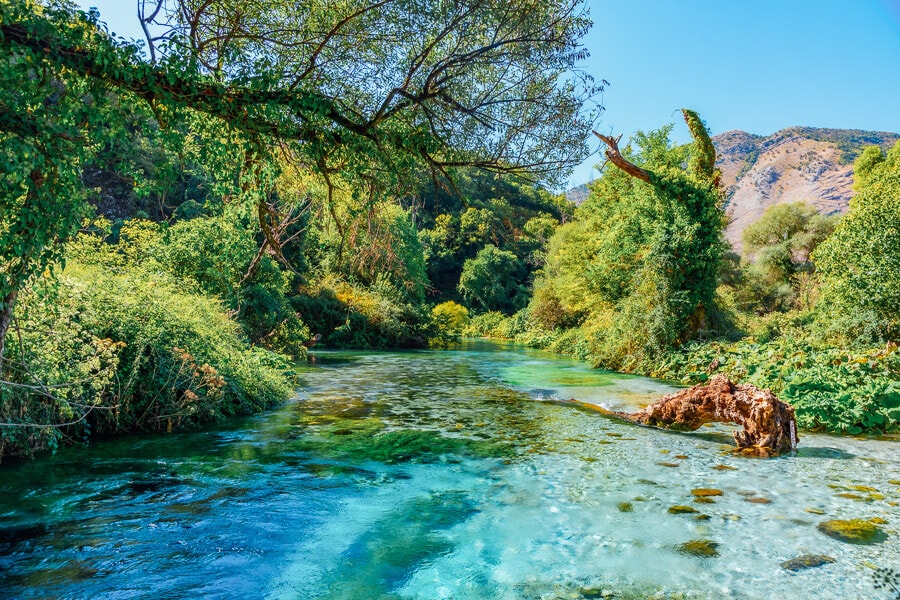
A Blue Eye (or Syri i Kaltër in Albanian language) is a naturally occurring geological phenomenon. Essentially a Blue Eye is a very deep spring water pool set in a karst rock formation. Because of the depth and surrounding vegetation, the water takes on brilliant hues of turquoise and azure. In some ways, Blue Eyes resemble the cenotes found on Mexico’s Yucatan Peninsula – but the way they are formed is very different.
The name ‘Blue Eye’ comes from the pool’s close resemblance to a human eye, with its central ‘pupil’ a bright shade of blue, and the surrounding iris a lighter shade of blue-green.
The original Albanian Blue Eye outside Muzinë village in the south is fed by an underground water spring. It’s unbelievably deep – 50 metres is the furthest any diver has gone down – and doubles as the source of the Bistricë River, which spills out into the Ionian Sea at Saranda.
The Blue Eye of Theth is a bit different: it’s a limestone pool located part-way along the Kaprreja River and is fed by a cascading waterfall.
The Saranda Blue Eye, Syri i Kalter
The Blue Eye in Saranda – simply called Syri i Kalter by the locals – is located just outside the remote village of Muzinë in Finiq municipality, halfway between Saranda and Gjirokastra. See the exact location of the Blue Eye here.
The pool is hidden in the middle of the forest so you have to walk to find it – but it’s worth the long slog. The surrounding area, a Nature Monument known for its sycamore and oak trees, is almost as beautiful as the Blue Eye itself.
Currently a new road is being built to connect the Blue Eye with the main highway. Shops and cafes are going up near the swimming hole. This will make it a lot easier to visit, but the risk is that the Saranda Blue Eye will become even more crowded as a result.

Best time to visit the Blue Eye in Saranda
There is no right or wrong season to visit the Blue Eye – but spring (April/May) and autumn (September/October) are definitely preferable because there are far fewer people around. The weather is cooler, making the hike more comfortable.
Be sure to arrive early in the morning (as early as possible) because it does get very crowded by midday and early afternoon.
How to Get to the Blue Eye from Saranda or Gjirokaster
The Blue Eye near Saranda can be accessed by car, bus, taxi, or by booking a guided tour from Saranda or Gjirokaster.
If you plan to visit with your own car or bike, simply travel down the SH99 highway that connects the two cities. The journey from Saranda takes 30-40 minutes, whereas travelling from Gjirokaster will take you just over an hour.
Look out for the sign on the side of the road that says ‘Blue Eye’. After the turn off, you travel another 2 kilometres down a dirt road (currently being paved) to reach the pool.
Public buses and furgons travelling between Saranda and Gjirokaster, Tirana, Berat, Fier and Elbasan all travel on this road. Just ask the driver to drop you at the Blue Eye stop on the highway, which is a 2-kilometre (30-minute) walk from the entrance. Tickets cost around 200 LEK per person each way, paid directly to the driver in cash.
To get back, simply return to the main road and flag down a passing bus that’s travelling the opposite way. This is a popular route so you shouldn’t have to wait longer than 10-20 minutes.
The most convenient but pricey option is to take a taxi from Saranda or Gjirokaster. This should cost 5000-6000 LEK return including wait time, but do make sure to agree on the rate with your driver before setting off.
Blue Eye Saranda opening hours
This Blue Eye is open 7 days a week, 365 days a year from 7am in the morning until 7pm at night. There are a couple of shops and cafes nearby that are open until late.
Blue Eye Saranda entry price
The entry fee for visiting the Blue Eye is 50 LEK per person (around 0.40 Euros). If you are self-driving in Albania, you’ll need to pay an extra 100 LEK for parking. The ticket booth is located at the entrance to the bridge and pool.
What to expect when you visit the Syri i Kalter
As you arrive at the Blue Eye from the parking area or road, you first need to cross a small bridge over the river to reach the pool. Your first proper view of the Blue Eye will be from this vantage point – and you won’t be able to look away!
The Blue Eye really does look like a human eye when seen from above. The brilliant blue centre resembles a pupil, while around it, the lighter shade of water is almost like a white iris. The colours are just as splendid in person as they are in photos. The waters of the Blue Eye are very clear, and the surrounding vegetation is bright green in the warmer months, which further emphasises the blue ‘pupil’.
The temperature of the water is around 10-13° Celsius, which is very cold for a natural spring. This is a big part of the reason why so many people flock to the Blue Eye to cool off during the hot summer months. Although there are many signs indicating that swimming is prohibited, some people do brave the cold waters. There are a few cabins where you can change clothes if needed.
Right next to the Blue Eye there is a small floating deck restaurant that serves lamb ribs and cold Albanian beer. If you’re lucky enough to get a table, this is the perfect vantage point to enjoy a beautiful view of the Blue Eye while eating lunch or dinner.
The Albania Blue Eye in Theth
Albania’s second Blue Eye can be found in the far north near the remote village of Kaprre, around 11 km south-west from Theth. See the exact location of the Theth Blue Eye here.
Like its partner, this Blue Eye is enveloped by forest and accessible via a walking path known as the Vaskat Nderlysaj hiking trail. The scenery and ecology is very different, though: The valley in the Accursed Mountains is even more dense and mostly populated with pine trees.
Most people come to this part of Albania for the famous Valbona to Theth hike. If you do the hike ending in Theth (which is what I did and highly recommend), then you’ll have the opportunity to visit the Blue Eye as a shorter ‘cool down’ hike.

Best time to visit the Theth Blue Eye
Since this Blue Eye is located at a higher elevation in the Albanian Alps, it’s often too chilly to swim, especially during winter. It’s best to visit this natural wonder during summer or early autumn, between June and October.
How to get to the Albania Blue Eye from Theth
There is one road to Theth from the city of Shkoder. If you are in Tirana then you first must travel to Shkoder by bus from the Intercity Bus Station, which takes around 2 hours. The bus to Theth leaves Shkoder at 7am and takes around 3 hours. Renting a car is another option, although the best way to visit Theth by car is to hire a local driver who is familiar with the terrain and directions.
From Theth, there are two ways to reach the Blue Eye. A popular option is to hike all the way to the pool from the village – around 11 kilometres. First set off for the village of Nderlysaj (around 2.5 hours on foot from Theth) and locate the start point for the Vaskat Nderlysaj trail (marked here). From there, it’s another 30-50 minutes on foot – mostly uphill – to reach the pool depending on your pace.
Since there is no public transport, the second option is to hire a car or taxi to take you from Theth to Nderlysaj. This should cost around 5,000 LEK (50 Euros) return, including wait time while you complete the hike and view the pool. There are signs at Nderlysaj to direct you to the trailhead.

Opening hours & entry price
The Theth Blue Eye is open 24/7. Entrance is free.
What to expect when you visit the Blue Eye near Theth
The main thing that sets the Blue Eye at Theth apart is the towering waterfall that flows in the azure pool below. The waterfall is surrounded by lush trees and cliffs, which makes it an even more enchanting sight to behold.
Spectacular mountain views from the hiking trail you take to reach the pool are another highlight. Even if it’s too cold to swim – the water temperature is around 5-7°C in summer – it’s still well worth visiting just for the scenery and cool, fresh air.
A wooden platform has been built over the Blue Eye to offer a better view of the waterfalls. You can look straight down into the deep pool from here. Swimming is allowed, so if you feel daring, you can take an adventurous plunge into the freezing cold water.
If you simply want to take in the scenery, relax on one of the large rocks near the water’s edge. There is also a flat area nearby where you can enjoy a picnic lunch. If you didn’t BYO, there is one small restaurant-guesthouse by the pool that serves lunch and dinner.
If you want to spend the night, there is a campsite nearby for 5 Euros per night.
What to bring with you when visiting the Albania Blue Eye
Since both Blue Eyes require a bit of walking, it’s very important to wear sturdy hiking shoes. Bring plenty of drinking water, snacks to keep you energised, and a camera or GoPro to capture those gorgeous views.
Bring some extra cash with you if you plan to dine at one of the floating restaurants next to the Blue Eyes. The Saranda Blue Eye also has a small souvenir store, although it mostly sells cheap items such as magnets.
If you’re brave enough to swim, you should also bring a swimsuit and towel! Don’t forget a waterproof bag for your wet gear and a warm change of clothes.
Have you visited either Albania Blue Eye? Do you have any extra tips to share?
Albania Travel Guide
Discover insider tips, itinerary inspiration, and all the best things to see, do and experience in Albania!
Albania Essentials
My favourite resources and tools for planning a trip to Albania.
Find affordable flights to Albania
Book city tours & day trips
Hire a car in Albania
Get a visa for Albania
Find the perfect accommodation
Order the latest Lonely Planet
More from Albania
Albania Travel Guide
Discover insider tips, itinerary inspiration, and all the best things to see, do and experience in Albania!
More from Albania
- 21 best things to do in Albania
- The perfect Albania itinerary
- 22 useful travel tips for Albania
- One day itinerary for Tirana
- Where to stay in Tirana
- Things to do in Gjirokaster
- Things to do in Berat
- Things to do in Korca
- Guide to the Valbona Theth hike
- Best beaches in Albania
- How to visit the Albania Blue Eyes