You may know Vietnam for her bustling cities and heritage towns, but this is a nation of extreme natural beauty at heart. Here are 12 of the best Vietnam National Parks, chosen for their scenery, biodiversity, hiking and homestays.
Vietnam is nothing if not diverse.
In the grand scheme of things, the country is quite petite (a fair bit smaller than the state of Texas, if you want to draw a US comparison). Yet it offers everything from a rugged mountainous north, to limestone karsts and heavenly islands, jungle-clad Central Highlands, and of course an idyllic coastline (no less than 3,260 kilometres of it!).
You name it, Vietnam’s probably got it.

More from Vietnam
Discover the best city guides, itineraries, travel tips & hidden gems in my Vietnam Travel Guide.
There are 30 national parks across Vietnam dotted from north to south, coast to border region. A lot of time and money has been invested into regenerating forests and safeguarding biodiversity, especially after the destruction of the 1960s and 70s.
Some incredible community-run initiatives have been established to bring ecotourism to Vietnam’s wild spaces and showcase the cultural treasures of the ethnic minority communities who have lived in these remote corners for centuries.
From hiking, caving and kayaking to easy walks, visiting conservation centres and experiencing village hospitality, Vietnam national parks offer some of the most rewarding travel experiences in the region.
If you’re planning a trip to Vietnam, I highly recommend working at least a few of these national parks into your itinerary.
Most are easy to reach from the big cities, while the few hidden gems that require a bit more effort are well worth travelling off the beaten path for.
Please note: This post contains affiliate links, meaning I may earn a commission if you make a purchase by clicking a link (at no extra cost to you). Learn more.

Vietnam essentials
Here are the booking sites and services I personally use whenever I travel to Vietnam.
FLIGHTS: Find affordable flights to Vietnam using Skyscanner.
VIETNAM VISA: Use iVisa to check if you need a tourist visa for Vietnam and apply for an expedited e-visa online. Use OneWayFly to obtain proof of onward travel/hotel reservation if required.
TRAVEL INSURANCE: Insure your trip with HeyMondo, my preferred provider for single-trip and annual travel insurance.
AIRPORT TRANSFERS: Pre-book a private hotel transfer from Hanoi Airport or Ho Chi Minh City Airport via Get Your Guide.
SIM CARD: Buy an eSIM and data package for Vietnam online before you go. My top choice is the Asia Link Regional eSIM by Airalo (10 GB for 30 days).
ACCOMMODATION: Find the best hotel deals in Vietnam on Agoda or book a Vietnam hostel.
TRAIN TICKETS: Reserve your Vietnam Rail tickets for the train to Sapa, Da Nang, Hue or Saigon via 12GoAsia.
BUS TICKETS: Buy your domestic bus or plane tickets in advance using 12GoAsia or Bookaway.
FOODIE EXPERIENCES: Find the best cooking classes and foodie experiences in Vietnam on Cookly. Here are my top 15 Vietnam food experiences to help you decide.
DAY TOURS: Find the best city tours and day excursions in Vietnam on Get Your Guide. Check out my top 10 best Vietnam day trips for more inspiration.
HALONG BAY: Consult my comprehensive Halong Bay guide to find the best cruises & tours.
VIETNAM GUIDEBOOK: Pick up a copy of the latest Lonely Planet guidebook for Vietnam.
Top 12 Vietnam national parks
Here are 12 of the very best Vietnam national parks – from north to south and everywhere in between.
1. Cuc Phuong National Park

Cuc Phuong is the oldest national park in Vietnam, having been established in 1962. If you’re visiting Northern Vietnam, it’s an easy addition to your itinerary and a perfect stop if you want to get lost in nature.
The park lies roughly 60km east of Ninh Binh, so it’s no surprise that this protected area is among Ninh Binh’s top day trips. The unmatched scenery here ranges from prehistoric caves and ancient trees, to manicured botanical gardens and a few wildlife conservation centres.
It’s also possible to visit Cuc Phuong on an extended day trip from Hanoi. However, an overnight excursion with jungle trekking and wildlife spotting is much more rewarding.
The landscape here combines dense tropical forest and limestone grottoes, making it a cool and refreshing place to trek. Cuc Phuong is a great destination for animal lovers, housing the Endangered Primate Rescue Centre and Turtle Conservation Centre.
Kids will love discovering the Cave of Prehistoric Man, an excavation site where some of the earliest discoveries of human habitation in Vietnam were made.
- How to get there: Join a guided day tour from Hanoi or take a tour/private car from Ninh Binh. It’s also possible to travel by bus from Hanoi to Nho Quan and continue by motorbike to the park.
- Where to stay: Ninh Binh (see a full list of the best Ninh Binh bungalows and homestays).
2. Pu Luong Nature Reserve

Pu Luong Nature Reserve is a true hidden gem in Northern Vietnam. Over the past few years, it’s found its way into the spotlight as one of the country’s top ecotourism destinations.
Sustainable tourism is well structured here. Ethnic minority communities who dwell inside the park are actively involved in homestays and trekking, and there are many programs in place to protect the flora and fauna.
Pu Luong is a charming landscape of misty mountains, hamlets with wooden houses, and grand terraced rice fields. Bamboo waterwheels that bring life-giving water from the streams to the paddies are a classic feature of the park. No matter which corner you visit, you’re in for some spectacular and quintessentially ‘rural Vietnam’ views.
Pu Luong is a bit more difficult to access, so it retains its off-the-beaten-track feel. Accommodation in the park ranges from humble village homestays to luxury eco-lodges – the ideal place to relax after a day spent hiking through the rice terraces or rafting down the park’s Cham river.
- How to get there: Private car or motorbike from Hanoi, Mai Chau or Ninh Binh (see here for details).
- Where to stay: Pu Luong Jungle Lodge.
3. Ba Be National Park

Tucked away in the far northern province of Bac Kan, roughly 230km from Hanoi or two-thirds of the way between the capital and Ha Giang, Ba Be is the largest natural lake in Vietnam.
The lake and surrounding national park boasts an amazing ecosystem of fauna and flora. An estimated 65 species of mammals and more than 1,260 species of birds call this sublime slice of forest home. Undoubtedly, it’s one of the most popular birding sites in the country.
Floating on the lake at dusk with views of the park’s quaint villages, rising peaks and plateaus is incredibly moving. As well as cultural encounters (the area is home to many ethnic minority groups), visitors to the national park can take boat trips to explore the lake, hike through the vast rainforests that edge the water, or even cycle around to take in the beautiful panorama.
For a unique experience of Ba Be National Park, set aside at least three days for a caving and hill-tribe trekking tour.
- How to get there: Bus from Hanoi.
- Where to stay: Mr Linh’s Homestay.
4. Cat Ba National Park

Located off the coast of Hai Phong in Lan Ha Bay (adjacent to Halong Bay), Cat Ba is the largest of the 367 islands that make up the Cat Ba archipelago. The area is synonymous with boat trips and water activities – but not many people realise the island also features a leafy national park in its interior.
Limestone mountains, deep caves and mangrove forests set against a backdrop of jade-green waters makes Cat Ba National Park one of the most beautiful places in Vietnam. Trekking or mountain biking is the best way to soak up the views and see the wildlife, including the critically endangered Cat Ba Langur, which is only found on the island.
Accommodation inside the park is limited, so it’s best to stay near the port. From here, you can enjoy the other activities Cat Ba has to offer, including kayaking on the Gulf of Tonkin and climbing Ngu Lam peak (the view is simply mind-blowing).
Cat Ba is a beguiling destination for any Vietnam Tour if you want an insight into local life and access to a quieter, less-touristy alternative sailing route to Halong Bay.
- How to get there: Bus and ferry from Hanoi.
- Where to stay: Green Homestay (Cat Ba).
5. Ba Vi National Park

Nestled 60km west of Hanoi, Ba Vi is a perfect place for a quick city getaway. The park is important to local history and spirituality – inside, you’ll find an 11th century shrine at Tan Vien Peak, which in Vietnamese mythology is the home of Son Tinh, the mountain god.
There’s wonderful trekking inside the park, and depending on the season, birdwatchers can catch a glimpse of some of the 115 bird species that nest in Ba Vi. The forest here also serves as a home to 23 rare animals mentioned on the Red List.
Ba Vi is popular with local families but not really on the radar for foreign visitors. While it can be a fun motorbike trip from Hanoi, it’s a good idea to go with a guide if you want to make the most of your visit. Make a weekend of it by spending the night in one of the exquisite lodges within the park.
- How to get there: Take a full-day trekking tour from Hanoi or local bus from Hanoi.
- Where to stay: Melia Bavi Mountain Retreat.
6. Bach Ma National Park

Most visitors to Central Vietnam devote all their attention to the UNESCO World Heritage Sites of Hue and Hoi An. Inland from Danang and Ba Na Hills, Bach Ma National Park is an unearthed secret that can offer some much-needed green relief to your itinerary.
This Vietnam national park is all about cascading waterfalls, lakes, forests and dramatic mountain ranges. Like Ba Be National Park, Bach Ma is inhabited by a number of minority communities.
Challenge yourself with a trekking expedition to Bach Ma Mountain for uninterrupted panoramic views, seek zen at Truc Lam monastery, or take a dip in the gorgeous Do Quyen waterfall. The park’s five jade-coloured lakes are a true delight – there’s no better place to cool off in summer.
- How to get there: Join a full-day guided trekking excursion from Da Nang or tour the park by jeep from Hoi An.
- Where to stay: Mercure Danang French Village (Ba Na Hills).
7. Yok Don National Park

Also in Central Vietnam, Yok Don is the largest national park in the country. It spans a whopping 1,155-square-kilometres from Buon Ma Thuot to the Lao border.
An adventure in Yok Don involves getting pretty far off the tourist trail – but the reward is worth it. Trekking in the most remote corners of Dak Lak Province, plunging into the pristine waters of Dak Lau stream, walking with elephants at the Conservation Centre, and being welcomed by members of the E De, one of Vietnam’s most distinct ethnic communities, are just some of the highlights.
Dak Lak’s villages boast distinctive architecture (houses with thatched roofs that reach to the sky). Don’t miss a scenic boat ride on the Srepock river, either.
Because of its remote location, it’s best to visit Yok Don National Park with an expert local guide. Guesthouses and homestays in Buon Ma Thuot can organise trips into the park.
- How to get there: Fly/bus to Buon Ma Thuot.
- Where to stay: The Highland House (Buon Ma Thuot).
8. Con Dao National Park

It’s not all jungles and caves – many Vietnam National Parks are located on tropical islands off the coast. Con Dao National Park is one of them. It lies off shore of Vietnam’s eastern tip in Vung Tau Province, and is accessible by flying from either Hanoi or Ho Chi Minh City (or by a very long boat ride!).
This magnificent spot features a mix of critical marine habitats, pristine beaches, coral reefs and tropical rainforests. Trekking in the dense mangrove canopy is a highlight. Con Dao’s colourful reefs are a prime location for snorkelling and diving.
Fourteen out of the 15 islands that make up the archipelago are uninhabited, so you can also enjoy more remote ‘island safaris’, either by motorbike or on guided excursions. Don’t miss catching the sunset from Mũi Cá Mập on the big island’s eastern tip.
- How to get there: Fly from HCMC or Hanoi to Con Dao Airport.
- Where to stay: Six Senses Hideaway Con Dao.
9. Nam Cat Tien National Park
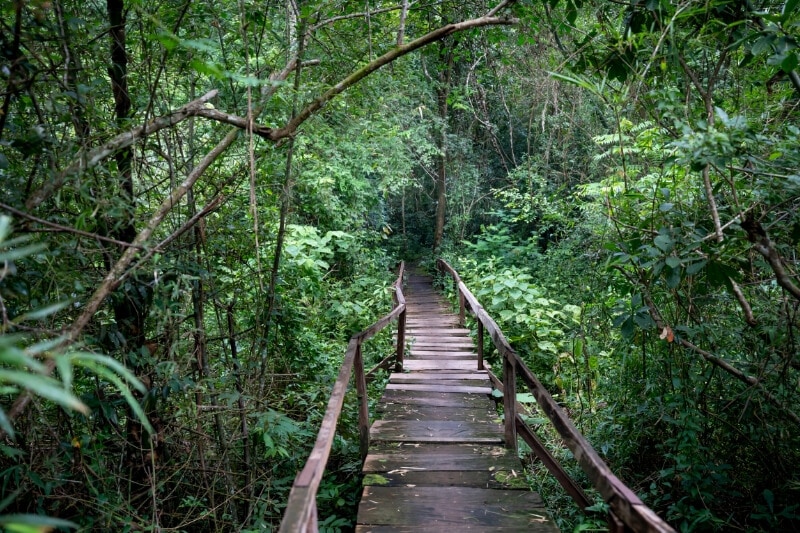
Just 150km north of Vietnam’s biggest city, Nam Cat Tien is one of the largest areas of lowland tropical forest left in the country. The area was made famous in 1992 when a group of rare Vietnamese Javan rhinoceroses were discovered in Cat Loc.
Nowadays, Nam Cat Tien is widely known as the best spot in Southern Vietnam for primate encounters. Langurs, macaques and golden-cheeked gibbons are among the park’s most famous residents.
Equally, Nam Cat Tien is a great place for trekking. The combination of wetlands, low-lying jungle and vast grasslands offer great diversity to hikers.
Also worth visiting is the Ta Lai ethnic village, which showcases local minority culture. There’s also a primate rehabilitation centre within the biosphere, and the Vietnamese branch of Free the Bears, an NGO that rescues Asian black and sun bears from wildlife trafficking.
- How to get there: Overnight excursion from HCMC or bus to Cat Tien.
- Where to stay: Cat Tien Jungle Lodge.
10. Phong Nha-Ke Bang National Park

Among locals, it’s said that no Vietnam national park can beat Phong Nha. This is the home of legendary Hang Son Doong, the world’s largest cave, plus a variety of smaller caves that offer all kinds of experiences, from natural mud baths to zip-lining.
However fascinating its underground wonders are, there’s a lot going on above ground here as well. Phong Nha-Khe Bang sits in the narrowest part of Vietnam, pressed against the border with Laos, and is home to some of the thickest rainforest in the country.
Jungle trails snake along the Son river and around the Truong Son mountain range, offering hiking and mountain biking. Fairytale-like Mooc Spring is a highlight of the park and the perfect place to cool down.
This part of Vietnam is steeped in history. Adventurous travellers can try cycling part of the Ho Chi Minh Trail, a network of paths cut through the forest by the Viet Cong during the Vietnam-America War.
If you’re in the mood to relax, stake out a hammock at one of the idyllic bungalow resorts along the river and soak up the misty views.
- How to get there: Fly, train or bus to Dong Hoi then join a guided cave excursion.
- Where to stay: Phong Nha Coco House.
11. Phu Quoc National Park

Speaking of relaxation… There’s no place quite like Phu Quoc to kick back and enjoy Vietnam’s chilled coastal vibes. But this island has a wild side, too.
If you can tear yourself away from the beach, you’ll find plenty to do in Phu Quoc National Park, the massive UNESCO Biosphere Reserve that dominates the northern part of the island.
The park boasts more than 1,000 plant species and is a habitat for more than 200 species of animals. Most is evergreen old-growth forest. Choose between hiking or exploring back tracks by motorbike.
The marine part of the national park, meanwhile, calls for scuba diving or snorkelling the reef. Forest camping is also available and a nice contrast to the island’s flashy resorts.
- How to get there: Fly to Phu Quoc Airport from any city in Vietnam or boat from Kampot/Kep in Cambodia.
- Where to stay: InterContinental Phu Quoc Long Beach Resort.
12. Hoang Lien Son National Park

What better way to cap off this list of Vietnam National Parks than by taking a detour from the southern delta to the peaks of the country’s far-north.
The thought of combining Phu Quoc and Hoang Lien Son National Park, which is located west of Sapa near the Chinese border, proves just how diverse Vietnam’s natural beauty really is.
Established in 2002, Hoang Lien Son attracts thousands of researchers and birdwatchers every year thanks to its wealth of fauna and flora. Inside the 29,000-hectare reserve, visitors can admire rare orchids, 2,000 species of flora and 66 species of mammals.
This is where the ‘Roof of Vietnam’ is located: Fansipan Peak. Views from the top of the tallest mountain on the Indochina Peninsula are about as spectacular as you might expect. Needless to say this is one of the best places in Vietnam for multi-day treks.
Hoang Lien Son isn’t tropical like other parts of Vietnam – it’s very cold in winter and often sees snow at its highest points. The unique climate and dramatic scenery makes it even more alluring.
- How to get there: Bus, sleeper train or van from Hanoi to Sapa, then join a guided hike to Fansipan.
- Where to stay: Sapa (view a full list of the best Sapa hotels and homestays).

Best Vietnam National Parks: Share it on Pinterest
More Vietnam travel resources
- Off the beaten track in Northern Vietnam – hidden gems & local favourites
- Where to go in Southern Vietnam – 5 must-sees
- The best things to do in Dalat
- How to spend 3 days in Hoi An
- How to get from Danang to Hoi An – transport guide
- How to visit the abandoned dragon waterpark in Hue
- Where to buy authentic Vietnamese souvenirs in Hanoi
- Waterwheels & rice fields in Pu Luong Nature Reserve
- Cycling the Ho Chi Minh Trail in Phong Nha
- Homestays in Da Bac village
- Halong Bay alternatives – where to go beyond the bay
- How to travel to Halong Bay from Hanoi – transport guide
- How to travel to Sapa from Hanoi – transport guide
- Where to stay in Sapa, Vietnam – best homestays & more
- Visiting Bac Ha Market near Sapa
- Guide to Ha Giang in far-northern Vietnam
- Guide to visiting Ninh Binh
- Exploring colonial architecture in Hai Phong city
- Day trip from Hanoi to Duong Lam Ancient Village
All comments are moderated and may take a little while to appear. If you’ve submitted your comment, I’ve got it!