From painted palaces to decadent desserts, abandoned silk factories to beautiful handicraft traditions, here are 17 wonderful things to do in Sheki plus my complete Sheki travel guide.
Once a whistle stop on the fabled Silk Road that connected East and West, the small city of Sheki (also known as Shaki or Şeki) is far and away my favourite place in Azerbaijan.
Located in the shadow of the Greater Caucasus mountains in the country’s north-west, Sheki lies roughly 300 kilometres from Azerbaijan’s capital, Baku.
Essential reading: How to travel to Sheki from Baku in 2026
One of its main draws is the historic architecture, including the country’s newest UNESCO Heritage Site and one of the most beautiful buildings in the Caucasus, the Sheki Khan’s Palace.

Ever since Sheki was featured in the TV doco Joanna Lumley’s Silk Road Adventure (read on to learn how you can stay overnight in the stone caravanserai featured in the series), more and more people have been dreaming about visiting Sheki.
I first came to Sheki in 2017. Now that I live in neighbouring Georgia, I have had plenty of opportunities to revisit – and let me tell you, I still get the same feeling of quiet euphoria every time I get my first glimpse of Sheki’s signature gabled roofs.

With an excellent local cuisine, vernacular architecture, curious locals and a pleasant climate, Sheki is an essential stop on any Azerbaijan itinerary, and definitely the place to go if you want to experience a part of the country that is not Baku.
This Sheki Guide, first written in 2017 and updated for 2026 following my two recent trips this past spring, will show you all the best things to do in Sheki.
Please note: This post contains affiliate links, meaning I may earn a commission if you make a purchase by clicking a link (at no extra cost to you). Learn more.

Briefly about Sheki
Sheki is Azerbaijan’s ninth-largest city, with a population of around 68,000 people. It is located in northwestern Azerbaijan, 300 kilometres from the capital city, Baku.
Sheki was founded around the 8th century BC and was one of the biggest Caucasian Albanian states in the region. Later in its history, it served as the capital for the powerful Sheki Khanate who gifted the city with some of its finest architecture, including the famous Khan’s Palace.
Sheki was an important stop on the Silk Route. There is evidence of this period all around the city, in the silk factories and mulberry groves and most notably in the monumental stone traders’ inns or caravanserais that have survived until today.

The Historic Centre of Sheki was inscribed by UNESCO in 2019. It covers the Khan’s Palace plus dozens of other protected monuments ranging from palaces and mosques to hammams, private residences and house museums.
Backlit by the Greater Caucasus and with a river running directly through the city, Sheki is a classic mountain city. The area has its own unique culture, fabulous cuisine, and a people who are known throughout Azerbaijan for their good humour.

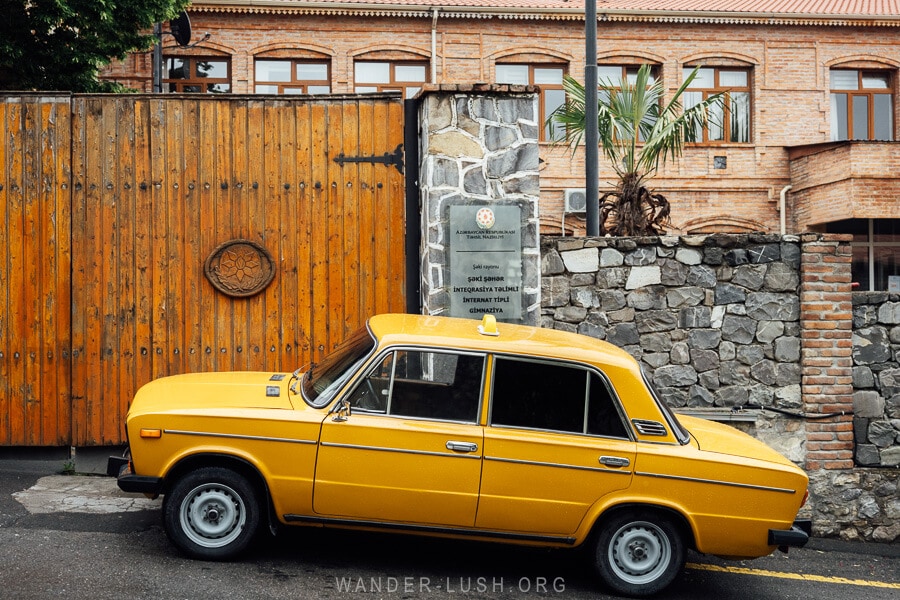
More recently, when Azerbaijan was part of the Soviet Union, Sheki had a flourishing silk industry and several other factories. If you like Soviet-era architecture, monuments and retro cars (the Lada lives on in Sheki!) then you will certainly find Sheki interesting from this point of view.
Where to stay in Sheki
MinAli Boutique Hotel
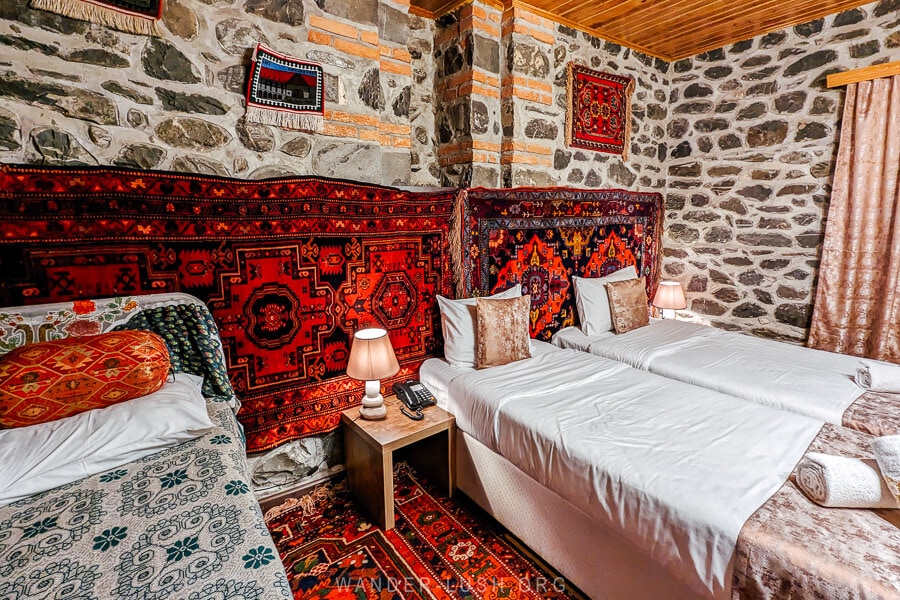
Located just off the main street in a historic building, this boutique hotel has two ‘heritage rooms’ plus modern suites arranged over two levels. I was lucky enough to stay in the heritage room on the bottom level (pictured): It is completely charming with exposed stone walls, a fireplace and traditional textiles.
A top-notch buffet breakfast is served in the top-floor dining room overlooking Sheki’s rooftops. Staff are professional and warm.
→ Check prices & availability for MinAli Boutique Hotel here on Booking.com
Sheki Karvansaray Hotel

For a once-in-a-lifetime accommodation experience in Sheki, book a room at the Karvansaray Hotel. Located inside the Upper Caravanserai, it is a restored Silk Road traders’ inn where you can sleep in the original stone chambers that once housed roving merchants. I stayed here on my first visit to Azerbaijan way back in 2017 and it’s a big part of the reason why I fell in love with Sheki.
Rooms are modest but comfortable (in winter, there are radiators provided). Prices range from a very reasonable 30-120 AZN depending on the room.
Reservations can only be made by phone – see my complete guide to staying at the Sheki Karvansaray Hotel for all the details.
Macara Sheki City Hotel

This modern hotel is located in the newer part of town, around 30 minutes’ walk from the Khan’s Palace and 15 minutes’ walk from the Taza Bazaar. I recently stayed here with my father and was very impressed: Honestly I think this might be the best mid-range hotel in Azerbaijan.
Rooms are luxury-level comfortable and well-appointed. The breakfast is excellent, and I recommend trying the restaurant here too (especially if you’re in the mood for something different because they have a nice range of European meals). Staff are extremely attentive and helped us to organise our taxi to the Georgian border for an excellent price.
→ Check prices & availability for Macara Sheki City Hotel here on Booking.com
Central Hostel
I personally haven’t stayed at Central Hostel, but it was recommended to me by a local who works in tourism. It has stellar reviews online, too. I ended up visiting the adjoining Central Cafe a couple of times (they certainly serve the best coffee in Sheki) and I had a quick look around the property while I was there.
Dorms (both mixed and segregated) are neat and tidy with nice touches including traditional carpets. The location on the main square is convenient to the bus station. To reach the Khan’s Palace, you need to walk around 20 minutes.
→ Check prices & availability for Central Hostel here on Booking.com
17 magical things to do in Sheki
Here are the top 17 things to do and see in Sheki, Azerbaijan.
1. Be floored by the incredible Sheki Khan’s Palace

Of all the fascinating places to visit in Sheki, the Khan’s Palace should be top of your list. It is the touchstone of the UNESCO-listed Historic Centre of Sheki and one of Azerbaijan’s most prized pieces of architecture.
I have been lucky enough to visit the palace on three occasions. Not to sound melodramatic, but it literally brings tears to my eyes every time. It is just so overwhelmingly beautiful.
There is at least one blog out there that suggests you should stick to the outside and forgo buying a ticket to tour the palace interior. No offence, but that is some of the worst advice I have ever heard. Please, please, please do not skip it!

The Khan’s Palace was built over a decade-long period ending in 1797 (some sources cite a conflicting date of 1762) as a private residence for the third khan of Sheki, Muhammad Husayn Khan Mushtaq, and his family. At that time, this part of Azerbaijan was part of a khanate established by the Persians.
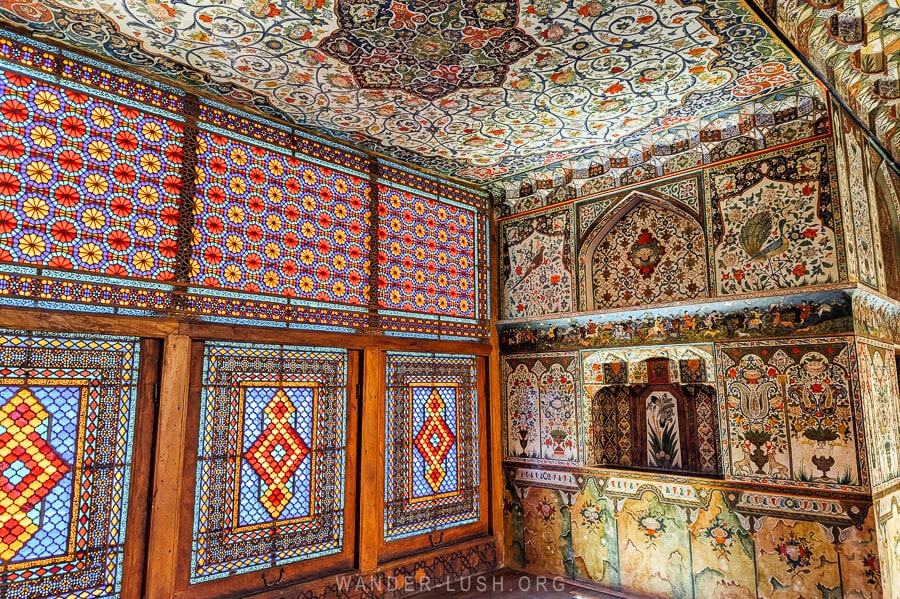
Of the 10 years it took to complete the palace, eight of those years were spent on the interior. All but a few of the six reception rooms, offices and living quarters are completely covered from head to toe with miniature paintings (including thousands of human characters, each with a unique face), wood inlay ceilings and Qajari-style mirrored niches.
You can also see a nice example of this mirror work in Tbilisi at the State Academy of Arts, which was built in the 1850s by a merchant named Arshakuni. In fact, this house is specifically referenced in the Sheki UNESCO Nomination Text.
Photos are not allowed inside the palace, and this rule is strictly enforced with the help of CCTV cameras. I was given special permission to photograph the palace on one of my recent visits.
The most splendid feature of the palace is the coloured glass windows, which have a special local name: Shebeke. Originally they were made with paper-thin Venetian glass. There are no nails or glue used in the construction of lattice-like Shebeke – masters use a special technique to slot thousands of glass pieces into their wooden frames. There is a Shebeke workshop on the grounds of the castle where you can see this artform for yourself (more details in the next section).


In summer, visit the palace in the late afternoon – around 5pm – and there is a good chance the light will be streaming through the Shebeke windows at just the right angle, painting a colourful mosaic on the wooden floors. In the past, every stone floor was covered with carpets that mirrored the ceiling paintings directly above them.
The walls and ceilings of the palace have been painstakingly restored by architects and master craftspeople including the Shebeke makers. But incredibly, around 85% of the interior is original and has only been touched up or cleaned.
As you walk through the rooms with your guide, they will explain the symbolism and meaning behind some of the more creative designs. My favourite is the painting of a lion standing atop a fish on the ceiling of the Khan’s office. It is meant to be a reminder that power is fleeting.

The 36 metre-long facade is the first thing you encounter upon entering through the palace gates. It too is super opulent, with decorative plasterwork showing peacocks, scallop patterns and Islamic-inspired motifs in a palette of salmon, black and blue. Two 500-year-old plane trees guard the entrance – they were here first, and the palace was built around them.


Note: For some reason the pin for the Khan’s Palace has been erased from Google Maps. There are all sorts of incorrect names and locations pinned for different palaces. My map, linked below, has the correct location for both the Khan’s Palace (the main palace) and the so-called-but-not-really Winter Palace (covered below).
- Opening hours: 9am-6pm daily (break from 1pm-2pm)
- Ticket price: 9 AZN (guide no longer included)
- Tip: You do not need a ticket to enter the courtyard and view the exterior of the palace building. This means you can come back multiple times to take photos in different light conditions (on my last trip with my dad, we revisited the palace four times to try and get the perfect picture). The palace faces south, so I recommend taking photos in the late afternoon.
2. Explore the Sheki Castle complex (Shebeke Workshop, Ethnography Museum & more)
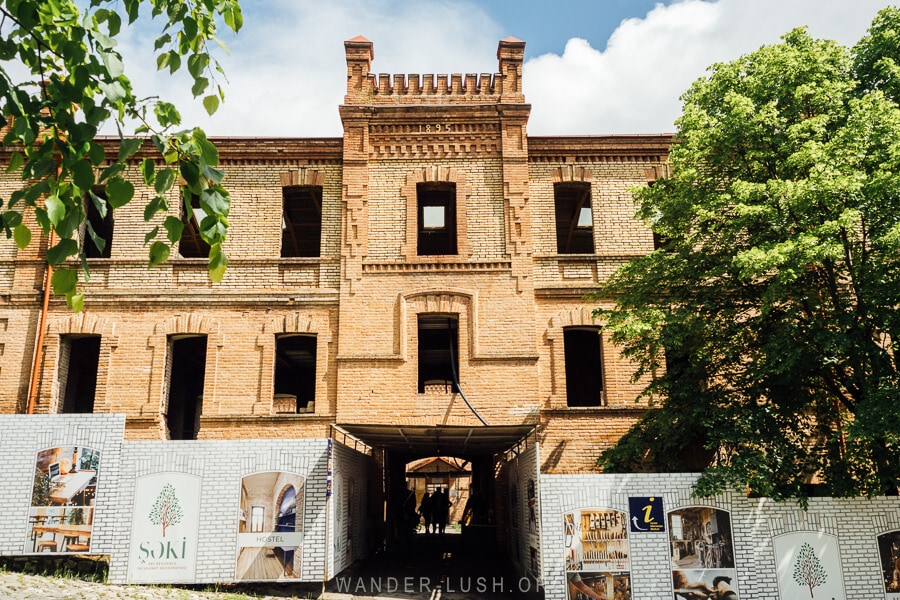
The Palace of the Sheki Khan lies inside Sheki Castle, a walled defensive complex at the north-eastern end of town. As a juxtaposition to the Persian-style palace, there are half a dozen military barracks that were added around 1895 by the Russians who stationed soldiers here.
Some of these buildings have been repurposed as cultural venues and museums. This includes the Sheki State Art Gallery (now open; free entry), and the Sheki History and Ethnography Museum (still under refurbishment and closed at the time of writing).
The grand brick building close to the palace is also being renovated and will reopen as an Art Residence, with hostel accommodation, co-working spaces and craft workshops all under one roof. Behind it, the Craftsmen’s House (now open) is a covered handicraft market where you can buy miniature panels of Shebeke glass and other knick knacks.
Don’t miss visiting the Shebeke Workshop. On my last visit, the building was under renovation and the workshop display had been relocated outside temporarily.

Sheki is part of UNESCO’s Creative Cities Network that recognises cities with a particularly impressive heritage of crafts. Shebeke is one of them. Made through a process called tracery, Shebeke uses wooden frames and fragments of coloured glass that are expertly slotted together without glue, nails or fasteners or any kind. Some panes of Shebeke contain 1,800 individual pieces and weigh up to 40 kilograms.
When the Sheki Khans’ palaces were being reconstructed, all of the Shebeke work was done by local master craftsmen using glass imported from Burano island in Italy.
Also on the castle grounds, the Nukha Three Saints Church is a round temple that was used as a Russian Orthodox Church during the imperial period. It has a very similar look to the Church of Kish (see #17 on this list) and according to my guide, it too was originally built by the Caucasian Albanians.

When I visited Sheki for the first time, there was a small Museum of Folk and Applied Arts inside the church. At present it is empty. As far as I can tell, the museum will later reopen in a new location.
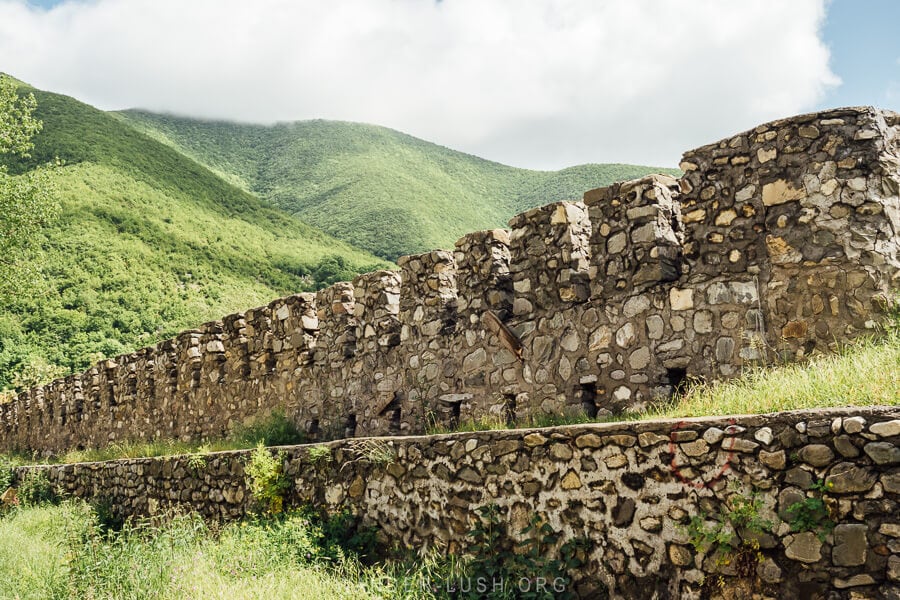
One last point of interest – and something I think most people overlook – is the Castle Walls. In its heyday the wall measured 1,300 metres and had 15 defensive watchtowers. Fragments are still standing on both the eastern and western sides of the complex.
- Tip: Free to explore without buying a ticket for the palace. Gates are locked overnight and open in the early morning.
- Tip: Once the Sheki History and Ethnography Museum reopens, you will be able to buy a combination ticket for the Khan’s Palace, the two museums and the House of the Shekikhanovs (next on this list) for 10 AZN.
3. Visit the lesser-known Shekikhanovs’ Palace (not a Winter Palace!)

Located well outside the castle walls on a seemingly random suburban street, the second royal residence in Sheki isn’t quite as opulent as its palatial cousin – on the outside, at least.
Step inside, and you will find more beautiful wall paintings, carved wooden doors and examples of Shebeke glass, albeit on a much smaller scale.
Contrary to what Google Maps and most other websites try to tell you, this is not a Winter Palace! Rather it served as a residence for relatives of the Khan, who lived here year-round. It dates back to the same era as the main palace but was decorated by a different artist.


The Shekikhanovs’ House was only rediscovered by historians quite recently (given the conspicuous location, I can understand why). As the story goes, after the Sheki Khan was exiled by the Russians, descendants of the family continued living inside the house before it was abandoned, fell into ruin, and then was almost completely forgotten.
Reconstruction began in the early 2010s. Like at the other palace up the road, 90% of the picture-book murals in the guest room are original.


When I first visited Sheki, photography was permitted inside the Shekikhanovs’ House. They change their policy on this every now and then, so it’s best to check in person when you buy tickets.
- Opening hours: 9am-6pm daily (break from 1pm-2pm)
- Ticket price: 5 AZN
4. Sleep in (or just visit) the Upper Caravanserai

Sheki’s lofty stone caravanserai dominates the main street and defines the layout of almost the entire downtown.
Walking up to the castle complex and palace from the centre, you will walk directly alongside the Upper Caravanserai and its Lower counterpart (up next) – but you might not even realise it until you come to the main entrance. That’s because the stone arcades are flush with the sidewalk.
Like the palace, the Upper Caravanserai is a monumental piece of architecture. I have visited plenty of caravanserais in my life – in the centre of Tbilisi, in the Skopje Old Bazaar and elsewhere – but for whatever reason this one is just that much more impressive.
Spending a night or two inside one of the 14 modest rooms – once sleeping chambers that housed Silk Road traders – is truly an unforgettable experience.
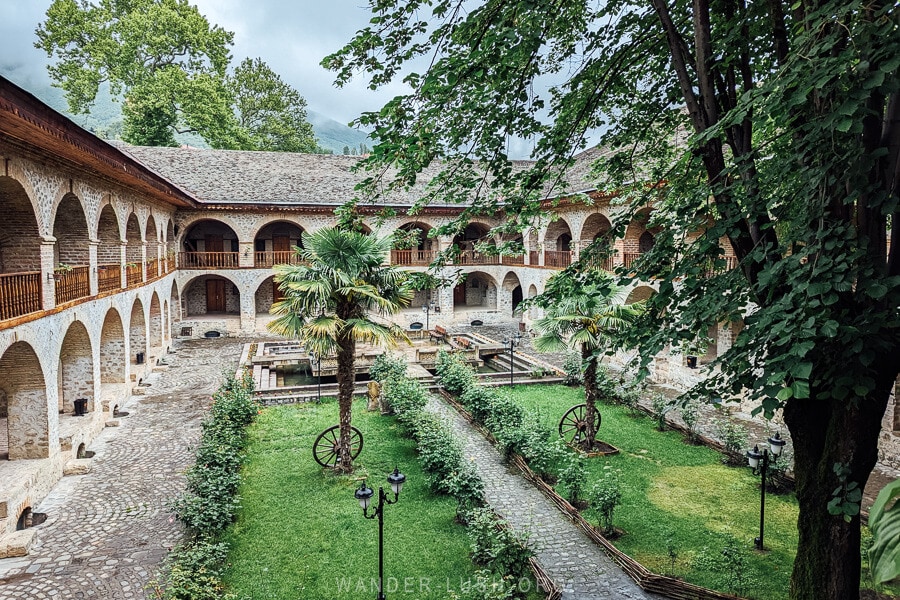
Even if you’re staying elsewhere, it is essential to drop in and see the building up close and literally walk through history as you cross the palm-fringed courtyard. Anyone is free to wander through the caravanserai’s heavy wooden doors, past the water fountain and through to the central courtyard, where you will find the stone arches and cloisters in all their glory.
There is a small tea house and a restaurant inside one of the back rooms on the upper level.
- Opening hours: 11am-7pm daily (day visitors can only enter the first level)
- Details: Find more information about staying at the Karvansaray Hotel here.
5. Photograph the (closed) Lower Caravanserai

Sheki’s second caravanserai is located on the same street, further towards the centre of town. Known as the Ashaghi Caravanserai or Lower Caravanserai, it dates back to the 18th century.
While the Upper Caravanserai has an irregular shape that accommodates its corner location, the Lower Caravanserai has a more traditional rectangular design. Its footprint is also much, much bigger. You can’t really appreciate this from ground level, but you can see the difference when looking at satellite images.
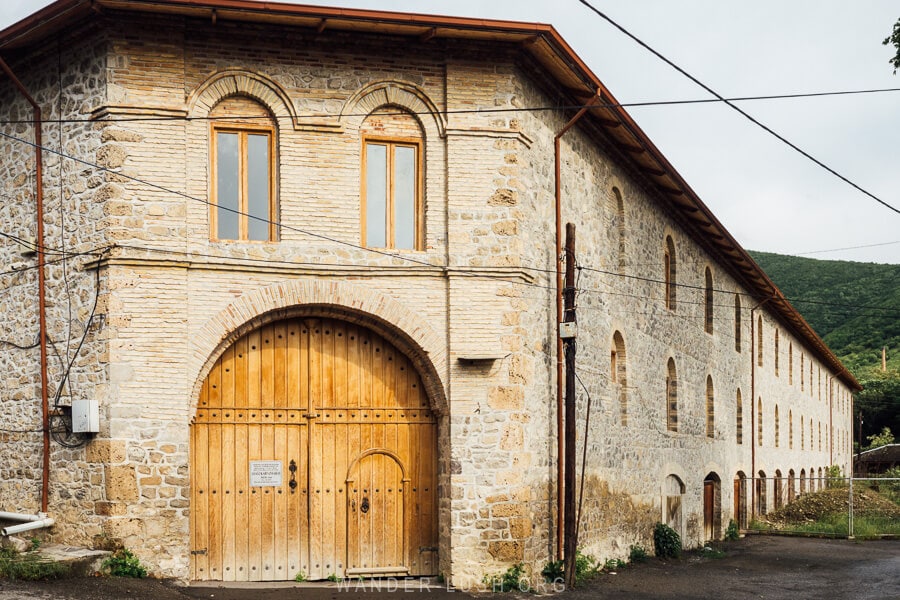
It has been closed for renovations – its bottom-storey shops empty and wooden gates locked – for several years now. For the moment, the best way to appreciate its beauty is by photographing the street-facing facade. Try to find the back gate when you go walking down the backstreets of Sheki.
6. Head up to the Sheki Palace Hotel for a view of the caravanserai
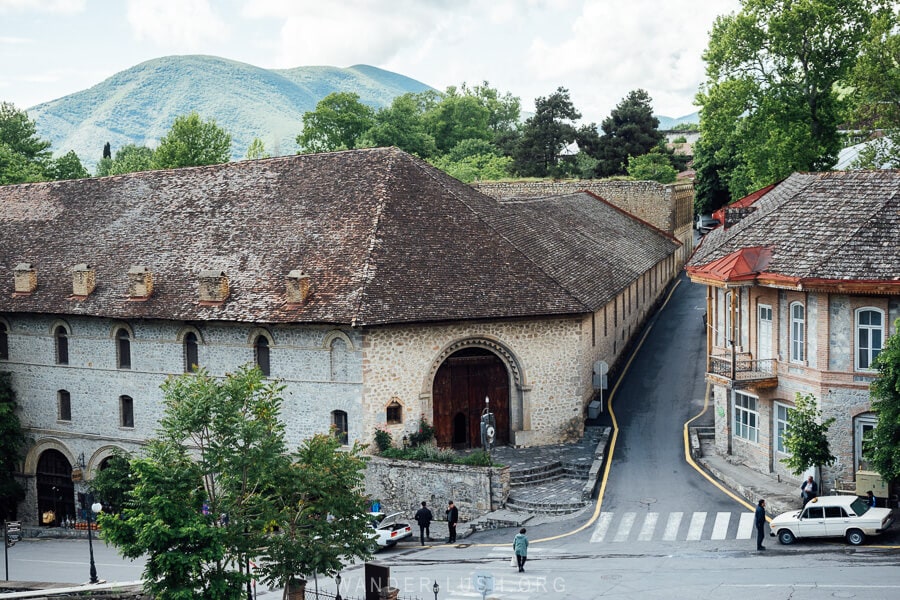
But before that, I recommend going up to the rooftop for a different view of the Upper Caravanserai.
Directly opposite the main gate you will see a parking area and a building set back from the road. Go inside, and in the eastern wing there are stairs and an elevator. Go all the way to the top level, and you will see a restaurant belonging to the Sheki Palace Hotel. Walk through the restaurant (staff don’t seem to mind!) and out onto the terrace – then you will be greeted with a pretty amazing view of Sheki city and the caravanserai.
7. Shop for Silk Road-inspired souvenirs

Before you bid farewell to the Upper Caravanserai, take your time to wander up and down the row of shops nestled in its arched underbelly. These boutique shops and antique emporiums directly onto the main street.
Among the businesses here are two excellent souvenir shops. The first is Kelagayi Ziya, which has been producing traditional silk scarves since 1947.
Kelagayi are traditionally worn by Azerbaijani women to cover their hair. As a major centre of silk production in the region, Sheki is one of the two places where Kelagayi-making flourished.

The traditional wax-resist method involves stamping paraffin oil onto the fabric with a wooden block then dip-dyeing it. The wax is then rinsed away, leaving buta (paisley-like) ornaments and other patterns behind.

The generously sized shawls are ideal for covering your shoulders and because they are so lightweight, they are easy to carry home. The more colours used, the more expensive the piece. Prices start from around 50 USD (both cash and card accepted).
Kelagayi Ziya also has a workshop on the outskirts of Sheki that you can visit. Ask staff for details.
The second Sheki souvenir on sale here is clay piti pots, a special piece of kitchen equipment used to make Sheki’s signature dish (more on that in a moment).


The petite pots with handles and a lid are small enough to fit inside a suitcase and only cost a couple of AZN each. There is another pot seller on the street in front of the castle complex.
8. Satisfy your sweet tooth with a slice (or a box!) of Sheki Halva

Sheki Halva is one of the most popular food products from this region. I once had a driver from Baku bring me to Sheki and before driving back, he made a pit stop at a halva shop and bought a dozen boxes of sweets to take home!
Sheki Halva is a rather unusual concoction and is nothing like the halva I am used to. It is much closer to baklava. Legend says the recipe was first devised for the Sheki Khan – talk about having a taste for the finer things in life.
Sheki Halva is made from crushed nuts (walnuts or hazelnuts) flavoured with secret spices and layered with sheets of rice flour dough called rishta, which has the appearance of stiff gauze. Once smothered in molten honey or sugar, it all melts together into one very sticky, very sweet treat. I was lucky enough to see this process in full at one of the halva workshops underneath the caravanserai.

Before it is carved up, the gigantic round pan of halva is decorated with a pink crosshatch pattern of saffron and beet juice. My favourite version, dim-dim halva, is prepared with a rich blend of hazelnuts, walnuts and almonds.
There are several dozen halva specialty shops in Sheki. I can personally vouch for the following three:
- Halvaci Yahya: Run by a fifth-generation halva maker, located underneath the Upper Caravanserai.
- Aliovset Shirniyyat Evi: Popular among locals and always very busy.
- Aliahmed Sweetstore: Big range of sweets and another popular local choice.
These shops also sell Turkish-style baklava and other sweets.
9. Get lost on the Old Streets of Sheki

My favourite part of Sheki is the ‘Old Streets’ area between the castle complex and the main square. The tangle of cobbled roads and narrow alleyways that stretches along the northern fringe of the city is the oldest part of Sheki and the most photogenic.
Mainly a residential area, the Sari Toprak neighbourhood is brimming with beautiful brickwork, houses with plaster moulding that imitate the Khan’s palace, and colourfully painted gates.

Starting from the Lower Caravanserai, take the left alongside the building towards the Khan’s Mosque (it is very much worth a stop off – see #10 on this list).
From there, you can continue up alongside the castle. The old silk factory, established in 1928 and now abandoned, is one of the first buildings you come to. Note the twin lion statues guarding the entrance.


Circle around and head towards the Godak Minaret, which was built in 1811. Using the minaret as a guide, follow your nose through the backstreets, tracing the riverstone paths to remain inside the old town area.

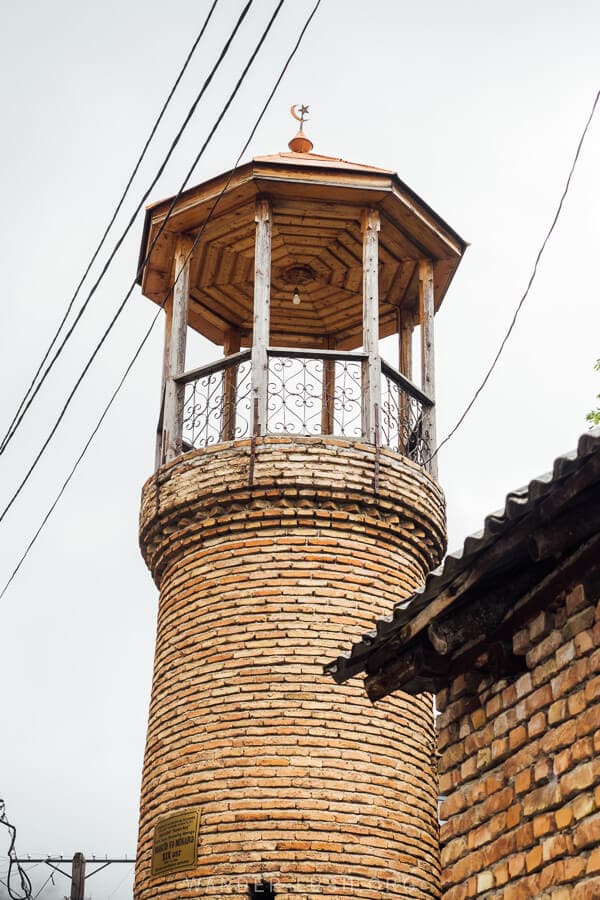
Alleyways peel off in all directions and it’s a great place just to wander and get lost. The Shekikhanovs’ House can also be found in this area, tucked away down a narrow street, and there is a back gate to the Lower Caravanserai that gives you a different view of the structure.
No doubt you will meet some friendly locals along the way who are keen for a chat!
10. Tour the newly reopened Khan’s Mosque & Museum

Built by Muhammad Husayn Khan in 1769 (and serving as his burial place after his death 11 years later), the Khan’s Mosque was the main Juma (Friday) Mosque of the period and also housed a madrasa school.
Following extensive renovations, the mosque complex just recently reopened in December 2022. It is a functioning mosque that visitors are welcome to tour outside of prayer times. Ancillary buildings house the Khan Museum, which displays artefacts from the period.
On my last visit, I arrived to find the garden in front of the mosque deserted. I sheepishly tried the front door and was greeted by Habid, who is the Imam here. He graciously welcomed my father and I into the main prayer hall and showed us around.

It is quite spectacular – the floor is layered with antique Azerbaijani carpets and the dividers that separate male and female worshippers are crafted from wood in the Shebeke style.
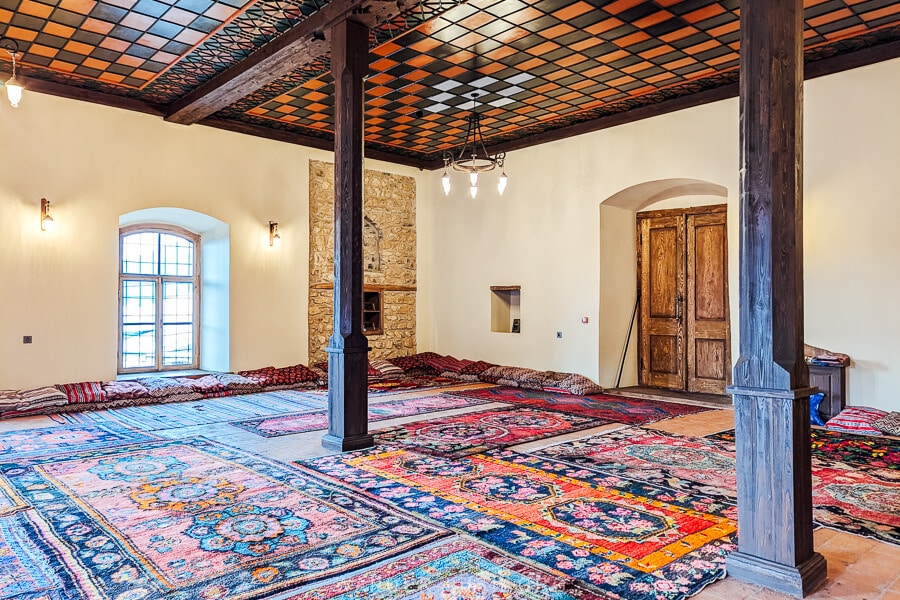
This mosque is unlike any other I have been to before. Inside the prayer hall, right there in front of the mihrab, there are holes in the floor covered with perspex. Peer through, and you can see clay pottery remnants and ceramic pipes from the Middle Ages.
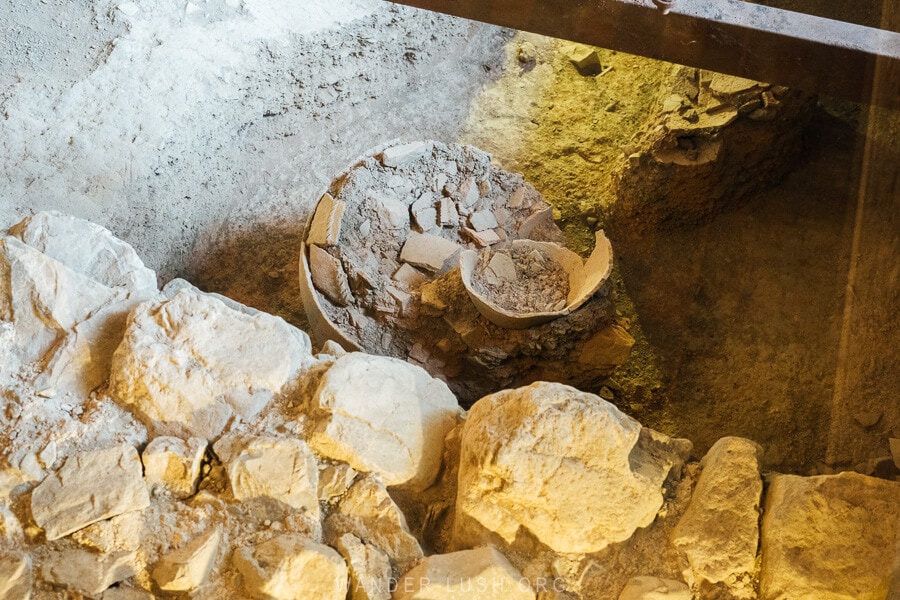
Historians believe that a Caucasian Albanian temple (like the one in Kish, coming up later on this list) was once located on this site, which explains the multitude of artefacts and graves unearthed during restorations.
11. Peek inside the Yeralti ‘Underground’ Hammam

Located on the other side of town behind today’s Juma Mosque, the Yeralti Hammam or ‘Underground Hammam’ is worth stopping for when you’re in the area.
It is abandoned and closed up (although there is at least one working hammam in Sheki, and I have heard rumours that another one will soon be restored…), but the quintessential domed roofs have been preserved and are just lovely.
As the name suggests, this hammam is embedded underground. Peek through one of the missing windows to see the inner workings of the bathhouse, including the ancient pipe system and what was clearly once a bathing pool.
- Opening hours: From 7am daily (mosque)
12. Find the working Sheki Silk Factory
Sheki’s position on the old Silk Road meant it was a trading powerhouse. Not only that, but the city was itself an important producer of the much-coveted natural fabric in its own right.
High-quality Sheki silk was known throughout the region for its luxe sheen – the city was even nicknamed ‘Caucasian Lyon’ in reference to France’s biggest silk producer.
In 1861, the first silk factory was built in Sheki to process fibres locally grown and spun. (I once had a guide in Sheki, Zamira, who fondly told me about spending summer’s beneath her grandparents’ mulberry tree. It seems that rearing silkworms to sell to the local factories was a popular side for all Sheki families!)
One of the factories is still ticking away today, apparently using the same Soviet-era machinery. I tried to talk my way into the factory on my first trip to Sheki, but sadly I was turned away!
You can, however, visit the small gift shop attached to the factory where silk carpets and Kelagayi scarves are sold.
13. Eat piti, sudlu ash & other Sheki delicacies

Sheki is certainly a contender for foodie capital of Azerbaijan. The unique climate and historical influences in this part of the country have given Sheki a rich and varied cuisine that is quite distinct from the rest of the country.
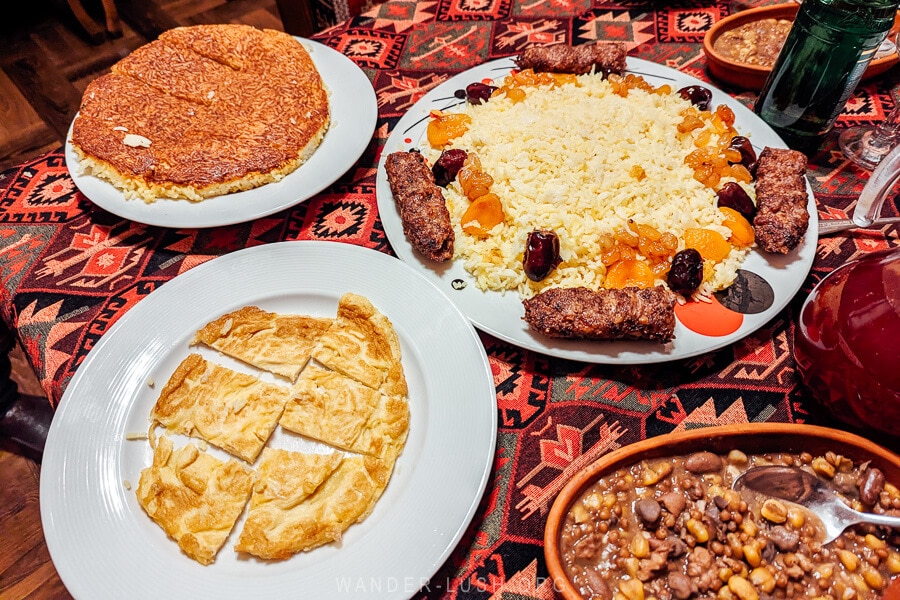
The most renowned local specialty is piti, a chunky, aromatic stew made from lamb, chickpeas, chestnuts and various vegetables. It is fatty and wholesome (sometimes with chunks of lard floating on top) and is traditionally served in an earthenware pot with bread on the side.
Piti is both an appetiser and a main meal in one. There is an art to eating it: First you must tear your bread into small pieces and place it in an empty bowl. Using the back of your spoon to keep the chunky bits in the pot, you then pour the piti liquid over the bread. Sprinkle it with sumac and eat the sodden bread/soup as your first course.
Next, you smush the remaining piti stew into a chunky paste using a special wooden pestle. Once you’ve finished the soup, transfer the stew to your bowl to eat as a second course.
Every restaurant in town serves piti – I will leave it up to you to decide which one is the best.
Top piti tip: If you don’t want your waiter manhandling your food, tell them you want to take a photo of your piti before you eat it. That way you can tear your own bread. You can then ask them to step in to help with the juice pouring and stew smashing.
Piti is synonymous with Sheki but there are a few other local specialties you should try while you’re here. My favourites are:
- Sudlu ash: The local version of Azerbaijan’s national dish, plov, sudlu ash is flavoured with apricots and served with a thin egg omelette and lula kebab on the side.
- Lapali chorak: A sour bread made in Kish village using walnuts, white onion and cherry syrup.
14. Do an Azerbaijani wine tasting at Khan Wine House

Georgia might be the birthplace of wine, but Azerbaijan has its own (much smaller) wine industry too – especially in the northern part of the country around Sheki where many of the communities are ethnic Georgians. And despite being an Islamic country, many Azerbaijanis do drink, thus you can find wine and spirits on most (but not all) restaurant menus.
Azerbaijan’s first commercial wineries were established by German settlers in 1860. Archival photographs of their factories and the first wine bars in Baku where their bottles were sold decorate the tasting room at Khan Wine House, a lovely little wine bar and boutique located underneath the Sheki Palace Hotel.


Founded five years ago by Vusal, a sommelier who was born and raised in Sheki, it stocks a nice range of Azerbaijani wines including everything from Saperavi to pomegranate wine.
Drop in for a quiet glass with Vusul – he is a kind, open-minded guy who is always up for a chat. And when it comes to wine, he really knows his stuff. He is planning to open a new bar in Sheki soon – watch this space!
- Opening hours: 10am-11.30pm daily (break from 1pm-2pm)
15. Browse the lively Taza Bazaar


The Taza Bazaar is Sheki’s biggest and best produce market. It is located in the new part of town, not far from the bus station, which means it’s a bit of a trek if you’re staying close to the castle. If you don’t feel like walking, jump on city bus 11 or any of the buses with ‘bazar’ written on the front.
This market is humongous, with different marked undercover sections for spices, nuts, fish and meat, etc. Around the outside and spilling out into the surrounding streets are hundreds of stalls selling fruit and vegetables.
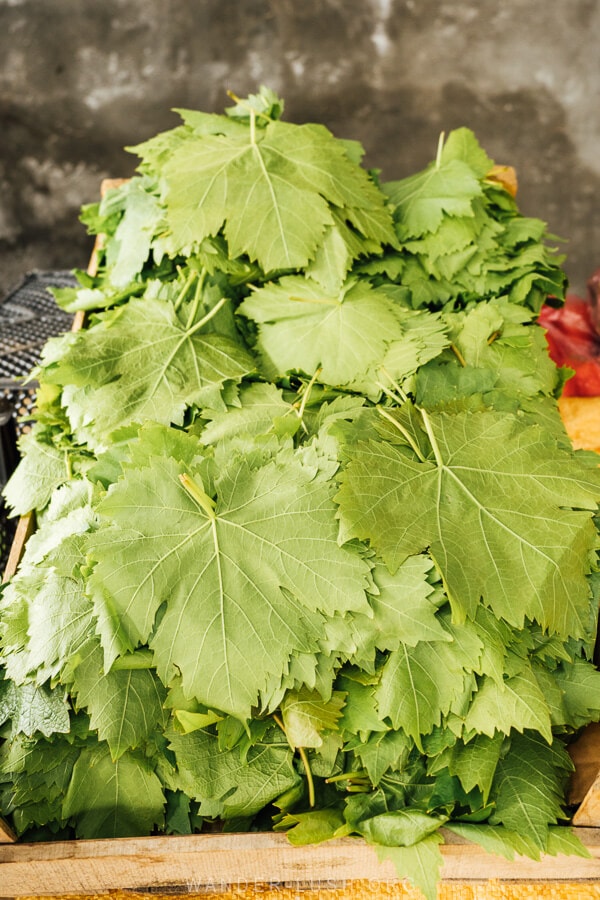

A few of the products I took a special interest in were the bundles of vine leaves (destined to become tomorrow’s dolma), the jars of colourful pickles (preserving culture is HUGE in Azerbaijan), the wedges of cheese with saffron, and the great tubs of Azerbaijani tea leaves.
Taza Bazaar is a popular place to shop for Sheki halva and there is an entire row dedicated solely to vendors peddling mammoth pans of it. There are different price points depending on the nuts used.

I spotted a few interesting bits and pieces when I was wandering around the periphery of the market, including a very old cobbler’s studio. I also found this Soviet-era sculpture on a high wall.


Unfortunately, it is mostly destroyed but you can get the gist of the work from the panels that remain: Two ladies holding a bolt of fabric while people work on silk spinning machines in the distance, and two men cradling great copper plates and jugs – this sculpture must have been devoted to traditional Azerbaijani handicrafts.
- Opening hours: 9am-9pm daily (best on weekends in the mid-morning from around 10am)
16. Walk up to the Sheki WWII Memorial & viewpoint
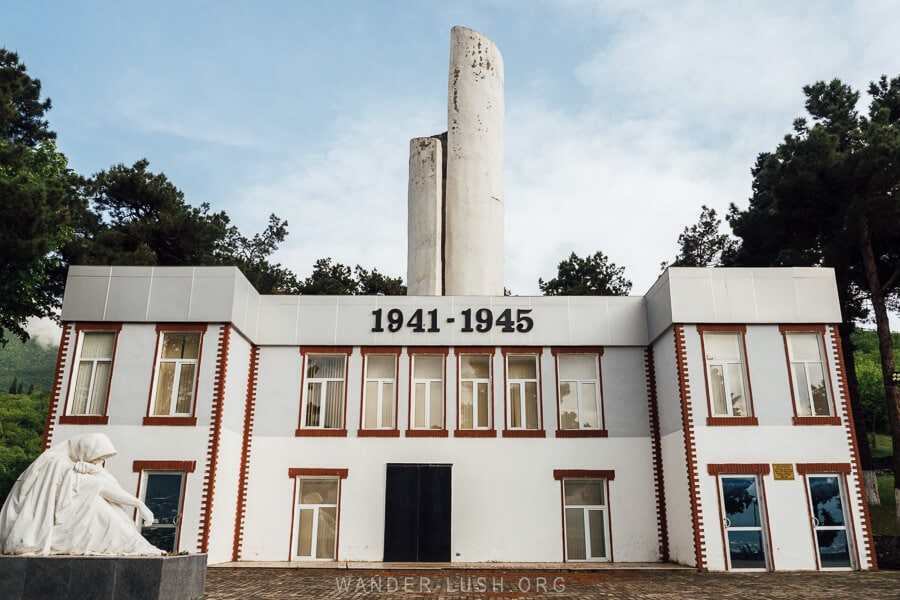
Living in Georgia has taught me to always be on the lookout for interesting Soviet-era stuff, including memorials to the Great Patriotic War or WWII. Sheki’s is perched up on a hill that looks out over the old part of the city, which means it doubles as an excellent viewpoint.
The memorial itself is an interesting piece of architecture, with a sculptural spire that resembles several Brutalist monuments in Tbilisi. The sculpture of a mourning woman is reminiscent of the WWII memorial in Dedoplistskaro in Kakheti. The dates on the building, 1941-1945, represent the years of the US-Soviet Alliance.
You can get a nice view of Sheki city and the mountains from the elevated memorial and the streets surrounding it. We were actually aiming for a higher hilltop viewpoint, but it started raining before we could find it. If you have the location, please leave me a comment below.

The walk up to the memorial is very pleasant and takes you past Sheki’s stadium and alongside a historic cemetery. I recommend going in the late afternoon/evening for the best light.
Tip: If you’re looking for a longer hike in Sheki, try the Khan’s Pasture. The trail starts from Kish and leads high into the mountains. The hike to Galarsan-Gorarsan Fortress is in the same area.
17. Take a side trip from Sheki to the Church of Kish

Part of Sheki region, Kish village is located 7 kilometres (around 20 minutes by car) north of Sheki’s centre and is an easy side trip from the city. It too is very old and very charming, with narrow streets wrapped in high riverstone walls.
Kish’s most famous attraction is of course the Church of Kish. Thought to be the oldest Caucasian Albanian Temple in the region, it is one of around 100 churches of its kind that are protected monuments in Azerbaijan.
In the past the church was used by Orthodox Georgians. In 2001, it was converted into a museum. One of the most interesting things I learned about the temple on my guided tour was that the distinctive round shape served as inspiration for Azerbaijan’s first mosques.
The inside of the church contains a display of coins, weapons, stone engravings and other artefacts uncovered in the area. Outside, there are several excavated gravesites where you can see the skeletons of prominent worshippers who were buried on the church’s periphery.

Some of these individuals were taller than two metres, which has spurred a theory that the Caucasian Albanians came to these lands from the Nordic countries. Around 5,000 people who identify as Caucasian Albanians live in Azerbaijan today .
And they have no association with the Balkan country of Albania – the word Albanian means ‘brave person’, ‘high mountains’ and ‘white skin’ in different languages, and it’s pure coincidence that they share this common name.
A taxi to Kish from Sheki costs around 3 AZN when booked through Bolt. A taxi up and back, including wait time while you tour the temple, should cost around 10 AZN.
- Opening hours: 9am-7pm daily
- Ticket price: 9 AZN
- Tip: Kish is much higher than Sheki, so the climate is cooler and more wet. When it’s warm and sunny in Sheki, it can be freezing and foggy in Kish – so remember to check the weather and come prepared.
Where to eat in Sheki: Best Sheki restaurants & cafes
Cafe Central
For the best barista coffee in Sheki.
VIP Karvan
I have it on good authority that VIP Karvan is the best restaurant in Sheki. The chefs specialise in regional food – we had the sudlu ash plov and it was absolutely incredible (and huge – you need at least four people if you have any hope of polishing it off!).
Old Town Sheki Hotel and Restaurant
A local friend brought me here the first time and I liked it so much, I came back with my dad when he was visiting. They have a great local wine list (actually Vusal used to have his bar here in the basement!) and a very yummy selection of dishes.
Of the meals we ate, my favourites were the nar qovurma, a pomegranate and beef dish, and the nardanja, chicken with pomegranate, walnuts and cinnamon. For dessert there is Sheki Halva by the slice.
Restoran Qaqarin
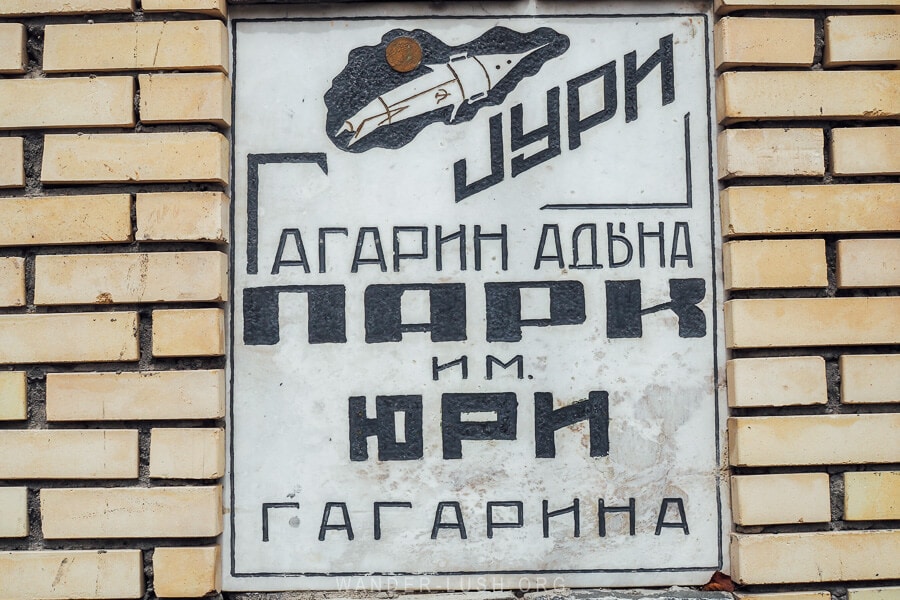
AKA Restaurant Gagarin, this restaurant pays homage to the Soviet cosmonaut and has a very cute sign out the front. The outdoor garden is very pleasant and the piti is top-notch.
How to get to Sheki from Baku
Important reminder: Azerbaijan’s land borders remain closed to inbound travellers. This means that it is impossible to cross into Azerbaijan from Georgia overland (you can, however, travel the opposite way into Georgia by foot – more details below). For the time being, the best way to get to Sheki from Georgia is via Baku.
Detailed guide: How to travel from Baku to Sheki
Baku to Sheki bus or marshrutka
Marshrutka vans and large coach buses both leave for Sheki from the International Bus Terminal in Baku (see the location here on Google Maps – and trust me, it is not permanently closed as Google suggests).
Travel time is 4-4.5 hours on average for a marshrutka (longer for a coach bus, around 5-6 hours), and the fare is 13.20 AZN. At present, there are at least five services daily at 9.50am, 11am, 2pm and 10.30pm. Double check times locally or online here.
The road from Baku to Sheki is quite steep and windy in parts, so pack some non-drowsy motion sickness medication if you need it.

Buses terminate at Sheki Central Bus Station. When you arrive, exit the station and start walking north. There is a bus stop in front of the UniBank (by the fountain) where you can pick up a city bus going to the centre or castle area. Alternatively, a taxi to the centre from the bus station should cost 1-2 AZN.
Heading back to Baku, buses depart Sheki every 30-60 minutes between 6.30am and 6pm.
Baku to Sheki transfer tour
When I recently visited Sheki with my dad, we chose to take a one-way transfer tour to Sheki stopping at Shamakhi, Lahic, Gabala and a bunch of other places along the way. It was very efficient and comfortable and a great way to see all the places you usually miss when travelling by public transport.
We chose this independent 2-day tour with Old City Tours (formerly known as TES Tour). It is very flexible with lots of options to customise. We ended up staying a night in Gabala along the way, but you can quite easily continue to Sheki on the first day to give yourself more time. You also get to choose where the tour ends: In Sheki, back in Baku, or at the Georgian border.
Baku to Sheki train
Another option is to take advantage of the overnight train service from Baku to Sheki. There is one nightly train departing Baku’s 28 May Station just before midnight and arriving at Sheki Railway Station at 5.45am the next morning (6 hours travel time). For the return journey, trains depart Sheki after midnight and arrive back in Baku at 6.40am.
There are three classes on this train (all with beds): Standard, Standard plus, and Business. Prices range from 16-70 AZN, and tickets can be purchased up to 30 days in advance online through the official Azerbaijan Railways website or at the station.
Sheki Railway Station is around 20 kilometres from the centre of Sheki town. A taxi should cost around 10-20 AZN.
Leaving Sheki: Overland to Georgia
While it is true that Azerbaijan’s land border is closed, foreign passport holders are still permitted to exit Azerbaijan by land and travel into neighbouring Georgia by foot. I did this in May 2023, crossing at Lagodekhi.
There is no cross-border transport so you will need to do the trip in at least two stages. The easiest option is to take a taxi from Sheki directly to the border, which is 100 kilometres (around 2 hours) west. We booked a taxi through our hotel, Macara Sheki, for 50 AZN.
If it is quiet, crossing the border takes around 40 minutes, including the 700-metre walk across the river between the two checkpoints.
Once you cross into Georgia, a taxi to Tbilisi will cost around 120 GEL. There were only two drivers there when we crossed at midday on a weekday – so I highly recommend pre-organising onward transport so that you don’t get stranded. One option is to book a driver via GoTrip, being sure to tell them that you will rendezvous at the border.
It is also possible to get to the Azerbaijan-Georgia border by minibus. From Sheki, take a bus to Balakan (the closest town to the border) at 10am or 2pm for 5 AZN, then use a local taxi to travel the remaining 15 kilometres.
When the border reopens, cross-country marshrutka vans from Qax to Tbilisi should resume. Refer to my Azerbaijan bus transport guide for full details.
Sheki travel tips
- You might have noticed that most museums and some other venues are closed between 1pm-2pm. The hour-long lunch break is popular, so keep this in mind when planning your schedule.
- Most restaurants and hotels accept credit cards. If you prefer to use cash, there are ATMs in Sheki that you can use to withdraw manat.
- Bolt app works in Sheki, although the fleet of drivers is smaller than in Baku. If you choose to go with a local driver, you can still use the app to get a ballpark figure on the fare.
- Sheki is a small city and is a bit more conservative than the capital. Dress appropriately (especially in summer) and avoid public displays of affection.
- A fair number of people in Sheki speak English and you shouldn’t have any trouble getting around. All restaurant menus are in English.
- There is a Tourist Information Office located inside the Sheki Castle complex. Staff speak English and are very helpful – but do note that the office isn’t always open.
7 things to pack for Azerbaijan
- An anti-theft backpack. As a general rule, Azerbaijan is a very safe place and petty crime against tourists isn’t really an issue. Still, a good anti-theft day pack is worth having to keep your valuables safe in the city. If you’re having trouble deciding, here are a few of my favourite minimalist backpack designs.
- A scarf for visiting mosques (women). A lightweight cotton scarf is my number one travel item. In Azerbaijan, it will come in extra handy for covering your hair when entering a mosque or for draping over your shoulders when visiting a market or a rural area. This neutral travel scarf goes with anything, and it even has a hidden pocket. Remember the dress code in Azerbaijan is quite conservative – women and men alike should avoid shorts and wear pants or a skirt that covers the knees.
- Walking shoes. From the cobbled streets of Sheki to the hills of Baku and the muddy landscape around Gobustan, you’ll likely be spending a lot of time on your feet in Azerbaijan. Comfy walking shoes are absolutely essential.
- A reusable water bottle. Avoid single-use plastics whenever you can. I love my S’Well water bottle for warm climates because it doesn’t sweat.
- Wine Wings. Should you decide to buy a drinkable souvenir in Azerbaijan, these handy custom-made bottle protectors will keep your vino safe and sound in your luggage. A travel corkscrew and a wine stopper are bound to come in handy, too.
- Entertainment for long bus/train journeys. If you don’t suffer motion sickness, an e-reader is great for passing the time on long bus or train journeys. If you have a travel buddy, pick up a headphone splitter – probably my favourite travel gadget of all time – so you can share a screen or a podcast. Check out my full list of essential items to make a long train or bus journey more comfortable.
- Biodegradable wet wipes. Try this convenient travel pack.
Azerbaijan essentials
Here are some of the websites and services I use for planning a trip to Azerbaijan and the Caucasus. Remember to check out my full list of travel resources for more tips.
FLIGHTS: Find affordable flights to Baku on Skyscanner.
VISAS: Use iVisa to check if you need a tourist visa for Azerbaijan and apply for an expedited visa online.
DOCUMENTATION: Use OneWayFly to obtain proof of onward travel/hotel reservation for your visa application.
TRAVEL INSURANCE: Insure your trip with HeyMondo, my preferred provider for single-trip and annual travel insurance (use my link for 5% off).
AIRPORT TRANSFER: Pre-book a private transfer from Baku Airport to your hotel.
RENTAL CAR: Use Local Rent to find an affordable rental from a local agent.
ACCOMMODATION: Find the best Azerbaijan hotel deals on Booking.com or book a Baku hostel.
SHORT ON TIME? Get to know Baku on this Old City walking tour, or join this panoramic night tour to see Baku in her best light.
ALI AND NINO: Pick up a copy of Ali and Nino, Azerbaijan’s national novel. I can guarantee that Kurban Said’s evocative descriptions of Baku will get you excited for your trip!
More Azerbaijan travel resources
- Azerbaijan travel tips & latest guides, all my guides in one place
- One-week Azerbaijan itinerary, the essential route for first-time visitors
- 10-14 day Azerbaijan Georgia itinerary, overland in the Caucasus
- The ultimate Caucasus itinerary, the best of Georgia, Armenia & Azerbaijan
- All the best things to see and do in Baku, a guide to the capital
- Baku Old City, what to see & do in the oldest part of Baku
- The Heydar Aliyev Center, tips for visiting this incredible building
- 12 best day trips from Baku, for hiking & culture
- Day trip from Baku to Gobustan, how to visit the mud volcanoes
- Guide to Khinaliq, hiking & homestays in Azerbaijan’s highest village
- Guide to Quba, traditional carpet weaving on the way to Khinaliq
- Guide to Lahic, visiting the old-school copper workshops
- How to travel to/from Baku and Georgia by overnight train
- BTAK railway from Baku to Kars via Tbilisi, all the latest details
- Photos of Azerbaijan, more inspiration for your trip
I M really looking forward to Sheki after reading your fabulous descriptions! We plan on 2 full days and I like the idea of visiting Kish, too. You mentioned that it’s 7 km so v walkable (we hile a lot) – you don’t happen to know if there are walking trails in that direction? Thanks
Hi Lisa, a quick search brings up this: https://transcaucasiantrail.org/en/hike/sheki-azerbaijan/stage-notes-sheki-kish/
Hey, Emily! Thanks, as always, for your wonderful guides. FYI – We just went to the Kish temple, and ticket is 9 manat for foreigners now (no guide included). Seems like a lot of pricing has gone up here (often doubled!) in the past couple years.
Ahh! Thanks so much, Lindsey! I have updated the pricing!
I am going to Baku and I wish to cover Sheki too. I have 5 nights so I was thinking of doing Baku first and spending last two days to go to Sheki and heading for airport directly. Is this doable ? Can I get a cab which would take me that way?
Hi Sachi, yes it’s definitely possible. I did it once myself. Just give yourself plenty of time to get back to the airport as traffic in Baku can be heavy.
I have read through every page of your travel… its very detailed and helpful. Thank you.
Are there any transport available from Sheki to Gabala or any local tour operators that can take us to Tufandag Mountains.
Hi Amit, we used TES Tours to go the opposite way so perhaps they could organise a transfer for you.
There are Mercedes mini buses that go between Gabala and Sheki. They are reasonably comfortable, take about 2 hours and cost 5 Manat. Bus station in Sheki is in the new part of town and the one in Gabala is next to the bazaar, a few kilometers south of the center.
One thing to note however is that unless you have a car or want to use taxis, there’s little of interest in Gabala.
Thank you, Phil!
Hi
How many days do you reccommend to stay in Sheki ?
Hi Sumi, you can see just about everything in one day. If you have time, two full days is ideal for walking around the old streets and soaking up the atmosphere.
How to get Sheki from Qabala?
> There is one bus from Qabala Bus Station to Sheki at 9:00 and costs 2,7 Azn.
(I am writing this comment directly from the bus station – 2023)
Hi Emily!
I really wanted to take the marshrutka to Sheki to save some time.. but…
When traveling by marshrutka, is it possible to carry medium sized checked luggage?
The marshrutka seems quite uncomfy, tiny and crowded… Is there enough room to store bigger luggage from international travelers?
Hi Fabricio, there is not much room for luggage but if you arrive early at the bus station then you will probably find a spot. The driver will help you out.
Hi, can you tell me about the roads from Baku to Sheiki? Was a smooth ride? Thank you
Hi Kel! From memory, the road was pretty smooth and straight. I am prone to motion sickness but I was fine on that trip.
I hope this helps!
Thank you Emily. Heading there next week. Looking forward.
The roads closer to sheki seem to be undergoing maintenance, it was super bumpy but no where near unbearable!
Thanks for the update!
I am coming to Azerbaijan in October for a week. Reading your site makes me wish I was staying longer! Great website.
Do you know whether it is possible to do any good day trips by train from Baku?
Thanks.
Wilbur.
Hi Wilbur,
Great to hear! Local trains in AZ are pretty slow, but I think you can get to Ganja in about four hours. I enjoyed visiting Quba and it can be done as a day trip (by bus) and of course, don’t miss Qobustan! Sheki is wonderful, but sadly no trains, only buses.
Enjoy your time in AZ! Let me know if there’s anything else I can help out with.
Thank you for your wonderful blog! Visited the winter palace today – which my guide knew nothing about so I would never have seen it without your post and very glad that I did…it was amazing!
Oh wow! It’s still a bit of a ‘hidden gem’, then?
I’m so glad you got to go! Hopefully your guide can share it with more people – I’d love to see the restorations progress and it get the same attention as its counterpart!
Enjoy your time in Azerbaijan and thanks so much for taking the time to comment!
I am in Sheki and not in love with it. Actually very very far from it. Looking forward to move on from here.
Sorry to hear that, Ricardo! Was it something particular about Sheki? Perhaps your tips could be helpful to other travellers.
Thank you so much for this amazing post about my hometown! You are very welcome to my city of silence when you want!!!
Thank you, Sabina! I love your home town. Can’t wait to visit again 🙂
I feel I have to see shebeke craftmanship at least once before I die! Your post and Sheki have my heart.
It’s gorgeous, isn’t it! Thanks Mohana!
Hi, i am from Azerbaijan. I can help anyone to come to Sheki and other ancient historical places
Hello i am trying to find a reservation in sheki in the karavansaray hotel. The number in the internet is not working
Hi Rihab,
Try contacting them through their Facebook page: https://www.facebook.com/shekikarvansaray/
Hi, i am from Azerbaijan. I can help anyone to can ro Sheki and other ancient historical places
Lovely post, Emily. Now I wanna go 🙂
Thanks Pru! Trust me, you and the family would love it!
Thanks for that rare glimpse into Azerbaijan. The description of Shebeke is marvellous.
Thank you Kevin! Seeing and learning about shebeke was a definite highlight of our time in Azerbaijan. Craftsmanship never ceases to amaze me.