Tbilisoba is Tbilisi’s biggest annual festival – a celebration of the city, its people, and the autumn harvest.
Huge crowds turn out for the two-day event, traditionally held on the first weekend of October.
Tbilisoba has changed considerably over the years, and these days – much like the Tbilisi Christmas Village – the official program is a carefully choreographed affair, with elaborate installations, performances and entertainment across the city.
Having seen old photos of Tbilisoba – streets overflowing with wine and music, people gathered around makeshift tables, and farmers selling their autumn produce – I’ve always wondered if that less-scripted side of the festival still exists.
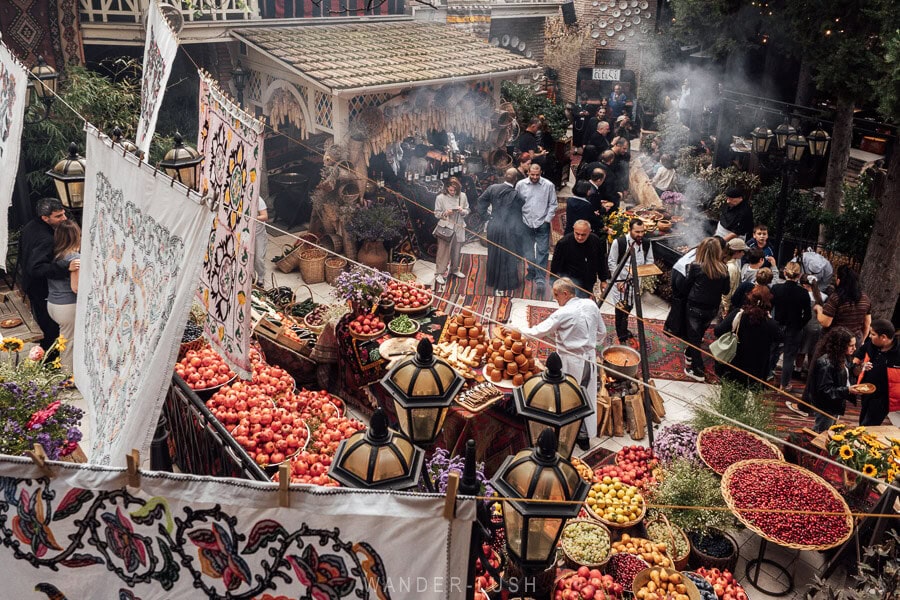
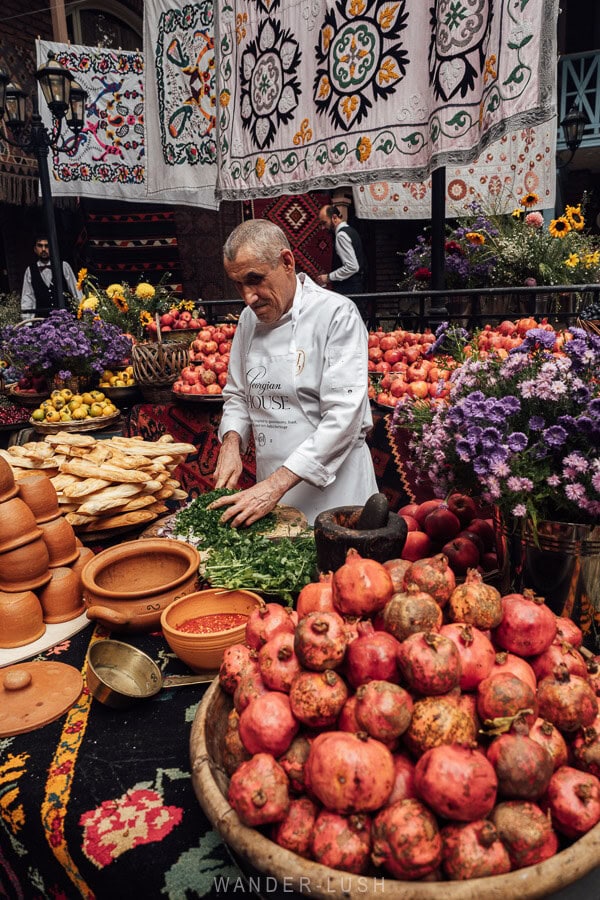
I have attended Tbilisoba several times now, and I’ve come to appreciate both sides. I love some of the more carefully staged elements – especially the chidaoba wrestling and the beautiful autumn displays at restaurants such as Georgian House (photos below).
But in 2026, I found what I’d been looking for: A neighbourhood street party that felt like those old photos had come to life. It was easily the highlight of the weekend.
So, is Tbilisoba worth attending, and should you plan your Georgia itinerary around it? In this guide, I’ll show you which official festival zones are worth prioritising, the independent celebrations to look out for, and where to experience that more spontaneous side of Tbilisoba.
→ Planning a trip to Tbilisi this season? See my full Autumn in Tbilisi Guide for more things to do
Please note: This post contains affiliate links, meaning I may earn a commission if you make a purchase by clicking a link (at no extra cost to you). Learn more.
What is Tbilisoba?
Tbilisoba – ‘Tbilisi Day’ or the Tbilisi City Festival – is a celebration of the Georgian capital. Many cities and villages across Georgia have similar events – there is Kutaisoba in Kutaisi, Batumoba in Batumi, and Shatiloba in the mountain village of Shatili, for example.
Although Tbilisoba might sound like an age-old folk tradition, it is actually relatively young: The first festival was held on October 28, 1979, when Georgia was still part of the Soviet Union.
Gilotsavt Tbilisobas!
On festival weekend, you will hear people greet each other with Gilotsavt Tbilisobas! – the Georgian equivalent of ‘Happy Tbilisoba!’
The original concept of Tbilisoba was a meeting of old and new Tbilisi. Historic districts like Abanotubani were transformed into a theatrical version of the old city, with kintos (street vendors) and karachoghelebi (craftsmen and tradesmen) in costume, carpets hanging from wooden balconies, and rafts floating along the Mtkvari River.
At the same time, farmers travelled to the capital to sell grapes, wine, fruit and other produce, tying the festival to the end of the autumn harvest and the auspicious Rtveli wine season.
The event was paused during the early years of Georgian independence, but Tbilisoba returned in the mid-1990s, and once again became a regular fixture on the city calendar.

Tbilisoba has always had a theatrical side, but for many years the staged elements existed alongside another important tradition: Working harvest markets.
In the past, City Hall designated temporary outdoor trading areas across Tbilisi where farmers from different regions could sell their seasonal produce directly to customers. This continued well into the 21st century. Even in 2021, when the main Tbilisoba celebration was cancelled, the city still organised a two-day ‘autumn bounty’ (sashemodgomo nobati).
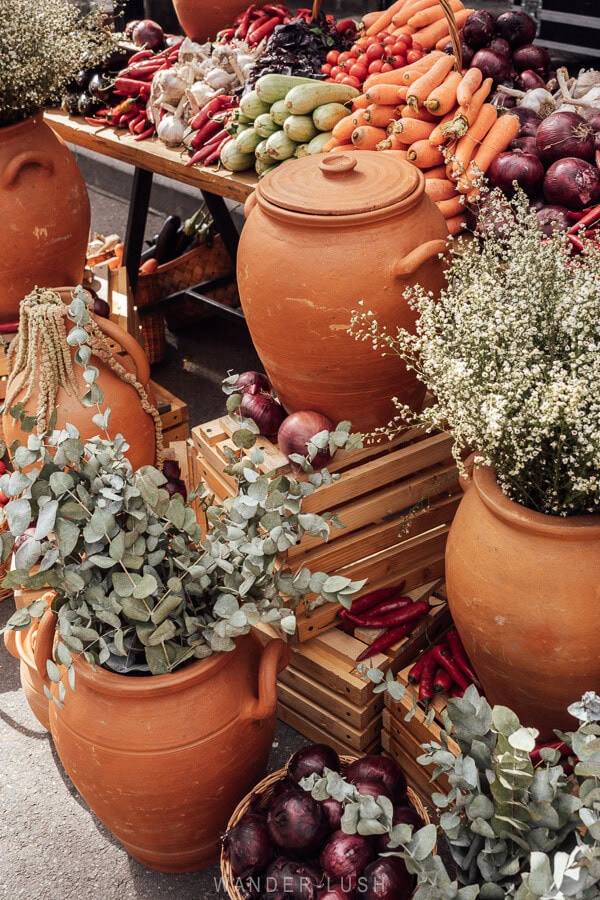
Over time, these working markets have become less prominent. Autumn produce is still an important part of Tbilisoba, but you’re more likely to see it arranged in decorative displays – like those pictured above – than piled up at roadside stalls.
The balance between carefully orchestrated entertainment and street vibes has definitely shifted. But as I discovered in 2026, the more spontaneous side of Tbilisoba hasn’t disappeared entirely.
When is Tbilisoba held?
Tbilisoba is always held in autumn, normally over the first weekend of October.
Dates are usually confirmed a month or so out. To give you an idea of when the 2027 festival might fall, here are the dates from previous years:
- 2027: October 2-3 (TBC, to be confirmed)
- 2026: October 3-4
- 2025: September 20-21 (moved due to local elections on October 4)
- 2024: October 5-6
- 2023: September 30-October 1
- 2022: October 1-2
- 2021/2020: Not held
Where does Tbilisoba take place?
The official Tbilisoba takes place across several locations in central Tbilisi, with each festival zone offering a slightly different program. The main venues are all within walking distance of each other.
In 2026, the celebrations were held in five areas:
1. Orbeliani Square: Seasonal produce displays, a big food market, stage, and kids’ entertainment. The official opening parade takes place here, and Orbeliani Palace hosts the Gardenia Shevardnadze Autumn Tbilisi installation.
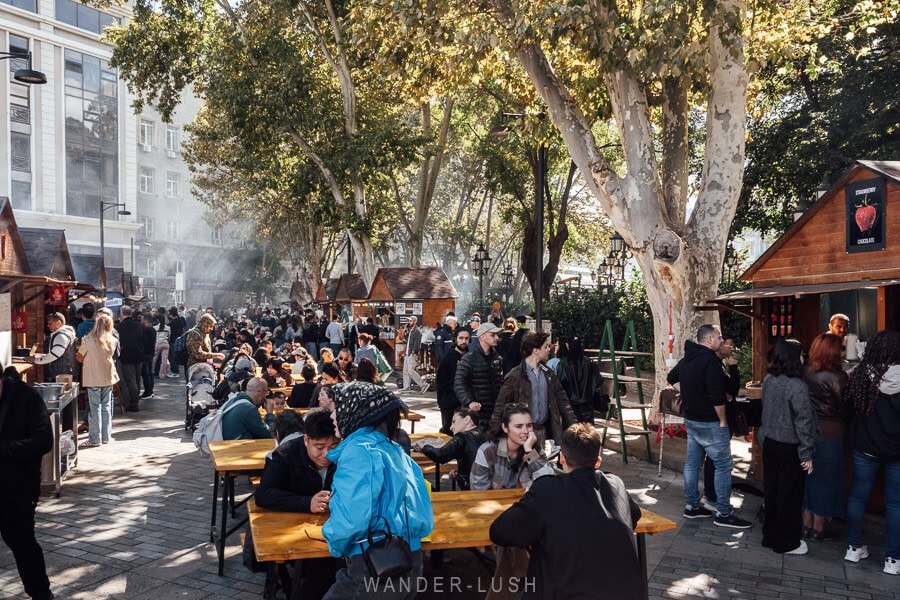
2. Rike Park: Handicraft markets, more food stalls, traditional Georgian wrestling (chidaoba, pictured below), and performances throughout the day. The main stage hosts concerts in the evening.
3. Gudiashvili Square: A smaller, more relaxed festival area with an open-air cinema showing kids’ films plus a couple of food stalls organised by local businesses (pictured directly below).
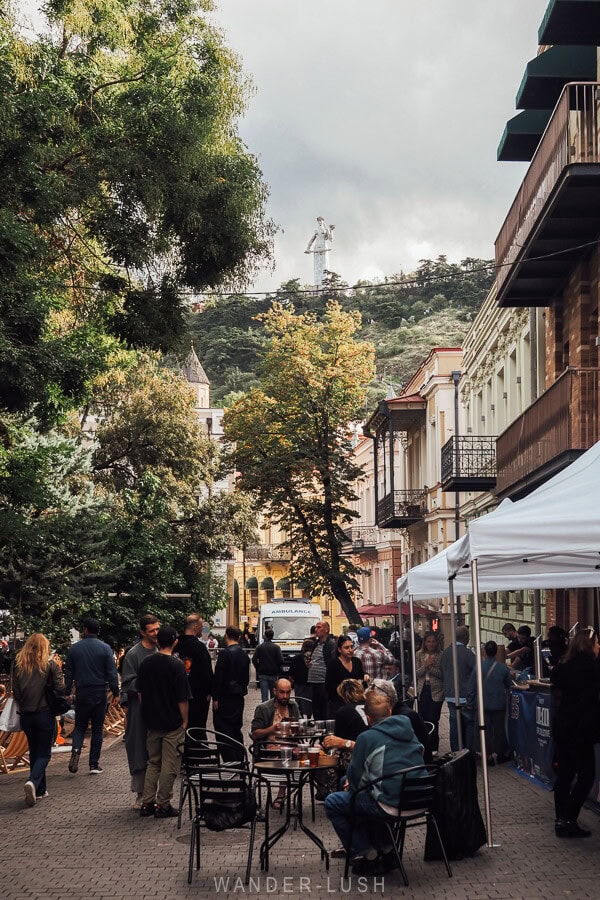

4. Europe Square and Metekhi Bridge: The bridge is closed to traffic and lined with vintage cars and motorcycles (pictured below), while Europe Square and Wine Rise hosts an enduro motorcycle competition.
5. Abanotubani and Leghvtakhevi Gorge: The area around the sulfur baths hosts an international food market, while Leghvtakhevi Gorge features costumed actors recreating scenes from Old Tbilisi.
What to expect from the official Tbilisoba festival
Markets, food stalls, children’s activities and live entertainment are hosted across these five designated zones.
The atmosphere is great, and some of the decorations are truly beautiful. The festival is particularly well suited to families, which makes sense – Tbilisoba is, after all, a celebration for the people of Tbilisi, and the program primarily reflects what locals want to see and do.
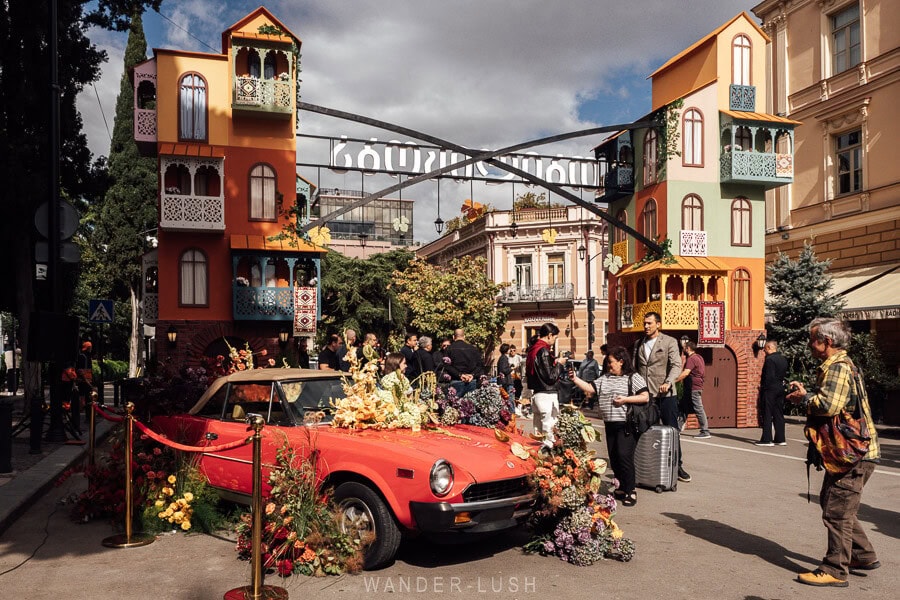
But Tbilisoba is not really a folk festival. The program is quite contemporary, with children’s recitals and pop concerts rather than traditional music and dance, German bratwurst as well as Georgian mtsvadi, kombucha and craft beer served alongside wine, and motorcycle racing as well as traditional wrestling.
I’ve attended some wonderful community-centred celebrations around Georgia over the years – from Lelo Burti in Guria to the Epiphany gathering at Paravani Lake and the Bakhmaro Horse Cup. These events have a very different atmosphere, and if that’s the sort of experience you’re hoping for, it’s worth adjusting your expectations.
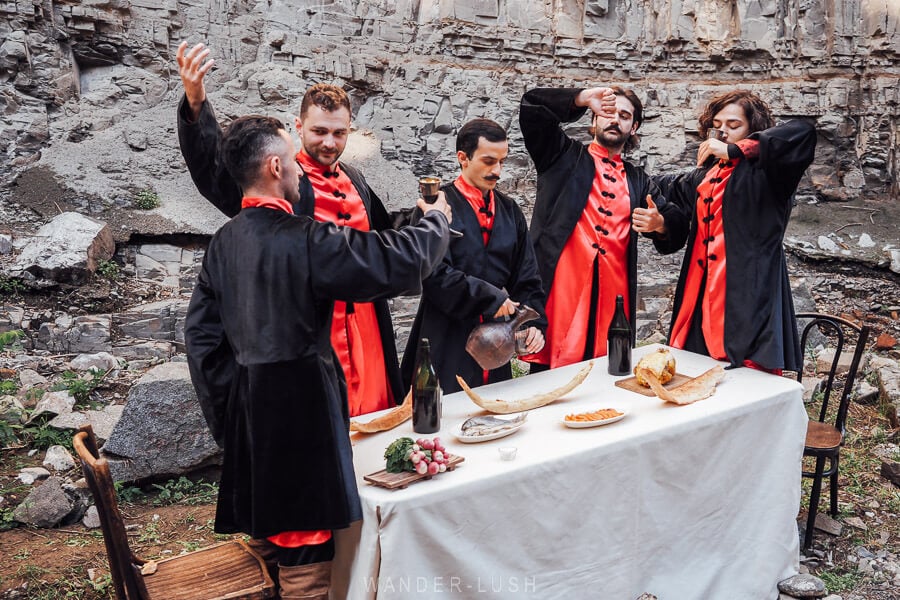
That’s not to say traditional culture is absent from Tbilisoba. In 2026, there seemed to be a particular emphasis on bringing elements of Old Tbilisi into the program. Leghvtakhevi Gorge – a new venue – was filled with actors recreating scenes from old city life. It sounds a bit silly, but it was actually one of the highlights for me!
Independent Tbilisoba celebrations
Beyond the official festival zones, some of Tbilisi’s bigger restaurants organise their own Tbilisoba events, often with cooking masterclasses and live music.
Another of my favourite experiences in 2026 was at Georgian House, which went all out with its incredible decorations – Kakhetian kilims and Adjarian embroidery hanging in the courtyard, and baskets overflowing with pomegranates, pears and apples. The event was free to attend, with khinkali, lobio and wine being passed around to guests. They even had a satsnakheli wine press set up, and a small antique market.
Hopefully Georgian House will repeat the celebration in 2027. Keep an eye on their Instagram page for announcements – I will also add details here closer to the date.
Tsiskvili is another restaurant known for its Tbilisoba celebrations. In 2026, it hosted a two-day event, with grape pressing, workshops, and traditional music and dance.
Fabrika also organised its own Tbilisoba celebration on October 11, a week after the main event, with resident businesses serving seasonal food and drinks.
Smaller restaurants, cafes and shops always get into the spirit too, decorating their entrances with grapes, pears and pumpkins, and adding special autumn dishes to the menu.
Neighbourhood celebrations on Khetagurov Street
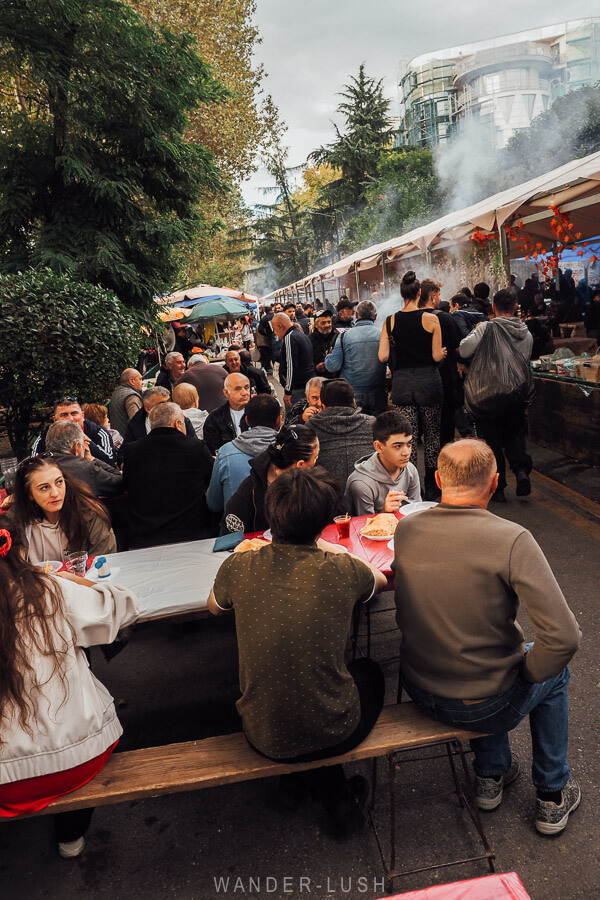
What I had really been hoping to find at Tbilisoba was something less polished – and in 2026, I found exactly that on Kosta Khetagurov Street in Chugureti. This neighbourhood event was easily the highlight of my weekend, and I sincerely hope it continues in the years to come.
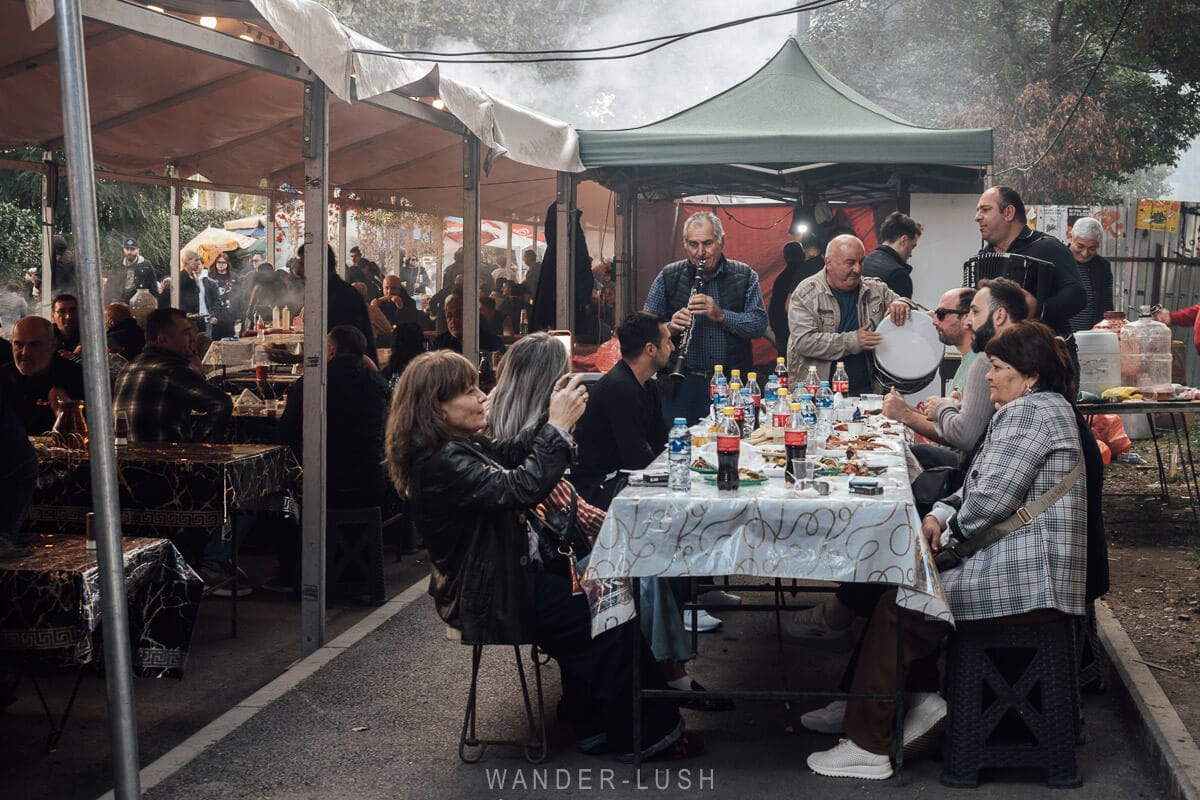
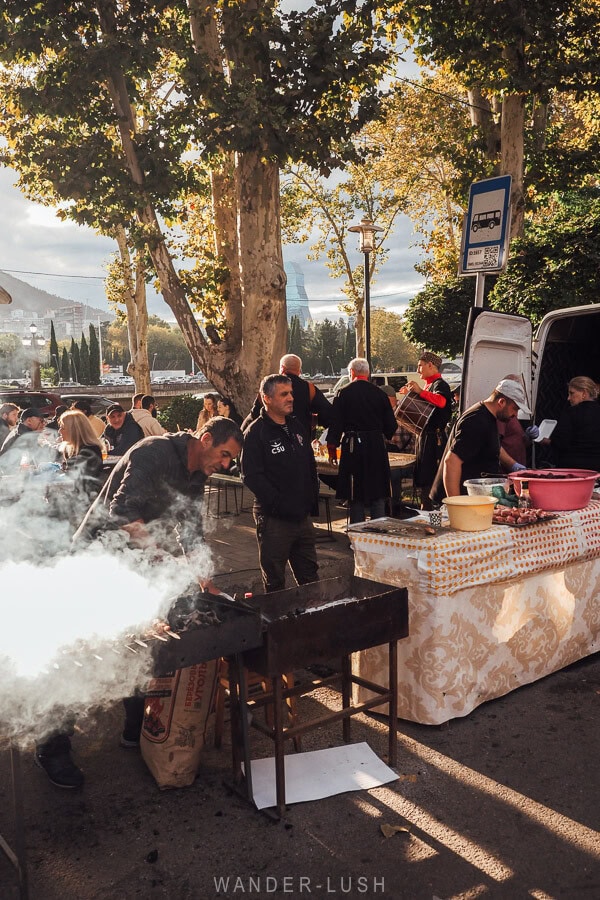
It is not part of the official Tbilisoba program. We ran into a follower of mine, Lasha, who lives in the neighbourhood, and he explained that it is essentially a weekend block party. People from the surrounding apartment buildings organise it themselves, setting up tables in the street and bringing food, wine and produce to share or sell.
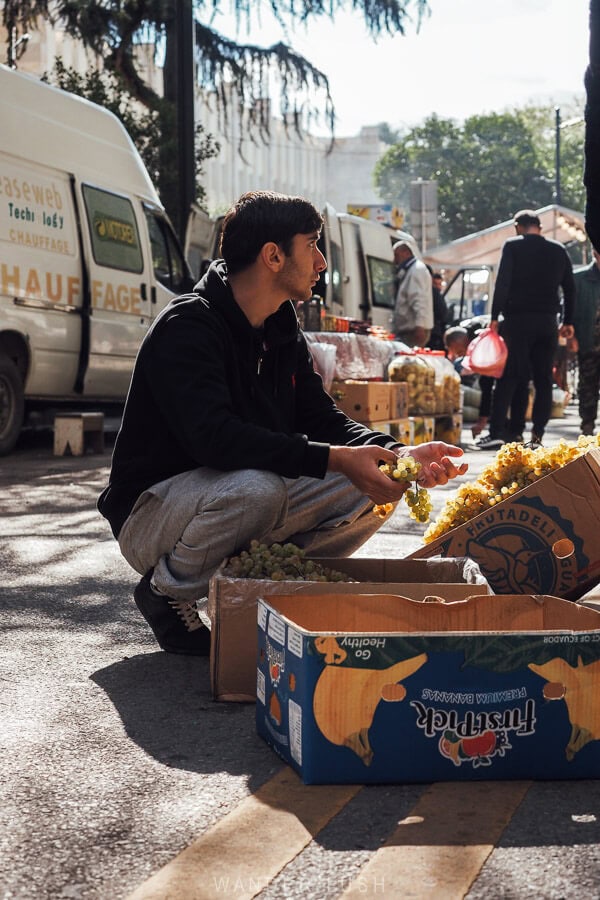
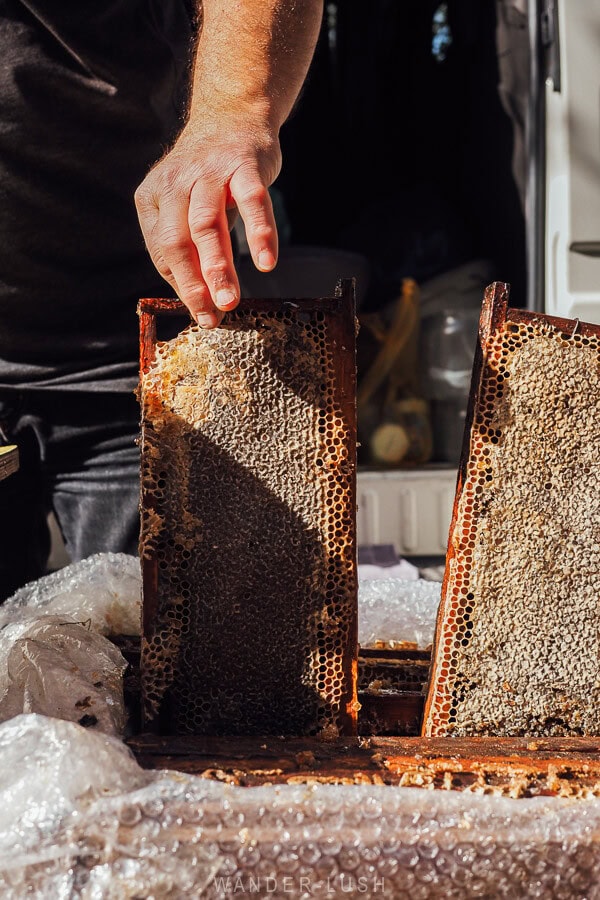
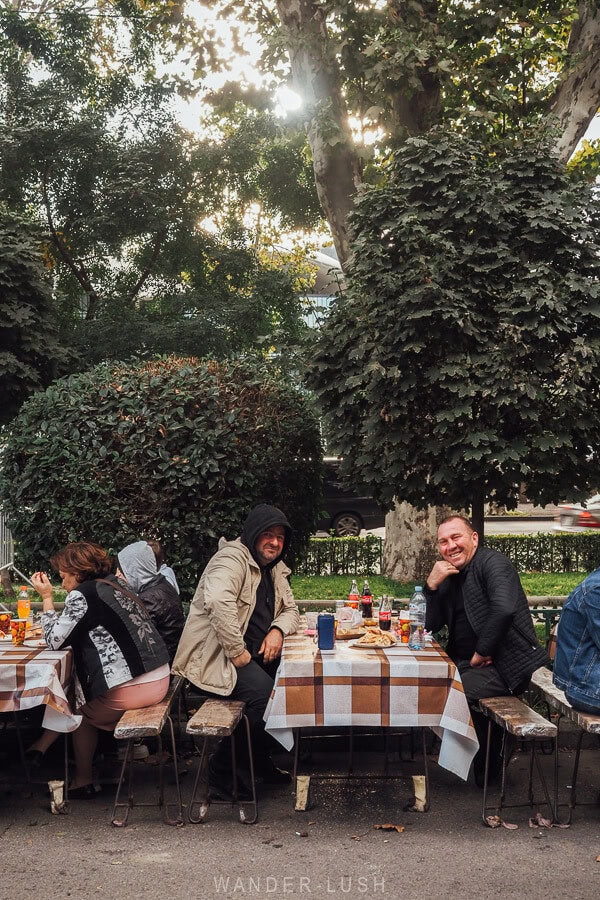
The atmosphere couldn’t have been more different from the official festival zones. We visited twice – first on Sunday morning and again at sunset – and both times it took all of 10 minutes before we were being offered plastic cups of Saperavi and freshly made churchkhela to try.
All along the street, people were making pelamushi (thick grape juice pudding), selling honey on the comb, jars of pickles, grapes and corn, and pouring wine and spirits from unlabelled bottles.
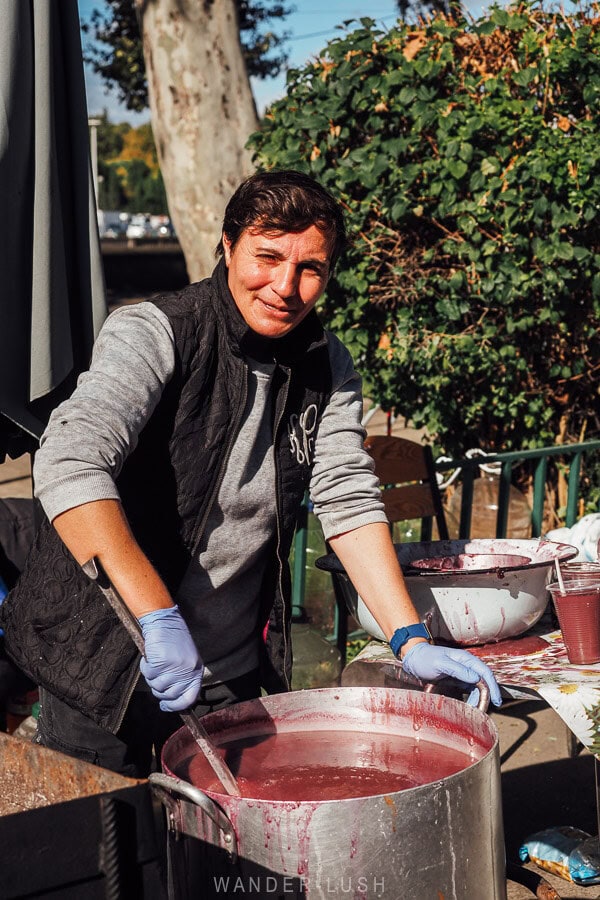
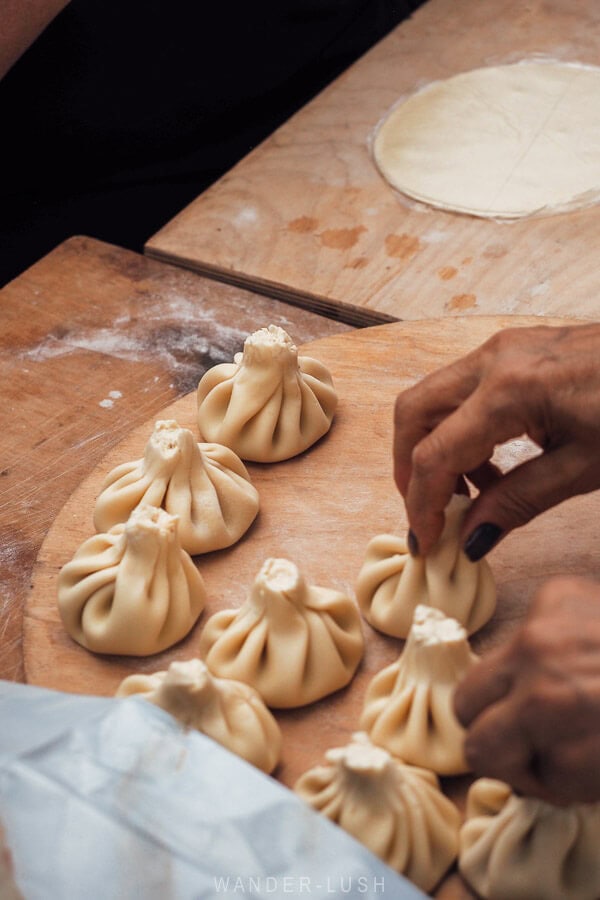
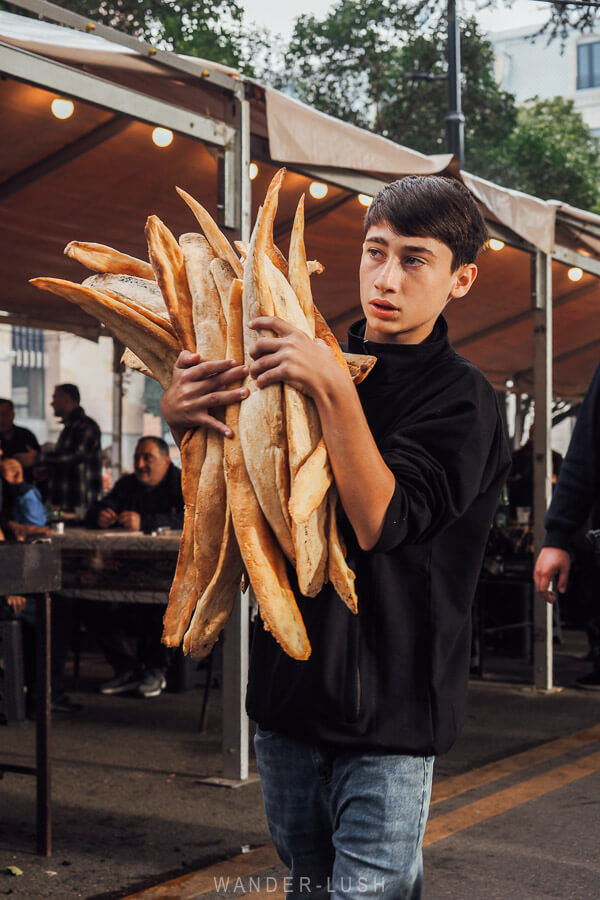
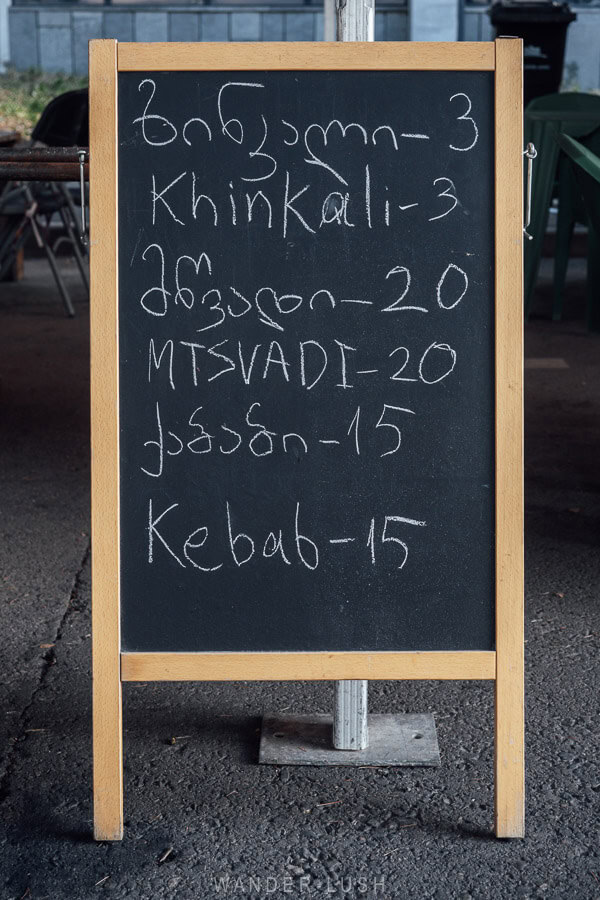
Further on, a dozen grills were set up for mtsvadi, with dining areas arranged under tents and long picnic tables lining one side of the road – mismatched chairs, plastic cutlery, and food that we enjoyed way more than the official festival fare!
The set-up spread into a neighbouring park, where someone had even improvised a kitchen inside the calisthenics gym.
Throughout the afternoon, three-piece groups of roving musicians moved from table to table, stopping to play a few songs before carrying on to the next group.
Much to my delight, we got to see one of the trios do a novelty piece where the clarinetist disassembles his instrument piece by piece until he’s left playing just the mouthpiece. This is only the second time I’ve seen it done in Georgia!

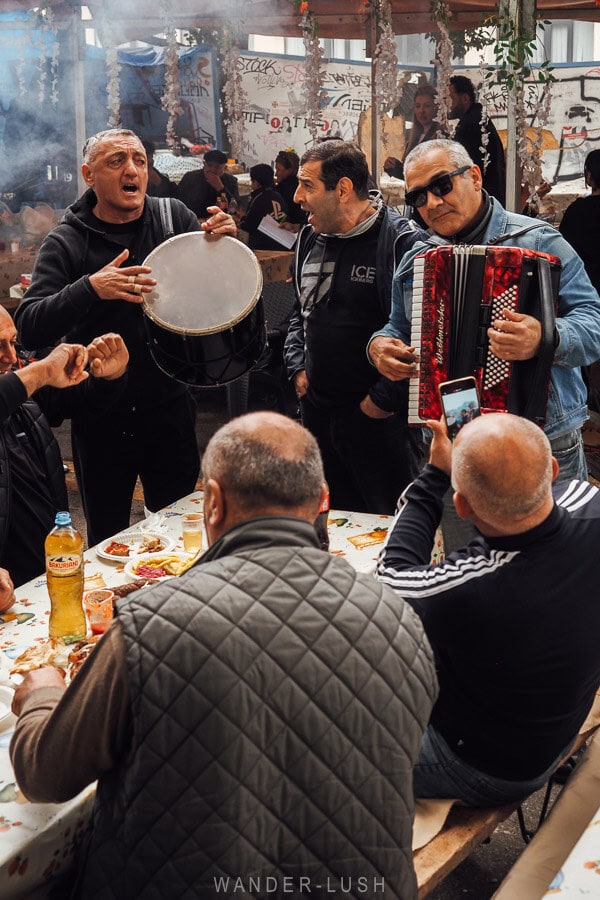
With the smoke rising from the grills and the golden light filtering through the trees, it was incredibly atmospheric – and very photogenic.
We weren’t the only foreigners there, but there were few enough of us that we attracted some attention with our cameras as we walked laps up and down. People repeatedly asked us to take their photos, waved us over to their tables, and made space for us to join them.
Festival highlights: My suggested Tbilisoba itinerary
This is the route I recommend following for Tbilisoba based on my experience in 2026.
10am: Start on Khetagurov Street
Begin the day on Kosta Khetagurov Street, when the tables are being arranged and everyone is busy preparing food for the day. Markets will already be set up, and you can see people shopping for produce and preparing pelamushi.
12pm: Arrive at Orbeliani Square for the official opening
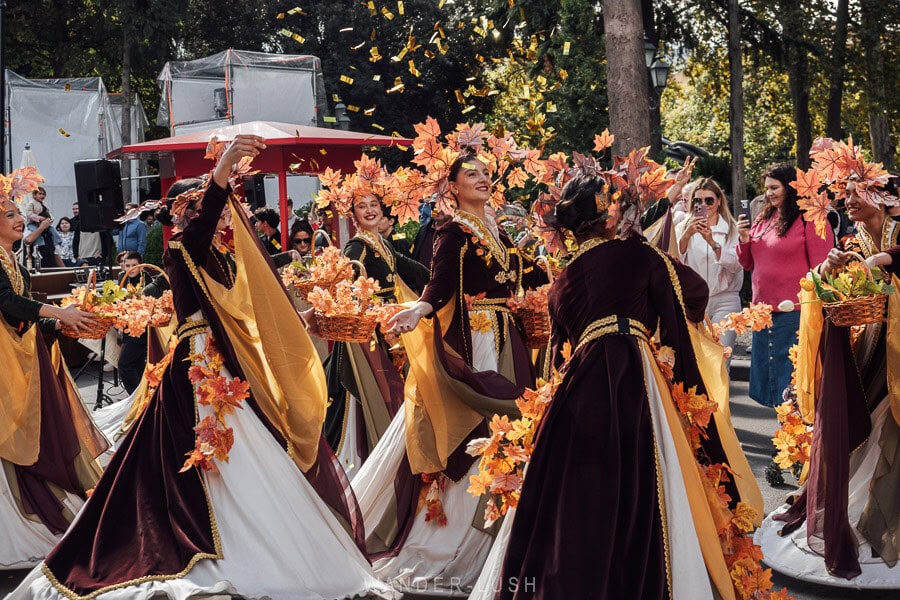
Next, head to Orbeliani Square for the official Tbilisoba opening parade. In 2026, we saw a marching band accompanied by dancers dressed in autumn-themed regalia. The parade takes place on both days of the festival, Saturday and Sunday.
As soon as it finishes, go straight to the nearby Orbeliani Palace for the Gardenia Shevardnadze Autumn Tbilisi installation – an arrangement of flowers, fruit and seasonal produce organised by the Tbilisi garden centre (pictured below right). In 2026, the gates opened just after midday. It gets extremely busy here later in the day, so it’s best to come early.
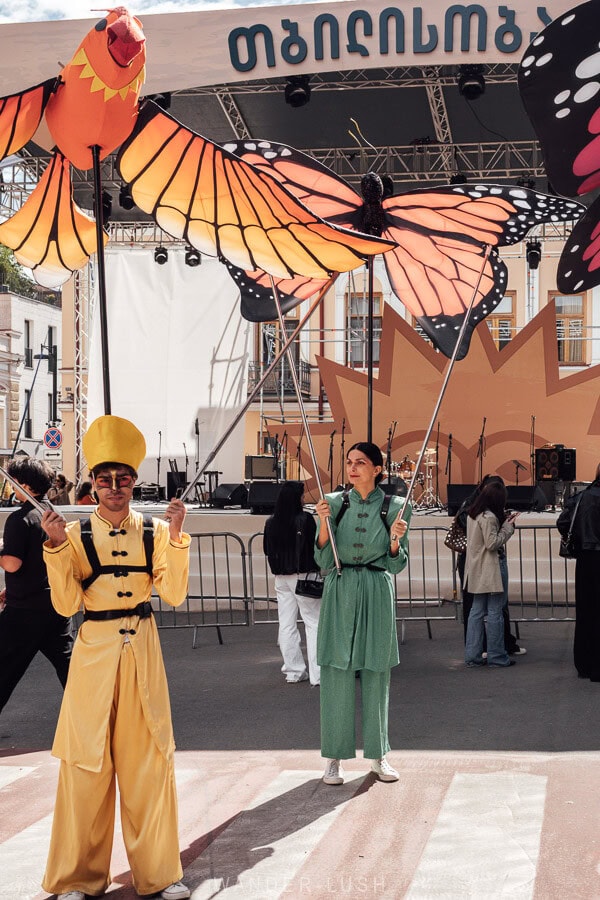
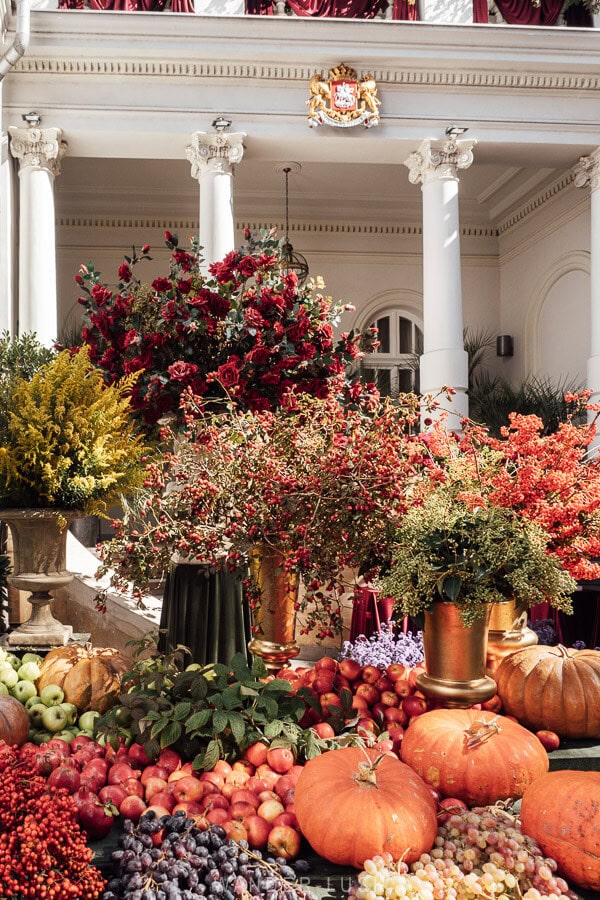
There are other autumn-themed installations and produce displays around Orbeliani Square that you can photograph, too.
1pm: Head to Rike Park for chidaoba
From Orbeliani, continue to Rike Park to watch a few bouts of chidaoba, traditional Georgian wrestling.
Two young men face off in a circular sand arena, with hay bales and carpets laid out around the edge for spectators. A three-piece ensemble plays throughout the bouts, traditionally on two zurnas (wind instruments) and a doli (drum). The music is an integral part of chidaoba, setting the rhythm and adding to the excitement as the wrestlers attempt to throw each other.
Chidaoba was recognised by UNESCO as Intangible Cultural Heritage in 2018, and it’s one of the traditional performances I would definitely make time to see.
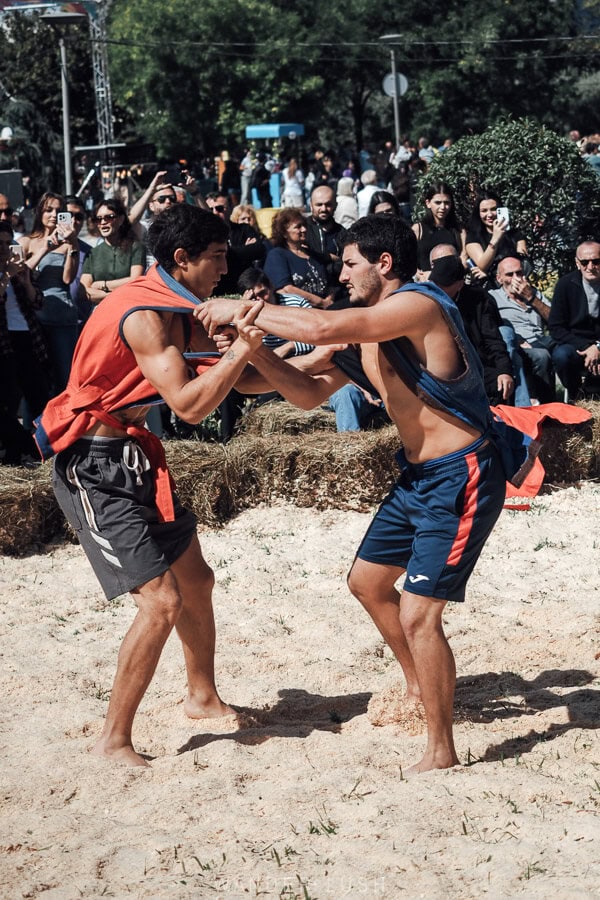

Rike is one of the main venues so while you’re there, take a walk through the park to see more decorations and browse the handicraft market.
2pm: Walk through Leghvtakhevi Gorge & stop for lunch
Leaving Rike, cross Metekhi Bridge to make your way towards Abanotubani. In 2026, vintage cars and motorbikes were set up along the bridge, which was closed to traffic.
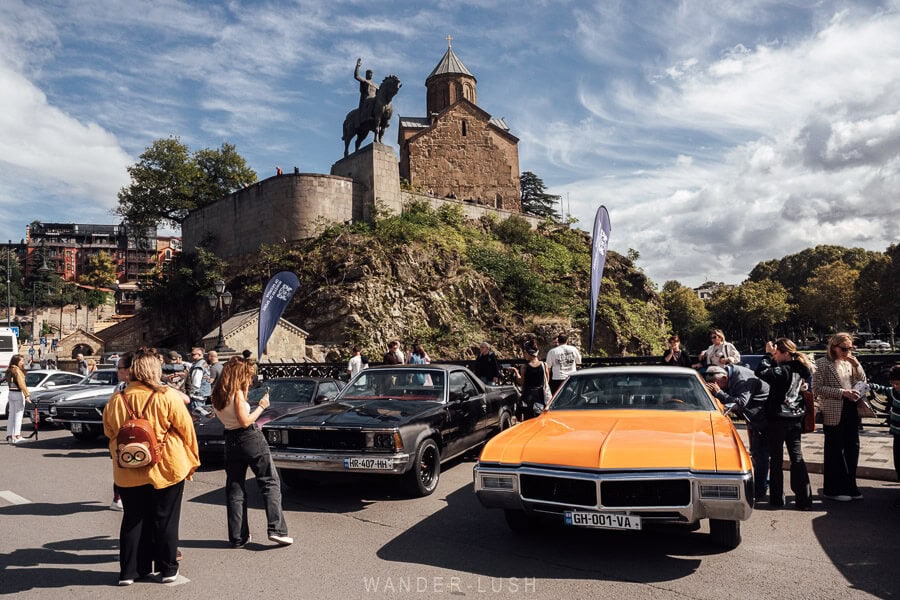
At the other end, there is an international market amidst the sulfur baths, with different countries represented with their own stalls. Then in Leghvtakhevi Gorge behind the baths, clusters of costumed actors were dotted around, performing small scenes from city life (collecting water, toasting at a supra table) and demonstrating traditional trades.
For lunch, Culinarium Khasheria is steps from the baths and normally gets into the spirit of Tbilisoba with sweet decorations to complement its seasonal dishes.
4pm: Visit Georgian House
After lunch, take a taxi back across the river to visit Georgian House. As mentioned, this restaurant hosts a free Tbilisoba event, with a gorgeous display in the courtyard, food, wine and antiques.
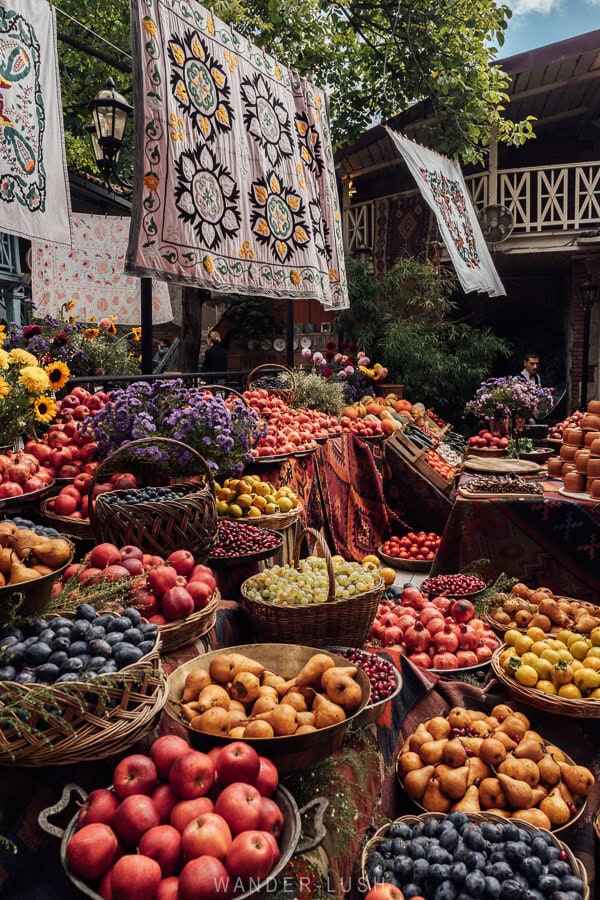
5pm: Finish back on Khetagurov Street
Finally, return to Kosta Khetagurov Street once the party is properly underway.
By now, tables should be full, the grills dialled up to full volume, and the musicians moving through the crowd. This is sure to be the highlight of the day, so give yourself plenty of time to soak up the atmosphere.
Finally, Rike Park is just a short walk from Khetagurov Street if you want to catch an evening performance on the big stage.
Practical tips for Tbilisoba
When to go: The festival starts at 12pm midday, with opening performances and a relaxed feel before it gets too crowded. Most food stalls don’t really get going until 1-2pm. Sunday evening tends to have the liveliest atmosphere. The festival zones close at 11pm.
Festival program: The full schedule for Tbilisoba is usually released by Tbilisi City Hall in the days leading up to the festival. In 2026, it was published online two days beforehand, and printed programs (pictured below right) were also available at the event. I have a Google Alert set up for ‘Tbilisoba’ so that I receive any updates about the dates/programs in my inbox as soon as local news starts reporting it online.
Admission: Free (no tickets or registration required for any of the event zones).

Getting to the festival: Several streets in central Tbilisi are closed to traffic during the celebrations, particularly around Europe Square, Metekhi Bridge and Abanotubani. Public buses continue operating, but some routes are diverted. Bolt taxis are still available.
Cash or card: Most vendors at the official food and souvenir stalls have terminals, so you can pay with card (or contactless) for most things. On Khetagurov Street, cash is required.
What to eat: Mtsvadi (Georgian barbecue) is a Tbilisoba staple. Also look out for pelamushi grape pudding (pictured below left), freshly made churchkhela, and Georgian wine.


Toilets: Free portable toilets are set up around the main festival areas.
Smoke: Be prepared for a lot of smoke coming off the grills. You will definitely carry the smell of barbecue with you for a while – and the smoke can be a bit overwhelming when it gets in your eyes and throat.
Where to stay on festival weekend: I recommend staying on the Left Bank, in Chugureti or Avlabari, so you can walk to the different festival venues without having to deal with traffic.
Is Tbilisoba worth planning your trip around?
If you’re going to be in Tbilisi on festival weekend, I absolutely recommend setting aside some time for Tbilisoba. But would I plan an entire trip to Georgia around it? Probably not.
Tbilisoba is a great opportunity to see the city in a different light, with streets closed to traffic, public spaces transformed by installations, and families out enjoying the celebrations. There is plenty to see and do, especially if you’re interested in Georgian food and traditions, and street photography.
But you do need to manage your expectations. Tbilisoba is a modern, highly organised event rather than a grassroots folk festival – with a side of the spontaneous, convivial atmosphere you might be hoping for.
If you’re visiting Georgia in early October, it’s worth arranging your time in Tbilisi to coincide with it. But I wouldn’t change flights or make major sacrifices elsewhere in your itinerary just to attend, especially since festival dates aren’t confirmed until relatively late.
Have you been to Tbilisoba? What did you think of the festival? I’d love to hear your impressions in the comments below.
You might also be interested in…
- The ultimate Georgia itinerary: Four detailed & custom-designed itineraries
- Georgia Travel Guide: All of my 200+ posts plus my top travel tips
- Georgia travel tips: 25 essential things to know before you go
- Places to visit in Georgia: 50+ unique & underrated destinations around the country
- The best things to do in Tbilisi: Favourites, hidden gems & local picks
- 35+ best restaurants in Tbilisi: Where to eat Georgian food
- 15 best day trips from Tbilisi: With detailed transport instructions
- The best time to visit Georgia: Month-by-month guide to weather, festivals & events
All comments are moderated and may take a little while to appear. If you’ve submitted your comment, I’ve got it!