A complete, no-nonsense guide to using public transport in Tbilisi.
Tbilisi has an excellent public transit system that makes it easy and affordable to get around the city.
Between the two underground metro lines, the city bus and minivan network, four cable car ropeways and one funicular, you can get just about anywhere you need to go using public transport in Tbilisi.
This detailed guide for first-time visitors – updated and accurate for 2026 – covers everything you need to know, from buying tickets to etiquette tips, how to check bus schedules, and more.
It also explains how to use the new Travel Card to save money.
→ Watch it on YouTube: Tbilisi Public Transport explained
Please note: This post contains affiliate links, meaning I may earn a commission if you make a purchase by clicking a link (at no extra cost to you). Learn more.
Are you planning a trip to Tbilisi?
Here are a few quick links to my favourite accommodations, tours & services.
Where to Stay in Tbilisi:
- The House Hotel Old Tbilisi – wake up in your own typical Tbilisi courtyard.
- Communal Hotel Plekhanovi – my favourite boutique hotel has a wine bar & gift shop.
- Vagabond B&B – budget-friendly option for solo & social travellers.
- Unfound Door Design Hotel – luxe rooms set inside a historic mansion in Chugureti.
- Fabrika Hostel & Suites – popular creative space & co-working hangout.
Best Tbilisi Tours & Day Trips:
- Tbilisi Food & Drink Tour – a food-themed walking tour of the city.
- Day Trip to Kazbegi – with plenty of stops along the Georgian Military Highway.
- Off-road Adventure to David Gareja & Udabno – use WANDERLUSH for 10% off.
- Kakheti Wine Experience with Eat This! Tours – mention WANDERLUSH for 5% off.
- Day trip to Northern Armenia – another stamp in the passport!
Last-minute Private Transfers in Georgia:
Plan the perfect mini road trip & find a professional driver on GoTrip.ge. The price is locked in when you book, and you can stop wherever you want along the way.
Go Your Own Way:
Car hire in Georgia doesn’t have to be expensive – I regularly use Local Rent to find great deals. Pick-up & drop-off from any address in the country for complete flexibility.
Tbilisi public transport: Quick overview of operating hours & fares
Public transport in Tbilisi operates on a flat-fare system. There are no zones, no distance calculations, and no time limits.
The metro, buses and minibuses all cost 1 GEL per ride (less than 50 US cents), with most services running from 6/7am until midnight daily.
The Rike Park-Narikala Cable Car is more expensive at 2.5 GEL per ride, while the Mtatsminda Cable Car and Funicular cost 12 GEL one-way. All three of these special services have their own operating hours.
|
Service |
Hours |
Fare |
|---|---|---|
|
Metro |
6am-midnight daily |
1 GEL |
|
City buses |
7am-midnight daily |
1 GEL |
|
Minibuses |
7am-midnight daily |
1 GEL |
|
Cable cars |
Varies (see below) |
1-2.5 GEL |
|
Mtatsminda Cable Car & Funicular |
11am/12pm-late daily |
12 GEL |
Transport runs 365 day a year, with extended hours on popular holidays.
Children under 5 travel free on the metro and buses.
Student discounts are only available to students enrolled at Georgian universities. International student cards are not accepted.
How to pay for public transport in Tbilisi
Tbilisi’s transport system is completely cash-free. There are no coin machines on the buses, and no metro tokens available. Bus drivers do not sell tickets on board.
There are three ways to pay:
- Using a bank card or mobile wallet
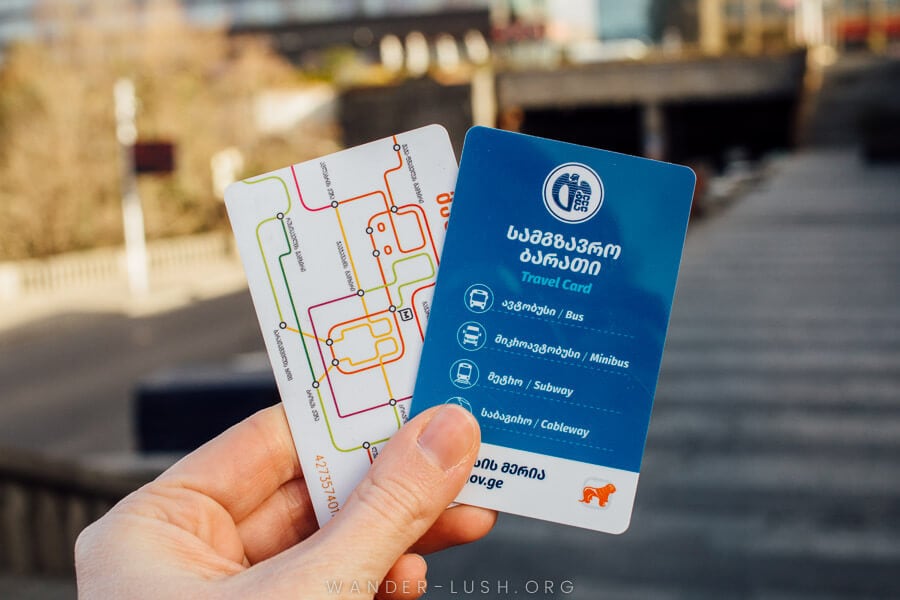
- Using a rechargeable MetroMoney card (below left)
- Using a reloadable Travel Card (below right)
Regardless of how you pay, you only need to tap on once when entering the metro / cable car station or boarding the bus. You do not have to tap off when you finish your ride.
- Metro & cable cars: Tap at the turnstiles before entering.
- Buses: Tap on the electronic reader on board (usually located at the front, back & in the middle of the bus).
- Microbuses: Tap on the electronic reader opposite the driver when boarding.
Ticket inspectors are common at bus stops around Tbilisi. If one approaches you, simply tap the same card you used to pay on their handheld terminal. Travelling without a valid ticket carries a 20 GEL fine, payable at any bank branch or paybox terminal.
International Bank Card / Mobile Wallet
If you are only in Tbilisi for a short time, you can use your debit card from home (or mobile wallet) to pay for the bus, metro, and some of the cable cars. When you pay with an international card, the fare is slightly higher – approximately 1.50 GEL per trip.
Wise, for example, works perfectly for transport in Tbilisi – and if you have a Georgian lari balance, there are no additional fees.
This is especially handy for getting into the city on the airport bus when you first arrive in Tbilisi.
If you have a long stay or you plan to use transport frequently, I recommend buying one of the two rechargeable transport cards once you reach the city centre.
White MetroMoney Card
Tbilisi’s original transport card, the white and rainbow-coloured MetroMoney card (pictured below left), is the best option for most travellers.
It can be used on the metro, city buses, city micro buses, and on three of the four cable cars (Rike Park–Narikala, Turtle Lake, and Bagebi). It cannot be used on the Mtatsminda Funicular or the Mtatsminda Cable Car.
The same MetroMoney card can also be used for city buses in Batumi.
Where to buy a rechargeable MetroMoney Card
MetroMoney cards are available to buy from the cash desks located inside all metro stations (not the orange Bank of Georgia desk, but the metro station cashier with the ‘MS’ sign). You can also buy one from the Narikala Cable Car bottom station in Rike Park.
The card costs 2 GEL. MS desks accept both cash and card payment. You do not need to show ID.
You can get a refund on your 2 GEL deposit by returning your card and paper receipt to the cashier desk within 30 days of purchase.
How to use your MetroMoney Card
The MetroMoney card is very easy to use: Whether you’re taking the bus or the metro, you only need to tap once when boarding (no need to tap off).
As you exit the metro, the gates will automatically open to let you out.
Transfers between the metro and buses are free within 90 minutes. Just tap your card again when boarding – no extra charge.
Sharing is allowed, so multiple people can use the same MetroMoney card. I would recommend keeping it to a maximum of three passengers per card.
How to recharge your MetroMoney Card
Whenever you tap on, 1 GEL will be deducted from your balance. Your new balance will also be displayed on the screen. You can check your balance anytime using an orange paybox (see below).
When you buy a new MetroMoney card from the cash desk, you can add to your balance at the same time. Going forward, it is much easier to recharge using a Bank of Georgia Express paybox rather than going back to see the cashier.
Payboxes are those freestanding plastic ATM-like machines you see on the street and inside the metro. Only the orange and white Bank of Georgia Express machines will work for transport cards in Tbilisi.
To use the paybox:
- Use the flag icon in the top right corner of the screen to toggle to English.
- Select ‘Transportation Services’ from the main menu.
- Select ‘Transport Card Top Up’, and swipe your card on the reader.
- Insert the exact amount you want to top up with into the machine – both cash and coins (50 tetri, 1 & 2 GEL) are accepted. No change is given.
- Follow the directions on the screen to complete the transaction.
Tip: Topping up at the cash desk inside the metro is a convenient way to break 100 GEL bank notes.
Blue Travel Card
In February 2022, Tbilisi launched a new subscription scheme for public transport. The blue-coloured Travel Card (pictured above right) is used to load subscriptions, and is most suitable for frequent travellers.
If you plan to make four or more trips per day, then purchasing a Travel Card could save you some money.
The blue card can be used on the metro, buses, city mini buses, and on some cable cars. Importantly, this card will not work for the Rike Park–Narikala Ropeway – only the white MetroMoney. Like MetroMoney, it is not valid for the Mtatsminda Funicular or the Mtatsminda Cable Car, either.
The following subscriptions are available:
- 1 day (24 hours): 3 GEL
- 1 week: 20 GEL
- 1 month: 40 GEL
- 3 months: 100 GEL
- 6 months: 150 GEL
- 1 year: 250 GEL
All subscriptions are capped at 20 rides per day. The card is reusable, and you can switch between different subscriptions as you wish.
Where to buy a Blue Travel Card
As with the MetroMoney card, the Travel Card also costs 2 GEL and is available from any MS cash desk inside the metro. You do not need to show ID.
If you want to use the airport bus 337 to get to the city when you first arrive in Tbilisi, you can buy a Travel Card at the Bank of Georgia Express desk inside the airport arrivals terminal. This office does not sell MetroMoney cards – only Transport Cards. In my opinion, it’s easier to pay for your first bus trip into the city using your bank card from home.
When you buy a card, the cashier will ask you to nominate your desired subscription. Going forward, you can then use any Bank of Georgia Express paybox (those same orange and white machines) to reload a new subscription. You are not locked into any plan – you can change at any point, e.g. start with one day, and change to one week.
To use the paybox:
- Use the flag icon in the top right corner of the screen to toggle to English.
- Select the ‘Subscription’ option on the home screen.
- Select ‘Buy a new subscription’.
- Choose your subscription from the menu.
- Follow the directions on the screen to complete the transaction.
A new card takes a few minutes to activate, so if you try to use it right away, you will be rejected with a loud ‘uh-uh’ sound. Wait five minutes before tapping on for the first time.
You can also use the paybox to check your subscription dates and see when your pass runs out. Once it has lapsed, you will need to re-subscribe.
How to use your Travel Card
The new card works much the same way as the old MetroMoney card: Tap once on the electronic reader as you board the bus or enter the metro/cable car station.
There is no 90-minute transfer period for these cards.
And unlike the MetroMoney card, you can’t use the same Travel Card for more than one passenger. If you try to tap twice in quick succession, you will be rejected. Sharing is not allowed – each person needs to purchase their own card.
Mtatsminda Park Card
The Mtatsminda Park Card is a separate rechargeable card that works for services tied to Mtatsminda Mountain in Tbilisi. Specifically, it is used for the Mtatsminda Funicular and the Rustaveli Avenue–Mtatsminda Cable Car. Neither the white MetroMoney Card or the blue Transport Card – or any bank card for that matter – will work on these services.
If you are visiting the amusement park or heading up for a sunset view, then you can use the same card to purchase tickets for the various rides and the Ferris Wheel.
The Mtatsminda Card costs 2 GEL and can be purchased from the cash desks located at the bottom and top cable car and funicular stations.
Multiple people can share the same card. You can add to your card balance at the cash desks, or by using the automated machines inside Mtatsminda Park.


Which apps to use for public transport in Tbilisi
Google Maps is very reliable for route planning in Tbilisi – at least for short journeys around the centre. I have been using it for the past couple of years with no issues.
The metro, city buses, and minibuses are all integrated into the app. Each transport mode has its own colour – red for the metro, green for city buses, and blue for microbuses. When you’re planning a journey with connections, you will see these colour codes are used in the directions panel and on the map itself.

TTC (Tbilisi Transport Company) is the official app for public transport in Tbilisi and is an alternative option. It supports English, and uses the same colour code system. You can also use this app (or the TTC website) to check bus schedules, track buses in real-time, or buy e-tickets.

The Tbilisi Metro
Built in 1966, the Tbilisi Metro has two lines and 23 stations.
The red Akhmeteli–Varketili Line runs north-south and serves central stations including Liberty Square (for Freedom Square and Old Tbilisi), Marjanishvili (for Fabrika), Station Square (for the train station), and Didube (for the main bus station).
The green Saburtalo Line runs east-west and serves six stations near the railway station and in Saburtalo district on the western side of the river.
The two lines intersect at Station Square, where there is an underground interchange.

The metro is very easy to navigate, with English-language signage on the platforms and bilingual station announcements on board the trains. With the exception of the Station Square interchange, stations only have one platform serving trains in both directions – so it’s hard to go too wrong.
The metro operates every day (including Sundays and holidays) from 6am until midnight. Services are very frequent, especially at peak hour.
Majority of the metro stations in Tbilisi are underground and accessed via long escalators. These escalators move very fast, so watch your step! The deepest is Rustaveli Station, at 120 metres.
Photography inside the metro is prohibited, and the security guards that patrol every platform do not like cameras. (It’s a shame, because many of the stations are decorated with interesting Soviet-style bas-reliefs and mosaics.) Discrete phone photography is normally OK.


Metro cars have plastic seats and handles you can grab onto when standing. Like the escalators, the trains go extremely fast. The old carriages are loud and bumpy. There are now plans to upgrade all the cars on the metro within the next couple of years.
You can still get mobile coverage in most underground stations, but reception drops out when the train is moving.
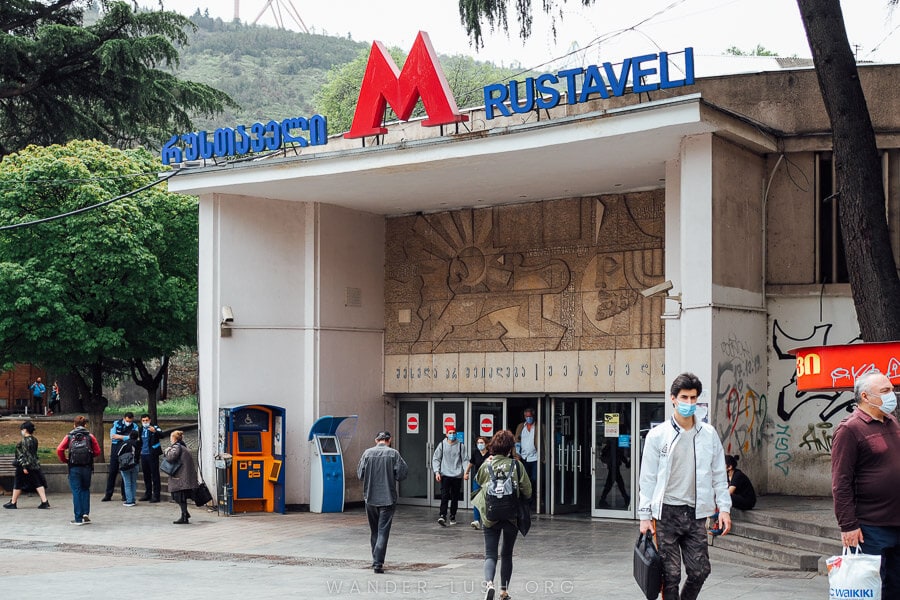
Above ground, station entrance points are marked with a red ‘M’ sign (not the green underpass sign pictured below). Most platforms only have one exit, with multiple staircases up to street level. There is basic signage at every station pointing the direction to major landmarks – but sometimes you just have to take a guess at which exit you need.

Tbilisi city buses
Tbilisi city buses fill in the gaps where there are no metro stations, and are especially useful when travelling around Vera-Vake and to further-flung spots such as the Chronicles of Georgian monument.
Buses start at 6/7am and run until midnight, with departures every 10-40 minutes approximately depending on the route.
Every bus route in Tbilisi has a three-digit route number. Routes that start with a 2 or a 3 are large buses, while routes that start with a 4 or a 5 are a different system of minibuses (microbuses), as covered in the next section below.
Buses only stop at designated stations, which are usually marked with a shelter, a seat, and an electronic display. At the bottom of the screen there is a unique number that you can SMS to get a status update on the buses due at that stop. Or you can use the TTC app to track the buses in real-time. In my experience, buses tend to run true to schedule for the most part, and delays are not all that common.

When boarding the bus, try to use the middle or back door. Bus drivers do not handle tickets or payment – there is no need to interact with the driver. Simply tap on at one of the readers once you have boarded to pay the 1 GEL fare.
Some buses have interactive maps that you can use to track your journey. Station announcements are made in Georgian and English – but not on all services. The larger buses are modern with AC, USB charging ports, and wheelchair-accessible ramps.
Drivers tend to stop at every station so there’s no real need to hail the bus or press the bell to get off. If you’re travelling at night or if there aren’t many people on board, you can press the bell just to be safe.

Tbilisi minibuses
Marshrutka minivans are the most popular form of intercity transport in Georgia. Tbilisi also has its own network of minibuses that work within the city limits, supplementing the larger coach buses on certain routes.
As a tourist, I have only used these blue-grey city microbuses a handful of times. They are more for locals who live in the outer suburbs and need to travel to areas that aren’t on the main bus network.
These route numbers always start with a 4 or a 5.
The fare for these is the same – 1 GEL – payable with any card. Maps and timetables can be found on Google Maps and TTC, and these minibuses also show up on the electronic displays at bus stops.
These vans don’t always stop at every station, so you need to wave down the driver to board and alert them when you want to get off. If you want to ask the driver to stop, say ga-a-che-ret.
In 2025, a new fleet of minibuses appeared on the streets of Tbilisi. These compact, white and black minibuses connect Tbilisi with the city of Rustavi to the south. You can use these Rustavi Buses within Tbilisi, but the flat fare might be higher at 2-2.5 GEL.
Tbilisi cable cars & the funicular
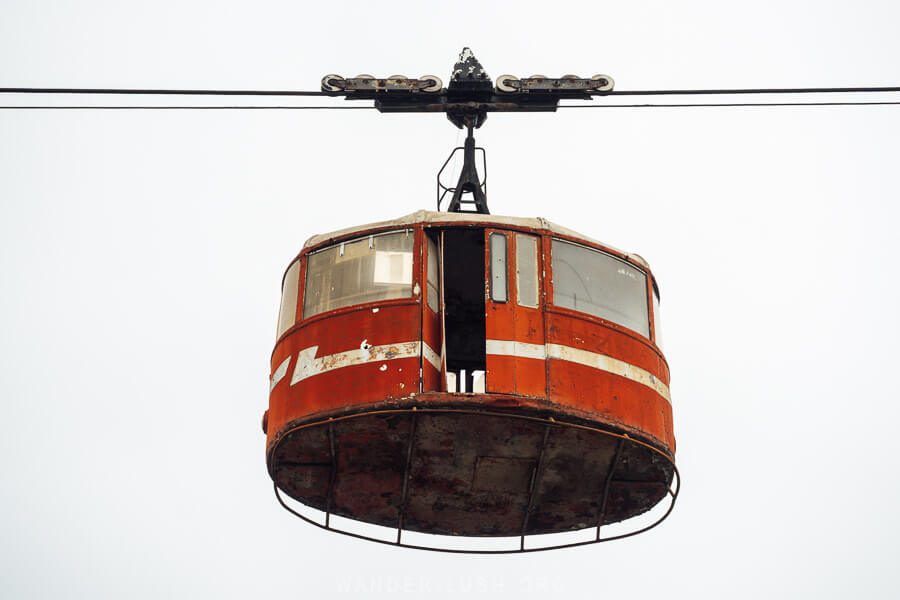
If you’re going up into the hills to visit landmarks such as Turtle Lake, Mtatsminda and Narikala Fortress, a fun way to travel is by cable car. Tbilisi’s Soviet-era ropeways are attractions in and of themselves.
There are four working ropeways in Tbilisi – including one line that relaunched in October 2024 after being closed for more than 30 years. There is also one funicular.
Rike Park–Narikala Fortress cable car
This modern ropeway connects Rike Park with Narikala Fortress and the National Botanical Garden. The ride only lasts a minute or two, but the views are quite spectacular as the cabins cross the river and sail above parts of the Old Town.
- ⏱️ 10am-midnight (summer)
- ⏱️ 10am-10pm (winter)
- 🎫 2.5 GEL (MetroMoney Card or debit card)
Find out what you can do on Narikala Hill in this guide I wrote to visiting the fortress and its surrounds.

Rustaveli Avenue–Mtatsminda cable car
The cableway linking Rustaveli Avenue and Mtatsminda was originally launched in 1958. After being closed for 34 years, it finally reopened on October 18, 2024.
The cable car starts from behind the Academy of Sciences building on Rustaveli Avenue and terminates at Mtatsminda Amusement Park. It is more of a tourist attraction than a form of public transport – hence why you need the special Mtatsminda Park Card to use it.
The lower cable car station, an example of Soviet monumental architecture designed by Konstantine Chkheidze, is an incredibly lovely building with tall windows, decorative ironwork, and a stunning double-helix staircase. I think it’s worth paying for the cable car just to go inside!
The journey on the 845-metre-long cableway takes just over four minutes. It moves very slowly! The views are stunning, and because the carriages are new, the glass is still nice and clear. Some have a glass bottom.
- ⏱️ 11am-11pm (summer)
- ⏱️ 12pm-10pm (winter)
- 🎫 12 GEL + 2 GEL card fee
Kids under 6 years old ride for free.

Tbilisi Funicular to Mtatsminda
The Tbilisi Funicular was built in 1904. It also takes visitors up to Mtatsminda Amusement Park, Restaurant Funicular, and Tbilisi TV Tower.
Halfway up the mountain, the funicular stops at Mamadaviti and Mtatsminda Pantheon, one of my favourite churches in Tbilisi and a must-visit for the city views and sculptural gravestones.
Personally, I think the view from the cable car beats the funicular. The cable car is more conveniently located, too – to get to the funicular bottom station (another beautiful heritage building), you have to walk uphill.
Again, you need to buy a Mtatsminda Park Card for 2 GEL in order to use this service.
- ⏱️ 11am-11pm (summer)
- ⏱️ 12pm-10pm (winter)
- 🎫 12 GEL + 2 GEL

Turtle Lake Ropeway
This cable car runs from the edge of Vake Park to Turtle Lake on the western side of Tbilisi. At the top, you can visit Turtle Lake, the Open Air Museum of Ethnography, and the fabulous Rachis Ubani, one of my favourite restaurants in Tbilisi.
This cable car was inaugurated in the Soviet period and still has its retro blue cabins. Riding it is a bit of a blast from the past. The views are excellent as you sail over Vake Park and the WWII Monument.
- ⏱️ 10am-10pm daily
- 🎫 1 GEL

Tbilisi State University Maglivi–Bagebi Ropeway
The Bagebi–Maglivi Ropeway also dates to the Soviet era and has retro rectangular gondolas. It reopened in April 2021, connecting the Tbilisi State University campus on Maglivi Hill in Saburtalo with the former student dorms in Bagebi.
There is nothing much to see around this area, so it’s just a joyride: The line runs 320 metres over the Vere river gorge and is quite spectacular. If you are interested in Brutalist architecture, do hop off to see the dormitory buildings.
- ⏱️ 8am-8pm daily
- 🎫 1 GEL

Using taxis in Tbilisi
Taxis are very affordable in Tbilisi and a great option for longer journeys, saving time – or for travellers with limited mobility. Always book through an app rather than hailing a taxi on the street.
My Tbilisi taxi guide covers the best taxi booking apps (and the ones you should avoid), plus handy tips for using taxis in the city and around Georgia.
Etiquette when using public transport in Tbilisi
Here are a few quick etiquette tips for using the metro and buses and Tbilisi:
- You can board Tbilisi buses from any door (try to use the middle or back).
- When boarding the bus, let other passengers exit before you try to get on.
- Don’t try to speak to the bus driver.
- It’s polite to give up your seat for older people or women.
- If you’re standing near the ticket machine, it’s not unusual for someone to hand you their transport card (or even their wallet) and ask you to tap on for them. If the bus is crowded, don’t be afraid to ask someone else to do the same for you.
What is the best way to get to/from Tbilisi Airport?
City bus 337 runs between Tbilisi Airport and Central Railway Station via Freedom Square. At just 1 GEL, it’s by far the cheapest way to travel to/from the airport.
This bus is no longer a 24-hour service – it runs from 7am-11pm (airport to city) / 6am-10pm (city to airport).
Use your bank card from home to pay for a single bus fare (1.5 GEL), or purchase a Transport Card from the Bank of Georgia desk inside the airport terminal (2 GEL + 3 GEL for a daily subscription).
If you are arriving in the early morning or you have heavy luggage, it’s much more convenient to pre-book an airport transfer. I use (and highly recommend) GoTrip. They charge a very reasonable ~19 USD for this service, including meet-and-greet inside the arrivals hall and drop-off at any address in the city.
Learn more about GoTrip here (including how you can use it to travel safely anywhere in Georgia) or pre-book your airport transfer here on the website.
What is the best way to get to/from Tbilisi train station?
The entrance to Station Square metro is right beside the main entrance to Tbilisi Central Railway Station, making it easy to step straight onto the metro.
Both the Saburtalo (green) and Akhmeteli–Varketili (red) Lines stop here, so you can travel almost anywhere in the city for just 1 GEL.
What is the best way to get to/from Didube bus station?
Didube Bus Station (AKA Okriba) is the main station for marshrutka vans and shared taxis to Mtskheta, Gori, Kutaisi, Batumi, Kazbegi, and lots of other destinations around Georgia.
Again, there is a metro station nearby: Didube Metro Station, which is on the Red Line. This station is above ground. To get to the platforms from the bus area, walk back behind the market and enter through the glass doors.
More transport tips for Tbilisi & Georgia
- How to use taxis in Tbilisi
- How to get from Tbilisi Airport to the city
- How to get from Kutaisi Airport to the city
- Intercity transport options in Georgia
- Guide to using marshrutka vans to get around Georgia
- How to use trains in Georgia
- Guide to using GoTrip, my favourite long-distance transfer service
- Tips for hiring a car and self-driving in Georgia
Detailed transport guides for Georgia
- How to travel from Tbilisi to Batumi
- How to travel from Tbilisi to Sighnaghi or Telavi (Kakheti)
- How to travel from Tbilisi to Kazbegi
- How to travel between Tbilisi and Kutaisi
- How to get to Borjomi from Tbilisi
- How to get to Gudauri ski resort from Tbilisi
- How to travel to Bakuriani from Tbilisi
- How to get to Mestia & Svaneti from anywhere in Georgia
- How to travel to Vardzia Cave Town from anywhere in Georgia
More Tbilisi posts you’ll love
- Georgia Travel Guide – all my 200+ posts for Georgia
- 25 Tbilisi travel tips – essential reading for first-timers
- The ultimate Georgia itinerary – the best of Tbilisi & beyond in 1-4 weeks
- How to plan your Caucasus travel itinerary – discover Georgia, Armenia & Azerbaijan
- What to pack for a trip to Georgia – and what to wear in Tbilisi
- How to get from Tbilisi airport to the city – 5 best transport options
- The best things to do in Tbilisi – the ultimate insider’s city guide
- Where to stay in Tbilisi – best neighbourhoods & accommodations
- The best restaurants in Tbilisi – where to find the best Georgian food
- The best cafes in Tbilisi – for coworking, coffee & more
- The best breakfasts in Tbilisi – cafes that open early
- The best gift shops in Tbilisi – where to buy authentic souvenirs
- The best walking tours in Tbilisi – discover the city by foot
- Tbilisi’s best walking streets – architecture, people-watching & street photography
- The best boutique hotels in Tbilisi – art hotels, wine hotels & more
- The best hostels in Tbilisi – accommodation on a budget
- Visiting Gulo’s Spa – the best sulfur bath in Tbilisi
- Visiting the Dezerter Bazaar – Tbilisi’s incredible green market
As many have said your blog is amazing! And Thankyou for answering all my emails. I just wanted to ask, you said you can buy a travel card at airport from the bank of Georgia desk. Can you purchase a metro money card there?
And I don’t suppose you have any idea when they open in the morning? Plus does the 337 bus run from 6 or 7 am? Thankyou Lynn hardy
I hope all is good for you.
Hi Lynn, I was just at the airport recently and asked staff my slew of questions again!
No, you cannot buy a Metromoney card, only a Transport Card.
The desk will be open early – if there are flights landing, it will be staffed.
The first bus leaves the airport at 7am.
Hi, Emily.
Thank you so much for all the effort to create lots and lots of information about Georgia, Azerbaijan, and other countries. Helped me and my wife so much to planning our trip.
Anyway, we are planning to visit Tbilisi & Batumi around February or March for 1 week next year with our 1 year old baby boy. May I ask if it’s okay to bring folded baby stroller into the bus/metro in Tbilisi & Batumi since it might be inconvenience for others?
Thank you and warm greetings from Indonesia.
Best Regards,
Alveno & Family
Hi Alveno, that’s great to hear! It shouldn’t be a problem at all – Georgia is very kid-friendly and usually very relaxed about this sort of thing. Wishing you a wonderful trip!
I’ll be visiting Tbilisi for the first time in 2 weeks and your site has been wonderfully helpful. Thank you!
Thank you, Ling! Wishing you a wonderful trip!
Do you have any idea how easy you have made it for everyone with your oh so detailed Travel tips and guides.
Bless you! Cannot thank you enough for your guidance. Your tips are gold!
Thank you, Jes! That is my goal! Very happy for the feedback.
Hi Emily. Thank you for such a wonderful blog. I have now gone through many travel blogs (incl some from authors who focus on Georgia); however, your style of writing and the breadth+depth that you bring is unparalleled. If every country had such a blog, DIY travel would become so much easier and fun!
I have a query on the blue travelcard, specifically the cost of the card (2 GEL). Once my subscription is over, can I return the card and get a refund for 2 GEL like I can in Metromoney card? Thanks in advance for your help
Thanks so much, John! Yes I believe you can also get your deposit back for the blue card. Just hang onto your receipt.
Thanks a lot for this fruitful article. I am still confused about the ransportation card.
My trip will be only 7 days including Tbilisi and Batumi, I will use metro, buses and cableways. Thus, should I buy travel blue card OR metromoney or both?
Hi Perla – either, not both. You could get a MetroMoney and pay per trip, or get a blue card and load up a one-week subscription.
Hi Emily, hope you are doing well. I should say your blog is fantabulous. There’s tons of info about Georgia. We went 2 times to Georgia earlier and will be travelling for the 3rd time next month Jan 2024 same country, different cities. I am a huge fan of your blog, completely relied on your articles for all my Georgia trips.
Just need a quick assurance from you. We are travelling (Tblisi – Mestia- Gudauri) as a group 6 adults and 2 kids . Our Train from Zugdid to Tblisi will reach at 11:30PM. I want to know is it safe to travel from Tblisi Railway station to Gudauri at 11:30PM, if i book taxi via GOTRIP.GE?
OR Any other suggestion from you?
Hi Manasa, thanks so much! To be completely honest, I would wait until the next morning to depart for Gudauri. It will be dark, likely wet and slippery on the road – and although GoTrip drivers are more cautious in my experience, it’s still not the best idea to drive on a mountain road at night in winter. If it’s possible to spend a night in Tbilisi I would highly recommend you do that.
Hi thank you again for your great blogs on Georgia. I have some confusion regarding Travel cards/metroMoney cards.
i) You mentioned ‘Metro, bus and minibus fares in Tbilisi are all a flat 1 GEL.’ And then I see ‘Prices for the Travel Card: 1 day: 3 GEL, …) So if I buy a Travel Card (or a MetroMoney card), and let’s say recharge for 3 GEL, will I be able to use the card for same day any number of times? Or it will only allow 3 trips (1 GEL for each trip)
ii) Is MetroMoney card applicable for Buses/Minibuses as well (apart from Metro and Ropeways)
iii) And is it possible to buy 1 Day Travel Card (3 GEL) for future days. For example, if today is 15th Aug, can I buy travel card for 16,17,18 August too (so that I don’t have to buy card again and again). As I will be in Georgia for 4 days only.
Hi Ammar, the Travel Card (3 GEL for 24 hours) is for unlimited trips (capped, as I mention in the post).
MetroMoney works for buses and microbuses, yes.
You cannot recharge for a future date, the 24 hours kicks in from the moment you purchase the subscription. In this case I would suggest looking at the one-week subscription.
I hope this answers your questions!
Does google Map’s public transit option work in Tbilisi? read your blog about TTC takes a bit of learning curve, Google map worked well for me before in some other countries before. We are planning a 30 day Georgia and Armenia trip and your site is probably the only resource we need! Thanks for this wealth of info you put together.
Hi Jenny, thanks so much! Yes Google Maps works almost perfectly now – they have improved it significantly in the past few months. Have a wonderful trip!
Worth noting that the Bank of Georgia express pay boxes only work with tap-enabled cards. If you’re an American traveler, it’s very possible that your bank card doesn’t have this feature (indeed, US banks only started incorporating chip technology a few years ago—a standard feature everywhere else).
Interesting Sean, I wasn’t aware of that. I suppose they don’t work on the ticket machines either? Thank you for the helpful info!
Hi,
Can you buy the 2-lari MetroMoney card anywhere at the airport terminal upon your arrival WHEN THAT ARRIVAL IS LATE NIGHT? I mean, is the service selling you the MetroMoney (I prefer single rides over the MetroCard subscriptions) open 24/7 at TBS?
Thanks, Orrling
Hi Orrling – yes the Bank of Georgia desk will be open as long as flights are landing. But they sometimes will only sell a Transport subscription card, not MetroMoney. So for your first bus trip, I recommend tapping on with a credit card. Remember the bus is no longer running 24 hours.
Thank you ma’m, and greetings from a gorgeous Tbilisi
hi, i want to report that the new “blue-gey minivan” that substituted the old yellow minibuses are not electric powered, but still with a ICE
Thanks Sman for clarifying!
Hi,
This information was really useful. I used my Dubai Credit card and was successful. Thanks a lot .
Great Sam, that’s really good to know!
Hi Wanderlush,
My husband, 2 year old and me are travelling this June. We were just concerned about the hassle of loading 2 metromoney cards with money every couple of days and not wanting to load too much as well. We would use Bolt depending on how the day has been and how the baby’s mood is.
2 questions please
1) Can 2 individuals use a single metromoney card? Do you tap it twice on the bus and while using the metro do we handover to the next person while at the gate?
2) And do I get a refund of the balance amount on my metromoney card besides the 2 gel of the card itself.
Thanks in advance
Hi Kylie,
Yes, two people can use the same MetroMoney card.
No, the balance is not refundable I don’t think. Just load small amounts, a single ride is only 1 GEL.
Enjoy!
Hi there,
We’re in Tbilisi currently.
On arrival we got the new (blue) travel card
Unfortunately however this is not accepted at the cableways.
For them you still need to get the MetroMoney Card.
So personally I think the new travel card is not worth it for a short stay (we’re here for 12 days and now think the MetroMoney Card would have been a better option since we have to get it anyway for using the cableways)
Hi Simon – yes I agree, unless you to plan to make more than 3 trips in a day then the MetroMoney card is better value.
I was under the impression that it was valid for the Narikala Ropeway but now I see it’s only valid for the Bagebi Ropeway. Thanks for pointing this out – it’s a good point to consider and very helpful for others!
This is a very hepful piece of informative writing. Thank you very much.