Georgia’s popularity as a tourist destination has grown exponentially in recent years. Yet for many who are unfamiliar with the region, travelling in Georgia and the Caucasus is still somehow perceived as unsafe.
Some of these misconceptions stem from Georgia’s geographic location. Others are tied to the country’s past and present geopolitical tensions. And in many cases, it’s simply because Georgia remains relatively unknown on the world stage – and we tend to fear what we don’t understand.
In reality, Georgia is one of the safest countries I’ve travelled to or lived in. I feel safer in Tbilisi than I do in almost any capital city in Western Europe. Whenever I leave Georgia, I have to consciously remind myself to put my guard back up. Living here has lulled me into a sense of security that has almost caught me out on a few occasions when I’m travelling.
Of course that’s not to say there is nothing to be mindful of.
In this post, I’ll walk through some of the biggest safety concerns travellers typically have when visiting Georgia for the first time. I’ll also share practical safety tips based on my experience living and travelling here for several years.
My aim is to help you understand the real risks, put common fears into perspective, and make informed decisions during your visit.
Please note: This post contains affiliate links, meaning I may earn a commission if you make a purchase by clicking a link (at no extra cost to you). Learn more.
Protests, political context & what travellers should know in 2026
My advice in this area is the same as it was in 2025. Georgia has been in the international news frequently over the past few years, and many travellers are understandably concerned about the ongoing protests.
For context: In November 2024, demonstrators started taking to the streets of Tbilisi following Georgia’s parliamentary elections. These demonstrations have continued on a nightly basis, and are ongoing at the time of writing. There are a range of complex issues (and a whole lot of historical context) at play, information about which is readily available online.
It is important to note that protests are not unusual in Georgia. Public demonstrations take place regularly in Tbilisi, particularly during election cycles and in the summer months.
Below are my observations on safety, based on my experience as a foreigner who lives in Georgia and travels around the country regularly.
What is the situation on the ground?
At the time of writing, demonstrations are still taking place in Tbilisi. These are almost exclusively confined to nighttime gatherings along Rustaveli Avenue, near Parliament. Smaller, organised protests have also occurred in other cities around Georgia.
There have been occasional daytime actions in Tbilisi as well, including marches in other parts of the city, short-lived business strikes, and limited attempts to block traffic.
Is there any danger to my personal safety?
Although the first days of the demonstrations were unfortunately marked by violence, gatherings have largely been peaceful since.
For visitors, the main safety consideration is to avoid the demonstration area at night. In practical terms, this means steering clear of Rustaveli Avenue near Parliament after dark.
Outside of this area, there are no heightened safety risks for tourists. Knowing that there is no place on earth that offers a 100% guarantee of safety, relative to other cities, Tbilisi remains extremely safe.
Most official travel advisories reflect this assessment and have not issued anything close to a ‘do not travel’ warning for Georgia. If you have concerns, it’s always sensible to check the guidance issued by your own government.
Are businesses still open? Will I be able to do everything I want to do when I visit Georgia?
Yes – businesses are operating as normal in Tbilisi and across Georgia.
There were some temporary closures at the end of 2024 and start of 2025, mainly affecting bars, clubs and theatres, but these have since reopened. Public transport is running as usual, and tourist attractions continue to operate normally.
Are tourists still welcome in Georgia? Is there any anti-foreign sentiment?
There is no anti-foreign sentiment in Georgia tied to these events. Tourists are not only welcome, but they are actively needed.
Tourism is a vital part of Georgia’s economy, and many businesses have been openly encouraging visitors to return after what has been a difficult year.
Throughout this time, I have never heard a Georgian express a desire for tourists to stay away. Quite the opposite. Most Georgians I know want the world to better understand what is happening in their country, and recognise that tourism plays an important role in maintaining international connection and visibility.
The bottom line:
This is an important moment for Georgia, but the current political situation does not directly concern tourism, nor does it directly impact tourists.
For visitors, the overall safety situation in Georgia remains unchanged. My advice – to exercise common-sense personal safety precautions and to avoid public demonstrations – is the same advice I’ve been giving since I first published this guide in 2020.
While some risk-averse travellers have chosen to cancel or postpone their trips – a decision I fully understand – many others have continued to visit Georgia as normal throughout this period.
Once again, I strongly recommend you follow your local travel advisory for any updates related to safety.
Do you need travel insurance for Georgia? (Yes!)
I always recommend taking out travel insurance no matter where in the world you’re going. Even though Georgia is a safe place for tourists, I personally would not consider travelling here without insurance.
From January 1, 2026, medical and accident insurance is compulsory for all international visitors to Georgia. This is a legal entry requirement, and travellers may be asked to show proof of insurance either before departure or on arrival. Find the full details here.
If you’re looking for a suitable policy, my preferred travel insurance provider is HeyMondo. Their policies meet Georgia’s insurance requirements, and you can save 5% by using my referral link.
Safety in Georgia: What does the data say?
A lot has changed since I moved to Georgia in 2020 – not to mention since I first travelled here in 2017. Anecdotally, crime has increased in recent years. But taken as a whole, Georgia remains a very safe destination relative to many other countries.
To put this into context:
According to the Numbeo Crime Index, Georgia ranks 21st globally for safety, placing it just behind countries such as Monaco, the Netherlands, Iceland, Slovenia and Croatia. This is only one data point – and it’s worth noting that Georgia ranked as high as 4th place in 2020 – but it is still indicative of a strong safety profile.
Tbilisi, Georgia’s capital, is consistently cited as one of the safer large cities worldwide. In the 2026 Numbeo Safety Index by City, it ranks 49th out of 380 cities.
The World Travel Index, which states that it draws on more than five million data points, ranks Georgia 26th globally for offering good safety conditions for travellers.
In the World Justice Project Rule of Law Index, Georgia performs above the global average across most indicators, including order and security and absence of corruption.
Meanwhile, the Gallup Law and Order Index gives Georgia a score of 86 out of 100, placing it among the top 35 safest countries out of 140 surveyed. This index is particularly interesting because it is perception-based, asking questions such as: ‘Do you feel safe walking alone at night in the city or area where you live?’
Finally, data from the National Statistics Office of Georgia (Geostat) shows a multi-year downward trend in total recorded crimes, with early figures from 2025 suggesting a continued decline.
What do official travel advisories say?
Official travel advisories issued by governments such as the United States, Australia, the United Kingdom and Canada paint a similar picture of the safety situation in Georgia.
None of these advisories advise against travel to Georgia as a whole. Instead, they recommend exercising normal caution, with a particular emphasis on staying informed about protests, avoiding demonstrations, and taking care on the roads.
Most official sources highlight the same key points:
- Public demonstrations can occur, particularly in Tbilisi, and may cause temporary disruption. Travellers are advised to avoid protest areas and follow instructions from local authorities.
- Abkhazia and South Ossetia are designated as ‘do not travel’ areas due to safety, security and legal risks (more info below).
- Road safety is consistently flagged as a concern, reflecting driving standards and road conditions rather than crime or targeted risk to tourists (more info below).
Things can change at short notice, so it’s important to check the advisory issued by your own government shortly before you travel. But taken together, official guidance supports what most visitors experience in practice – that Georgia remains a safe destination for tourists who exercise common-sense precautions.
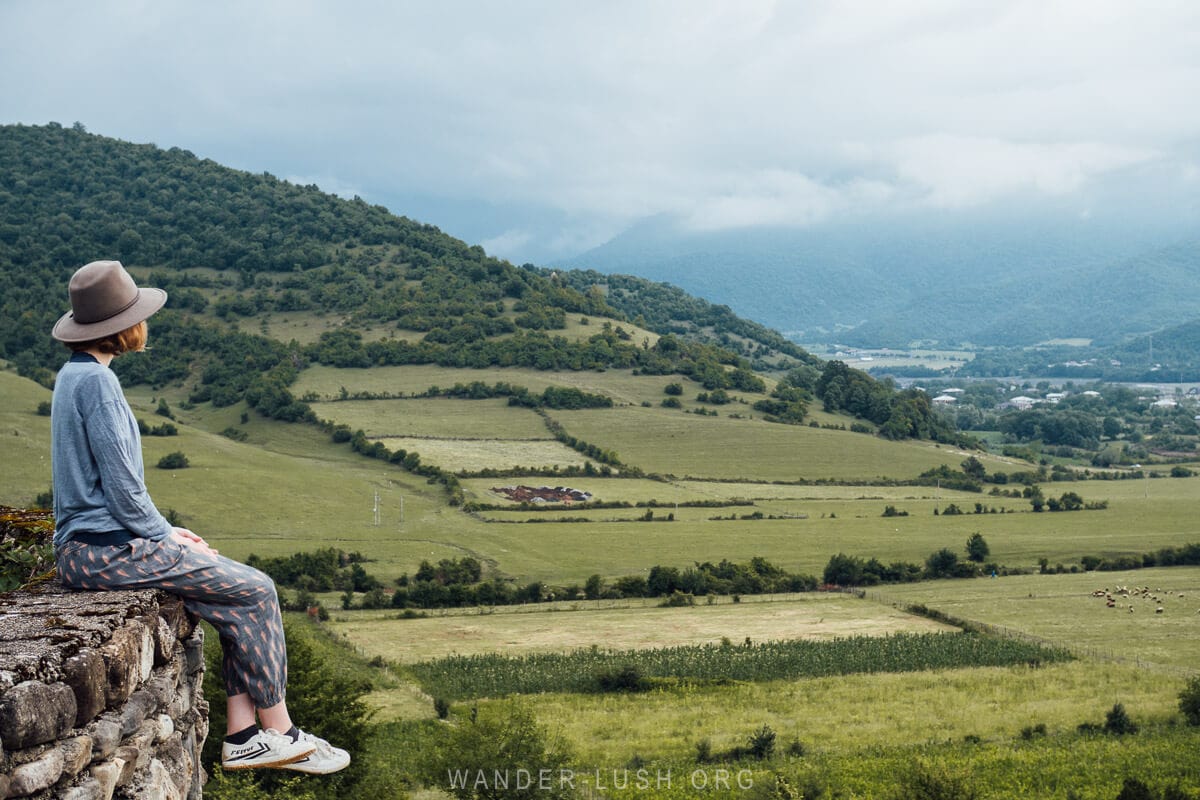
Everyday safety concerns in Georgia
No statistics or advisories – however positive – are a reason to abandon common-sense when it comes to personal safety. Georgia may be safe by international standards, but you should still remain alert and take sensible precautions, just as you would anywhere else.
Petty crime
As mentioned above, Georgia – and Tbilisi in particular – rank very low in terms of petty crime. Pickpocketing and burglaries do happen, as they do everywhere, but tourists are very rarely targeted.
In Tbilisi, it’s not unusual to hand your wallet to a stranger so they can swipe a bus card, or to leave your bag/laptop unattended at a cafe while you use the restroom. There is a baseline level of trust in public spaces that many visitors find surprising.
Even in larger cities, there is a strong sense of social familiarity and informal accountability – a feeling that people are generally aware of what’s happening around them, and respectful of personal space. Georgia’s recent history, including the shared hardships of the 1990s and the legacy of communal living during the Soviet period, has shaped a society where opportunistic street crime remains relatively uncommon.
That said, common-sense precautions still apply. Keep an eye on your belongings in crowded areas, particularly in busy tourist zones and on public transport, and I do recommend you avoid leaving valuables unattended – just as you would anywhere else.
In summer, there are occasional bag-snatching incidents in Tbilisi. Take extra care if you’re sitting outside at bars or restaurants late at night, and be mindful of your belongings in hostels. Look for accommodation that offers secure storage, and use reputable left-luggage services.
As always, lock your doors and windows at night and when you leave your accommodation, and avoid walking alone in quiet or poorly lit areas after dark.
Child beggars
Child beggars have only really become a problem in Georgia in the past few years. There is a lot of discussion about this on travel forums including Trip Advisor, which is why I’m mentioning it here.
While it is definitely something to be aware of, it is nowhere near the level it is in some other cities. Sometimes kids will approach you for money when you are sitting in a cafe or standing on the street. Once you give them a firm no, they are likely to walk away.
More concerning are incidents of pickpocketing. The ploy is pretty standard: One kid will distract you by grabbing onto your arms or legs while another attempts to pinch your wallet/phone.
Though extremely concerning, these incidents have so far been limited to a few locations in Tbilisi and Batumi. And as of 2026, they are far less common than they were a few years ago.
Touts in Tbilisi
Touts are more of an annoyance than a safety issue. Being approached aggressively or pursued by someone trying to sell you a boat trip or pushing a particular restaurant can be intimidating, especially if you are alone.
If you’re walking around Old Tbilisi (especially near Shardeni Street), the Bridge of Peace or the pedestrianised part of Aghmashenebeli Avenue, you are bound to encounter touts. The situation tends to be far worse in the busy summer months compared to shoulder or low season.
I personally detest this kind of thing and hate having to be on-guard when walking around the city. My advice is to avoid these areas during the middle of the day. If you’re ever approached and you feel uncomfortable, make eye contact and give them a firm no.
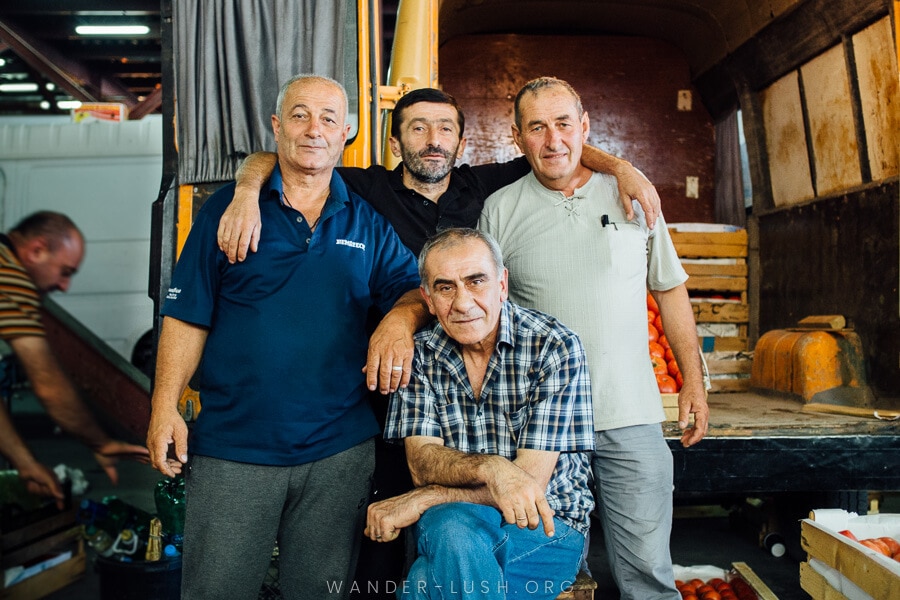
Police, emergency services & getting help
Back in 2003, Georgia’s police force underwent major reforms, which significantly reduced corruption and improved public trust. While no system is perfect, this period marked a turning point for law enforcement in Georgia and contributed to a long-term decline in crime.
Today, there is a visible police presence in most cities, and CCTV and security cameras are widespread in public spaces.
If you do need to report a crime, police are generally professional and helpful when dealing with foreigners. English-speaking officers or interpreters are available at most police stations.
It’s a good idea to familiarise yourself with Georgia’s emergency numbers:
- 112 – General emergency
- 112 1 – Police and fire service
I also recommend downloading the 112 Georgia app, which allows you to contact emergency services directly and send your GPS location if you need assistance.
Tourist scams in Georgia
Tourist scams are far less prevalent in Georgia than in most Western European countries. While dual pricing and the occasional ‘tourist tax’ are a reality, getting scammed isn’t something the average tourist needs to be overly concerned about.
That said, there are a few situations where you should exercise caution.
Dodgy currency exchange desks sometimes take advantage of tourists by offering unfavourable rates or, in some cases, shortchanging people. For this reason, I recommend avoiding exchange kiosks altogether and using your bank card to withdraw cash from an ATM instead. For more money tips, see this guide.
Overcharging can also happen. I’ve heard of people being charged inflated prices in broad daylight – for example, one foreign traveller in Tbilisi was charged 30 GEL (around 11 USD) for a glass of orange juice. While these incidents are not common, they do happen.
Another occasional nuisance involves ‘roving musicians’. A small group may approach you to perform a folk song and then demand an unreasonably large sum as payment. The best response is simply to decline at the outset and walk away.
As a general rule:
- Always ask the price before buying food, drinks or souvenirs at a market
- Check menus carefully before ordering in bars and restaurants
- Review itemised bills before you pay
I also recommend avoiding street vendors and restaurants in heavily touristed areas of the Old Town and on the pedestrianised section of Aghmashenebeli Avenue, which are known hotspots for inflated pricing.
Taxis & transport scams
Taxis are another common pressure point for tourists. Taxis in Georgia are unmetered, so if you don’t speak the same language as your driver, things can get very confusing.
Some drivers will unfortunately take advantage of tourists in these situations. This is especially common when travelling from the airport to the city, which is why I recommend avoiding airport taxis at all costs (see my guide on how to get to and from Tbilisi Airport for alternative options).
Instead of using street taxis, I highly highly recommend using a ride-hailing app. Bolt is the most widely used and reliable, with good chat support and several in-built safety features. To use it, you’ll need a local SIM card with a data package.
Occasionally, travellers report issues such as drivers taking longer routes or forgetting to end the trip, resulting in overcharges. This has happened to me as well. A simple precaution is to make sure the driver ends the trip before you exit the vehicle – Bolt also allows passengers to end the trip manually if needed.
PromotedDon't miss out on today's trending deals!
Join thousands of users enjoying exclusive benefits right now.
In areas where Bolt is not available, try to organise taxis through your guesthouse. Most hosts have a few reliable drivers on speed dial.
Pre-paying for accommodation: what to watch out for
One issue that occasionally affects visitors to Georgia involves pre-paying for accommodation outside established booking platforms.
From time to time, I see situations where people transfer money directly only to have the host renege on their offer or ghost them. Sometimes people arrive and find that the accommodation no longer exists or has been double-booked. Needless to say, refunds rarely materialise.
To reduce the risk, you should only book accommodation through reputable platforms that offer payment protection and dispute resolution. Avoid making advance payments directly to hosts unless you already know them or have stayed before. Be careful with properties that request full payment upfront, and check recent reviews carefully, particularly for newer listings.
Platforms such as Airbnb and Booking are widely used in Georgia for all categories of accommodation – from big hotels to the smallest guesthouse-homestays.
The bar scam in Tbilisi
If you’re planning to dabble in Tbilisi’s nightlife, one thing you must be cautious about is the dreaded bar/nightclub scam. Usually scammers prey on single men via dating apps. But a few years ago this happened to friends of ours (a couple) at a certain bar in Tbilisi Old Town. It has since closed down, thankfully.
The swindle goes something like this: After a few drinks, a friendly bartender will talk you into buying a bottle of wine or champagne. When it comes time to go, there are a few more zeros on the bill than you were expecting. But you agreed to buy the bottle, and you drank it – so you have to pay up.
When this happened to our friends, they were taken to the nearest ATM and forced to cough up the several thousand laris they apparently owed. They went to the police and managed to get some of their money back, but not all of it.
The good news is that police are cracking down on these scams, and the bar scam is much less common than it once was.
One clear red flag is that these bars often do not appear on Google Maps. Before heading out, check that a venue is listed and has reviews. If you meet someone online, choose the meeting place yourself. As a rule, stick to well-reviewed bars and clubs with an established reputation, such as these ones.

Why road safety in Georgia should be your biggest concern
Road safety is, without question, my biggest safety concern in Georgia – and it’s something visitors really do need to take seriously.
Unfortunately, the situation has not improved in recent years. According to official figures reported in English-language media, road fatalities in Georgia rose by around 20% in the first half of 2025 compared with the same period in the previous year.
Contrary to what many travellers expect, it’s not the notorious mountain roads – such as the road to Tusheti – that pose the greatest risk. Many of these routes have seen significant upgrades in recent years. The bigger concern is everyday city driving and intercity travel.
Driving in Georgia is best described as fast and aggressive. High-speed overtaking on two-lane highways is common, and adherence to road rules is inconsistent. While this behaviour isn’t limited to any one group, there is often an element of machismo on the road – something I personally find very challenging.
There is a level of risk that comes with road travel anywhere in the world. In Georgia, that risk is amplified by poor road conditions, the prevalence of old and poorly maintained vehicles (and the mix of left and right-hand carriages), lack of regulation around day tour providers, the drinking culture, and the lax approach to road rules in general.
Marshrutka vans remain a practical way to travel between cities, but increased competition has put pressure on drivers, who may speed or cut corners in order to fit in extra trips. Planned reforms aimed at professionalising intercity transport and improving safety have been pushed back to 2027.
If it’s within your budget, I recommend using a reputable private driver for longer trips, especially in the mountains. GoTrip is a reliable and well-priced service for this.
Tips for staying safe on the road in Georgia:
- Never travel after dark
- Avoid trying to cover long distances in one go (3-4 hours of driving is about my limit)
- Choose tour operators carefully – don’t be afraid to question them about their road safety measures
- Always wear a seatbelt (mandatory for front-seat passengers)
- Never, ever get into a car or a marshrutka if you suspect the driver has been drinking
- If hiring a car, familiarise yourself with driving etiquette, weather conditions and avoid high-risk routes
- Approach hitchhiking and informal ride-sharing with caution, particularly in rural areas
Pedestrians should also take extra care. Zebra crossings and traffic lights are common in Tbilisi and other cities, but never assume cars will stop. Turning vehicles are especially likely to cut across pedestrian crossings.
Never attempt to cross a major road in Tbilisi without a marked crossing. Where available, use underground pedestrian passages instead – they exist for a reason.

Outdoor safety in Georgia
Hiking in Georgia
Accurate, up-to-date information on weather and trail conditions can be difficult to find in Georgia’s more remote mountain regions, so it’s important to consult locals and have a backup plan in place before setting out.
The quantity and quality of marked trails is slowly improving thanks to initiatives such as the Transcaucasian Trail, but some of these routes may be poorly signposted and not suitable for inexperienced hikers.
If you’re a solo female traveller, I strongly recommend hiking with others rather than going alone. This applies both to remote mountain trails and to urban hikes around Tbilisi.
Jozef at Caucasus Trekking is an expert on this topic – I highly recommend consulting his website before you go hiking in Georgia.
Skiing & adventure sports
Skiing and snowboarding and all kinds of other adventure activities are available in Georgia nowadays. Safety standards might not be what you’re used to, though.
I generally advise against paragliding in Georgia as the industry has historically been unregulated. In 2022, paragliding was temporarily banned in Georgia following a devastating accident in Gudauri.
There have been some positive developments since then. New safety standards have been introduced for paragliding operators, and professional liability insurance is now mandatory for high-risk tourism service providers. Even so, this is not an area where I’d recommend cutting corners.
If you’re considering adventure sports in Georgia, do your research, choose a reputable operator, and make sure your travel insurance explicitly covers high-risk activities. When in doubt, seek advice from an experienced guide or established tour company.
Street dogs & mountain dogs
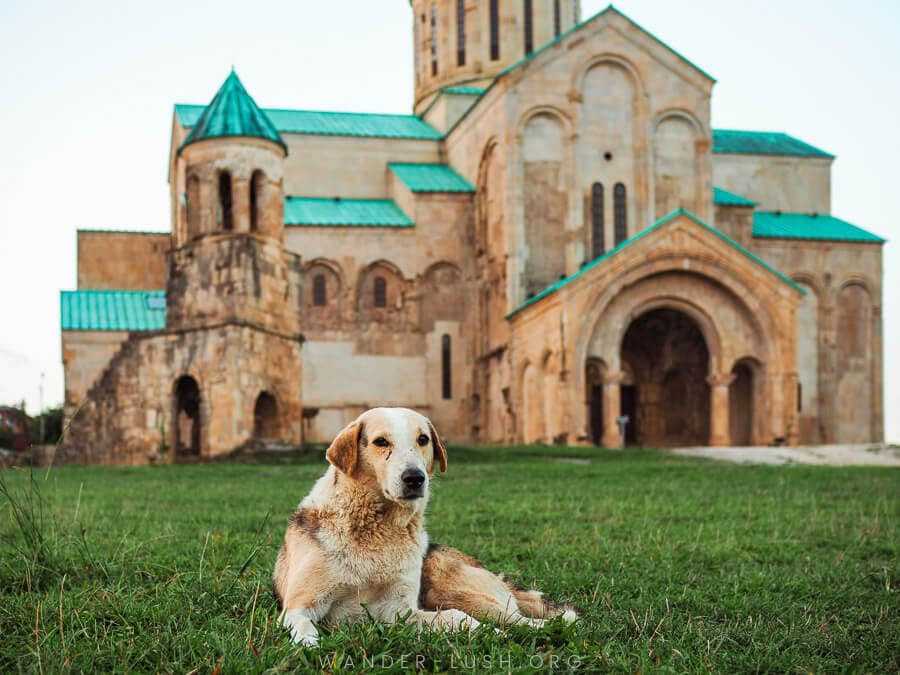
There are a lot of stray dogs in Georgia. According to the latest survey, there are 30,000 street dogs in Tbilisi alone.
In the cities, many dogs have a plastic tag on their ear, indicating they’ve been vaccinated and desexed. While they may be strays, they’re generally fed and looked after by the community.
Urban street dogs in Georgia are typically calm and well-socialised. They often gather near tourist sites where they receive attention and food. Personally, I’ve never witnessed an urban dog acting aggressively towards humans (but that’s not to say it never happens).
Shepherd dogs in the mountains and rural areas are a very different story. These dogs are working animals, bred to protect livestock from predators and theft, and they take this role seriously.
If you encounter sheep or cattle when hiking or walking in rural areas, be aware that there is probably a dog nearby. Try and find an alternative route – or if that’s not possible, walk at a normal pace and with purpose – show the dog that you’re moving through, and you’re not a threat. If the dog becomes aggressive, freeze in place and call out for help – oftentimes the owner (or a more confident bystander) will be close enough to call the dog off.
If you’re concerned about dogs and you plan on doing a lot of hiking, consider investing in an ultrasonic dog deterrent zapper.
Food safety & potable water
On a much lighter note, I often get questions about food hygiene and whether or not you can drink the tap water in Georgia.
I eat out at once or twice a week – more when I’m travelling – and I’ve never had food poisoning in Georgia. Ingredients are generally fresh, and Georgian cooking tends to rely on simple, seasonal produce rather than heavily processed foods. MSG is not traditionally used.
As always, I suggest eating where locals eat (this list of Tbilisi’s best restaurants is a good place to start) to minimise the risk of a bad meal.
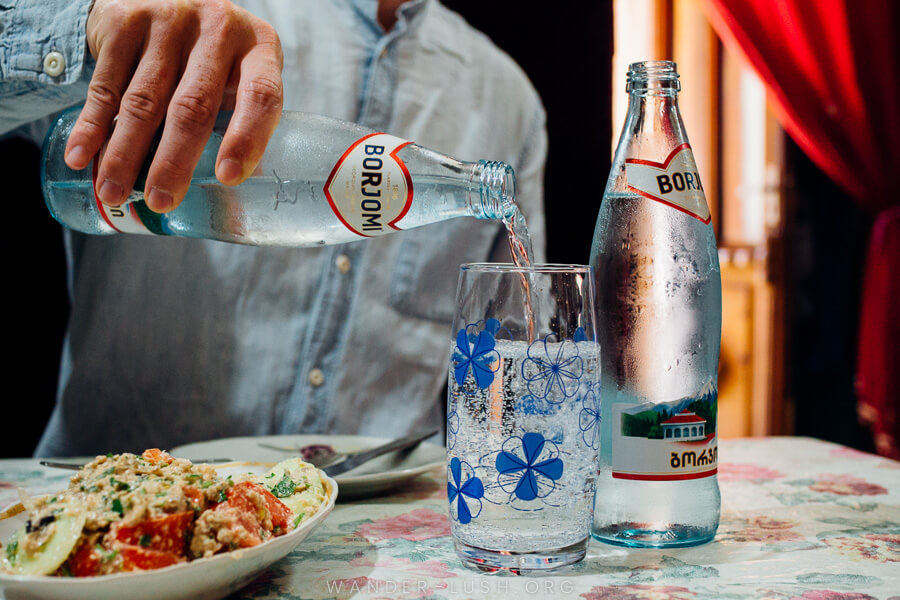
Generally speaking, tap water in Georgia is safe to drink. Tbilisi is the main exception. While the water itself is treated and safe, the mineral content can be high, largely due to ageing pipework in many buildings. As a result, tap water doesn’t agree with everyone.
Tap water doesn’t agree with everyone, so I suggest starting with small doses and switching to bottled water if you need to.
Georgian hospitality & personal boundaries
Interacting with locals is one of the most rewarding aspects of travelling in Georgia. Hospitality here is well known, but it’s important to understand that it’s rooted in social obligation and tradition – not in treating tourists as special guests.
In rural areas especially, people may feel compelled to share what little they have with visitors. While this generosity is genuine and deeply ingrained, travellers should be mindful not to overstep or take advantage of it, even unintentionally.
Being invited into someone’s home for food or drink is not unusual, particularly in small towns and villages. As with anywhere, exercise common sense in these situations – especially if you’re travelling alone – and trust your instincts if something doesn’t feel right.
Courtesy goes a long way in Georgia. Making an effort to learn a few basic Georgian phrases, dressing appropriately for the setting, and being respectful of local norms can make interactions smoother and more comfortable for everyone involved.
Georgia’s ethnic and cultural diversity is one of its great strengths. Regions such as Pankisi Valley offer some of the most meaningful and rewarding travel experiences in the country, but it’s important to remember that customs and expectations can vary significantly between communities. Life in the mountains or rural areas follows very different social norms to urban Tbilisi.
For this reason, I always recommend dressing more conservatively in rural Georgia, both out of respect and to avoid unwanted attention.
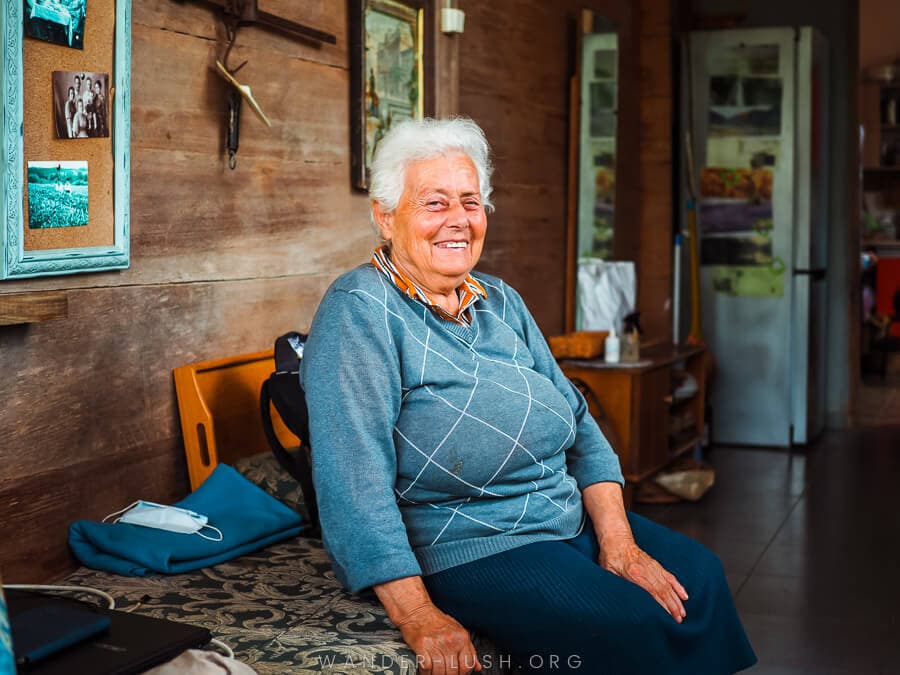
Is Georgia safe for solo female travellers?
As a woman, I generally feel very safe in Georgia. However, I’ve noticed that travelling alone – without my husband – can sometimes be a noticeably different experience.
Georgia is a patriarchal society, and women here do face particular challenges. Awkward interactions and unwanted attention from men is the most common complaint I hear, while there have been cases of female expats and tourists being followed in public areas. Harassment and public indecency (including being flashed) are less common, but they do occur.
Solo travel and hiking is very common in Georgia. If you are planning a solo trip, I recommend being proactive and taking extra steps around your personal safety. Don’t walk alone late at night. Make sure the door to your accommodation has a lock, and always secure the door and windows at night. I also recommend you avoid apartments or Airbnbs with shared ’Italian yards’ as they offer little privacy from neighbours or common areas.
Dressing more conservatively can also help. Not because what you wear should determine how you’re treated – it shouldn’t – but because Georgia is conservative in many ways, and dressing accordingly can reduce unwanted attention and help you blend in.
You might want to avoid travelling solo in very remote mountain areas. Pairing up with other travellers is never a bad idea. It’s also good practice to have your accommodation organised in advance in these situations, and to be in touch with your guesthouse owner.
For further reading, here is an interview about travelling and hiking in Georgia solo. This website correlates first-hand reports from solo travellers in Tbilisi and is very useful for getting a picture of what it’s like on the ground.
LGBTQ travellers will find some useful insights in this article.
Is Georgia safe for kids?
While Georgia remains popular with younger travellers and backpackers, more and more families are considering it as a holiday destination. I have encountered families of all sizes and kids of all ages travelling here.
In Georgian culture, children (especially babies) are adored, so you’ll get big brownie points if you show up to a restaurant or guesthouse with a little one.
The biggest thing to be aware of is the lack of safety barricades and rails at heritage sites such as Vardzia, Uplistsikhe and Martvili Canyon. The crumbling walls at Tbilisi’s Narikala Fortress are an accident waiting to happen (although the site is being renovated as I write this). Similarly, some hotels and guesthouses might not be set up for kids – it always pays to ask first.
Overall though, Georgia is perfectly safe for kids and there are plenty of child-friendly things to do here.
Travelling to Abkhazia or South Ossetia
If you are considering travelling to Abkhazia or South Ossetia (also referred to as Tskhinvali / Samachablo), it’s important to understand that these regions present separate safety, legal and logistical risks that do not apply to the rest of Georgia.
I know people who have travelled to Abkhazia and had a positive experience – and I’ve also heard accounts where things went badly wrong. The reality is that conditions can change quickly, and it can be very difficult for visitors to accurately assess the situation on the ground.
There is no consular assistance available in Abkhazia, meaning that if something goes wrong, foreign nationals have very limited options for support. It’s also worth noting that most standard travel insurance policies do not cover travel to Abkhazia.
It is not possible to enter South Ossetia from Georgian-controlled territory, and travellers are strongly advised to avoid the administrative boundary line altogether.
Importantly, these restrictions do not affect travel in the rest of the country. It is still safe to travel along the main east-west highway through Gori, and there are no issues travelling to destinations such as Stepantsminda or Racha. Proximity to the Russian border alone does not pose a risk.
For most travellers, the safest and most straightforward option is simply to avoid Abkhazia and South Ossetia entirely and focus on the many regions of Georgia that are fully accessible and welcoming to visitors.
Final words: Is Georgia safe?
Yes – Georgia is an overwhelmingly safe destination for travellers, and this aligns with the experience of most visitors and expats.
The main safety concern is road travel, so please take proactive steps to minimise risk: avoid night driving, limit long journeys, and use reputable drivers or transport services where possible.
Violent crime is rare, and everyday personal safety in cities such as Tbilisi is generally very good. As with anywhere, use common sense, be aware of your surroundings, and keep up to date with local news – particularly around demonstrations, which should always be avoided.
Solo female travellers should take extra care, especially when hiking or travelling in remote areas, but many women travel independently in Georgia without issue by planning ahead and taking sensible precautions.
Georgia Essentials
Here are the websites and services I personally use and recommend for Georgia. Check out my full list of travel resources for more tips.
TRAVEL INSURANCE: Insurance is now mandatory for all travellers to Georgia. Insure your trip with HeyMondo, my preferred provider for single-trip and annual policies. Get 5% off when you book with my link.
AIRPORT TRANSFERS: Most flights into Georgia arrive in the early hours. Airport taxis should be avoided at all costs. For ease, pre-book a private transfer from Tbilisi Airport to your hotel or from Kutaisi Airport to Tbilisi with my partners at GoTrip.ge.
SIM CARD: Magti is my preferred provider, with prices from 10 GEL/week for unlimited data. See this guide for all the details about buying a Georgian SIM card.
ACCOMMODATION: Booking.com is the most widely used platform in Georgia. Use it to find family guesthouses, private apartments, hostels and hotels around the country.
CAR HIRE: Find a great deal on a rental car in Georgia – use the Local Rent website to book through a local agent (prices start from $30/day).
PRIVATE TRANSFERS: GoTrip.ge is a terrific service for booking a private professional driver and car for the day. Use it for A-to-B transfers, a customised round-trip itinerary, or a multi-day trip. You can stop wherever you like for as long as you like without the fixed price going up.
DAY TRIPS & CITY TOURS: Use Viator or Get Your Guide to browse a range of day trips and city tours. For alternative itineraries with expert guides, I recommend Friendly.ge. Use the promocode wanderlush for 10% off.
WINE TOURS: For in-depth day trips to Georgia’s wine regions, I recommend Eat This! Tours. Use the promo code wanderlush for 5% off.

Is Georgia safe? Save it & share it on Pinterest
You might also be interested in…
- The ultimate Georgia itinerary: Four detailed & custom-designed itineraries
- Georgia Travel Guide: All of my 200+ posts plus my top travel tips
- Georgia travel tips: 25 essential things to know before you go
- Places to visit in Georgia: 50+ unique & underrated destinations around the country
- The best things to do in Tbilisi: Favourites, hidden gems & local picks
- 35+ best restaurants in Tbilisi: Where to eat Georgian food
- 15 best day trips from Tbilisi: With detailed transport instructions
- The best time to visit Georgia: Month-by-month guide to weather, festivals & events
Hi Emily,
do you know if it’s possible to get a rabies pep shot in Kutaisi (French vaccine, not the Indian one)? On the web, I only found information about Tbilisi and Batumi.
I got scratched by a dog which had a tag – is it safe to assume it has it’s vaccine up to date?
Love your blog, thanks!
Hi Ola, nothing is guaranteed so you should seek medical attention.
In Kutaisi you can find the vaccine at the referral hospital: https://maps.app.goo.gl/xbzYDznBR1vQkVwc8
Good luck and stay safe!
Dear Emily,
I loved your blog and it was very helpful, very accurate your description and your reading of Georgian society. However, I had to stop here where you say “the hospitality here is legendary”
I’m sorry to say but Georgians are far away from any hospitality, even average. After a week I can count with the fingers of one hand which people were actually, friendly.
I found everyone to be quite rude and poor manners. As a person who has traveled around all continents I was shocked by this attitude and still in disbelief, why some people insist saying Georgians are friendly.
If excuses such as language, city, taxis, not a king, need to be given, then definitely this people are not hospitalarian.
I will just mention Japan, Mexico, Cuba, South Africa, New Zealand, Spain… examples that are way more friendly and nobody dare to say their hospitality is legendary.
Don’t get me wrong, I loved your blog and was quite helpful, but why? why? Why people insist to talk about hospitality? In a full week of travelling around Georgia, only in one restaurant, we entered feeling that we weren’t doing something wrong.
Thanks so much Alex for sharing your thoughts. Things have changed a lot over the past five years (as you can imagine) and this topic is something that I have been grappling with for a while now. I will definitely try to share my thoughts about it in a future post.
Georgia has a quality to it that is difficult to experience in a week – I know that’s not very helpful for most tourists who are only here for a short period, which is why I think many others share your concerns. It certainly has less to do with service quality or the general disposition of people you encounter in everyday situations, and more to do with the deeper connections you form. Perhaps hospitality is no longer the right word.
Hi Emily,
thank you for all of the amazing information you have shared and continue to share on your wonderful blog. I am setting off on my first solo trip to Georgia in a few weeks, and do have some concerns Re safety as a solo female traveller. I’ve travelled to many countries on my own, and rarely felt unsafe, but have to be honest and say I feel a little nervous about this trip.
Sounds like proper urbex is maybe a hard no-go, but do you think it’s generally safe to walk around Tblisi solo, exploring with my camera in day time? I tend to just like to aimlessly walk neighbourhoods/parks, slightly away from the main tourist drag, taking in the real city. I’m sure some neighbourhoods are maybe less safe than others, like any city.
Thanks!
Hi Mia – absolutely no issue with that. Urbex is fine, too – I do most of my exploring alone. Have a wonderful trip!
Hi Emily,
Your blog is amazing and insight about Georgia’s culture is just beautiful. I’m planning a trip to Borjomi from Tbilisi and I’ve read a bit information ( a lot) about South Ossetia. And I know it’s very close to the E60 highway (and Gori too) which I was planning to use to travel to Borjomi.
Would you say actual E60 is safe to travel? Or is there another better/safer route to use?
Ps. There’s so much worrying information about that area. And I’m not sure how old and how reliable it is for current times.
Thanks in advance xx
Hi Tomas – that is the main highway connecting east and west Georgia. There is absolutely nothing to be concerned about. Happy travels!
Hi Emily,
I stumbled across your page on the Sulphur Baths of Tbilisi, but have since read a few. There is a lot of useful data in these pages (especially this one on safety) – much more so than many other sites I’ve looked at. I’m hoping to get to Tbilisi later this year, so will be referring to your info.
Phil
Thanks Phil, glad to hear it!
Thank you for this excellent overview which is very helpful, especially because it’s based on a real person’s exprerience and therefore IMHO much more trustworthy than all those generic “travel safety” pages on tourist and government websites.
I’d like to comment on one minor detail. You seem to suggest that the “prevailing sense of community and a feeling that everyone looks out for each other” emerged with the downfall of the Soviet Union. Actually, that WAS the general attitude in the Soviet Union. Speaking of Estonia, another former Russian colony, it was hard to imagine back in the 1980’s that a minor could walk on the street, smoking, without being severely scolded by the passersby. When you didn’t offer your seat in a bus to an old woman, you were likely to get heavy verbal abuse. Things like that. Then came democracy, human rights, property laws, privacy laws, and suddenly nothing was anybody’s business. People started looking the other way and pretending they weren’t seeing anything. That’s one of the (very few) downsides of a normal society.
Far be it from me to deny that the prevailing sense of community is there in Georgia of today. I’ve never been to Georgia, so I couldn’t know. All I’m saying is that it’s probably an age-old Georgian tradition and surely not a by-product of Georgia’s independence form Russia.
Hi Lawless – actually I wasn’t trying to suggest that at all. I don’t know enough about social dynamics in the USSR to have a strong opinion either way – just noting it as a massive historical force that has influenced the way things are today. I will leave your comment here as an interesting aside for others to read. Thank you for your input!
Hey Emily
Thanks so much for this fantastic blog! Myself and two female friends are heading there this September, so this is very useful. My brother went in June and said all his drivers in the mountains were drunk, so we will definitely be more picky with our choices like you mention! We are debating doing Nakra to Mestia or Mestia to Ushguli but think we will go with the popular route just to feel safer for our first trip. thanks again
Thank you so much for this wonderfully rich guide to Georgia! I hope to visit soon from the United States.
Could I ask in general, how accessible is Georgia for older adults who occasionally need to use a wheelchair? Do buildings generally have elevators and is public transportation generally accessible? Or is the infrastructure still being updated for those kinds of measures?
Thank you so much!
Hello Ann! Sorry to say that Georgia still has a long way to go in terms of accessibility – the new city buses in Tbilisi are accessible, but many venues and hotels are not.
Hi ! thank you for your useful advice. We are planning on travelling to Georgia in April. Would you change any of your recommendations considering the latest demonstrations in Tbilisi? thank you
Hi Lisa, no I wouldn’t – the demonstrations have ended. Have a great trip!
Emily Lush, I agree in general with your assessment about security and safety in Georgia, having lived in this lovely country from 2003 to 2009, then from 2012 to 2016 and currently from 2021. Please, stop using the offensive term “romani” that you are using with regards to the gypsy (tsigani) children committing petty crimes in Tbilisi. Once and for all, with this anglo-saxon offensive term “romani” that you have borrowed while referring to the gypsy minority of Sinti or Egyptian origin, you are offending the whole country Romania, who has inherited its name from the Holy Roman Empire, and whose name does not have anything to do with Sinti gypsies.
My apologies – I did not mean to cause any offence.
According to the European Roma Rights Centre, the term Tsigani that you have suggested and the term Gypsy are both “highly offensive racial slurs”. I have seen some academics use the terms Lom and Dom to refer to communities in the South Caucasus, but I am not 100% sure these people are associated with those particular groups. The term Romani is more mainstream, which is why I chose to use it. I think most people understand by now that there is no association with Romania.
If you can suggest a non-offensive alternative, I am all ears.
I accept that you did not want to offend, but to be helpful, but please, be careful with what you are writing, such as: “These kids are from Roma/Gypsy families who have entered Georgia from neighbouring countries. Because they don’t have documents (and because they are minors), the police are apparently limited in how they can respond.” How do you know these kids belong to this minority? Do you speak “Roma”/”Gypsy”/”Sinti” language? How do you know they are from neighbouring countries and not residents of Georgia? The neighbouring countries of Georgia are Russian Federation, Turkey, Armenia and Azerbaijan. The land border of Georgia with Azerbaijan is closed since Covid started, therefore these kids could Not come from there. The border with Russian Federation was widely opened in September 2022 when partial mobilisation was declared, but I doubt that these kids “without documents” could have crossed that heavily controlled border into Georgia. The border between Turkey and Georgia can be crossed by Georgians with the ID only, however the Turkish authorities are known as being extremely serious and thorough at doing their border control, so I do not think they could have crossed the Turkish border from Turkey into Georgia without documents. Armenian-Georgian border seems to be the friendliest, but for those who crossed it, the border control is very seriously done, firstly by the Armenian Border Guards and then by the Georgian Border Guards (green border) and by Patrol Police at Border Check Points. So, in conclusion your statement is probably taken from some locals, who feel embarrassed by the delinquent kids, and tried to unfairly suggest that they are “foreigners”. No, these kids are not foreigners, as they do not have documents to prove this statement, and they could not cross the borders from a neighbouring country without documents. Unless they were brought in by an adult, and forced here to do delinquencies, and in this case the local police does have a case, and must do the job to find the adult and prosecute him.
I’m not sure how this is relevant. This is a post about safety advice, and I am simply trying to offer some insight into why this continues to be an issue.
Many of these families have been here since before COVID.
News, police, embassies and travel advisories are all reporting that these children are from Roma/Gypsy/Sinti families. If you can point me to a reliable source that says otherwise, I would appreciate it. They do not come alone, they come with their families/parents.
Hi,
I had used your blog during our trip to Georgia. We travelled as a family of four. Why I am writing here is to highlight the child beggar ploy into which we got to be a victim. As you had clearly mentioned that, four to five child beggars would hold on to your legs and hands and cleanly pickpocket you and at the exact location you had mentioned near Galleria Tbilisi. Let me explain clearly the scene of robbery/pickpocketing…
There were a group of four to five girls sitting in the road bench along the pavement on the road. They noticed us and judged us, then they started to follow us, walking along with us for a while, then moving past and came back to us from the opposite direction. They surrounded me and two girls held my hands pretending to beg and the other two girls immediately caught onto my legs, meanwhile I clearly felt they were flicking out my 2 wallets from my back pant pockets within seconds. Knowing my loss I caught hold of the girl who flicked my wallet, but I pretty well knew that the wallet had been immediately transferred to the other girls and would have reached to the head girl. Though I tried to catch hold of the girl and immediately called the police, but a local man who should be among the team, started to threaten me and i did not give up but at the end he started to attack me so i lost the grip of the girl hand and all the girls started to run. I chased them but they crossed the main road as that should be their regular passage for their escape.
I did not give up and I followed the man for a few hundred meters and he started to harass me and finally police arrived to the spot but they did not make any enquiry on the culprits as they said the guy is mentally challenged which is highly a false statement.
As an usual practice, the police complaint was lodged and the formalities are going on……..
So the lesson learnt is “we need to protect our personal belongings carefully” especially when we are foreigners in a new country. And I also recommend not to react in the crowd when such an incident happens, as they could go to any extent and mainly language is barrier. Simply ignore, stay calm and claim your insurance.
Anyway, safe travelling!
SM
I’m so very sorry to hear this happened to you. Thank you for taking the time to share your experience, I hope it will help others to avoid something similar happening to them. I hope you see some justice as a result of the police report.
I sincerely hope this didn’t spoil your trip and your family still enjoyed your time together in Georgia!
Kindest wishes.
‘Romani’ has nothing to do with Romania and Romanian. Romani is in fact the language of the Roma people who do have different names in different countries (Dom, Nawar, Sinti etc) but it is their own organizations who have encouraged the use of Roma instead of Gypsy which they, the people concerned, find offensive.
Hi Emily
I used your blog extensively for my travel to Georgia recently. Thank you for this wonderful resource. In terms of safety I wanted to add my experience. Overall, I felt very safe but I had some bad experiences at the airport. I’d kept some money (token to be taken home as souvenirs) in my bag’s front pocket, which was stolen, possibly during check in at Tbilisi International airport. It wasn’t a whole lot but it did leave a bad taste. I’d also recommend avoiding the SIM card resellers at at the airport who offer a discount but the SIM card I’d purchased stopped working mid term. The taxi drivers are also excessively aggressive (especially for a solo traveler) Bolt is such a blessing.
So sorry to hear that Smita! What a terrible end to the trip. Yes, I always recommend buying a sim in the city rather than at the airport and using Bolt whenever possible. Hope you still had a great time in Georgia!
Hi Emily,
Thank you very much for a lot of great information! My friend and I are going to Georgia later this week. We are going for a day hike in Bordzjomi and Kazbegi respectively (to the glacier and later for a two day hike back and forth to Roshka from Juta via the Sadzele pass and the Chaukhi pass). We are two female travellers doing these hikes, and I’m interested in knowing if there in general are many people doing these hikes regarding not being alone as you describe in your post? Furthermore: Are there any other thoughts you want to share regarding safety in these areas that you haven’t already described ? We are staying at guesthouses in Kazbegi and Roshka and a hotel in Bordzjomi.
Kind regards,
Christina
Hi Christina, I’m not sure how many people will be out on the trails but since it’s July, I’m sure you will encounter a few!
Borjomi is a popular resort for families so there’s nothing special to keep in mind regarding safety there.
I am not familiar with the Roshka area but you can see this post for specific tips: https://www.caucasus-trekking.com/treks/roshka-to-juta-by-sadzele-pass
Hi Emily,
Sadly we have different experience with street dogs than you have. We have seen multiple urban dogs be aggressive towards humans, and witnessed dog bites. We spoke with locals about it and with doctors in a Tbilisi hospital. According to the people we spoke it sadly is still a big problem in Georgia, and quite a lot of people get bitten. Luckily RIG, anti-rabies and tetanus shots are available in bigger cities (for example Tbilisi, but also Telavi). It is true that the tagged dogs are generally safe, but it’s best to be careful around dogs in general, especially at the outer edges of villages. Still 90% of the dogs won’t do you any harm, and will only keep you company for a while. It’s best to be warned about this as a first time visitor in Georgia.
Hi Maurits – yes I totally agree and this is the same advice I provide in the post. Street dogs in cities are very different to those in rural areas, as I explain. Thanks for your insights!
Thank you so much for all this great information! In terms of avoiding solo female travel to more remote areas, what would you think safety-wise of a solo female traveler traveling to the Pankisi valley? Thanks!
Hi Elisa – I have travelled solo to Pankisi and know many others who have as well. I recommend you stay at Nazy’s Guest House – she will make you feel like family and sort out everything you need for your stay.
Thanks for this fantastic post, planning to visit Georgia for the first time next year, so I find your post very useful and informative, the best to you from Mexico!
Thanks Manuel for your comment! Happy to hear that.