There are dozens of food and flea markets in Tbilisi – some of them formal, others more spontaneous. Visiting is a great way to immerse yourself in local culture and commerce, see what’s in season, pick up a few souvenirs, and above all get a feel for what makes the city tick.
As a former Silk Road outpost, trading has long been an important part of Tbilisi’s social fabric. Old Tbilisi revolved around the meidani, where merchants carried goods from East and West.
(By the way, you won’t find the Meidan Bazar on this list – though popular and fun to walk through, it’s not among my favourite Tbilisi markets.)
The market or bazari still plays an important role in everyday life in Georgia – even in the supermarket/megamall age. Many people prefer to buy their fresh food and household goods at markets, and you’ll see lone vendors and small informal fruit and veg markets on almost every corner.
This is even more common outside the capital in the regions. Some of my favourite local markets are in Telavi, Kutaisi, Zugdidi and Batumi – be sure to check those out too!
For now, here are 9 fantastic food, flea and antique markets that I recommend visiting in Tbilisi.
Please note: This post contains affiliate links, meaning I may earn a commission if you make a purchase by clicking a link (at no extra cost to you). Learn more.
Year-round markets in Tbilisi
1. The Dry Bridge Market

Tbilisi’s famous flea market is the best place in the city for Soviet retro, antiques, and other ephemera. Handicrafts and original artworks are also sold here.
The saying ‘one man’s trash is another man’s treasure’ doesn’t really apply to the Dry Bridge: Everything you see here is precious and fascinating in its own way, from the war medals to the kilim carpets, the USSR-era film cameras to the vintage vinyl.
See my full guide to the Dry Bridge Market for more tips.
- Location: Dry Bridge (Mshrali Khidi), 9 March Park & Dedaena Park
- Opening hours: Daily from 10am-5pm (visit on the weekend from 11am onwards for the most variety and best atmosphere)
2. The Dezerter Bazaar

Tbilisi’s main produce market is a vast display of fresh fruit and veg from across the regions (and beyond). People also sell artisan food products such as farm cheese and cured meats, spices, herbs, and meat.
If you’re keen to expand your knowledge of Georgian cuisine, this is a great place to start. The undercover part of the market is my favourite. From there, stalls spread out all along the surrounding streets. You can easily spend a few hours wandering around and taking photos.
See my full guide to the Dezerter Bazaar for more tips.
- Location: Abastumani Street (near Dinamo Stadium)
- Opening hours: Daily from 7am-5pm
3. Station Square markets & Tbilisi Gold Market

The outdoor markets surrounding Station Square merge with the Dezerter Bazaar and extend all the way up to the stadium and the railway station. There is also a popular clothing market at Station Square staged in the pedestrian underpass and in the overhead tunnel above the station.
If you need to buy warm winter gear or shoes, or you’re looking for second-hand clothing and vintage gems, there are piles and piles of clothing and accessories to dig through. It can be crowded and cramped though, so if you suffer from claustrophobia you might want to skip this one!
On the bottom level of the railway station, the Tbilisi Gold Market is a unique set up with rows of jewellery vendors sitting behind plexiglass. If you have time to kill before your train, this is a great place for a wander. As well as gold you’ll find plenty of minankari, traditional Georgian cloisonne enamel.
- Location: Tbilisi Central Railway Station
- Opening hours: Daily from 9am until late
4. Bazari Orbeliani

Offering a very different kind of market experience, the newly re-opened Bazari Orbeliani is a beautiful covered produce market and dining hall on Orbeliani Square. The building has a long history as a food market (it first opened in 1886). It’s wonderful to see the upper levels restored to their former glory.
If you’re searching for edible souvenirs or gifts, you can find a handful of artisan food products such as Waime! adjika and spice blends, Georgian wine and chacha, dried fruits and churchkhela, local honey, and tea from Guria sold here.
Upstairs, there is a fancy food court with a dozen or so different bars, cafes and restaurants. Georgian and international cuisines are on offer. While you’re in the area, don’t miss the Orbeliani Flower Pavilion, a cute little fresh-cut flower market, which is located just outside the main entrance.
- Location: Vekua Street
- Opening hours: Daily from 9am until late
5. Navtlugi Farmers’ Market & Barakholka
At the opposite end of the spectrum, Navtlugi Market (AKA Samgori Market) in Tbilisi’s eastern suburbs is another lively produce market. It’s essentially a bigger, more ‘local’ version of the Dezerter Bazaar. Many of the vendors here sell produce fresh from their own farms – that’s why the prices are so famously low (and the quality so high).
Fruit, vegetables and nuts are all available in bulk. You’ll also see extravagant displays of spices, pickles, churchkhela and other popular Georgian foods. Freshly ground coffee, homewares and clothing is also stocked. You probably won’t find anything to take home, but it’s a wonderful place to wander around and people-watch.
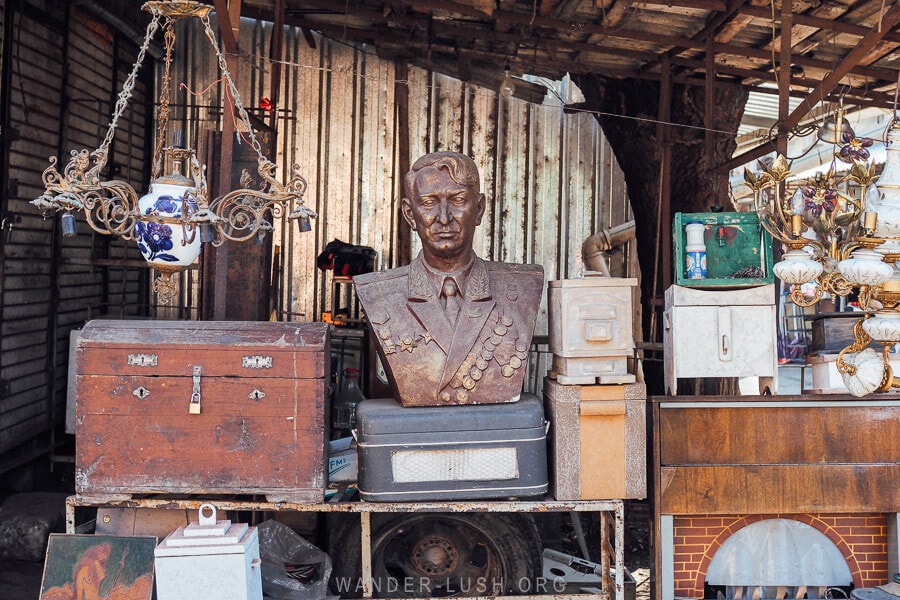
The highlight is the Barakholka antiques and vintage section, which is housed inside a set of warehouses and undercover sheds around Mevele Dead End. A great alternative to the Dry Bridge, this market has old street signs, pressed metal plates, ceramics and china, and a big array of made-in-the-USSR and Soviet-era stuff. Visit on a weekend for the biggest selection.
Because this market is less touristy, foreigners are still a bit of a novelty. Be prepared for lots of stop and chat!
- Location: Around Mevele Street & Ketevan Tsamebuli Avenue (outside Samgori metro station)
- Opening hours: Daily from 9am until late
6. Lilo Mall
If you’re traveling down the highway to Kakheti wine region, you’ll pass right by Lilo Mall. This is a gigantic outdoor marketplace – for sure the biggest market in Georgia and probably the largest in the entire Caucasus region.
Almost everything is imported from China, Turkey and the Middle East. People from neighbouring countries come here to shop for clothes – Vogue even published an article about the low-cost designer labels you can find.
The mall is made up of undercover sections, outdoor shops and stalls. You can buy anything and everything at Lilo, from hardware and craft supplies to plants and clothing. The market is divided into different sections signposted with big information boards.
Even so, it can be extremely confusing to navigate so it’s best to take your time and just follow your nose. If you’re looking for something particular, ask around and maybe someone will point you in the right direction.
Lilo Market is famous for its low prices and hard bargaining – this is one place where you can really test your bartering mettle without fear of causing offense.
- Location: Kakheti Highway (just past the airport)
- Opening hours: Daily from 8am-5pm (Monday, Thursday & Sunday are wholesale days)
Seasonal Tbilisi markets
7. Christmas markets in Tbilisi (December/January)

Every winter, Tbilisi puts on a magical display of lights, decorations and markets for the holiday season. Christmas Villages in Orbeliani Square, Dedaena Park and along Rustaveli Avenue include market stalls where local artisans sell souvenirs and gifts.
Restaurants and cafes appear at pop-up food stalls, and there are familiar Christmas market essentials such as roasted chestnuts and mulled wine (in this case, mulled Saperavi).
Remember the dates for Orthodox Christmas are different. The markets normally run from the end of December until mid-January.
See my guide to celebrating Christmas in Tbilisi for more details.
8. STALL Street Markets (September/October)

Autumn is my favourite time of year in Tbilisi, not only because the weather is perfect but also because there are lots of street markets on every weekend.
STALL normally hosts markets along Rustaveli Avenue throughout the months of September and October, bringing together local artists and makers. Check their Facebook Page for dates and details.
Also in autumn, Taste Tbilisi hosts food markets in various parks around the city. You can also find them at the Tbilisoba festival and at the Christmas markets.
9. Easter markets (April/May)
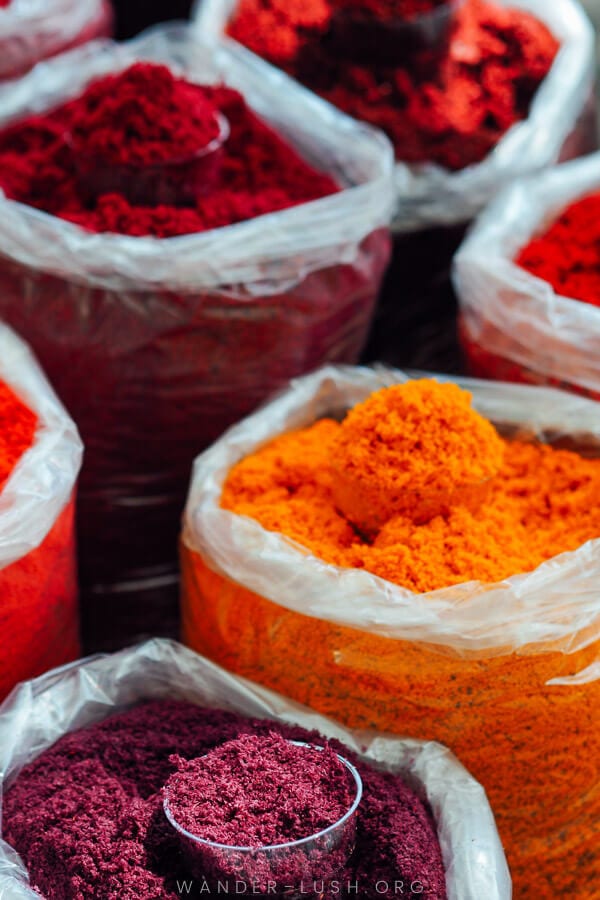
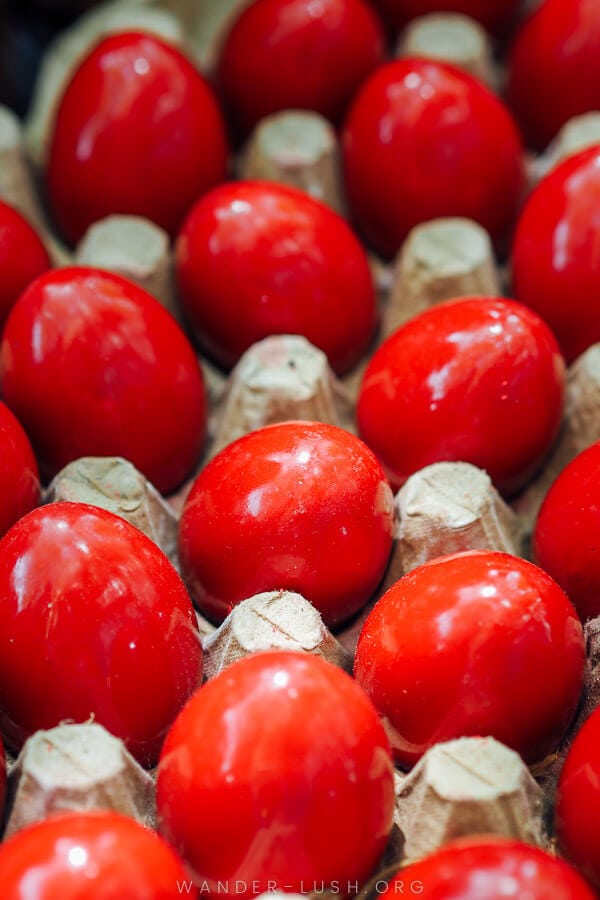
Easter is an important celebration in Georgia, with many associated rituals and traditions. All throughout spring in the lead-up to Orthodox Easter, you can find vibrant street markets in many districts around the city selling Easter supplies.
My favourite local Easter markets are in Saburtalo district. Here, you can see fresh-cut purple flowers, coloured eggs, bundles of madder root and powdered dyes, little patches of wheatgrass, and other traditional Easter decorations.
Which of these markets in Tbilisi have you visited? Are there any other local markets you’d recommend?
More Tbilisi posts you’ll love
- 23 Tbilisi travel tips – essential reading for first-timers
- How to plan your Caucasus travel itinerary
- What to pack for a trip to Georgia (and what to wear in Georgia)
- How to get from Tbilisi airport to the city
- The best things to do in Tbilisi – my city guide
- The best restaurants in Tbilisi – where to eat out
- The best cafes in Tbilisi – coworking & coffee
- The best breakfasts in Tbilisi – including traditional Georgian meals
- The best gift shops in Tbilisi – where to buy your souvenirs
- The best walking tours in Tbilisi – discover the city by foot
- Tbilisi’s best neighbourhoods – architecture, people-watching & street photography
- The best boutique hotels in Tbilisi – art hotels, wine hotels & more
- The best hostels in Tbilisi – accommodation on a budget
- Visiting Gulo’s Spa – the best thermal bath in Tbilisi
- Visiting the Dezerter Bazaar – Tbilisi’s incredible green market
- How to get from Tbilisi to Sighnaghi and what to do in Georgia’s wine region
For even more inspiration and resources, check out my new Georgia Travel Guide and my Georgia itinerary.
Can you bargain in the different markets or is it seen as bad taste?
Most food items are priced, but for antiques and clothes etc. you can certainly (politely) bargain. It is normal and accepted.
Just curious but why isn’t Meidan Bazar one of your favorites?
Hi Lisa, I love walking through but not for shopping. Simply put, it is overpriced.