A hand-picked list of the best galleries and museums in Tbilisi, Georgia.
There are dozens of excellent museums and art galleries in Tbilisi where you can learn about all aspects of Georgian history and culture, from winemaking to the arts.
This guide is a long-list of my 17 favourite Tbilisi Museums – including the big institutions plus alternative, quirky and special-interest museums you might not have heard of before.
I have also included 5 free museums and galleries in Tbilisi.
Please note: This post contains affiliate links, meaning I may earn a commission if you make a purchase by clicking a link (at no extra cost to you). Learn more.
Quick tips for visiting museums in Tbilisi
- Almost all museums in Tbilisi and around Georgia are closed on Mondays and on national holidays. Plan accordingly.
- Some of the larger museums offer a student discount – be sure to bring your International Student ID.
- Most museums have a cloak room, and some (including the National Museum and National Gallery) will encourage you to check any and all bags.
- Photography is permitted at all the museums on this list, provided you don’t use a flash. Video is usually not allowed.
- It is quite common for a security guard or staff member to shadow you very closely when you are walking around. This can feel disconcerting, but it’s nothing personal.
- In my opinion, many of the best museums in Georgia are not in Tbilisi! The Svaneti Museum of History and Ethnography in Mestia, the Vani Archaeological Museum outside Kutaisi, and the Bolnisi Museum are three fantastic, award-winning museums in the regions. Be sure to check those out as well.
The ‘Big 5’ Tbilisi museums & galleries
Tip: If you want to visit two or more of the ‘Big 5’ museums and galleries listed here, then I recommend buying the five-museum day pass for 50 GEL. It is available at the National Museum.
1. Georgian National Museum

Located on Rustaveli Avenue, the National Museum of Georgia is the largest and most important museum in Tbilisi. Admission has just gone up again for 2026 – but it remains a must-see in my opinion, especially if it’s your first time in Georgia.
Founded in 1852 as the Russian Royal Geographic Society’s Museum of the Caucasian Department, it has a long and turbulent history. In 1921, the collections were relocated to Batumi, then to Kutaisi, and eventually to France for safekeeping. After WWII, all objects were returned to Tbilisi and a new institution was established.
The highlight here is definitely the Archaeological Treasury in the basement, which displays gold jewellery, ornaments, ceramics, weaponry and other items that date back to the days of the Kingdom of Colchis and the Trialeti Barrow Culture. More specimens from this era can be seen at the Archaeological Museum in Vani near Kutaisi.

There is extensive signage in English but if you want to go deeper, you can hire a guide. I have done the guided tour here before – it’s very good.
On the top level, the Soviet Occupation Exhibition Hall is a separate museum within the National Museum. The permanent exhibition is dedicated to documenting Georgia’s years as a Soviet Republic, and presents a timeline of events from 1918 to the Red Revolution, right up until 1991.
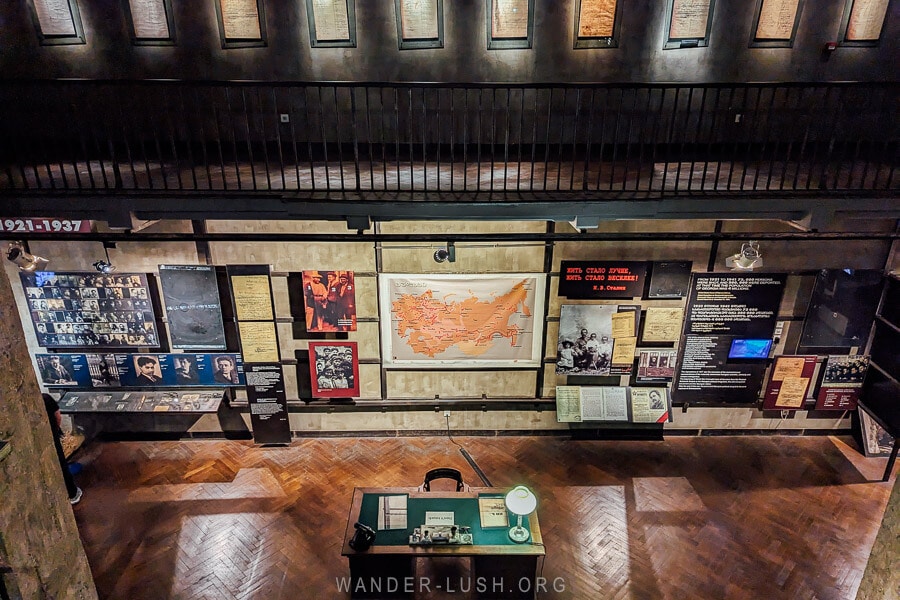
If you don’t know much about Soviet history, it’s a great starting point. There are moving tributes to the many Georgian artists, academics and religious figures who lost their lives during Stalin’s reign of terror, including a section about the plight of Georgia’s German communities during WWII.
You’ll want to take your time here, so give yourself at least 90 minutes to see both exhibitions in detail, plus an extra 15-30 minutes for the archaeological and natural history display on the first level (I personally think it’s OK to skip this part if you’re short on time).
Don’t miss the neolithic clay vessel decorated with grape clusters on the second level – dated to the 6th millennium BC, it was unearthed from the Khramis Didi Gora excavation site in 2017 and led to Georgia being recognised as the global birthplace of wine!


Another item to look out for is the Ioane-Zosime Manuscript, which went on display at the National Museum in October 2024 after it was acquired at Christie’s auction. The 5th-7th century text penned by the Georgian monk is important because it contains the “earliest textual witnesses of the Gospels in a dialect closely resembling the Aramaic spoken by Jesus”.
- Location: 3 Shota Rustaveli Avenue
- Opening hours: 10am-6pm Tuesday-Sunday (last tickets at 5.30pm; closed Mondays)
- Ticket price: 40 GEL
2. The National Gallery

Recently reopened in spring 2026 following an extended closure for maintenance, the National Gallery is the best place to see paintings by Georgia’s national artist, Niko Pirosmani. Together with the National Museum, it makes for a classic pairing for first-time visitors to Georgia.
Born in 1862 in Mirzaani village in Kakheti, Pirosmani (Pirosmanashvili) was a self-taught painter who rose to prominence only after his death in 1918. Sometimes called the ‘Henri Rousseau of the East’, he was a pioneer of the Primitivist style and portrayed Georgian traditions such as the Rtveli grape vintage with a deep sincerity.
The permanent Pirosmani exhibition extends over four rooms, with 54 works in total. Iconic paintings such as Actress Margarita and Giraffe hang alongside Rtveli tableaux and Easter still lifes. Other paintings including Fisherman in a Red Shirt remain at the Shalva Amiranashvili State Museum of Art (see below), which is the home of the collection.


The distinctive gallery building with an inverse dome portico was constructed in 1893 by Albert Salzmann as a Russian military and history museum. It is located two blocks further up Rustaveli Avenue from the National Museum.
The vividly painted gallery walls and incredible natural light from the glass ceiling make everything pop. But information is limited to one brief blurb about Pirosmani plus a few QR codes. Downstairs, there are two more galleries where temporary exhibitions are staged. The gift shop here is also worth checking out.
- Location: 11 Shota Rustaveli Avenue
- Opening hours: 10am-6pm Tuesday-Sunday (closed Mondays)
- Ticket price: 25 GEL
3. The State Museum of Arts

The Shalva Amiranashvili State Museum of Arts (AKA the Art Museum of Georgia) relaunched in October 2024 after being closed for almost a decade. The new gallery space is located adjacent to the old building (the former seminary where Joseph Stalin studied), just off Freedom Square.
This museum has more variety (and a bigger collection) compared to the National Gallery, including a few Pirosmani paintings. But the lighting here is not the best, and tickets are more expensive.


I suggest starting with ‘Georgian Art 1900-1930’, which contains canvases and sculptures by Lado Gudiashvili, Elene Akhvlediani, David Kakabadze, and other notable Georgian artists. The second exhibition, ‘From Paolo Veneciano to Vasil Kandinski’, presents a collection of European canvases from the same period.
On the museum’s lower level, the ‘Medieval Georgian Relief Sculpture’ exhibition contains dozens of carvings salvaged from churches and monasteries across Georgia. This exhibition is really worth seeing and justifies the ticket price in my opinion. The all-black halls and dramatic lighting really make the objects sing.


The new gallery also houses a research and restoration laboratory, the first of its kind in Georgia.
- Location: Off Pushkin Park, enter from Lado Gudiashvili Street
- Opening hours: 10am-6pm Tuesday-Sunday (closed Mondays)
- Ticket price: 40 GEL
4. Tbilisi Open Air Museum of Ethnography


Another classic, the Open Air Museum of Ethnography was established in 1966 by Georgian ethnographer Giorgi Chitaia. Outdoors, interactive, and aimed at showcasing Georgia’s diversity, it’s unique among museums in Georgia and a wonderful place to spend a spring or autumn afternoon.
The territory comprises 14 ethnographic zones, each with a traditional dwelling and an exhibition of tools, clothing and ceramics. When creating the museum, Chitaia painstakingly dismantled, relocated and rebuilt every house you see here now – including an oda from Samegrelo and a Svan tower house.
At present, only 3-5 of the houses are open at any given time. Each one has an in-person narrator who will explain the architecture and give you some information about the relevant region and its culture.
Special events such as the Art-Gene Fest and workshops are often held here during the summer months. This immersive museum is a great choice for families with kids.
The museum is located near Turtle Lake. The easiest way to get there is by taking the cable car from Vake Park. There is some walking involved (mostly flat) so allow at least two hours to see the museum in full. While you’re in the area, stop for a meal at Rachis Ubani, a lovely Georgian restaurant with spectacular city views.
- Location: Kus Tba Street
- Opening hours: 10am-6pm Tuesday-Sunday (closed Mondays)
- Ticket price: 20 GEL
5. The Tbilisi History Museum


Located on the ground-level of King Rostom’s 17th-century caravanserai, the Tbilisi History Museum catalogues the history of the city with a focus on 19th-century Tbilisi.
This museum is quite old-fashioned and signage is virtually non-existent, but for the most part the displays speak for themselves. A large part of the exhibition features scaled models of special landmarks, duqani taverns and vernacular houses, and there are several life-sized recreations of traditional shophouses and workshops. Kids will enjoy the immersive style of the exhibitions here.

I am fascinated by the history of Tbilisi’s Amkari craft guilds – unions of artists and makers that emerged in Georgia around the 8th century and were responsible for some of the city’s most beautiful interiors. Similar to the trade guilds in Transylvania, Amkari members were leaders of the community. At the History Museum, you can view their banners and special uniforms, which included a silver belt to be sold on the occasion of the member’s death to finance their funeral expenses.
- Location: 8 Sioni Street
- Opening hours: 10am-6pm Tuesday-Sunday (closed Mondays)
- Ticket price: 15 GEL
Art, design & architecture museums in Tbilisi
6. Art Palace of Georgia

Once you’ve visited Tbilisi’s main institutions, it’s time to check out a few of the lesser-known special interest museums and galleries around the city. First and foremost is my personal favourite museum in Tbilisi, the Art Palace of Georgia.
As the name suggests, this museum is dedicated to the arts, with exhibits on Georgian theatre, cinema, folklore, opera and ballet. The collection of 300,000 objects includes gorgeous costumes, movie props, sheet music, painted signboards from Pirosmani’s early days, and original set sketches by my favourite Georgian artist, Petre Otskheli.


The Art Palace is located in historic Chugureti district inside a fabulous 19th-century Gothic mansion designed by German architect Paul Stern for Duke Constantin Oldenburg. The house itself is a work of art – many of the rooms are adorned with hand-painted frescoes and ornate fireplaces.
There is a lot of reading to do at this museum, so you should set aside at least 60-75 minutes for your visit.
- Location: 6 Kargareteli Sreet
- Opening hours: 10.30am-5.30pm Tuesday-Sunday (closed Mondays)
- Ticket price: 12 GEL
7. The State Silk Museum


Established in 1887, the State Silk Museum is one of the oldest museums in Georgia. If you are interested in Tbilisi’s Silk Road heritage, this one is a must-visit.
You wouldn’t know it today, but Georgia had a thriving silk industry in the Soviet and pre-Soviet era. Families across the country were engaged in small-scale silkworm rearing, with processing factories established in Tbilisi and Kutaisi. At its apex, Georgia produced four thousand tons of cocoons annually – until a breakout of mycoplasma (and the collapse of the Soviet Union) wiped out the industry.


The Silk Museum was purpose-built at the end of the 19th century as part of the Caucasian Sericulture Station, a complex of 25 buildings that included a research institute and laboratory as well as weaving workshops. The building itself, an Alexander Szymkiewicz design, is a gorgeous piece of architecture. (When you arrive, look for the detailed silk worm and moth-themed plasterwork in the entryway.)
The original exhibitions still on display cover all sorts of silk industry ephemera – from samples of cocoons sourced from across the globe, to cardboard boxes used to transport eggs, to natural dyes. Part of the display deals directly with Georgia’s silk industry and includes retro posters and photographs of the shuttered weaving factories.


The Silk Museum reopened to the public in October 2024 after a four-year closure for repairs.
- Location: 6 Giorgi Tsabadze Street
- Opening hours: 11am-6pm Tuesday-Saturday (closed Sundays and Mondays)
- Ticket price: 12 GEL (free entry on the first Wednesday of every month)
8. Georgian Museum of Fine Arts (the MFA)

The MFA picks up where the State Art Museum (#3 above) leaves off, exploring Georgian art from the second half of the 20th century. This is a private museum, and every object is drawn from the personal collection of Gia Jokhtaberidze and Manana Shevardnadze.
The distinctive eagle-embellished building on Rustaveli Avenue opened its doors in 2018 with an exhibition that spans some 3,500 works representing 100 artists. If you want bang for your buck, this is probably my top choice. This gallery is huge! And it’s one of the few galleries in Tbilisi that is open seven days a week.


There are five floors (if the transparent staircase makes you giddy, use the elevators instead!) and dozens of rooms arranged chronologically by artist. The didactics are wonderful, and you will recognise much of the subject matter – including the canvases of Old Tbilisi and bronze miniatures of famous sculptures.
The cafe downstairs, The Museum, serves coffee and sweet pick-me-ups (the pistachio cheesecake is my favourite). The small gift shop sells postcards and print reproductions of key works in the collection plus silk scarves, pins, art books and other gifts.
- Location: 7 Shota Rustaveli Avenue
- Opening hours: 10am-7pm daily
- Ticket price: 40 GEL
9. The Academy of Arts Museum
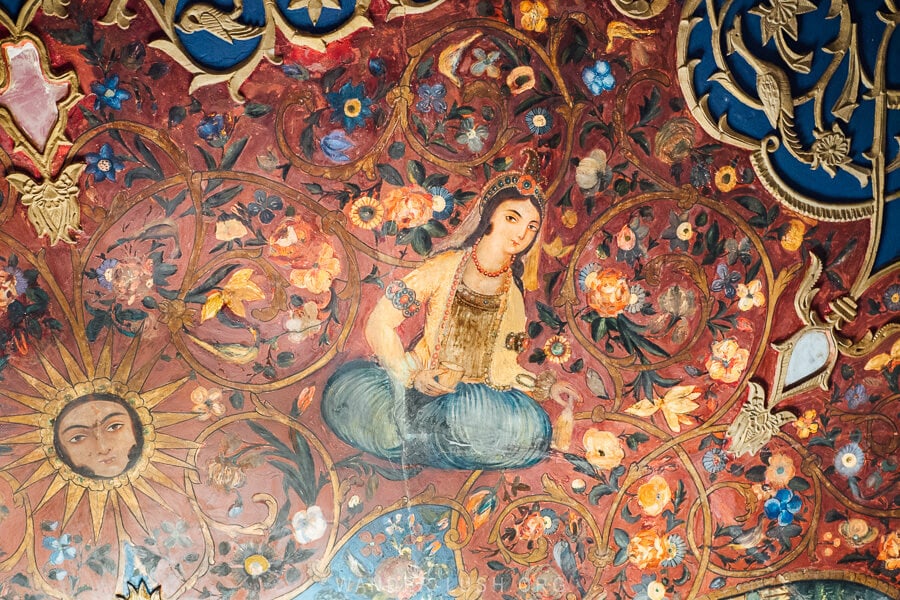
The Academy of Arts Museum is part of the Tbilisi State Academy of Arts, one of the oldest high education institutions in Georgia. Many of the country’s top painters, sculptors and visual artists are among its alumni.
It is steeped in history, and the main building on Griboedov Street (behind Rustaveli Avenue) is certainly up there with the most opulent interiors in the city.
Designed in 1861 as a private residence for the merchant Vardan Astvatsatryan Arshakuni, the building features a collection of ‘Mirror Halls’ with incredibly intricate Qajar-style mirror work (crafted by Persian masters, no less), miniature paintings, stained glass and muqarnas plaster.

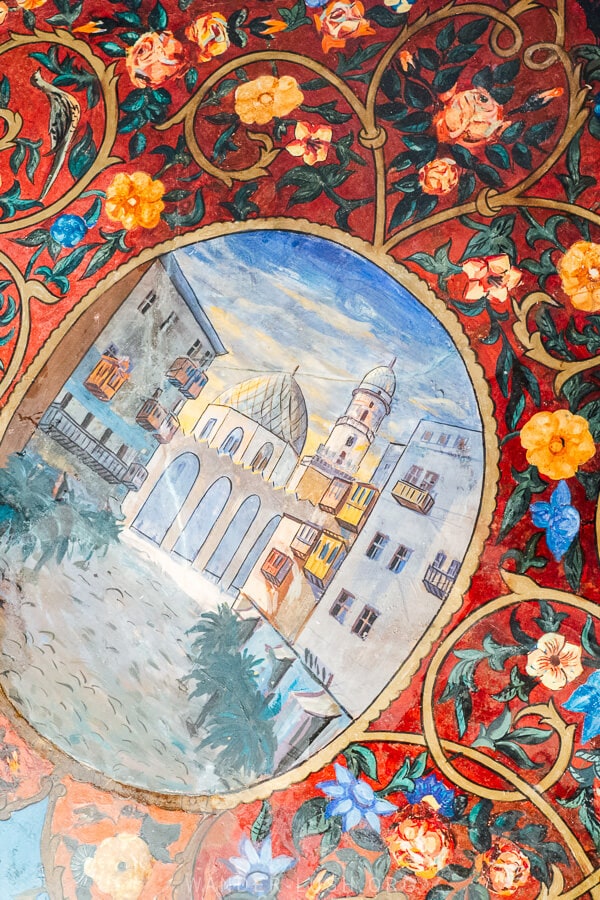
These rooms are open to the public to visit – read more in my detailed guide to the Academy of Arts Museum. While you’re there, be sure to check out the tea house and the lurji supra workshop in the courtyard.
- Location: 22 Alexander Griboedov Street
- Opening hours: 11am-5.30pm Tuesday-Saturday (closed Sundays and Mondays) during the university semester only (closed over the summer & winter break)
- Ticket price: 12 GEL (card only)
10. The National Palace Museum (New for 2026)

In a similar vein, the National Palace Museum – which only just reopened in late 2025 following a six-year closure for renovations – is as much about the interior as it is about the objects held within.
Located on Rustaveli Avenue, this building holds almost the entire modern history of Tbilisi inside its walls. It was built in 1868 for the viceroy, used by the Romanovs, and then by the Young Pioneers. When Georgia declared its independence in 1918, it was from inside this building.


Entrance includes a guided tour in English. You’ll be led up and down grand staircases, through glittering European ballrooms and Qajari-style mirror halls. There are some quirky displays, including a collection of corals, archaeological objects, and a series of painted dolls. Dotted around the museum, 250 modern canvases and sculptures were all donated by artists who attended classes here as children.
The garden that adjoins the museum is scheduled to reopen to the public later in 2026.
- Location: 6 Shota Rustaveli Avenue
- Opening hours: 11am-5pm Tuesday-Sunday (closed Mondays)
- Ticket price: 20 GEL
11. Art Foundation Anagai (New for 2026)

Another new institution on the scene in 2026, Art Foundation Anagi is a private cultural institution that includes a restoration workshop, meeting spaces and a cinema hall alongside its galleries. Nestled among the high-rise developments in Vake district, it’s a new kind of modern art space for Tbilisi.
There are two exhibitions. On the lower level, the permanent ‘Mappa Carographica’ is dedicated to antique maps and etchings. The highlight is a beautiful engraving often described as the first panoramic view of Tbilisi – based on Jean Chardin’s 17th-century travel sketches and first published in London in 1686.


Upstairs, the focus shifts to modern Georgian art, including a recreation of Sergo Kobuladze’s studio. Kobuladze was one of Georgia’s most important painters and graphic artists – he is best known for designing the iconic main curtain for the Tbilisi Opera and Ballet Theatre in the 1950s.
The gift shop here is also outstanding, with prints and textiles, and replica historic maps.
- Location: 12 Zurab Avalishvili Street
- Opening hours: 10am-9pm Tuesday-Sunday (closed Mondays)
- Ticket price: 10 GEL
Museums for history, politics & the Soviet era
12. Underground Printing House Museum (Stalin’s Printing Press)
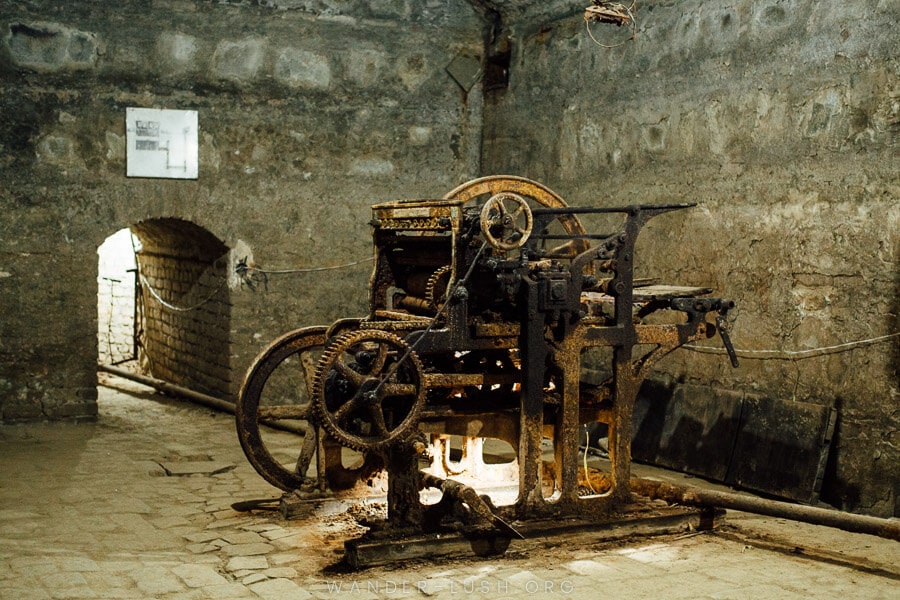
Macabre as it may be, the illegal propaganda printing press famously established in Tbilisi by a young Joseph Stalin beneath a house in Avlabari district is an important piece of world history.
The machine was smuggled into Tbilisi in 1903 by Stalin and his Bolshevik buddies and used to print off thousands of pamphlets in Georgian, Russian and Armenian. In 1906, the secret press was raided and the tunnels and underground chambers filled in.
A museum established here in the 1950s was abandoned in the 1990s. Today, there’s a slightly shabby display of communist kitsch alongside the original Augsburg printing machine, which sits forlornly under a bare lightbulb in the subterranean printing room.
Despite being managed by the National Parliamentary Library of Georgia, the opening hours are somewhat ad-hoc. The museum caretaker, Soso, lives on the property and told me he’s there on weekdays to let visitors in. I recommend going after 11am to be safe. The museum is small, so you only need to budget around 20 minutes for your visit.
Read more about visiting Stalin’s Printing Press in this detailed guide.
- Location: Kaspi Street
- Opening hours: 10am-6pm Monday-Friday (closed weekends)
- Ticket price: 10 GEL
13. The Museum of Repressed Writers & Davit Sarajishvili Memorial Museum
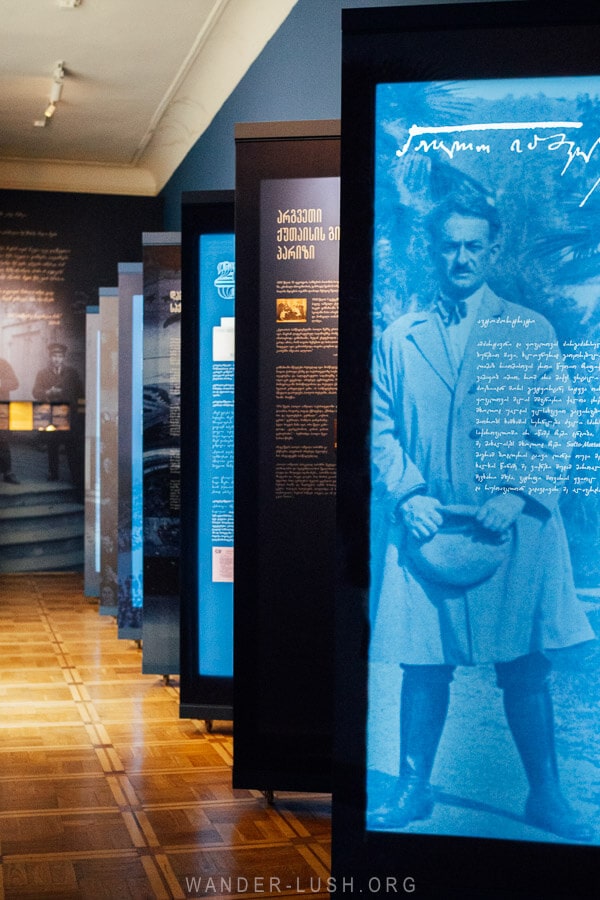

Located inside the gorgeous Writers’ House of Georgia in Sololaki, the Museum of Repressed Writers is another relatively new museum in Georgia that opened at the start of 2023. It remembers the victims of Soviet Terror and reflects on the regime’s attempts to ‘tame Georgian literature’.
The exhibit is small but thoughtful and very stirring. Alongside archival images (including a few ‘erased photos’), clippings and timelines there are poetic excerpts and lots of information about Georgian literature and various movements such as the Tsisperqantselebi ‘Blue Horns’.
When you visit this museum, you can also walk through the Davit Sarajishvili Memorial Museum, which explains a bit about the life of the brandy baron who built the Writers’ House as his private residence then donated it to the people.


Built in 1905, the Writers’ House blends traditional Georgian and Art Nouveau architecture and is undoubtedly one of the most beautiful houses in Tbilisi.
Have a good look around while you’re here: Highlights include the Villeroy & Boch ceramic tiled terrace and the timer dining room that was fashioned by a renowned local craftsman named Ilia Mamatsashvili.
- Location: 13 Ivane Machabeli Street
- Opening hours: 11am-6pm Tuesday-Friday & 12pm-7pm Saturday (closed Sundays & Mondays)
- Ticket price: 7 GEL
14. Kote & Soso Tsereteli Memorial House-Museum

Tbilisi has more than a dozen small house museums, but few are as compelling as this one. Unlike other institutions where doors may be closed or staff less than enthusiastic, here you’ll be greeted by young, knowledgeable guides who will walk you through the rooms with passion and detail – whether or not you opt for the 20 GEL tour.
The museum is dedicated to a remarkable father and son. Kote Tsereteli (1921-2004) was a celebrated scholar of Hebrew and Aramaic whose recreated study displays his Soviet stamp collection, rare blue passport, and the Key to Tbilisi awarded for his lifetime of work.


His son, Soso Tsereteli (1958-1983), was an artist caught up in one of Soviet Georgia’s most infamous episodes – the attempted hijacking of Aeroflot Flight 6833.
The young artist’s canvases and drawings, exhibited alongside contraband vinyl records and materials related to the event (including an eerie set of sketches made on the plane), provide a stark window onto life under Soviet rule. A modern timeline exhibit situates the incident in its global context, provoking thought about possible motives and wider implications.


The museum is housed in the family’s former apartment on Uznadze Street.
- Location: 2 Dimitri Uznadze Street
- Opening hours: 10am-6pm daily
- Ticket price: 5 GEL
Quirky & niche Tbilisi museums
15. Tbilisi Wine Museum


There are three museums inside the old caravanserai near Sioni Cathedral in Old Tbilisi: the Tbilisi History Museum and the Georgian Weaponry Museum (see the Free Museums section below), plus the more recently opened Tbilisi Wine Museum. All three are great, but the Wine Museum is must-visit in my experience – especially for the wonderful guides who are there to show you around.
The setting is spectacular: The entire museum is underground, set in secret chambers and passageways underneath the old caravanserai. The tour starts with a gander at one of the last remaining private fresh water springs in the city.
The museum displays objects related to winemaking and wine history: Clay qvevri, communal drinking vessels, Satsnakheli wine presses, and other ephemera. During the tour, you will learn about Georgia’s UNESCO-listed winemaking tradition and rituals such as the annual Rtveli wine harvest.
Most of the objects are reproductions of artefacts housed in the Georgian Museum or at Vani. That’s OK though, because the guides who bring this museum to life (especially Nino) are truly some of the best in Georgia. An hour in this museum will teach you more about Georgian wine and culture than even a trip to Kakheti wine region will (this was my experience, anyway).
The final section of the Wine Museum is a gallery with beautiful archival photographs of Old Tbilisi. It’s here that you sign-off with a wine tasting. All up, tours run for 30-40 minutes on average.
There is a bonus free museum located within the Wine Museum – see below for more details.
- Location: 8 Sioni Street
- Opening hours: 11am-8pm Tuesday-Saturday & 12pm-6pm Sunday-Monday
- Ticket price: 15 GEL
16. Museum for the History of Georgian Medicine

One of my favourite museums in Georgia and a complete hidden gem (a big thanks to Alex, one of my subscribers, who tipped me off about this one!).
As the name suggests, the museum is devoted to the history of medicine in Georgia and was the first institution of its kind in the Soviet Union when it opened in 1963. The exhibition begins with the Kingdom of Colchis and Medea, who famously concocted potions from herbs and plants. I had no idea that Georgia could claim to be the home of modern medicine – but there you go!
Two floors of objects and manuscripts touch on a range of different topics that relate to the history of the city and country, from Georgia’s 700 types of healing mineral waters and endemic herbs, to the science behind kisi treatments at the Tbilisi sulfur baths.
Particularly interesting are the small sections on Khevsur and Tush folk medicines. The museum founders completed mountain expeditions throughout the 70s and 80s, visiting remote communities to document traditional knowledge that was excluded from Russian-issued textbooks and thus mostly lost. Ask your guide to tell you about Megrelian poisons, the secret recipes for which are apparently still passed down through families to this day.
The museum has two floors and lots of well-written English didactics to read. Allow a minimum of 1.5 hours for your visit. Technically the guide service costs an additional 25 GEL – we were lucky enough to get shown around by the museum director for free. I definitely think it’s worth paying for a guide if you need to.
- Location: 51 Dimitri Uznadze Street
- Opening hours: 10am-6pm Tuesday-Sunday (closed Mondays)
- Ticket price: 10 GEL (cash only)
17. Tbilisi Auto Museum

This quirky museum – the first of its kind in the Caucasus – was created in 2014 by Gia Mamulashvili, a private collector of antique automobiles. It’s since expanded to include 50-plus vintage and rare cars and motorcycles, all but one of which (a Ford) were manufactured in the former Soviet Union.
Impressively, every one of the cars has its original tires and is kept in good working order (some are even available to rent). There are elegant Volgas, cute Ladas and Moskvitches in every colour of the rainbow, ZIM-12s, a Soviet-era UAZ ambulance, and much more.


I have zero interest in cars but I still found this museum fascinating! That’s largely thanks to the museum director and guide, Rezo, who is very knowledgable and has a great sense of humour.
The history behind some of the vehicles is wild: The collection includes Beria’s old car, Eduard Shevardnadze’s car, an amphibious vehicle, and a special car manufactured for war veterans.
The Isani location is not exactly convenient (20-30 minutes by taxi from the centre), but I think it’s worth the trip. If you’re visiting outside of summer, I recommend calling ahead to make sure someone is there to show you around. The museum has two halls and takes around 20-40 minutes to tour.
If you’re really into your vintage cars, you will also want to see if a tour of the Brutalist former Palace of Rituals in Avlabari is available. It houses another terrific collection of cars – and a helicopter!
- Location: Police Turn
- Opening hours: 11am-6pm Tuesday-Sunday (closed Mondays) – call ahead
- Ticket price: 10 GEL
Free museums in Tbilisi
While there are no regular free museum days in Tbilisi like there are in some other European cities, there are a few small and privately owned museums that do not require a ticket. Here are four of my favourites.
Remember also that entrance to the Silk Museum is free on the first Wednesday of every month, and on International Museum Day (May 18), all institutions under Georgian National Museums have free entry.
The Museum of Books

Part of the National Parliamentary Library of Georgia, the Museum of Books is a free museum where some of the institution’s 4,700,000 volumes are on display for public view. This includes the first book ever printed in Georgian language, and several beautifully illuminated volumes.


The museum is small, and unfortunately there is virtually no English signage, which does make it somewhat difficult to truly appreciate the collection.
But it’s still worth visiting to see the vestibule and stairway, which features cathedral ceilings, florid frescoes and ornamental woodwork.
- Location: 5 Lado Gudiashvili Street
- Opening hours: 10am-6pm Monday-Friday (closed weekends)
Bitadze Tea Shop & Museum

There was a time when Georgia was the world’s fourth-largest producer of tea. Today, an increasing number of new-wave farmers and tea-trepreneurs are reviving the country’s forsaken fields and factories, producing high-quality black, green and herbal teas in Western Georgia’s Guria, Imereti, Samegrelo and Adjara Regions.
The Bitadze family oversee the Georgian Tea Growers Association. Their tiny wunderkammer in Sololaki – one of my favourite hidden gems in the city – displays ephemera related to the country’s tea heritage, and doubles as a tasting room where you can sample local leaves, fruit blends, tisanes and fermented teas.


Giorgi Bitadze is in the shop most days and will provide you with a riveting description of tea history – from how Chinese tea technology made its way to Georgia, what happened to the tea industry under Perestroika, and why one factory reinstated the hammer-and-sickle symbol on its packaging after the fall of the Soviet Union.
Loose leaf black, green and fruit teas are available to purchase (from 10 GEL/100 grams) and come packaged in a sweet wooden box. Cold-pressed tea seed oil is also sold.
- Location: 15 Galaktion Tabidze Street
- Opening hours: 11am-8pm Monday-Saturday (closed Sundays)
The Museum of Georgian Weaponry

The Museum of Georgian Weaponry (AKA Akra Museum) is a small exhibition located on the bottom floor of the caravanserai, inside the Wine Museum. Ask staff at the Wine Museum desk and they will show you the way.
The small exhibition includes restored weaponry (swords, daggers, shields) and other ethnographic objects. Everything you see is part of a private collection held by David Nasaridze, who is onsite at the museum most days to show guests around.
The museum also has a photo corner where you can dress up in chokha and traditional garb for a photo.


If you are interested in war history and weaponry, you will enjoy this exhibition. Kids of a certain age will also find it fun.
Entry is free, but I highly recommend you leave a donation. All proceeds support David’s work.
- Location: 8 Sioni Street (inside the Wine Museum)
- Opening hours: 12pm-6pm daily
Tbilisi Photography & Multimedia Museum


Hidden away above Cafe Stamba, this is the first institution in Georgia solely dedicated to photography, video and new media. Solo and group exhibitions showcase established and emerging artists from the South Caucasus region, and every spring, the gallery hosts the Tbilisi Photo Festival.
The industrial warehouse space is beautifully lit and very atmospheric. The gallery is not always open, though – check for current exhibitions and events on the website before you go.
- Location: 14 Merab Kostava Street (inside Stamba)
- Opening hours: 12pm-7pm Monday-Friday & 2pm-8pm Saturday-Sunday
The National Archives of Georgia

Founded in April 1920, the National Archives was established during Georgia’s brief period of independence by bringing together materials scattered across the country for safekeeping. Located close to the Medical University Metro Station in Saburtalo, it holds a collection of more than 5 million documents, photographs, films and audio recordings.
Part of the Brutalist building is a gallery space. The free exhibitions here are drawn from archival materials and are always very interesting. On my last visit, there was a special exhibition of photos and construction blueprints related to the development of Abkhazia.
Upstairs there is a small gift shop selling books (both in Georgian and English), postcards and papergoods printed with patterns from the repository, and unframed reproductions of popular Soviet-Georgian film posters, USSR-style public service announcements, and other propaganda materials.
While you’re there, stop for a coffee at Prospero’s Cafe and Bookshop, located on the mezzanine level.
- Location: 1 Vazha-Pshavela Avenue (enter on Pekini Avenue, close to the corner of Panjikidze Street)
- Opening hours: 11am-7pm Tuesday-Sunday (closed Mondays)
There are some truly wonderful museums in Tbilisi to suit every taste and interest. That’s to say nothing of the city’s many contemporary art spaces, which I’ll cover in a future guide. What is your favourite museum in Tbilisi? Do you have any other suggestions to add to the list?
Where to stay in Tbilisi
See my Tbilisi neighbourhood and accommodation guide for a detailed break-down of the different areas and options. Here are my top overall Tbilisi hotel recommendations:
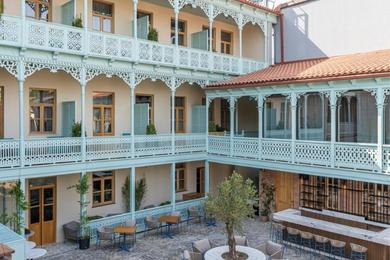
TOP CHOICE: The Blue Fox Hotel (⭐ 9.7). Located in the heart of Kala Old Town, this intimate 17-room hotel features turquoise balconies overlooking a typical Tbilisi courtyard. Complimentary breakfast is served at the onsite restaurant-bar, Blue Fox, while some of the city’s best restaurants are an easy stroll away.
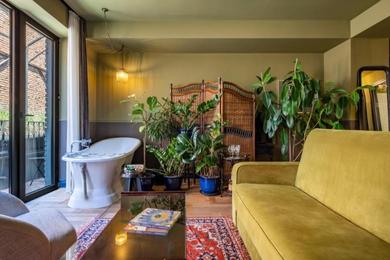
BOUTIQUE: Communal Plekhanovi (⭐ 9.2). Located in my favourite Tbilisi neighbourhood, this boutique hotel is among the finest in the city. Rooms are thoughtfully decorated with modern art and antiques, and there’s a fantastic restaurant, a wine bar and a gift shop onsite.
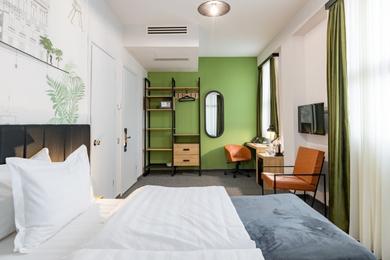
MID-RANGE: Graphica Hotel (⭐ 9.2). Explore the lesser-travelled Avlabari neighbourhood when you stay at this chic boutique hotel. Graphica is footsteps from the metro for easy access to the rest of the city. Rooms feature work desks, and a complimentary breakfast is included.
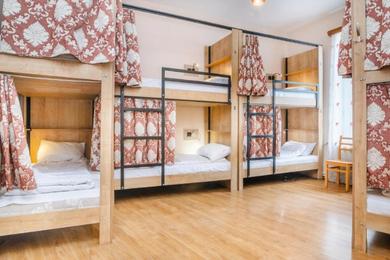
BUDGET: Pushkin 10 Hostel (⭐ 9.2). Located footsteps from both Orbeliani Square (near the Dry Bridge Market) and Freedom Square, this popular hostel has bright dorms and private doubles. The breakfast room overlooks the city from its 3rd floor location.
You might also be interested in…
- 10 special churches to visit in Tbilisi
- The best markets in Tbilisi
- The best viewpoints in Tbilisi
- The best bathhouses in Tbilisi
- The best bars in Tbilisi
- The best coffee shops in Tbilisi
More Tbilisi posts you’ll love…
- 23 Tbilisi travel tips – essential reading for first-timers
- How to plan your Caucasus travel itinerary
- What to pack for a trip to Georgia (and what to wear in Georgia)
- How to get from Tbilisi airport to the city
- The best things to do in Tbilisi – my city guide
- The best restaurants in Tbilisi – where to eat out
- The best cafes in Tbilisi – coworking & coffee
- The best breakfasts in Tbilisi – including traditional Georgian meals
- The best gift shops in Tbilisi – where to buy your souvenirs
- The best walking tours in Tbilisi – discover the city by foot
- Tbilisi’s best neighbourhoods – architecture, people-watching & street photography
- The best boutique hotels in Tbilisi – art hotels, wine hotels & more
- The best hostels in Tbilisi – accommodation on a budget
- Visiting Gulo’s Spa – the best thermal bath in Tbilisi
- Visiting the Dezerter Bazaar – Tbilisi’s incredible green market
- How to get from Tbilisi to Sighnaghi and what to do in Georgia’s wine region
For even more inspiration and resources, check out my new Georgia Travel Guide and my Georgia itinerary.
September 2023 – My visit to the National Gallery was hugely disappointing – the best Pirosmani works are on tour. The entrance ticket is 25 Gel and it is not worth it unless you like the one artist whose name I don’t remember because I didn’t like her work at all. I can’t even find her name on the museum website – but her work is on most of the two floors of the museum. The gift shop is good but no need to buy a ticket. On the other hand, I thought the MOMA Tbilisi and the Museum of Fine Arts are both excellent.
Hi Rachelel, yes I agree that the MFA is a much better experience. Thanks for your feedback and sorry to hear you missed out on the Pirosmanis! I believe they are hanging in the Netherlands right now.
Wonderful, that’s for sharing. I still need to get to a few of these. Shame the prices are so high. 30 lari for the national museum is pretty steep, considering that it used to be much cheaper. Any idea if Georgian residents get a discount?
Thanks Owen! Yes, it National Museum doubled and some others have quadrupled! No discount for residents unfortunately (only for citizens). Otherwise I would have been happy to claim it!
Great list! Actually lots of great ideas on your various posts for Tbilisi. Just a heads up, the price for the Art Palace is now 5 GEL and not 2. That’s a big price hike (percentage wise) even in these days of massive inflation. Not sure about the other museums but hoping I won’t have any nasty surprises. Still worth it, so far.
Thanks for the update, Jessie. You can double-check prices for some other museums on the National Museum website – I’ve just had a look and they appear to be the same.